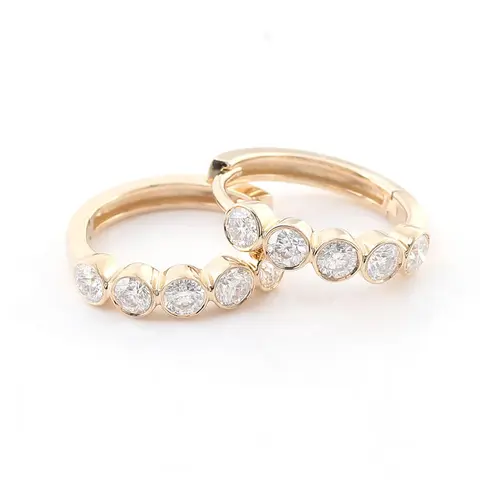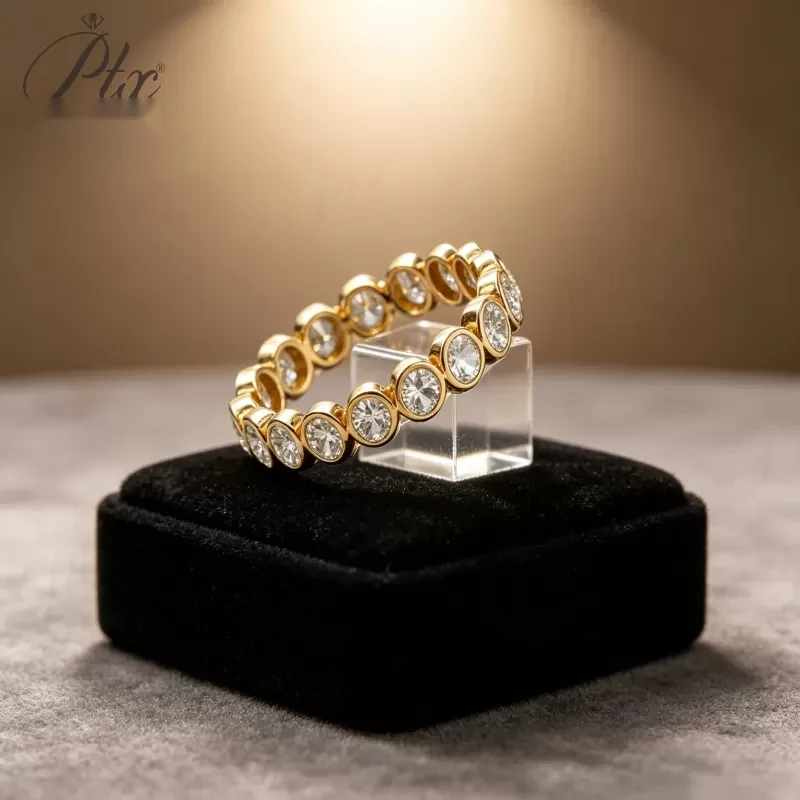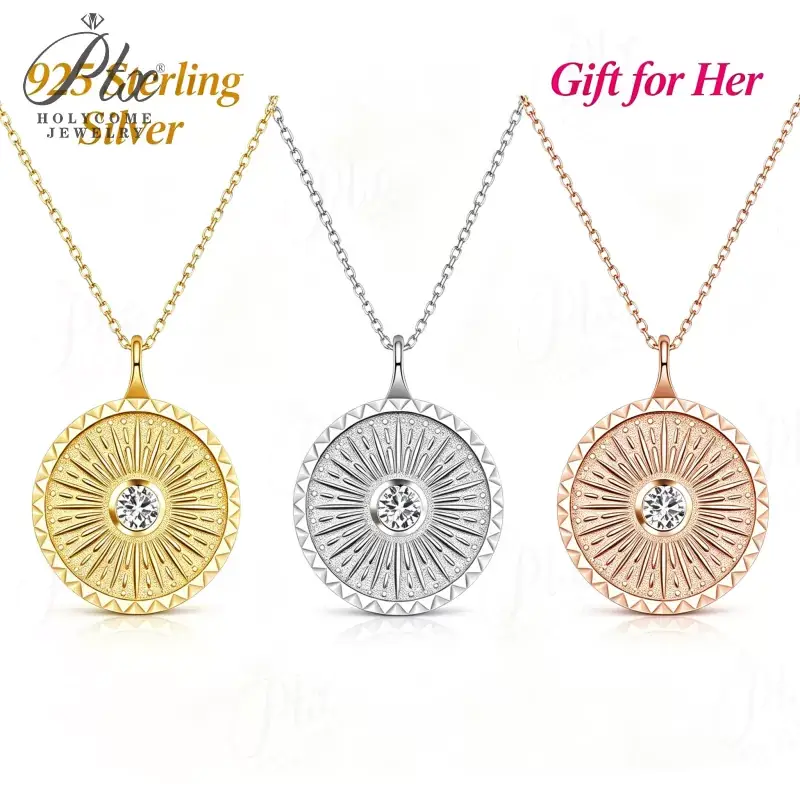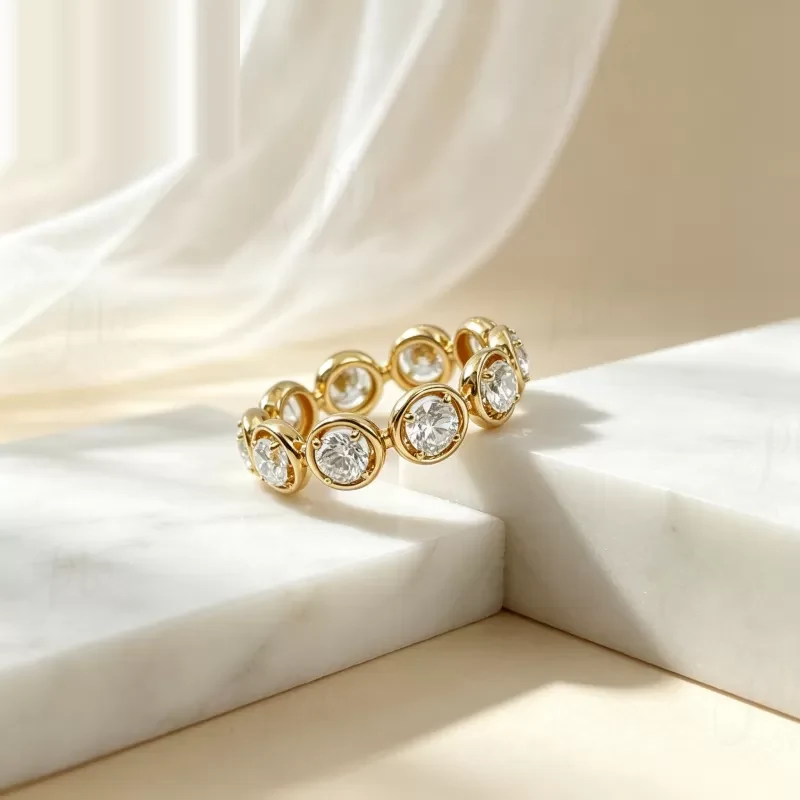
Selling generic moissanite rings from a catalog is a decent side business. Building a private-label bridal line around the stone is how you turn a decent side business into a brand customers remember. Private label means your logo on the inner band, your box on the doorstep, and your name on the warranty card. The supplier disappears from the customer's view, and you keep the margin that used to go to a middleman.
Here is the practical path from idea to first launch.
Decide what "private label" means for you
There are three levels. The lightest is relabeling: the factory puts your logo on stock designs and your packaging around them. The middle is semi-custom: you choose from existing settings and adjust stones, metals, and widths. The deepest is fully custom: you design your own setting from scratch, and the factory builds it. Most new brands start at level one or two and move to level three once they have sell-through data.
Pick a narrow opening range
The mistake most new bridal brands make is launching 40 SKUs on day one. You do not know your customer yet. Start with 8 to 12 styles: three solitaire settings, two halo settings, two vintage settings, and three matching bands. Cover round and oval in white and yellow gold plating. That is enough to feel like a real collection, small enough to manage inventory.
MOQ: what is reasonable
For relabeled stock, expect MOQs in the range of 10 to 30 pieces per style. For semi-custom, 30 to 50. For fully custom, 100 or more, because the factory has to cut a mold and set up production. Negotiate a low first-run MOQ in exchange for a committed reorder schedule. Factories would rather take a smaller first order than lose a repeat customer. Our guide on navigating jewelry MOQs covers the negotiation playbook.
Design details that build the brand
Private label is won in the small touches. Engrave your logo inside the band in a consistent font. Use a consistent ring box, a branded care card, and a warranty card that references your company name. These touches cost almost nothing at trade price, but they are what make a customer feel they bought a brand rather than a generic import.
If you go semi-custom, ask for small design signatures: a particular milgrain edge, a distinct prong shape, a hidden accent stone on the inside of the band. These signatures become recognizable on social media and set your line apart from other shops selling the same stock settings.
Pricing your own line
When you control the brand, you also control the price ladder. Price your core solitaire at a level that leaves room for future premium collections. Resist the urge to undercut other private-label lines; price on perceived value, not on race-to-the-bottom competition. For a full pricing framework, our guide on pricing wholesale jewelry for resale is built for exactly this decision.
Compliance and documentation
Because your name is on the product, compliance matters more, not less. You need material declarations for nickel, lead, and cadmium, and clear disclosure that the stones are lab-grown moissanite, not diamond. Mislabeling stone type is the fastest way to lose a private-label brand to a chargeback or a marketplace complaint. Keep the supplier's test reports on file and make your own disclaimer wording reviewable by a professional.
Timeline for a realistic first launch
Avoid the trap of thinking a private-label line can go from idea to live store in a week. Budget roughly four to six weeks for the full path: one week to choose samples and confirm the factory, two to three weeks for production and engraving, one week for photography and page writing, and a final week to test checkout and packaging. If your supplier promises ten days end to end, they are either rushing the finishing step or planning to ship stock pieces under your label, which defeats the point.
Plan a soft launch to your existing email list before any paid traffic. A small group of repeat customers will give you honest feedback on sizing, photos, and packaging that strangers never will. Fix those issues during the soft launch, then turn on acquisition ads once the product and the pages are actually right.
Launch before you think you are ready
Most new private-label brands wait until every SKU is perfect, every photo is shot, and every page is written. Then they launch to silence. A better approach is to launch the core range with good-enough photos and a clear story, then add styles based on what actually sells. Use pre-orders for the first 30 days to validate demand before you commit to a second production run.
Moissanite is an ideal stone for private label because the product itself is consistent, durable, and easy to photograph. The hard part is the brand discipline. Nail the small touches, keep the range tight, and let your best sellers tell you what to design next.
For the legal text behind our material compliance, see the REACH Regulation (EC) No 1907/2006 on EUR-Lex.
Frequently Asked Questions
Is moissanite a good diamond alternative for retail buyers?
Yes for price-sensitive customers who want brilliance and hardness. Moissanite ranks 9.25 on the Mohs scale, holds up to daily wear and costs a fraction of a natural diamond of the same size, so it resells fast in bridal and fashion lines.
What is the minimum order for wholesale moissanite?
MOQ starts at 50 pieces per design for stock items. Custom cuts and private-label settings usually start at 100–300 pieces depending on the mold.
Do you provide certificates with moissanite stones?
Yes. Every parcel ships with GRA or IGI documentation listing carat weight, color grade and cut. We recommend passing the certificate to your end customer for trust.
How long does sample and bulk production take?
Samples ship in 3–5 days. Bulk runs take 15–20 days under 500 pieces, and 25–30 days for custom work.