Fashion necklaces are the backbone of most jewelry stores, and buyers tend to have the same practical questions before their first order. This FAQ collects the ten questions we hear most often about wholesale necklaces, from chain length to MOQ to what to do when a clasp arrives broken. If you are comparing suppliers, the answers below will help you ask the right questions.
What is the minimum order for fashion necklaces?
Standard MOQ at most factories is 100 pieces per style. Because necklaces come in one size (the chain length is fixed), you do not need to balance a size run the way you do with rings. If you are testing, ask about a mix order: many suppliers allow 300 to 500 pieces spread across several pendant styles so you can test the market without committing to 100 of one design. We explain this trade-off in our mix and match orders guide.
What chain lengths should I stock?
The most versatile length for women is 40 to 45 centimeters (16 to 18 inches), which sits at the collarbone. This flatters most necklines. Longer chains of 60 to 70 centimeters (24 to 28 inches) sell for layering and bohemian looks. A sensible first order is mostly 16 to 18 inch pieces, with a few longer chains for the layering customer. Our necklace length guide matches each length to necklines.
Can I choose the chain material and plating?
On existing designs, the chain and plating are fixed by the factory, but you can often request a variation: gold instead of rhodium, or a thicker chain. On custom or private label orders, you build the spec sheet yourself. When you compare quotes, confirm whether the listed price includes the chain, the pendant, and the findings, or just the pendant.
How long is production and delivery?
Existing styles take ten to fifteen working days to produce. Custom designs add seven to ten days for sample approval before bulk production. Express shipping to the US and EU takes five to seven days; sea freight is twenty-five to thirty-five days but much cheaper for heavy orders. Plan your calendar backward: for a holiday peak, order at least three months ahead to be safe.
What is the defect rate, and what happens?
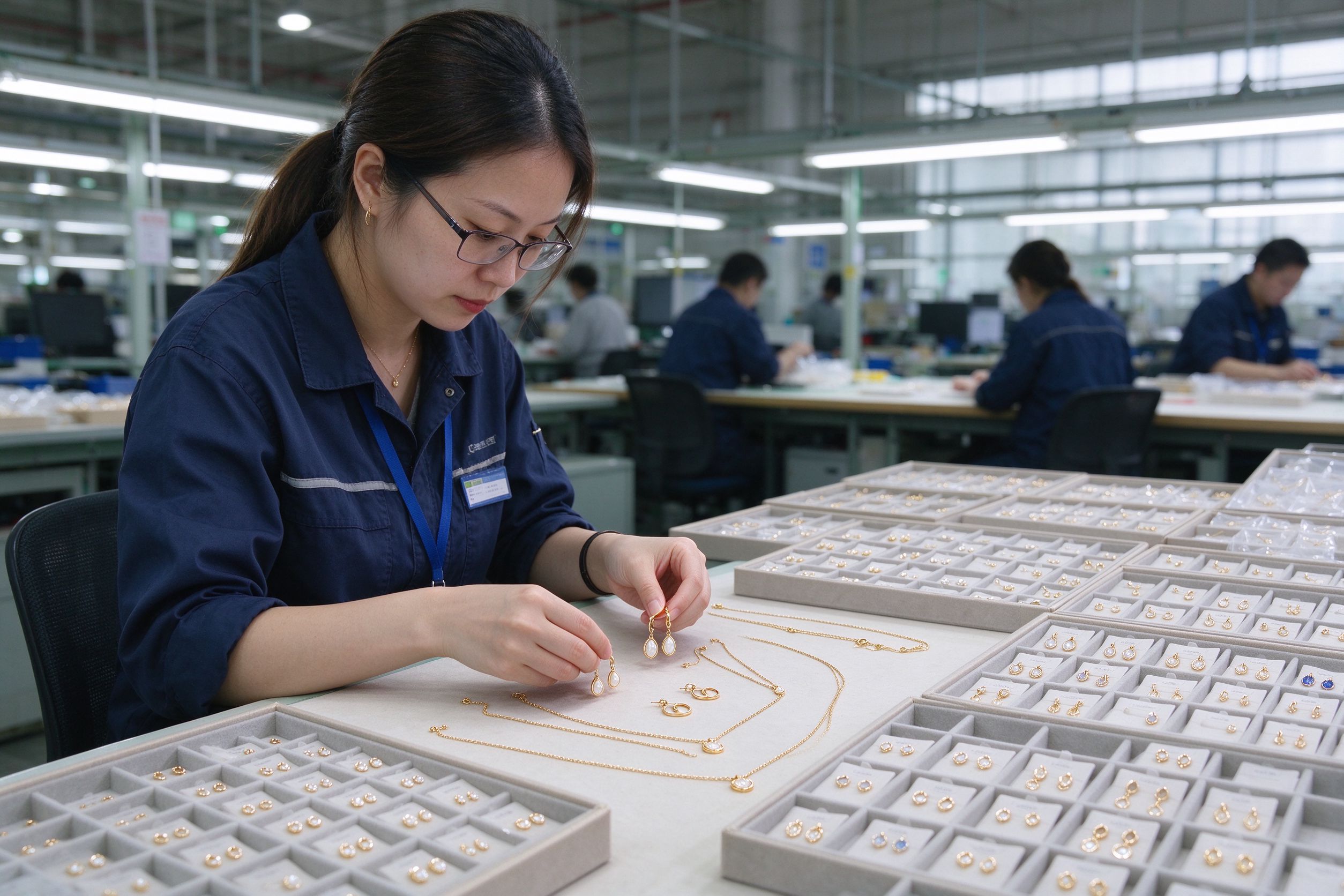
A realistic defect rate for fashion necklaces is one to three percent. Common issues are a weak clasp, a dull stone, or a jump ring that opens. Reputable factories replace defective pieces in your next order rather than refunding cash. Always ask before ordering: "What is your defect replacement policy?" If the answer is vague, treat it as a warning sign. Our quality control checklist tells you what to inspect on arrival.
How do I avoid tarnish and skin reactions?
Ask for nickel-free plating and an e-coat barrier. These two steps dramatically reduce green necks and allergic reactions. For customers with sensitive skin, a brass chain with good plating is safer than iron. We go into detail in our guide to hypoallergenic and nickel-free jewelry.
Can I get samples before ordering bulk?
Always order samples. Wear the necklace for two weeks. Check whether the chain kinks, whether the clasp stays shut, and whether the plating dulls against perfume. Samples cost retail but they are the difference between a bestseller and a drawer full of returns. Most factories deduct the sample cost from your first bulk order.
Do you offer private label and custom pendants?
Yes. Private label means your packaging and cards on existing designs. Custom pendants mean we build a mould from your drawing; tooling is a one-off fee and the MOQ on a new mould is usually 300 pieces. This is how brands differentiate themselves. Read about our OEM and private label program to see how it works.
What necklace styles sell best right now?
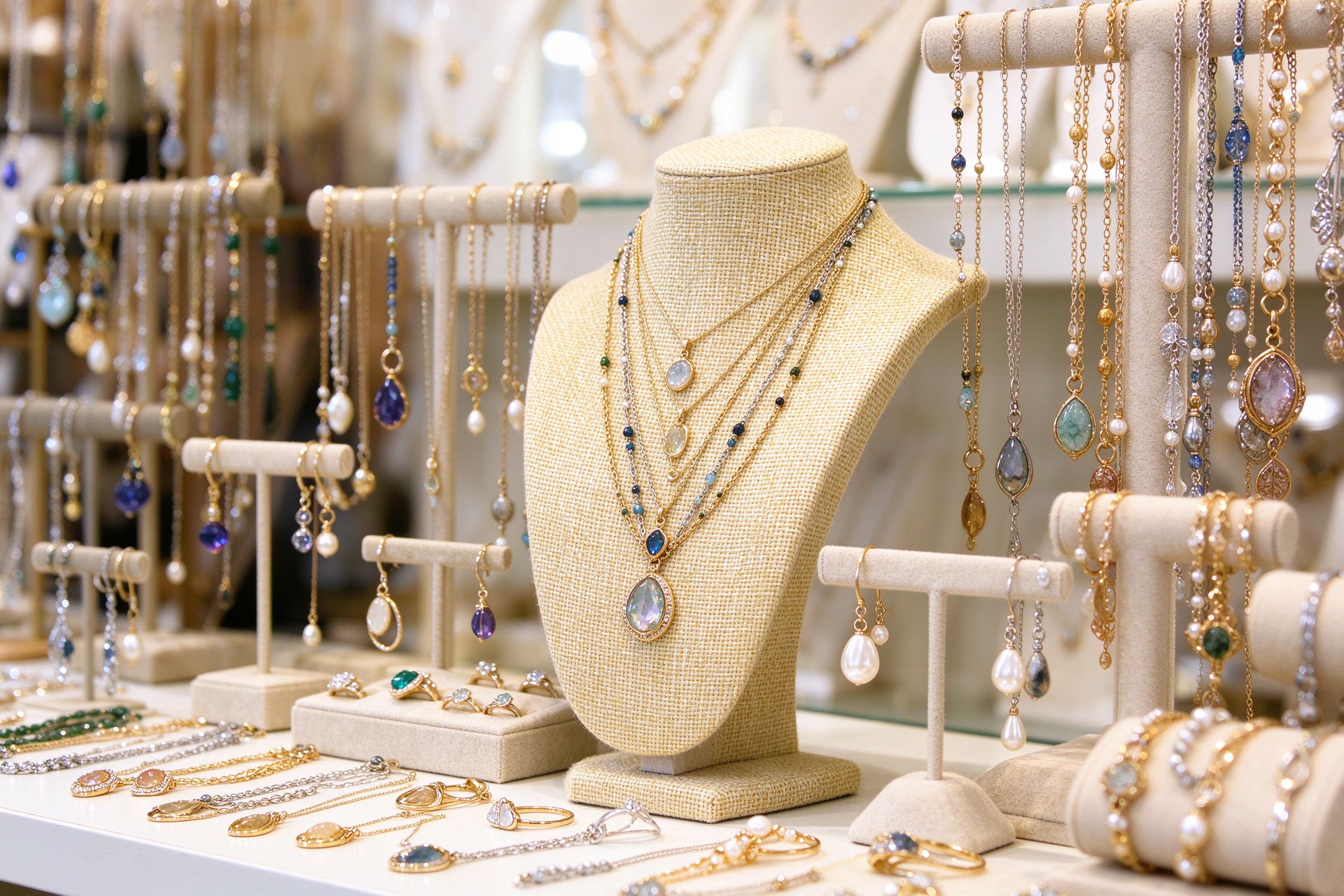
Three categories consistently move: dainty layered chains, personalized initial or bar pendants, and statement pieces for events. The dainty everyday piece sells in volume; the statement piece sells on margin. Stock both. For the trend outlook, read our trending necklace styles guide.
How do I price necklaces for resale?
A typical fashion necklace costs $1 to $3 wholesale and retails at $12 to $30. The markup is healthy because customers perceive necklaces as complete, giftable pieces. Keep a spread: a few entry-level pieces at $8 retail, a mid-range at $15 to $20, and one or two premium statement pieces at $30 to $40. This gives every shopper an option.
Start Your Necklace Order Confidently
The buyers who do best order small, sample first, and protect themselves with a clear defect policy. You do not need to know everything on day one. Start with a mix order of proven styles, read the responses you get above, and grow from there. Browse our fashion necklaces collection and request a wholesale quote with your target quantities.
How Do I Photograph Necklaces for Resale?
Necklaces are longer than other jewelry and can look tangled in photos. Lay them flat on a clean background, hang them on a small jewelry stand, or style one on a neck form. Show the clasp close-up so buyers see the quality. Natural window light beats any lamp. Consistent photos across your whole line make the store feel curated. If you sell online, a short video of the necklace moving sells better than ten still images. We share photography tactics in photographing jewelry that sells.
What About Chains That Tarnish Fast?
Tarnish on a chain usually means thin plating or an iron base. The fix on the buying side is to ask for thicker plating and a brass chain. On the customer side, advise storing the necklace dry and away from perfume. If a specific style keeps returning as tarnished, stop reordering it; it is not right for your channel. Track which styles come back and treat that data as seriously as sales data. We explain the chemistry in affordable quality.
Can I Mix Necklace Styles in One Order?
Absolutely, and that is usually the smartest way to start. A mix order across pendants, chains and statement pieces lets you test which your audience prefers without committing 100 units to one design. After two months, double down on the winners and drop the slow ones. This is the same feedback loop we describe in inventory turnover strategy. Start small, read the data, then scale.