
Choosing a jewelry supplier is the most important decision a wholesale buyer makes. A good supplier makes your business look reliable; a bad one costs you money, reviews and time. The problem is that every supplier online looks good in photos. Vetting is the process of seeing past the marketing and finding out whether a factory can actually deliver. This guide gives you a practical checklist for vetting a jewelry supplier before you place a serious order, from the first message to the first shipment.
Vetting is not about finding the perfect factory. It is about eliminating the risky ones and identifying the ones worth a trial. You do not need to fly to China to do it; a disciplined remote process catches most problems.

Factory vs trading company: the first filter
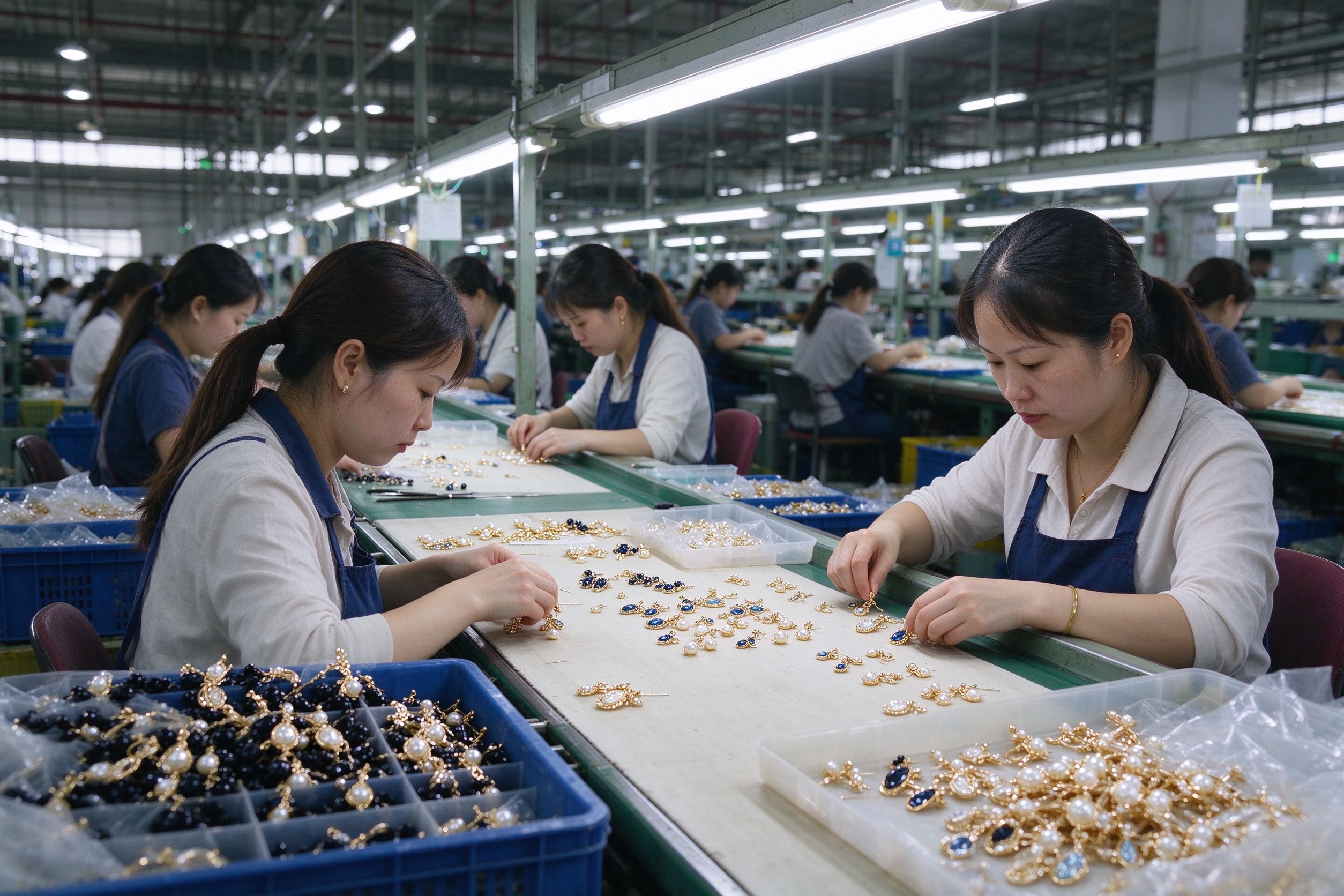
There is a real difference between a factory and a trading company, and it matters. A factory makes the jewelry and controls the process; a trading company resells other factories' stock and adds a margin. Trading companies are not always bad, but they cannot customize, cannot guarantee consistency, and cannot fix a production problem quickly. Ask the supplier directly: "Are you a factory or a trading company?" Then verify. Ask for photos of the production floor, the casting line and the packing area. A real factory will send them readily; a trader will deflect.
The sample test
The single best vetting tool is a physical sample. Order samples of the styles you care about and inspect them like a harsh customer. Does the plating match the photo? Is the weight right? Do the clasps work? Wear the piece for a week. A supplier that sends good samples at fair terms is a serious one. A supplier that sends samples that look nothing like the photos, or that stalls on sending samples at all, has answered the question already.
- Order physical samples before any bulk order.
- Inspect plating, weight, clasp and stones.
- Wear the sample for a week to test tarnish.
- Compare the sample to the listing photos honestly.
Communication as a vetting tool
How a supplier communicates tells you how they will handle problems. Note their response time, whether they answer your specific questions, and whether they ask about your market. A supplier that replies within a business day, asks clarifying questions and explains tradeoffs is a professional. One that only sends prices and says "yes yes good quality" is not. You will rely on communication when something goes wrong in production, so test it early.
Compliance and documentation
For the US and EU markets, ask for nickel-release and lead test reports. A real factory can produce these from a third-party lab; a trader selling someone else's stock may not. The presence of current test reports is a strong signal of an export-ready operation. If you sell on marketplaces that require compliance, this paperwork is non-negotiable. Ask for it on the first inquiry, not after you have placed an order.
Checking references and track record
Ask the supplier how long they have been exporting and which markets they serve. A factory that has shipped to your country before knows the compliance rules and the shipping process. Look for their business license and, if possible, a reference from a buyer in your market. You do not need to call the reference, but the willingness to provide one is itself a signal.
Red flags that mean walk away
Some signs are clear warnings. A price far below every other quote usually means a hidden compromise. A supplier that refuses samples or asks for a huge deposit before any sample is risky. One that only accepts payment to a personal account, or that goes silent after taking a deposit, is a serious warning. Trust your instincts; if the interaction feels off, there are hundreds of other factories.
- Price far below the market average.
- Refusal to send physical samples.
- Payment only to a personal or new account.
- Silence after a deposit is requested.
- No ability to provide compliance documents.
The trial order as final vetting
After the remote checks and samples pass, place a small trial order, not a bulk order. The trial order tests everything the samples could not: the packing, the lead time, the invoicing and how the supplier handles a real transaction. If the trial goes smoothly, you have a vetted supplier. If it reveals problems, you lost a little money rather than a lot. The trial order is the final exam, and it is cheap insurance.
Keeping suppliers honest over time
Vetting is not a one-time event. Even a good supplier can drift. Re-inspect each reorder, compare each batch to the approved sample, and keep a backup supplier qualified. Watch for creeping price increases or falling quality. A supplier that knows you have options stays sharp. Loyalty is earned through consistent quality, not assumed.
Building a vetted supplier list
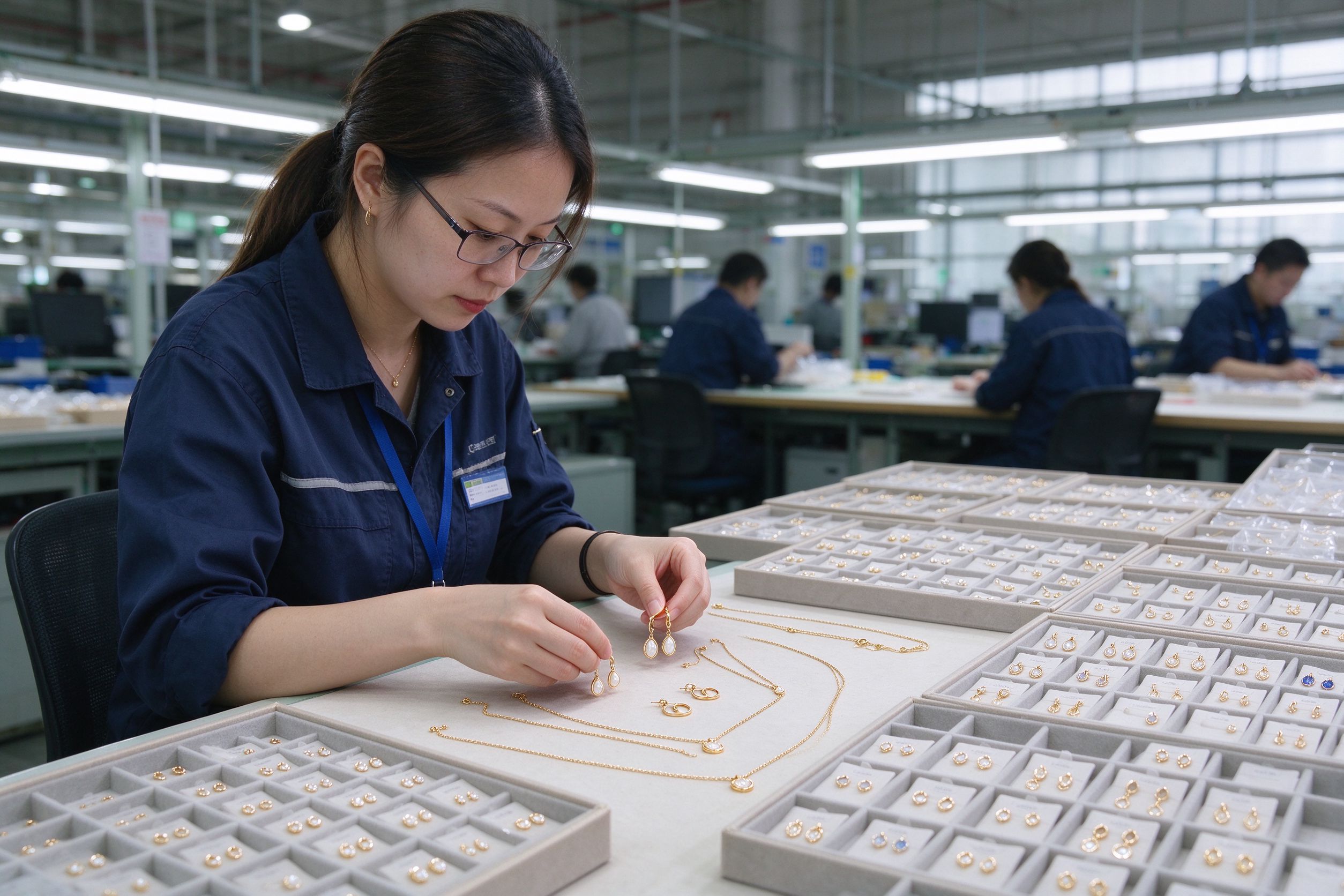
Over time, build a short list of three to five vetted suppliers for different categories. One for everyday earrings, one for statement pieces, one for bridal. That diversity protects you if any one factory has a problem. The list itself becomes one of your most valuable business assets. New buyers spend months chasing suppliers; experienced buyers keep a small, trusted roster and reorder from it.
On-site vs remote audits
A full on-site factory audit is powerful but usually only worth it for large, ongoing orders. For most small and medium buyers, a remote audit is enough: request live video of the production floor, recent packing photos, and the business license. A factory that welcomes a video call is transparent; one that refuses has something to hide. For orders above a certain value, a third-party inspection agent on the ground in China can inspect production and shipment for a modest fee. That is the practical version of an on-site audit for buyers who cannot travel.
Checking consistency, not just one good piece
A supplier can make one perfect sample and then cut corners in bulk. Vetting therefore includes checking consistency. Order a small second batch of the same style after the trial and compare it to the first. If the plating and finish match, the process is controlled. If they drift, the supplier cannot guarantee consistency, which matters for a brand. Consistency is what turns a one-time buyer into a repeat customer.
Frequently asked vetting questions
How long does vetting take?
A week or two. Samples take a few days to arrive, and the trial order takes a few weeks. It is slow, but it is far faster than the months a bad supplier costs.
Should I use a trade show to vet suppliers?
Yes. Shows let you hold pieces and meet sales reps in person. But still order samples afterward; a show piece is always the best the factory has.
What if the supplier is cheaper but risky?
Walk away. The few dollars saved are not worth a thousand-piece order that arrives wrong. There is always another factory.
When to end a supplier relationship
Vetting is not only about starting relationships; it is about ending bad ones. If a supplier repeatedly misses lead times, deflects on QC, or raises prices without reason, it is time to move on. Do not feel loyal to a factory that has stopped performing. You should have a backup qualified by now, so switching is smooth. The willingness to walk away is what keeps your main supplier honest in the first place. Buyers who are afraid to leave suppliers pay a quiet premium every order.
Vet once, order with confidence
Vetting a supplier takes a little time up front, but it saves you months of headaches later. Verify the factory, order samples, test communication, request compliance documents, and run a small trial order before you commit to bulk. The buyers who follow this process avoid the disasters that sink new jewelry businesses. Treat vetting as due diligence, not a formality, and you will build a supplier base that grows with you for years.
Questions to ask on a video call
- Can you show the casting or stamping floor right now?
- How many people work in plating versus packing?
- What is your normal production capacity per week?
- How do you handle a defective batch on bulk orders?
- Can you send a short clip of today's packing?
A live video reveals more than ten emails. Watch whether the floor looks organized, whether workers are focused, and whether the plating area is separate from packing. A clean, busy floor is a good sign; a cluttered storage room passing as a factory is a warning. You do not need to understand every machine; you need to see that real production happens.
A sample scorecard to keep
After every trial, score the supplier from one to five on quality, communication, lead time, packing and value. A supplier scoring four or five across the board is a keeper. One scoring poorly on communication but well on quality may still be usable if you adapt. Keep the scorecards; after a year they become a ranked list of your best sources. This simple habit removes emotion from reorder decisions.
What a good supplier relationship looks like
Over months, a vetted supplier starts to treat you as a partner. They warn you about trends that will not sell, offer you new designs first, and protect you on QC. That relationship is worth more than the cheapest quote. In return, pay on time and give honest feedback. Buyers who treat factories as partners get access to surplus stock, flexible MOQs and early samples that casual buyers never see.
Checking the finish room and plating line
When you tour a factory on video, the plating area tells you a lot. Look for whether plating is done in-house or sent out. In-house plating means the factory controls the finish and can fix drift quickly. Out-sourced plating means a middle step and less control. Ask which pieces are plated in-house. A factory that does its own plating is usually more consistent, and consistency is what your brand is built on. Also ask how they clean pieces before plating; a proper clean means the finish adheres and lasts.
Building the relationship after the trial
A passed trial is the start, not the finish. Introduce yourself to the person who actually handles your orders, reply promptly, and pay on time. Those small courtesies mean your reorders get prioritized. When a hot new style appears, a factory that likes you will offer it before it goes to everyone. That early access is a real business advantage. Treat your best supplier as a partner you want to keep, not a vendor you want to squeeze.
Final audit reminders
Keep your scorecards and approved samples in one folder so every reorder is compared against the same standard. A supplier who drifts is a supplier who has stopped trying, and that drift is invisible until you compare. The audit habit is what keeps a relationship honest for years rather than months.
Why the audit pays for itself
A few hours of vetting up front saves months of headaches later. The trial order, the scorecard and the video call cost almost nothing, but they filter out the suppliers who would have cost you thousands. Treat vetting as the cheapest insurance your business buys, and revisit it every time you consider a new factory. The buyers who audit casually regret it; the buyers who audit carefully sleep well.
Revisit your supplier list twice a year and re-score it. Relationships drift, and a quick re-audit keeps you aligned with who is actually performing. The list that protects your business is the one you keep fresh.
