Most necklaces close in the back with a clasp. The lariat, and its longer cousin the sautoir, refuse to. Instead of fastening, the chain passes through a ring, tie, or knot and drapes open down the chest. It is one of the oldest necklace forms in fashion history, and it is quietly one of the easiest sell-through necklaces for boutiques—because it looks more expensive than it costs and flatters more body types than a standard pendant. Here is what resellers should know about stocking and styling it.
What a lariat actually is
A lariat has no clasp and no fixed front. The wearer threads one end through a loop or a decorative knot and lets the two ends hang. A sautoir is simply a very long version—often 30 inches or more—that can be worn doubled, knotted, or wrapped. Both pieces are adjustable by design: tighten the loop for a choker-ish high drape, loosen it for a long dangling V. That adjustability is part of why the same necklace flatters a petite wearer and a tall one alike.
Who it flatters
The lariat's open V draws the eye vertically, which lengthens the neck and torso. It is especially strong on crewnecks, turtlenecks, and button-downs, where a standard pendant would either disappear or fight the neckline. It is also a strong choice for longer torsos and broader shoulders, because the loose drape adds length rather than bulk. Petite wearers can wear it shorter and knotted high for the same effect. If you are explaining necklines to customers, our necklace length guide by neckline pairs well with this styling advice.
The styles that sell
Knot lariats. A fixed knot or slider in the middle with two ends hanging. The most wearable version, low-fuss for customers.
Ring or toggle lariats. The chain threads through a ring or circle. Elegant, slightly architectural.
Beaded or pearl sautoirs. Long strands that can be doubled or knotted. These skew classic and sell well to an older, occasion-driven customer.
Minimal metal lariats. A thin gold or silver chain with a small slider. These pair with everything and are the everyday version.
How to style it in product photos
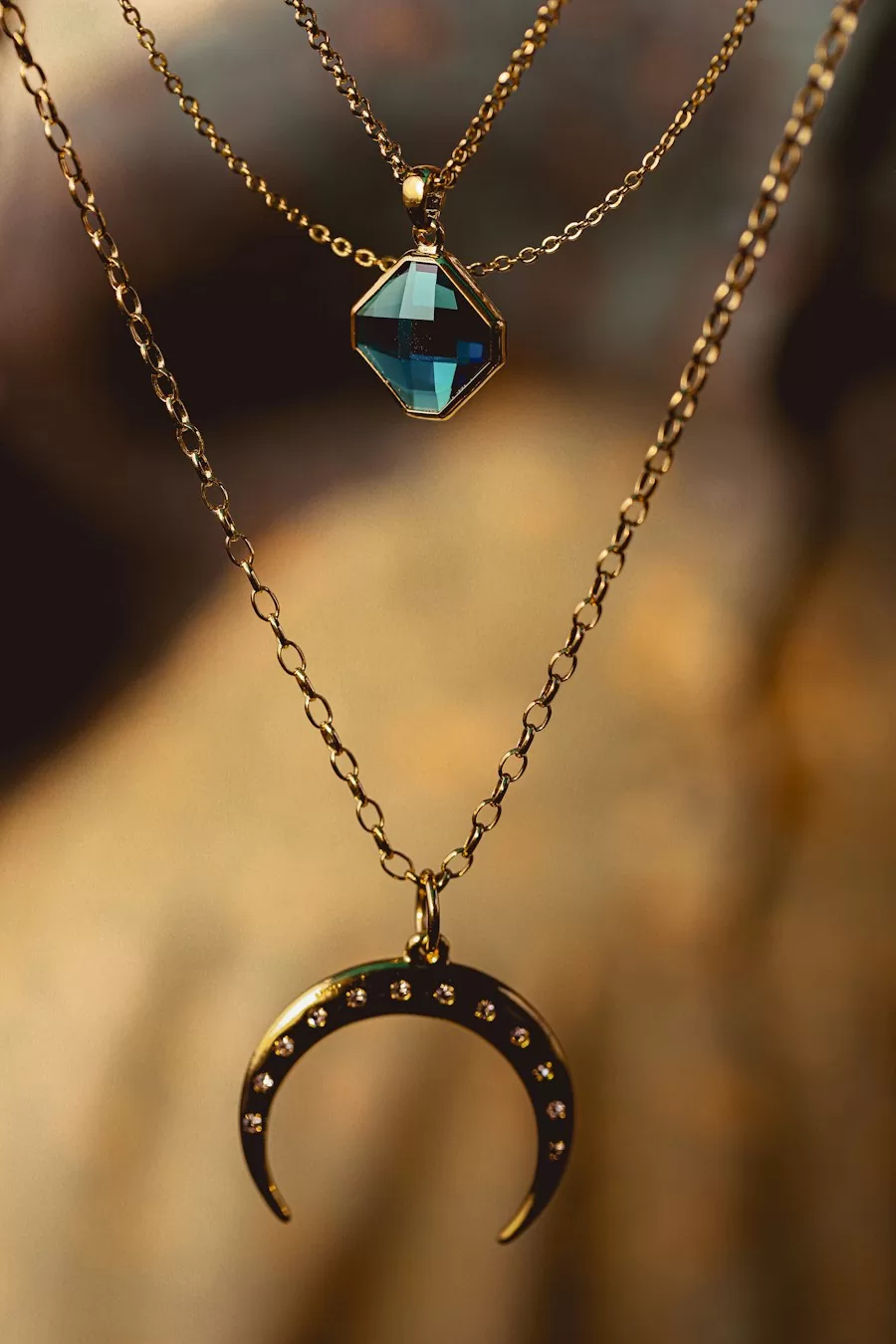
The lariat is hard to sell on a flat lay. It needs to be shown worn: once over a white tee for the everyday customer, once over a turtleneck for the autumn customer, once long and loose over a dress for the occasion customer. Show the same piece styled three ways and customers understand immediately why it is versatile. It also layers beautifully—read our necklace layering guide for how to combine a lariat with shorter chains without tangling.
Buying and pricing notes
Because lariats are longer than average chains, they use more material, so expect slightly higher cost than a standard pendant of the same metal. Buy a mix: one or two everyday thin-chain versions, one dressier beaded or pearl sautoir, and one statement enamel or colored version for trend buyers. Inspect the slider or knot mechanism at sample stage—it should hold its position without sliding down during wear. Done well, the lariat is the necklace a customer buys once and reaches for every season, which is exactly the kind of repeat, low-return piece every reseller wants in the edit.
For third-party reference, the Wikipedia article on moissanite details moissanite’s discovery, optical properties and use in jewellery.
Frequently Asked Questions
Which chain lengths should I stock first?
16 to 18 inch covers most necklines and gift purchases. Add 20 inch for layering sets and 24 inch for pendant lines.
Are your chains nickel-free and hypoallergenic?
Yes. Sterling silver is 92.5% silver; stainless lines use 316L. Both are nickel-safe for reactive customers when plated correctly.
Can necklaces be personalized?
Laser engraving on pendants and clasps is available from 50 pieces, with 3–5 day turnaround on the engraving step.
What is the bulk lead time?
15–20 days under 500 pieces; 25–30 days for custom pendants or new molds.