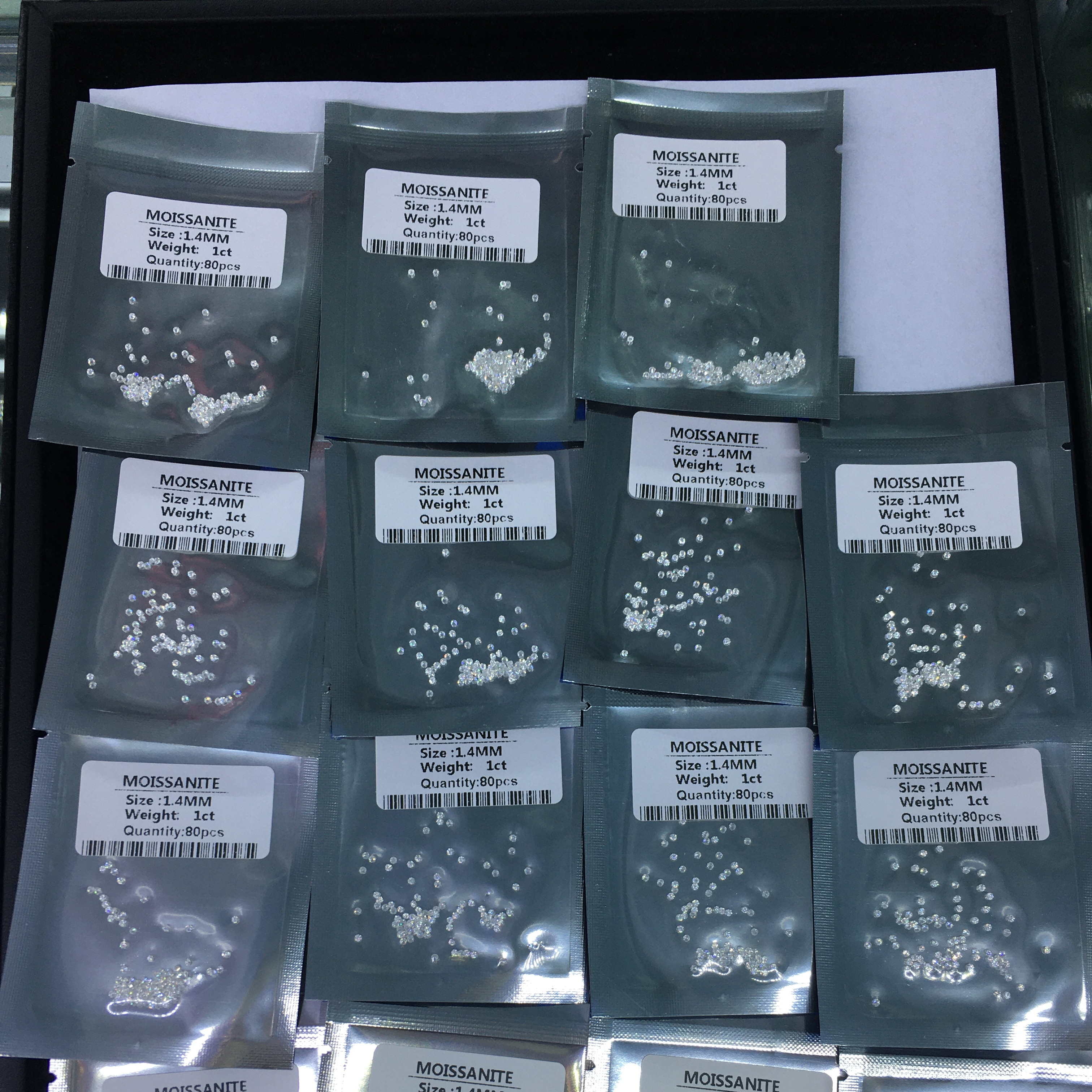
Loose Moissanite Supplier for Jewelry Stores: plating thickness an
Understanding Plating Thickness for Loose Moissanite
When you order loose moissanite from a supplier, the first thing that matters is the thickness of the metal plating. A thicker coating, usually 2 to 3 microns, gives the stone a richer, longer‑lasting shine, preventing early tarnish. Gold and silver alloys are common, but the exact thickness is specified by the buyer.
Wepecify the plating thickness in our production sheets, and it’s one of the three checkpoints in our QC process. During the in‑process check, we verify that the coating meets the requested microns, ensuring a uniform coverage across the stone’s surface.
The Tarnish Factor: What Every Jewelry Store Must Know
Tarnish is the main enemy of plated moissanite. Even a thin layer can corrode when exposed to sweat or humidity. Our lab‑grown diamonds are plated with a protective alloy that resists tarnish for months, but we recommend a wash schedule for your store to keep the shine.
Our pre‑ship AQL inspection confirms that each piece shows no visible oxidation. We also provide GRA or IGI certificates so you can verify the integrity of the plating before shipping to your point of sale.
How Plating Thickness Impacts Longevity: Quick Reference
| Plating Thickness | Typical Longevity | Best Use | Cost Impact |
|---|---|---|---|
| 1–1.5 µm | 6–9 months | Trendy, low‑cost lines | Lowest |
| 2–3 µm | 12–18 months | Standard retail | Moderate |
| ≥4 µm | 24 months+ | Premium collections | Highest |
Choosing the Right Alloy for Your Market
Silver plating offers a bright finish but can tarnish if not maintained. Gold plating is more resilient but thicker layers are needed to avoid scratching the stone. For US buyers, 18‑K gold plating at 2 µm is a common choice, balancing durability and aesthetics.
We run a continuous quality audit that measures both the alloy composition and the optical clarity of the finish, so you never receive a batch that fades quickly or shows discoloration.
Key Considerations Before Plating Your Loose Moissanite
- Specify the desired microns for the plating thickness.
- Decide whether you want silver or gold alloy.
- Request GRA or IGI certification for each batch.
- Plan a wash schedule to prevent tarnish.
- Confirm MOQ and lead time before ordering.
What the Production Timeline Looks Like
From the moment you place an order, our 12‑18 day production window begins. We treat every order as a priority, thanks to our in‑house setting and polishing lines. Our first‑pass yield is about 20% higher than typical trading companies, meaning you get more stones per batch.
Once polishing is complete, the stone goes through three QC stages. The final AQL check is performed right before shipment to ensure no plating defects or tarnish spots are present.
Frequently Asked Questions
What is the MOQ for custom orders?
Custom orders start at 30 pieces, while stock items can be ordered as low as one piece. This flexibility lets small boutiques test designs before committing to larger runs.
What is the typical lead time after placing an order?
Production takes 12‑18 days. After QC, the lead time is reduced to 5‑8 days for DDP delivery to the US, ensuring a quick turnaround for your retail calendar.
How do I pay for samples and bulk orders?
We accept PayPal for samples and T/T with a 30% deposit for larger orders. Once the final payment is cleared, we ship immediately, keeping costs transparent.
Ready to elevate your jewelry line with high‑quality, tarnish‑resistant loose moissanite? Contact us for a quote or sample today.