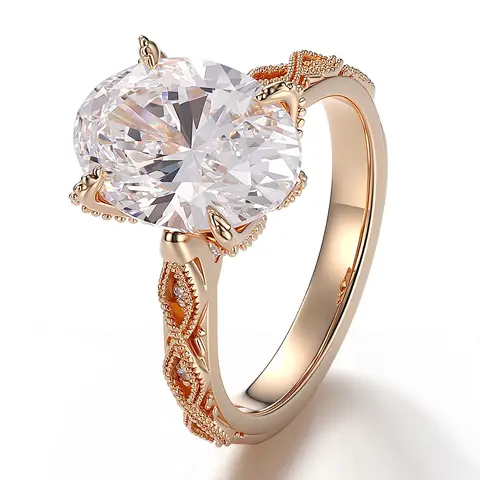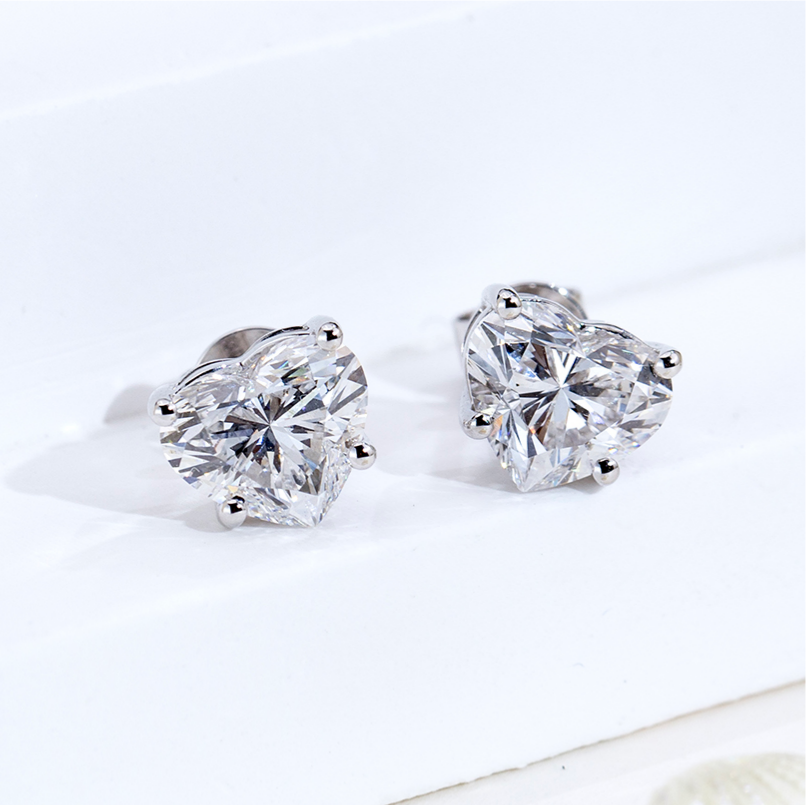
Why your first invoice is not your real cost
Most buyers who come to us for moissanite jewelry wholesale ask the same question first: what is the unit price? That number is useful, but it is not what you pay. The price on the quotation sheet is the factory gate number. Between that figure and your shelf sit freight, insurance, duty, certificate handling, and the cost of the pieces that fail your own inspection.
I have spent twelve years on the QC floor, and I have watched plenty of first orders go sideways for reasons that had nothing to do with the stones. The buyer budgeted on unit price, the landed number came in 25 to 35 percent higher, and the margin plan collapsed before the goods cleared customs.
This piece is the math I walk new buyers through on a call. No design theory, no brand talk. Just the cost stack, in the order it hits your bank account.
The five cost blocks in a moissanite order
Every quotation we issue breaks into five pieces. If a supplier hands you one lump price with no breakdown, ask for the split before you send a deposit. You cannot check a number you cannot see.
- Stone cost: moissanite by carat and cut grade, or lab-grown diamond if the line calls for it
- Metal cost: 925 sterling silver by gram weight, or gold if the program is higher end
- Labor: casting, setting, polishing, and plating, priced per piece by complexity
- Certificates and packaging: GRA cards, IGI reports where specified, boxes and pouches
- Logistics and duty: freight, insurance, customs clearance, and the duty rate at your border
On a typical silver moissanite ring program, stone and metal together run roughly 40 to 50 percent of the factory price. Labor is the next biggest slice. Certificates and packaging are small per piece but add up fast on a low unit price.
Stone and metal: where the numbers actually move
Moissanite is priced by carat weight and by cut quality, not by brand. A 1ct round brilliant and a 1ct oval do not cost the same, and a stone cut for fire does not cost the same as a stone cut to hit a weight target. Ask which grade you are being quoted, because the cheap quote is usually a lower cut grade.
Silver is priced by gram weight, and gram weight is where lightweight rings hide their savings. A ring quoted at 2.1 grams and a ring quoted at 3.4 grams look identical in a photo. On the scale, they are different products. Ask for the gram weight per SKU in writing.
Plating matters too. Rhodium over silver is standard. A thicker plate costs more and lasts longer, and a buyer who never asks about plating thickness will eventually get returns from customers whose ring went yellow in eight weeks.
A worked example: 100 rings, mixed sizes
Here is a real shape of a first order, rounded for clarity. Say 100 pieces of a 1ct solitaire in 925 silver with rhodium plating, average 3.0 grams per ring, packed with GRA cards.
| Cost block | Basis | Approx. share of factory price |
|---|---|---|
| Moissanite center stone | Per carat, by cut grade | 22 to 28 percent |
| 925 silver | Per gram, per piece | 18 to 24 percent |
| Labor (cast, set, polish, plate) | Per piece | 30 to 38 percent |
| GRA card, box, pouch | Per unit | 4 to 7 percent |
| Factory margin and overhead | Per order | Balance |
Notice what is missing: freight and duty. Those are not factory costs, and they are the ones buyers forget. On a 100-piece silver order shipping DDP to the US, freight and duty commonly add 8 to 14 percent to the factory total, depending on weight and declared value.
Our own cost and speed run about 20 percent better than a typical trading company on this kind of program. The reason is structural, not a discount: we cut and set in-house, so there is no middle layer marking up the stone, and no second factory re-quoting the labor.
Certificates, MOQ, and payment terms
GRA cards are the baseline for moissanite and cost very little per piece. IGI reports cost real money and are usually reserved for lab-grown diamond lines or higher-value moissanite above a certain carat weight. Decide up front which SKUs carry which certificate, because retrofitting reports after production is slow and expensive.
On quantity, our rules are simple. Stock items ship from one piece. Custom designs start at 30 pieces per style. Production runs 12 to 18 days after deposit and artwork approval, and that window is realistic because we control the setting bench rather than subcontracting it.
Payment is T/T with 30 percent deposit and the balance against the pre-shipment inspection report. For samples, PayPal is fine. Samples are how you check our color, our prong work, and our plating before you commit to a production run.
Freight, duty, and the landed cost line
DDP delivery to the US and EU typically runs 5 to 8 days once goods leave. That is door-to-door, with duty handled, which makes the landed cost easy to calculate instead of a guessing game at customs.
The formula I give every first-time buyer is this: landed cost per piece equals factory unit price, plus freight and insurance per piece, plus duty per piece, plus your inbound inspection loss allowance. That last item is the one nobody budgets. If 2 of 100 pieces fail your check and you credit or replace them, your effective cost per sellable piece rises.
Budget your margin on the pieces that pass inspection, not on the pieces you ordered. The gap between those two numbers is where first orders lose money.
Inbound inspection loss is why our three-stage QC exists: incoming stone check before setting, in-process checks at the bench, and a pre-ship AQL inspection before cartoning. It does not make defects impossible, but it moves the failure to our floor instead of yours.
How to sanity-check a quote before you pay
Ask three questions of any moissanite jewelry wholesale supplier, including us. What is the stone grade by cut? What is the silver gram weight per SKU? What is the plating thickness? A supplier who answers all three in writing is a supplier you can do math with.
Then ask for the landed number, not the unit number. If the reply is vague about duty and freight, treat the quote as incomplete. Send your target retail price and your required margin, and a good factory will tell you honestly whether the program fits or whether you need to change the stone size or the metal weight.
You can reach our floor directly on WhatsApp at +86 133 7744 7107 or by email at service@holycome.com.
Frequently Asked Questions
What is the minimum order for a first moissanite jewelry wholesale order?
Stock designs ship from one piece, so you can test quality before scaling. Custom styles require 30 pieces per design, and the price is quoted per piece based on stone grade, silver gram weight, and setting complexity.
How long does production and delivery take?
Production runs 12 to 18 days after deposit and artwork approval. DDP delivery to the US and EU adds 5 to 8 days door to door, with duty included in the quoted landed rate.
How is the price calculated, and what certificates are included?
Price is built from stone cost by carat and cut, metal cost by gram weight, labor per piece, and certificate and packaging costs. GRA cards are standard on moissanite; IGI reports are quoted separately for lab-grown diamond and higher-value lines.
If you want a landed cost sheet instead of a bare unit price, send us your SKU list, target quantities, and destination country. We will return a line-by-line quote with stone grade, gram weight, certificate type, freight, and duty shown separately, and we will ship samples first so you can check the bench work before the production deposit.