The global demand for lab-grown diamond alternatives has reshaped fine jewelry supply chains, and moissanite necklace manufacturing sits at the center of this shift for brands seeking accessible luxury without compromising brilliance. As a Dongguan-based factory with over 12 years of experience, we have watched moissanite grow from a niche stone to a mainstream category, driven by consumers who want diamond-like fire at a fraction of the price and by retailers who need partners who understand stone grading and metal craftsmanship.
What separates a moissanite necklace that sells consistently from one that generates returns is rarely the stone. It is the precision of the wax model, the integrity of the cast, the strength of the bail weld, the balance between pendant and chain, and the rigor of quality control. In this guide we walk through our production workflow, sharing material specs and QC standards behind wholesale-ready pieces.
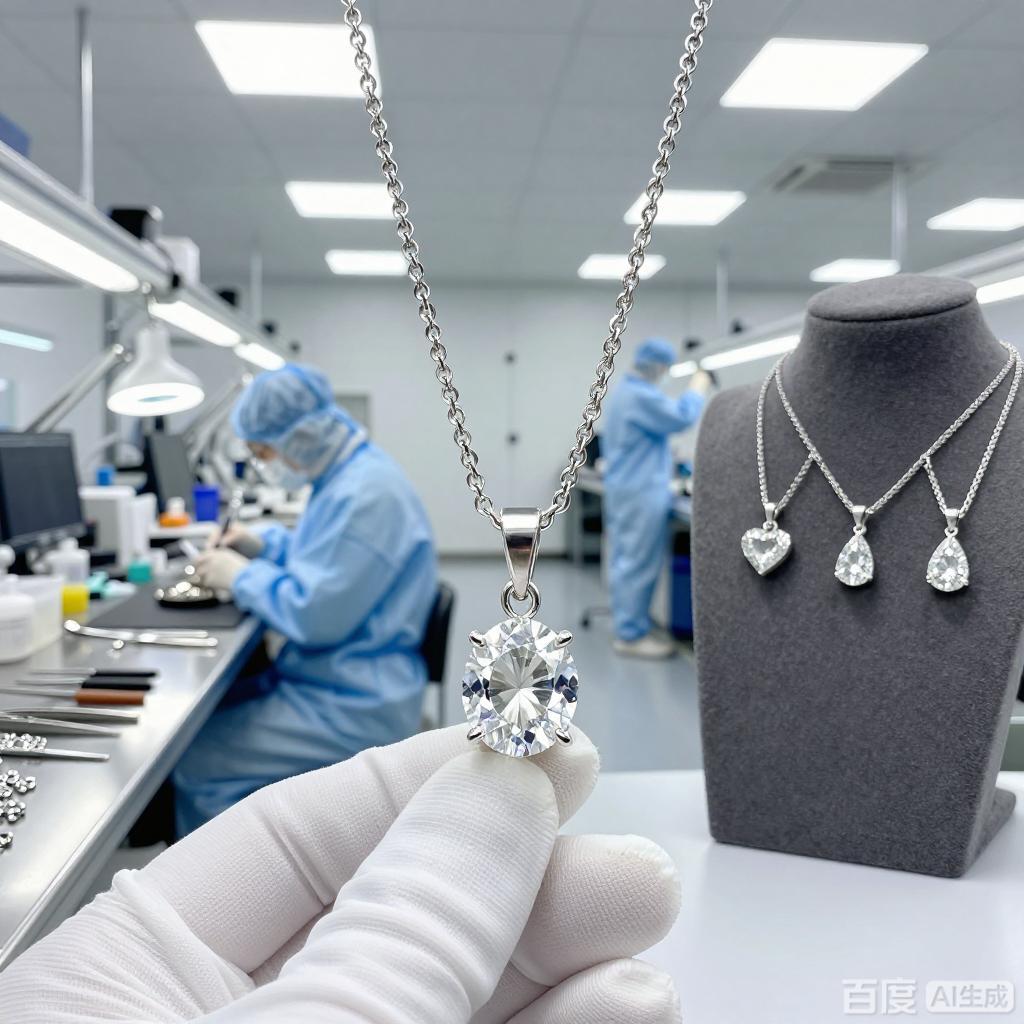
Table of Contents
- 1. Wax Modeling and CAD Prototyping
- 2. Lost-Wax Casting for Pendants
- 3. Moissanite Selection and Setting
- 4. Bail Welding and Chain Specifications
- 5. Assembly, Polishing, and Plating
- 6. QC, Compliance, and Client Case
- 7. Frequently Asked Questions
1. Wax Modeling and CAD Prototyping
Every moissanite necklace manufacturing project begins with a digital file, but the bridge between CAD and finished metal is the wax model—where cost-cutting operations introduce defects that surface months after delivery. Our team converts client sketches or samples into 3D models using Rhino and MatrixGold, optimizing prong thickness, seat depth, and pendant profile for moissanite's refractive index of 2.65, higher than diamond and calling for adjusted light-path geometry.
Print Resolution and Samples
We print waxes on industrial 3D printers at 25-micron layer resolution, rather than the 50-micron machines common in low-cost factories. This eliminates visible layer lines on delicate prongs and keeps stone seats accurate within ±0.02 mm—critical because moissanite is cut to tighter tolerances than cubic zirconia, and precision at this stage pays dividends through every later step of moissanite necklace manufacturing. Before full production we cast a silver sample, set it, finish it, and ship it with stone specs and metal weight for drape evaluation. Turnaround runs 5–7 days for existing designs and 10–14 days for custom work.
2. Lost-Wax Casting for Pendants
Casting is where wax precision is preserved or lost. Our moissanite necklace manufacturing line uses centrifugal lost-wax casting with vacuum-assist for sterling silver 925 and solid gold (10K, 14K, 18K). This reduces porosity in prong tips and bail junctions—the two highest-stress areas in daily wear.
Temperature Cycles
We use programmable burnout ovens with alloy-specific profiles: sterling silver runs a 9-hour burnout peaking at 730°C before casting at 960°C; 14K gold uses a 10-hour cycle peaking at 750°C with pour at 1020°C. These numbers were refined over thousands of flasks by cross-sectioning cast trees. Rushing burnout or pouring too hot causes gas porosity; pouring too cold causes cold shuts on thin prongs. After casting, trees are quenched, devested, pickled, and pieces cut with a 2 mm sprue stub removed by hand filing.
3. Moissanite Selection and Setting
A pendant is only as good as its center stone, and in moissanite necklace manufacturing, stone grading directly determines product tier and return rate. We source from two domestic Chinese growers, sorting incoming stones by color (D-E-F, G-H, I-J), cut (Excellent, Very Good), and clarity (VVS1, VVS2, VS1) before setting. The Gemological Institute of America (GIA) provides grading reference materials many B2B clients use in product education.
Four Setting Styles
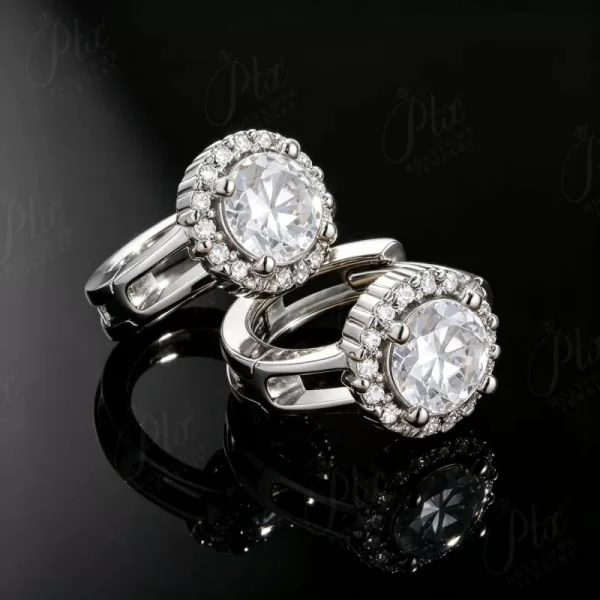
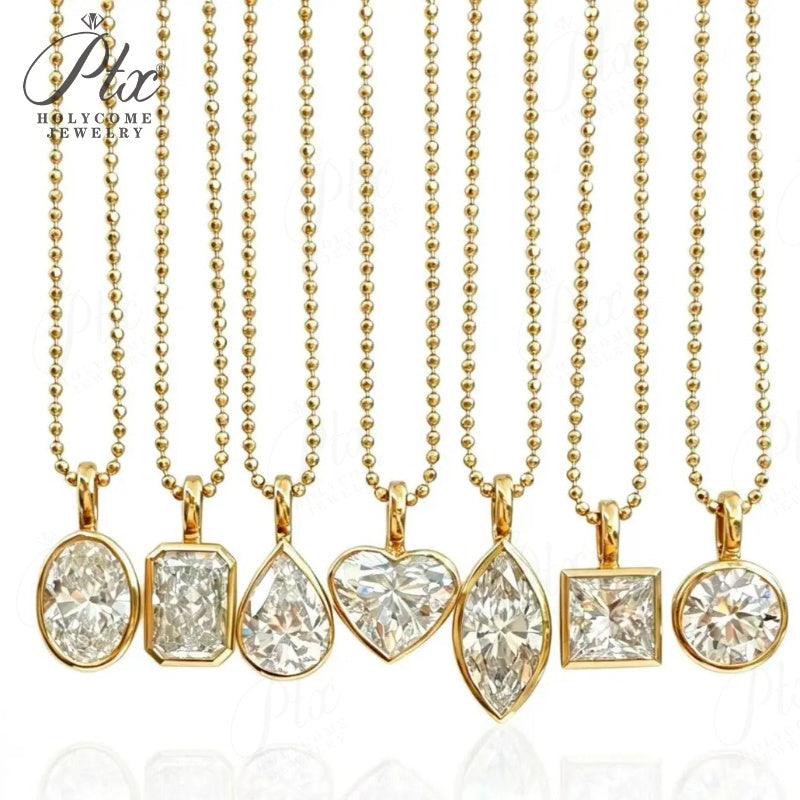
Our setters work in four primary styles: prong (4- and 6-prong for solitaires 0.5–5 ct eq., with rounded, hand-burnished tips); bezel (0.3 mm wall with bright-cut edge, for everyday wear); halo (micro-pavé with 0.8–1.3 mm accents in individual seats, no shared prongs); and three-stone (side stones calibrated within 0.05 mm of center table height). Each stone is seated with jeweler's epoxy at the base—standard for pendants, which swing more than rings—and tightened. Every piece passes a 500-gram lateral-force security test before polishing.
4. Bail Welding and Chain Specifications
The bail is the most overlooked failure point in moissanite necklace manufacturing, and the leading cause of warranty claims in wholesale moissanite jewelry. A pendant that detaches is not just a return—it is a lost customer. We treat bail construction as an engineering specification.
Bail Standards and Pull Testing
All our pendants carry a soldered (never glued, never open-jump-ring) bail with an inner diameter greater than 3.5 mm. This minimum accommodates chains up to a 2.5 mm rope or 3 mm cable without forcing, covering most retail preferences. For pendants over 2 ct we scale the bail to 4.0–4.5 mm. We laser-weld silver bails and use pulse-arc on gold to localize heat and protect the stone. Every bail is pull-tested at 5 kg for 10 seconds; deformation or cracking means the piece is scrapped. The U.S. Federal Trade Commission (FTC) publishes jewelry labeling guidelines that inform our stamping.
Chain Thickness and Clasp Rules
Brands sometimes save pennies on thin chains only to face kinking and breaking at assembly. In our workflow, chain selection is part of product development for every moissanite necklace manufacturing order. Minimum thicknesses scale with pendant weight: cable chain starts at 0.9 mm under 2 grams, 1.1 mm for 2–4 grams, 1.3 mm above 4 grams; rolo at 1.0 mm; box at 0.9 mm for modern designs; rope at 1.2 mm for halos. Every chain uses a lobster clasp as standard—field data shows spring rings fail roughly 3x more often. We use 10 mm clasps on silver and 9 mm on gold. Each chain is pull-tested at 5 kg before assembly. Wikipedia's moissanite entry is a reference clients often link to.
5. Assembly, Polishing, and Plating
Before pendant meets chain, both components go through multi-stage finishing. Our process uses three polishing passes: rough tripoli to remove casting texture, rouge for mirror luster, and a final hand-buff around the stone to remove compound residue.
Plating and Anti-Tarnish
For sterling silver we offer natural silver with anti-tarnish e-coat, rhodium plating (bright white, most popular with moissanite), and rose or yellow gold vermeil at 1 micron with a nickel-free barrier layer. Our rhodium runs 0.3 microns thick—double the costume-jewelry minimum, appropriate for pieces retailing above $100. All plating complies with EU REACH regulations for nickel and lead. The pendant attaches via a soldered-closed jump ring, the chain threads by hand, and a 2-inch extender is included on necklaces over 16 inches—data shows adjustable length reduces sizing-related returns by roughly 22%.
6. QC, Compliance, and Client Case
Every piece leaving our factory passes a 12-point QC inspection—a non-negotiable step in moissanite necklace manufacturing where small defects are caught before they reach a customer. Our QC team reports directly to the factory manager, separate from production. The checklist covers: stone security (600 g lateral test, repeated after polish); bail pull test (5 kg, 10s); chain pull test (5 kg, 10s); clasp function (20 cycles); stone alignment and prong symmetry; polish under 10x; plating thickness via XRF (2 per batch); chain length (±3 mm); pendant weight (±5% of sample); metal stamp verification; nickel/lead XRF spot test (1 per 50); and packaging inspection. Our system follows ISO 9001 principles with 3-year batch traceability. Standard MOQ is 30 pieces per style for silver and 15 per style for gold.
Client Case: Cutting Returns on a Best-Seller
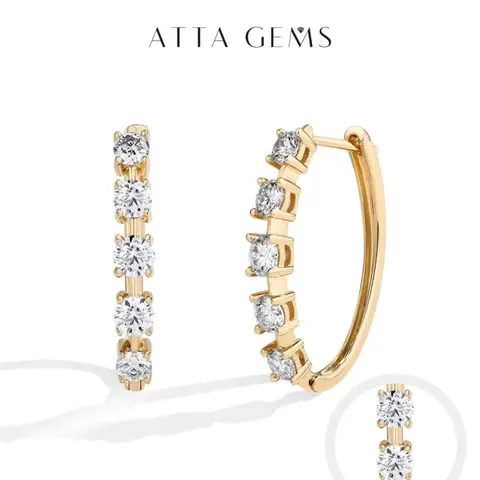
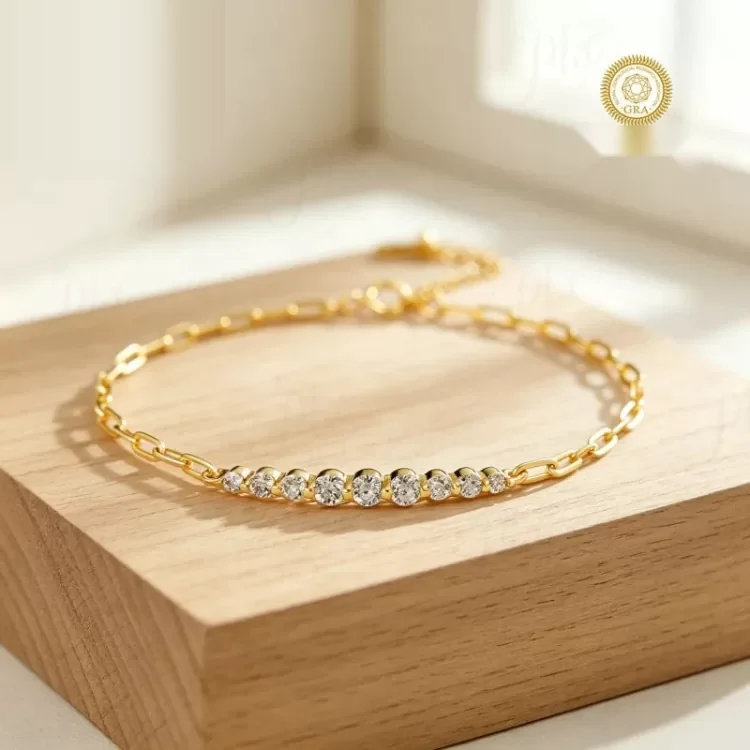
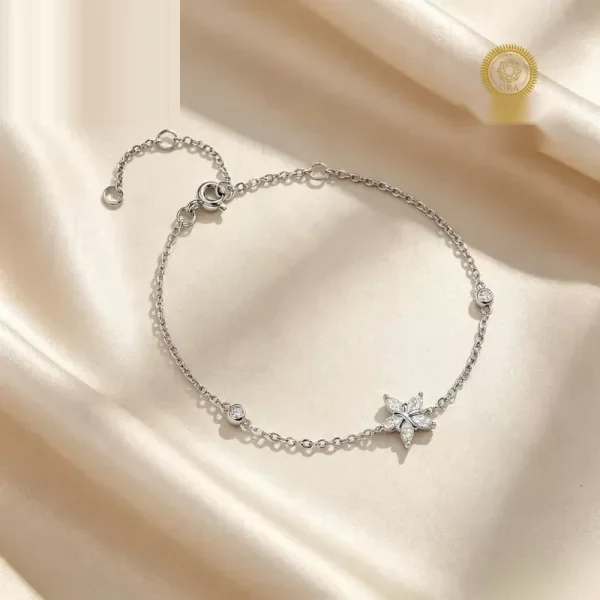
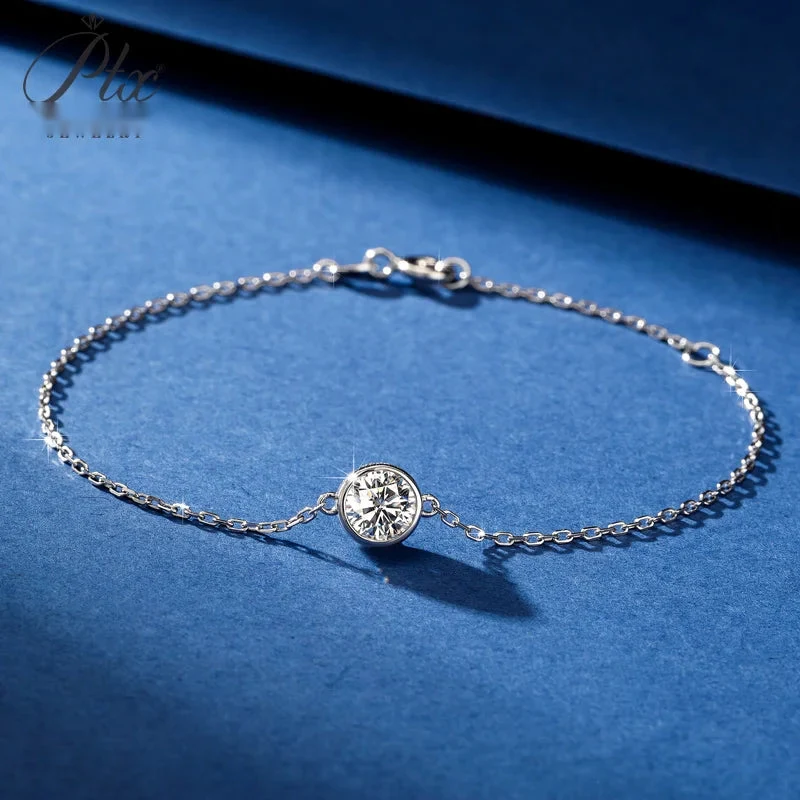
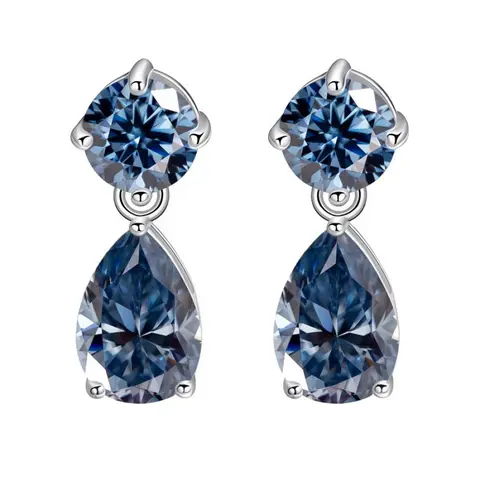
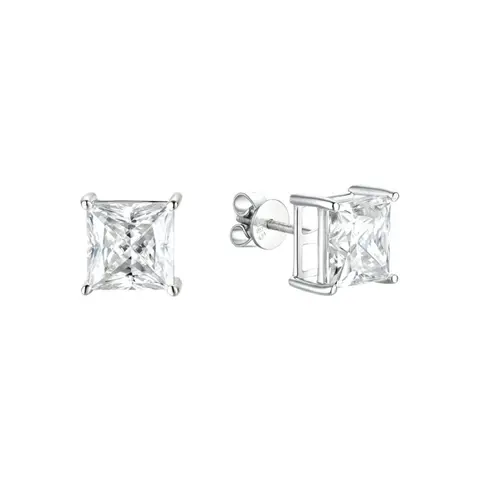
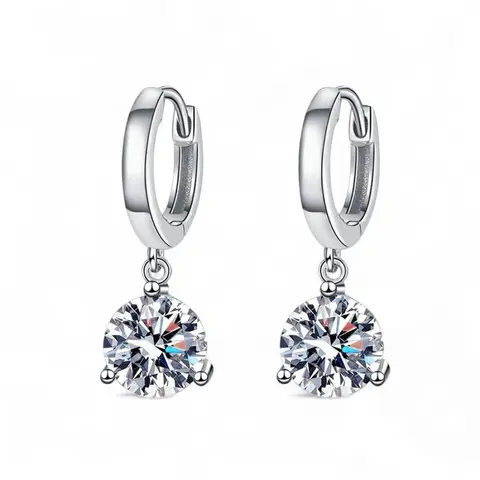
In 2024, a DTC brand in Texas approached us after a 12% return rate with their previous supplier, mostly bent prongs and bail failures on their flagship solitaire. We found two root causes: a 2.8 mm bail inner diameter creating chain friction that cracked the weld, and 0.7 mm cable chain on 2.3 gram pendants—below safe minimums. We respecified the bail to 3.6 mm, upgraded to 1.1 mm soldered-link cable, and thickened prongs from 0.6 mm to 0.8 mm. Within three months their return rate fell to 1.8%, and they scaled from 200 to over 1,200 units per month, expanding into halos and three-stone pieces through our moissanite necklace manufacturing program. Our production extends across silver necklaces, 925 silver rings, trendy earrings, silver bracelets, and coordinated fashion jewelry sets.
| Pendant Style | Recommended Chain | Common Stone Sizes | Key Craftsmanship Notes |
|---|---|---|---|
| Solitaire (4-prong) | Cable 1.0–1.2 mm | 0.5–3.0 ct eq. | Rounded prongs, epoxy seat, bail ID >3.5 mm |
| Halo (pavé) | Rope/box 1.2–1.5 mm | 0.8–2.0 ct center; 0.8–1.3 mm accents | Individual-prong pavé, bright-cut edge |
| Bezel solitaire | Cable/rolo 0.9–1.1 mm | 0.3–1.5 ct eq. | 0.3 mm wall, laser-welded bail |
| Three-stone | Cable 1.1–1.3 mm | 0.5–1.5 ct center; 0.2–0.5 ct sides | Height-matched sides, 4.0 mm bail ID |
| Pear/Teardrop | Box 1.0–1.2 mm | 0.5–2.5 ct eq. | V-prong at point, orientation mark |
| Initial/Letter | Rolo 1.0–1.2 mm | Pavé 0.8–1.1 mm | Reinforced joints, flat back |
Frequently Asked Questions
What is your MOQ for moissanite necklace manufacturing?
Our standard MOQ is 30 pieces per style for sterling silver 925 and 15 pieces per style for solid gold (10K, 14K, 18K)—minimums covering alloy setup and casting-tree efficiency while staying accessible for emerging brands. We offer 1–3 piece samples before full production.
Do you provide the moissanite, or can we supply our own?
We do both. Most clients use our in-stock inventory—D-E-F, Excellent cut, 0.3–5 ct eq., sorted and calibrated. If you require a specific brand such as Charles & Colvard Forever One, we accept customer-supplied stones via memo and adjust pricing.
What finishes are available for silver pieces?
We offer rhodium plating, natural silver with anti-tarnish e-coat, and 1-micron rose or yellow gold vermeil—all nickel-free and REACH-compliant. Gold pieces are produced in white, yellow, or rose alloy without additional plating.
What are standard lead times?
Standard lead time is 15–20 business days for silver under 500 pieces, and 20–25 days for gold or orders over 1,000 pieces. Rush production at 15–25% upcharge compresses timelines to 8–12 days.
What documentation ships with bulk orders?
Every bulk order includes an XRF metal purity report, a batch QC sign-off covering all 12 inspection points, and optional branded authenticity cards. EU shipments include REACH declarations; U.S. shipments include FTC-compliant stamping and invoicing with accurate HS codes.
Build Your Line With a Factory That Sweats the Details
The moissanite market continues to grow as consumers learn about lab-created stones. Your supplier's discipline directly shapes your brand reputation and margin. We built our moissanite necklace manufacturing program around bails that hold, chains that support, prongs that protect, and QC that catches defects before your customer sees them.
Whether launching a DTC brand, scaling a best-seller, or expanding into pendants, test our production with a sample order. You get the same 12-point QC, the same 5 kg pull-tested bails and chains, and responsive account management. Request a quote today and our team will respond within 24 hours. Browse our catalog of silver necklaces, 925 silver rings, trendy earrings, silver bracelets, and fashion jewelry sets to see how moissanite pieces can anchor your next collection.