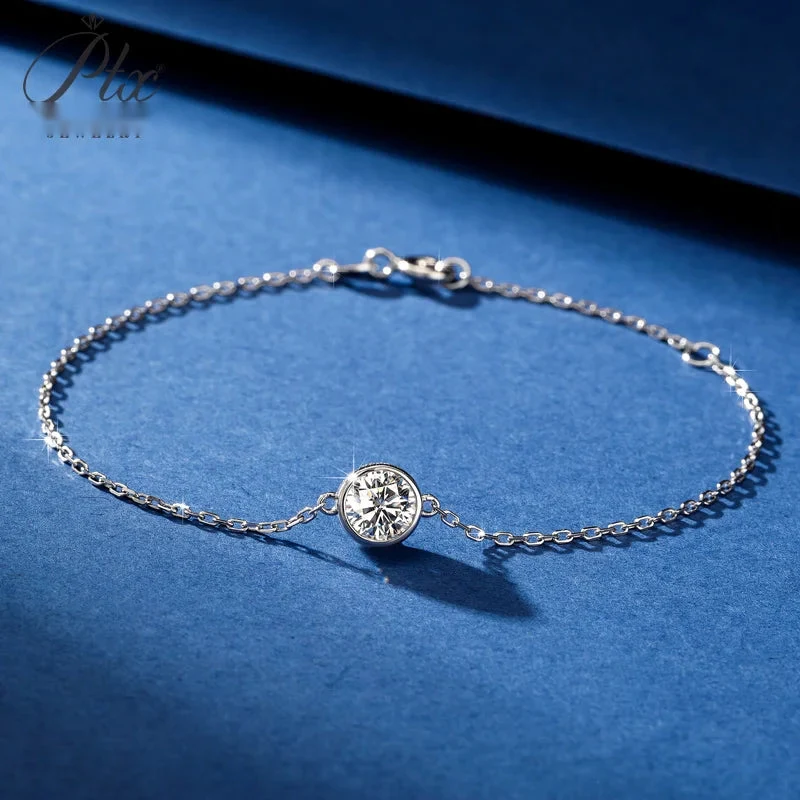
A moissanite pendant is only as good as the chain it hangs on. Even the most brilliant stone in the most perfectly cast pendant will disappoint customers if the chain kinks, breaks, tarnishes quickly, or catches in their hair every time they move. For wholesale and OEM jewelry buyers, selecting the right chain for a pendant line is not a matter of picking something that looks good—it is a production choice that directly affects return rates, customer satisfaction, and the perceived quality of your entire brand.
HOLYCOME supplies moissanite pendants with a range of sterling silver chain options sourced from our long-term chain suppliers in Guangzhou and Panyu (China's largest jewelry chain manufacturing district), with custom chain production available for OEM orders at volume. This article covers the chain types most commonly used with moissanite pendants, how chains are constructed, their relative strength and durability, recommended bail sizes, plating considerations, and the production specifications (gauge, length, clasp types, MOQ) that matter when ordering pendant chain sets for wholesale or private label jewelry lines.
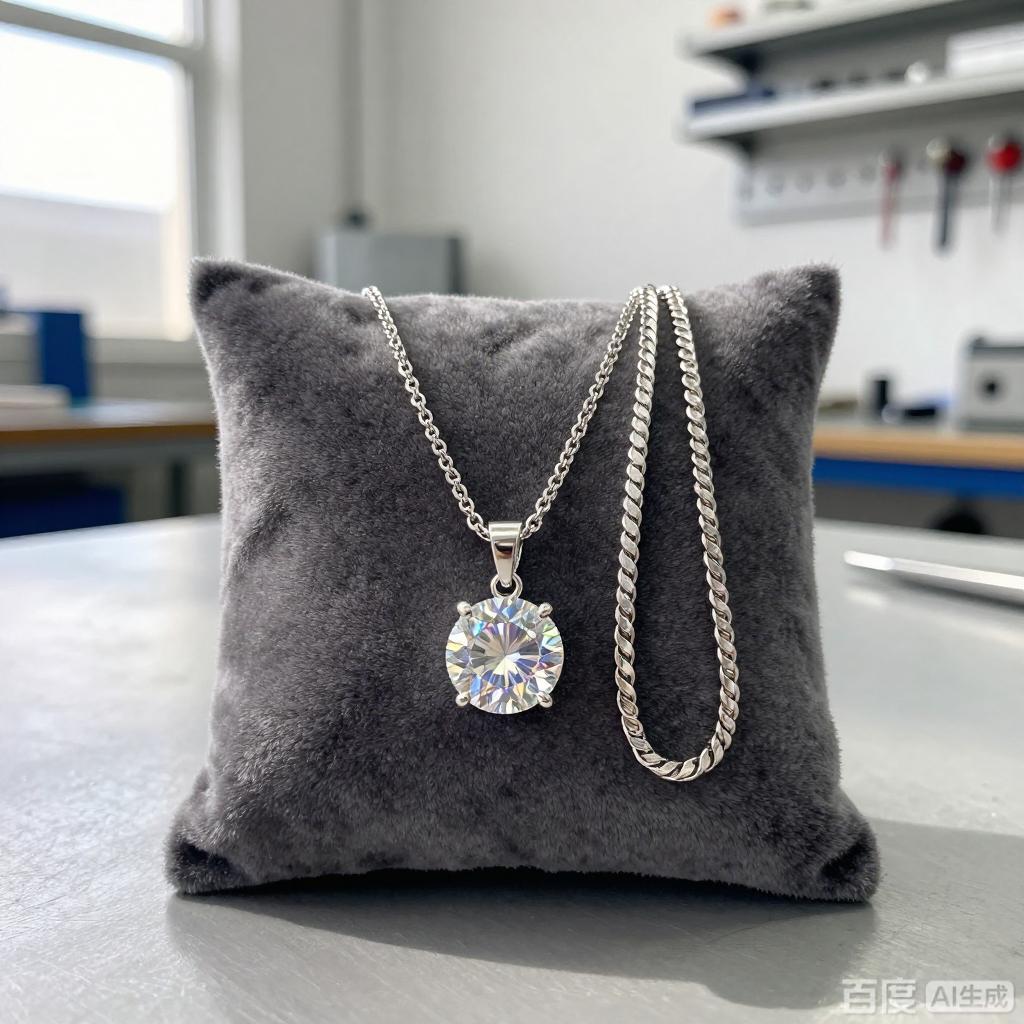
How Jewelry Chains Are Constructed
All metal chains are built from the same basic unit: an individual link, formed from wire, connected to the next link, closed, and soldered (or not) depending on the chain type and quality level. The differences between chain types are in the shape of the links, how they are oriented and connected, and whether each link is soldered closed. Three terms are essential to understand when comparing chains:
- Gauge: The thickness of the wire used to form each link, measured in millimeters or in wire gauge (AWG). Thicker wire = heavier, stronger, more expensive chain. Most pendant chains use 0.8–1.5mm wire.
- Pitch: The length of each link (distance from end to end). Shorter pitch = more links per inch, smoother drape, more labor cost.
- Soldered vs. unsoldered links: In quality chains, every link is soldered closed after assembly so that if the chain breaks, only one link opens and the chain remains mostly intact; in cheap chains, links are just pressed closed (unsoldered) and can pull apart, leading to the pendant falling off without warning.
We use only fully soldered-link chains for all our moissanite pendant production. Unsoldered chains cost 15–25% less but produce dramatic failure rates—a tug from a scarf or a child's hand can pull a single link open and the pendant is lost. The savings are not worth the customer complaints.
Chain Types for Moissanite Pendants
Cable Chain (Rolo/Cable)
Cable chain is the simplest and most popular pendant chain: oval or round links connected one to the next in a uniform sequence, lying flat. It is what most people picture when they think of a classic pendant chain. Cable chains drape smoothly, are strong for their weight, do not kink easily, and present a clean, timeless look that works with any pendant design.
- Best for: Solitaire pendants, small to medium stone pendants (5–8mm), minimalist and classic styles
- Typical wire gauge for pendants: 1.0–1.3mm (lighter for small pendants, heavier for larger stones)
- Typical link dimensions: 2.5×3.5mm to 4×6mm
- Strength: High for weight; soldered oval links distribute tension well
- Tangle/kink resistance: Good
- Price (silver, per 18-inch): Low–mid range ($1.50–$3.50 wholesale at production volume)
Rolo Chain (Belcher)
Rolo chain is similar to cable but uses round (not oval) links, often slightly thicker wire, creating a more substantial, chunkier look. It is popular in contemporary and minimalist jewelry where the chain itself is a design element, not just a carrier for the pendant.
- Best for: Modern solitaire pendants, heavier stone pendants (8mm+), men's pendants
- Typical gauge: 1.2–1.8mm
- Strength: Very high (thicker round links)
- Price: Mid-range
Box Chain (Venetian)
Box chain uses square links formed from flat wire folded into a box shape, connected in a continuous sequence. It has a smooth, geometric, modern look and a very smooth drape (it glides across fabric and skin). Box chains are excellent for pendants because their square links do not twist—the pendant always hangs facing forward.
- Best for: Modern/geometric pendants, premium lines, pieces where the chain aesthetic matters
- Typical gauge: 0.8–1.2mm (box chains feel heavier than cable at the same gauge because of the link construction)
- Strength: Good, but box chains can kink if crushed or pulled sharply (the square links can fold inward)
- Tangle/kink resistance: Moderate (do not fold or tie tightly)
- Price: Mid–high (box chain manufacturing is more labor-intensive)
Rope Chain
Rope chain is made by twisting multiple strands of links together in a spiral pattern, creating a textured, twisted look that catches light and has substantial visual presence. Rope chains are heavier and more expensive than cable at the same length, but they are a strong, premium-looking chain popular for statement pendants and bridal jewelry.
- Best for: Larger statement pendants, halo pendants, bridal sets, pieces where a more luxurious chain feel is desired
- Typical gauge: 1.5–3.0mm (thinner ropes are 1.5–2.0mm for ladies' pendants; thicker ropes for men's or statement pieces)
- Strength: Very high (multiple twisted strands share tension)
- Hair/skin catch: Rope chains can catch fine hair near the neck because of the twisted texture—we recommend at least 2.0mm rope for regular wear to minimize this
- Price: Higher (twisted construction is more complex to manufacture)
Singapore Chain
Singapore chain is a twisted diamond-cut chain where links are flattened and twisted as the chain is woven, creating a faceted, sparkly look that catches light from every angle. It has a beautiful, feminine drape and is an excellent premium option for small to medium pendants. Singapore chains shimmer in motion.
- Best for: Small to medium pendants (5–7mm stones), bridal and gifting lines, premium collections
- Typical gauge: 1.0–1.5mm
- Strength: Good
- Price: Mid–high (diamond-cutting adds cost)
Curb Chain (Cuban)
Curb chain uses flattened, interlocking oval links that lie flat against the skin. It is a substantial-looking chain with a classic, slightly masculine feel, popular in men's jewelry and with thicker pendants. Standard curb links are moderately flattened; Cuban curb links are more heavily flattened and rounded, creating the chunky Cuban-link look popular in streetwear and hip-hop jewelry.
- Best for: Men's pendants, large statement pendants, fashion-forward pieces
- Typical gauge: 2.0–5.0mm (heavier than ladies' pendant chains)
- Strength: Very high
- Price: Mid to high (increases sharply with thickness)
Figaro Chain
Figaro is an Italian-style chain that alternates groups of small round links with one elongated oval link (classic pattern: three small, one long). It has visual interest and a classic Italian jewelry feel, commonly used with men's pendants and medallions.
- Best for: Men's pendants, medallions, traditional and heritage-inspired designs
- Typical gauge: 1.5–4.0mm
Snake Chain (Omega)
Snake chain is made of tightly joined curved metal plates rather than discrete links, creating a smooth, flexible, round tube-like chain that glides and feels almost silky. It has a very modern, sleek look and does not catch hair or fabric. Snake chain is excellent for small pendants with small bails, but it is less flexible than linked chains and will hold a kink permanently if bent sharply.
- Best for: Small, modern pendants; contemporary minimalist lines
- Typical gauge: 1.0–1.5mm
- Strength: Moderate (kink-prone; not for heavy pendants over 5g)
- Price: High
Wheat Chain (Spiga)
Wheat chain is a braided chain made by weaving four strands of twisted oval links together, creating a rope-like appearance with a smoother, more elegant texture than regular rope. It is a premium chain that holds up well to heavy pendants.
- Best for: Premium pendant lines, heavier pendants
- Typical gauge: 1.2–2.5mm
- Strength: Excellent
- Price: High
| Chain type | Look | Best pendant size | Strength | Cost level | Kinks? |
|---|---|---|---|---|---|
| Cable | Classic oval links | Small–large (all) | High | $ | Rarely |
| Rolo | Round substantial links | Medium–large | Very high | $$ | Rarely |
| Box | Smooth geometric | Small–medium | Good | $$ | Can kink |
| Rope | Twisted textured | Medium–large | Very high | $$$ | Rarely (can catch hair) |
| Singapore | Sparkly twisted | Small–medium | Good | $$$ | Rarely |
| Curb/Cuban | Flat masculine | Large/men's | Very high | $$–$$$$ | No |
| Figaro | Pattern Italian | Medium/men's | High | $$ | Rarely |
| Snake | Smooth sleek tube | Small modern | Moderate | $$$ | Kinks permanently |
| Wheat/Spiga | Braided premium | Medium–heavy | Excellent | $$$ | No |
Bail Size and Chain Compatibility
The bail is the small loop at the top of a pendant through which the chain passes. Bail size must match the chain the pendant will hang from—a bail designed for a 1.0mm cable chain will not admit a 2.5mm rope chain, and a bail sized for a thick chain will cause a small pendant to slide loosely and fail to hang correctly. Standard bail opening sizes and chain compatibility:
- 3×4mm bail: Fits chains up to 1.5mm thickness. Standard for small pendants with cable, Singapore, or thin box chains.
- 4×5mm bail: Fits chains up to 2.2mm. Most common size, accommodates cable, rope (up to 2.0mm), rolo, box.
- 5×7mm bail: Fits chains up to 3.5mm. Used for larger pendants with rope, curb, or wheat chains.
- Pinch bail / enhancer bail: A hinged bail that clips onto a chain (instead of requiring the chain to be threaded through), used for pendant designs that are sold separately from chains and for higher-end lines.
When OEM clients specify pendant production without a chain (pendant-only orders), we cast the bail at the largest common size (4×5mm or 5×7mm) so the pendant works with the widest range of chains. When pendants are sold as complete sets (pendant + chain + packaging), we match bail and chain exactly for a clean fit.
Chain Lengths
Standard pendant chain lengths for women's jewelry follow well-established conventions:
- 16 inches (40cm): Choker length, sits high at the base of the neck. Works with small pendants and collarbone necklines.
- 18 inches (45cm): Princess length—most popular, sits on the collarbone. Standard default length for most pendant necklaces.
- 20 inches (50cm): Sits just below the collarbone, versatile for layering and higher necklines.
- 22–24 inches (55–60cm): Matinee length, sits on the sternum. Used for larger pendants and layering.
- 30+ inches: Opera/rope length, used for long lariat-style necklaces.
Men's pendant chains typically run 20–26 inches. Our standard production length for women's pendants is 18 inches, with 16/20/22/24 inches available as alternate lengths. Chains are supplied with a 2-inch extender chain option (+$0.30 per chain) that lets customers adjust length by 2 inches—a very popular add-on that reduces customer complaints about chain length mismatch.
Clasps
All pendant chains require a clasp at the back of the neck. Three clasp types are used:
- Lobster clasp: Spring-loaded oval clasp with a lever that opens a gate. Most popular clasp for pendant chains—secure, easy to operate one-handed, long service life if the spring is good quality. Used on all our chains unless otherwise specified. Standard size 6–10mm depending on chain thickness.
- Spring ring: Cheaper round clasp with a small internal spring. Not recommended for pendants over 3g or chains over 1.5mm, as the small spring can fail. Common on budget fashion jewelry.
- Toggle clasp: A T-bar inserted through a ring. Decorative and easy to fasten, but less secure than a lobster (can come undone if pulled). Used for fashion statement necklaces.
- Magnetic clasp: Rare-earth magnet closure. Easy for customers with limited dexterity, but can release if pulled hard—not recommended for high-value pendants.
We use lobster clasps as standard on all moissanite pendant chains. Clasps are attached to the chain via a small soldered jump ring and are available in sterling silver (silver-tone), gold-plated, or rose gold-plated to match the chain plating color.
Plating for Chains
Chains are plated in the same plating baths as pendants, but chain plating requires more care because links interlock and can shield each other from plating current if not agitated correctly. Our chain plating uses barrel plating (pieces tumble slowly in a rotating mesh barrel immersed in plating solution) to ensure every link receives full coverage both inside and out. All our plated chains use the nickel-free palladium barrier layer stack (palladium barrier + gold or rhodium flash) to prevent silver tarnish from bleeding through plate over time.
We offer the following plating finishes for chains:
- Rhodium-plated silver (bright white, platinum-like)—most popular
- 14K yellow gold-plated silver
- 18K yellow gold-plated silver
- 14K rose gold-plated silver
- Black rhodium-plated silver (gunmetal/dark finish)
- Two-tone (e.g., yellow chain + white pendant setting)
- Solid 10K/14K/18K gold chain (premium, no plating)
XRF testing is performed on one chain per plating batch to verify plating thickness (minimum 0.05 microns gold/rhodium).
Chain Sourcing and OEM Capability
HOLYCOME sources chain from four specialized chain factories in the Panyu district of Guangzhou (China's dedicated jewelry chain manufacturing hub), with each factory specializing in different chain types (one makes cable/rolo/box, one makes rope/Singapore/wheat, one makes curb/Cuban/Figaro, one makes snake/omega). Working with specialist chain producers rather than attempting to manufacture chain in-house (which requires completely different equipment from casting and setting) gives us access to the best quality at each chain type while keeping costs competitive.
For OEM private label clients, custom chain production is available with:
- Custom gauge and link dimensions
- Custom logo plate on the clasp (stamped or laser-engraved)
- Custom clasp size/style
- Custom length combinations (e.g., one SKU with matching chain and bracelet)
- Plating color matched to client brand specification (custom tone adjustments)
Custom chain MOQ is 500 pieces per chain style/length for stock chain types; 2,000 pieces for fully custom chain link designs. Production lead time is 7–10 days for stock chains and 21–30 days for custom chain production.
Chain Quality Checks
Before chains are assembled onto pendants and packaged, every chain goes through QC inspection:
- Length verification (measured flat, end to end including clasp, within ±2mm tolerance)
- Solder inspection (every link checked visually—no open links)
- Clasp operation test (lobster opens/closes 5 times with positive snap)
- Tensile test (sample chains pulled to 5kg force to confirm joint strength; production target is 7kg minimum break strength)
- Plating coverage (links checked for plating inside and out, no bare silver exposed)
- Kink check (chains passed through a smooth loop to confirm no stiff links or kinks as received)
- Anti-tarnish bag packaging (all chains sealed in individual anti-tarnish poly bags to prevent tarnish during shipping and shelf storage)
FAQ
What chain is best for a moissanite solitaire pendant?
Cable chain (1.0–1.2mm) in 18-inch length is the classic default for solitaire pendants. Box chain and Singapore chain are popular premium upgrades. Rope chain is a luxurious option for larger halo pendants.
Are your chain links soldered?
Yes. Every link on every chain we supply is fully soldered closed. Unsoldered chains are cheaper but produce high failure rates when pendants are pulled; we do not offer unsoldered chains.
What is the standard pendant chain length?
18 inches (45cm) is the standard princess length, sitting at the collarbone—this is the default we ship unless a different length is specified. 16 and 20 inches are the most common alternates.
Do chains come with extenders?
Extender chains (2-inch lobster-clasp extensions) are available as a +$0.30 add-on per chain and are strongly recommended for retail lines because they let customers adjust length.
Can I order pendants without chains (pendant-only)?
Yes. Many wholesale clients order pendants without chains to pair with their own chain inventory or to allow customers to select chains at point of sale. Pendant-only orders are priced 20–35% lower than pendant-plus-chain sets.
What clasp type do you use?
Lobster clasp is standard (strong, easy to use, long life). Spring ring and toggle clasps are available on request for fashion pieces, but we do not recommend them for higher-value pendants.
Selecting the right chain is one of the small production decisions that has an outsized impact on customer satisfaction. A pendant on a kinking or hair-catching chain will be returned regardless of how beautiful the stone is; a pendant on a cable, box, or rope chain with a proper lobster clasp will be worn daily for years. Our product team can advise on chain selection for your pendant line based on pendant weight, target price point, and aesthetic direction. Contact our necklace production team for chain samples or a quote on your next moissanite pendant order.
Independent background on moissanite — how its hardness and refractive index compare with diamond — is documented in the Wikipedia article on moissanite.
Related reading: Moissanite Rings Manufacturing Factory OEM Wholesale, Moissanite Necklace Chain Types Compared, Moissanite Necklace OEM - Custom Pendant Program.