Wholesale Necklaces: Sizing, Setting & Durability

Why Sizing, Setting, and Durability Decide Your Necklace Profit Margins
Wholesale buyers evaluating necklaces for the US market should treat sizing, setting type, and durability as the three decisions that shape returns, reorders, and margin. A chain that runs two inches short of customer expectation generates refunds, not repeat orders. A stone set poorly in 925 sterling silver will loosen within weeks of daily wear.
This guide walks through the practical choices you face when ordering necklaces at wholesale: chain lengths that sell, prong versus bezel and pave settings, metal selection for durability, and the quality control steps that keep bulk orders consistent.
Chain Lengths That Sell in the US Retail Market
Necklace length is the first spec to lock down, and it affects everything from packaging to product photography. Standard women's lengths run 16, 18, 20, and 24 inches, with 18 inches sitting at the collarbone and remaining the most versatile choice for pendant styles. Men's chains typically start at 20 inches, with 22 and 24 inches common for heavier link styles such as Cuban and rope chains.
When you build a wholesale necklace program, a mixed length strategy reduces risk. Ordering a run split across 16, 18, and 20 inch variants lets your retail accounts serve different neck sizes and neckline preferences without doubling inventory complexity. For pendants, confirm whether the listed length includes the bail or extension, and ask your supplier to state the finished length after the clasp is attached.
A two inch extender chain is an inexpensive addition that widens the wearable range of a single SKU, which is worth requesting on stock styles.
Matching Length to Pendant Size
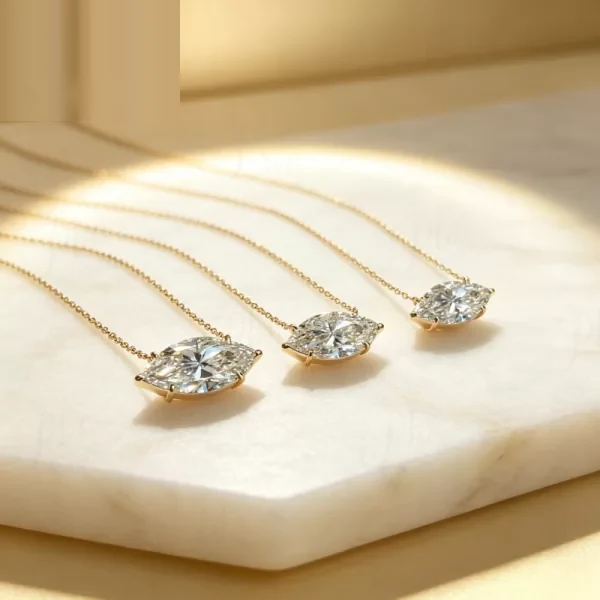
Pendant scale and chain length work together. A larger moissanite pendant on a 16 inch chain sits high and can look crowded; the same pendant on an 18 or 20 inch chain hangs with better proportion. For children's and petite lines, 14 and 16 inch lengths with lighter gauge chains keep the visual balance correct.
Confirm the chain gauge in millimeters, since a heavy pendant on a thin cable chain stresses the link nearest the clasp and leads to breakage claims from retail accounts.
Clasp Types and Their Impact on Returns
The clasp is the most common failure point on any necklace. Lobster clasps offer reliable security across chain weights and are the standard choice for mid range and higher lines. Spring ring clasps cost less but are harder for customers to operate and more prone to spring fatigue. Box clasps with a safety latch suit heavier Cuban and tennis necklace styles.
For the US market, ask your supplier to confirm clasp metal matches the chain metal, since a gold plated clasp on a 925 sterling silver chain will discolor first and trigger complaints.
Setting Types for Moissanite Necklace Pendants
Setting choice determines how much light reaches the stone, how secure it stays, and how much labor goes into each piece. Moissanite, a lab-created diamond alternative, performs well in every common setting style, but each has tradeoffs a wholesale buyer should understand before requesting a quote.
Four-Prong and Six-Prong Settings
Prong settings expose the most of the stone's edge, maximizing light entry and brilliance. Six prongs hold a round stone more securely than four, which matters for pendants that swing and bump against clothing. For solitaire pendants in 0.5 carat to 2 carat ranges, six prong settings are the safer bulk order choice. Confirm prong tip thickness in writing; tips that are too thin will wear through and release the stone within a year of daily wear.
Bezel Settings
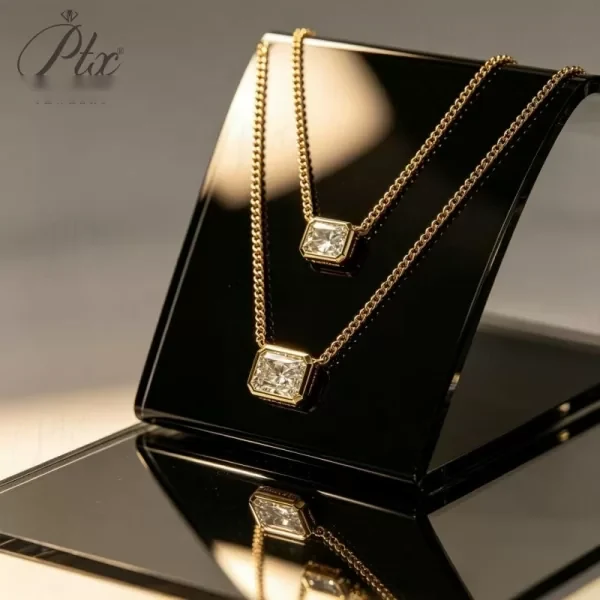
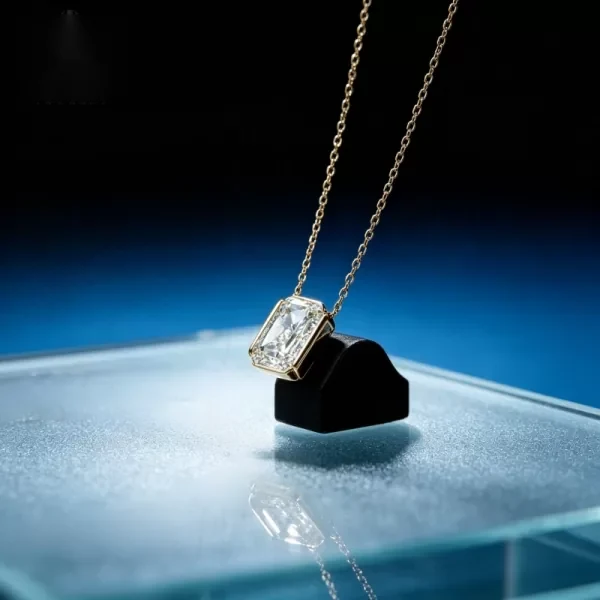
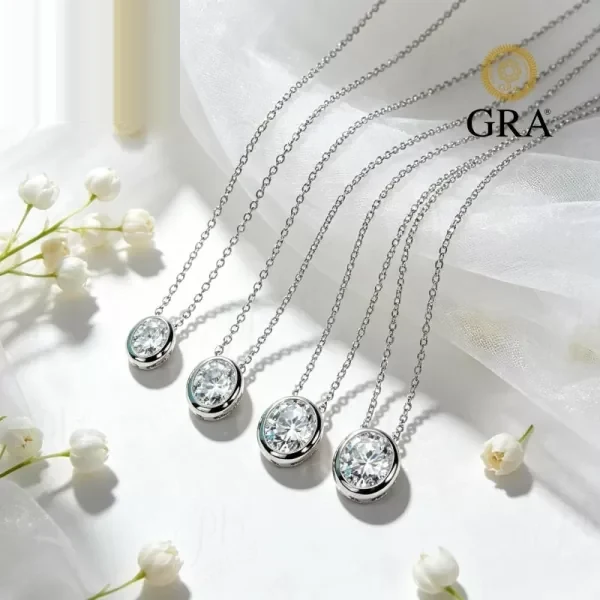
A full bezel wraps the stone edge in metal, protecting it from snags and impacts. This makes bezel set pendants the durable choice for lower price points and for buyers targeting active customers. Bezels reduce visible stone size slightly and require precise metalwork; a bezel that is even slightly out of round leaves gaps that catch dirt and loosen the stone. Ask your supplier how bezels are checked during in-process quality control.
Pave and Halo Settings
Pave work sets small melee stones along the pendant surface or around a center stone in a halo. It raises perceived value and retail appeal, but it is labor intensive and quality varies widely between workshops. On bulk orders, request pave set samples before committing to production, and confirm whether melee stones are set by hand or machine. Hand set pave holds stones more reliably on curved surfaces such as hearts and teardrops.
Metal Selection: Silver, Vermeil, and Solid Gold
Durability starts with the metal, and this is where buyer diligence pays off most. Each metal option carries a different price, wear profile, and customer expectation.
- 925 sterling silver: the workhorse for affordable pendant lines. Confirm pieces are stamped 925 and specify rhodium plating to slow tarnish.
- Gold vermeil: sterling silver with a thick gold plating layer. Durable for the price tier, but it is not solid gold and should be marketed as vermeil.
- Gold plated over brass or silver: the entry tier. Plating thickness in microns determines lifespan, so ask for the specification rather than accepting "gold plated" as a full description.
- 10K, 14K, and 18K solid gold: the durability tier. 14K balances hardness and gold content for daily wear; 18K offers a richer color with a slightly softer surface.
Name the metal accurately in your own listings. Calling gold vermeil or gold plated product solid gold creates compliance exposure in the US market and erodes retailer trust. A supplier that describes metals precisely on quotes and invoices is easier to resell from, because you can pass those descriptions straight into your product copy.
Plating Thickness and Tarnish Resistance
For silver and vermeil lines, rhodium plating is the single most cost effective durability upgrade. Specify the plating thickness in microns on your purchase order. E-coating beneath the plating adds another barrier against tarnish for pieces that will sit in retail display cases. Ask whether plating is applied before or after stone setting; plating after setting with proper masking protects prongs and bezels from chemical residue.
Chain Construction and Link Strength
Chain style affects durability as much as metal. Curb and Cuban links withstand daily wear well. Rope chains resist kinking. Box chains look refined but can snap under sudden pulls, so they suit lighter pendants only. For wholesale orders, ask whether links are soldered or closed unsoldered; soldered links on the final loop near the clasp reduce breakage on heavier pendants. Request tensile detail on the clasp attachment for anything above 10 grams total weight.
Comparing Necklace Specifications at a Glance
The table below summarizes the core decisions for a typical moissanite pendant necklace program. Use it as a checklist when comparing supplier quotes line by line.
| Spec | Silver Option | Vermeil Option | Solid Gold Option |
|---|---|---|---|
| Metal | 925 sterling silver | Silver with thick gold plate | 10K, 14K, or 18K gold |
| Tarnish control | Rhodium plating | Rhodium or e-coat | None required |
| Best setting | Bezel | Six prong | Prong or pave |
| Chain lengths | 16 to 20 inches | 16 to 20 inches | 18 to 24 inches |
Treat the table as a starting matrix rather than a fixed rule. Heavier men's chains in silver, for example, may perform better with box clasps and soldered links, while a delicate 16 inch vermeil chain may call for a spring ring clasp to keep the profile slim. Adjust each row to match the price tier of your retail accounts.
Quality Control and Certification for Bulk Necklace Orders
Durability claims are only as good as the inspection behind them. A structured three-stage QC process protects bulk orders: incoming inspection of raw materials and stones, in-process checks during setting and assembly, and a pre-ship AQL inspection on finished goods. Ask potential suppliers to describe each stage in writing and to state the AQL level used at pre-ship inspection.
For grader certified center stones, GRA or IGI papers should accompany the relevant pieces so your retail accounts can verify carat weight independently.
Sampling Before Bulk Commitment
Sampling runs 7 to 10 days and is the step most buyers rush. Order samples of every variant you plan to stock, including each chain length and clasp type. Wear a sample for a week before approving bulk production; this surfaces clasp fatigue, plating reactions to skin chemistry, and pendant balance issues that a visual check misses. Sample orders are typically paid via PayPal, which keeps the trial low risk before you move to bank transfer terms.
Custom Work and Minimum Quantities
Stock styles carry a minimum order of 1 piece, which makes it easy to test new lengths or settings without commitment. Custom work requires 30 pieces, so custom is where sizing and setting decisions must be locked carefully. Custom production takes 15 to 25 days after design approval. When planning a custom run, finalize chain length mix, setting type, and plating specification before approving the design, since changes mid-production extend timelines and raise per piece cost.
Shipping and Receiving in the US
DDP delivery to the US takes 5 to 8 days, with duties handled by the supplier. For bulk production, payment terms are typically T/T with a 30 percent deposit and the 70 percent balance before shipment. Schedule your pre-ship inspection review against the balance payment so any defects found in the AQL stage can be corrected before the order leaves the factory.
Pricing is quoted per piece for finished necklaces and per carat for loose stones, which keeps comparison shopping between suppliers straightforward.
Building a Necklace Line That Holds Up at Retail
The strongest wholesale necklace assortments pair one or two proven stock styles with a custom anchor piece. Start with 18 inch six prong solitaire pendants in 925 sterling silver for volume, add a bezel set vermeil line for the value tier, and place a 14K solid gold pave halo pendant as the premium offering. This structure covers three price points while sharing the same chain length system, which simplifies packaging and display for your retail accounts.
Review return reasons from your retail partners quarterly. Clasp failures point to a supplier or gauge problem; length returns point to a sizing mix problem; stone loosening points to setting QC. Feed each pattern back into your next purchase order specification, and your necklace line improves with every cycle rather than repeating the same defects.
Order Terms for Wholesale Buyers
MOQ is 1 piece for stock styles and 30 pieces for custom work, and loose stones are sold by the carat. Sampling takes 7 to 10 days, and bulk production runs 15 to 25 days after the sample is approved. Pricing is quoted per piece or per carat depending on the item. Payment is T/T with a 30% deposit and the 70% balance before shipment, and PayPal is accepted for sample orders.
Frequently Asked Questions
What necklace lengths should I order for my first wholesale run?
For women's pendants, split the order across 16, 18, and 20 inch chains, with the heaviest weight on 18 inches. For men's chains, start with 20 and 22 inch lengths. Two inch extender chains on stock styles widen the fit range at minimal added cost.
Which setting is most durable for moissanite pendants?
Bezel settings protect the stone edge best against snags and impacts, making them the durable choice for silver and vermeil lines. Six prong settings offer a strong balance of security and light entry for solid gold solitaires. Avoid thin four prong settings on pieces intended for daily wear.
How do I verify the metal on a wholesale necklace order?
Request the metal specification in writing on the quote and invoice, including plating thickness in microns for plated or vermeil items. Confirm 925 stamps on sterling silver pieces. Keep vermeil and plated items labeled as such in your listings rather than calling them solid gold.
What is the typical timeline from sample approval to delivery?
Sampling takes 7 to 10 days. Bulk production runs 15 to 25 days after you approve the samples and design. DDP shipping to the US then takes 5 to 8 days, so plan roughly five to seven weeks from first sample to goods in your warehouse.
How are center stones documented on pendant orders?
Graded stones come with GRA or IGI papers that certify carat weight and grade. Loose stones are priced per carat, while finished necklaces are priced per piece. Ask for the paperwork to ship with the corresponding pieces so retail accounts can verify at receiving.
Start Your Wholesale Necklace Program
Sizing, setting, and durability are decisions you can lock down with a clear specification sheet and a disciplined sampling round. Browse current stock styles in the products catalog, read more sourcing and specification guides on the blog, or request samples and a custom quote through the contact page. A short sampling cycle is the fastest way to validate chain lengths, clasp choices, and metal tiers before you commit to a bulk run.
Sources: Grading references: GIA gem education and GIA laboratory information.