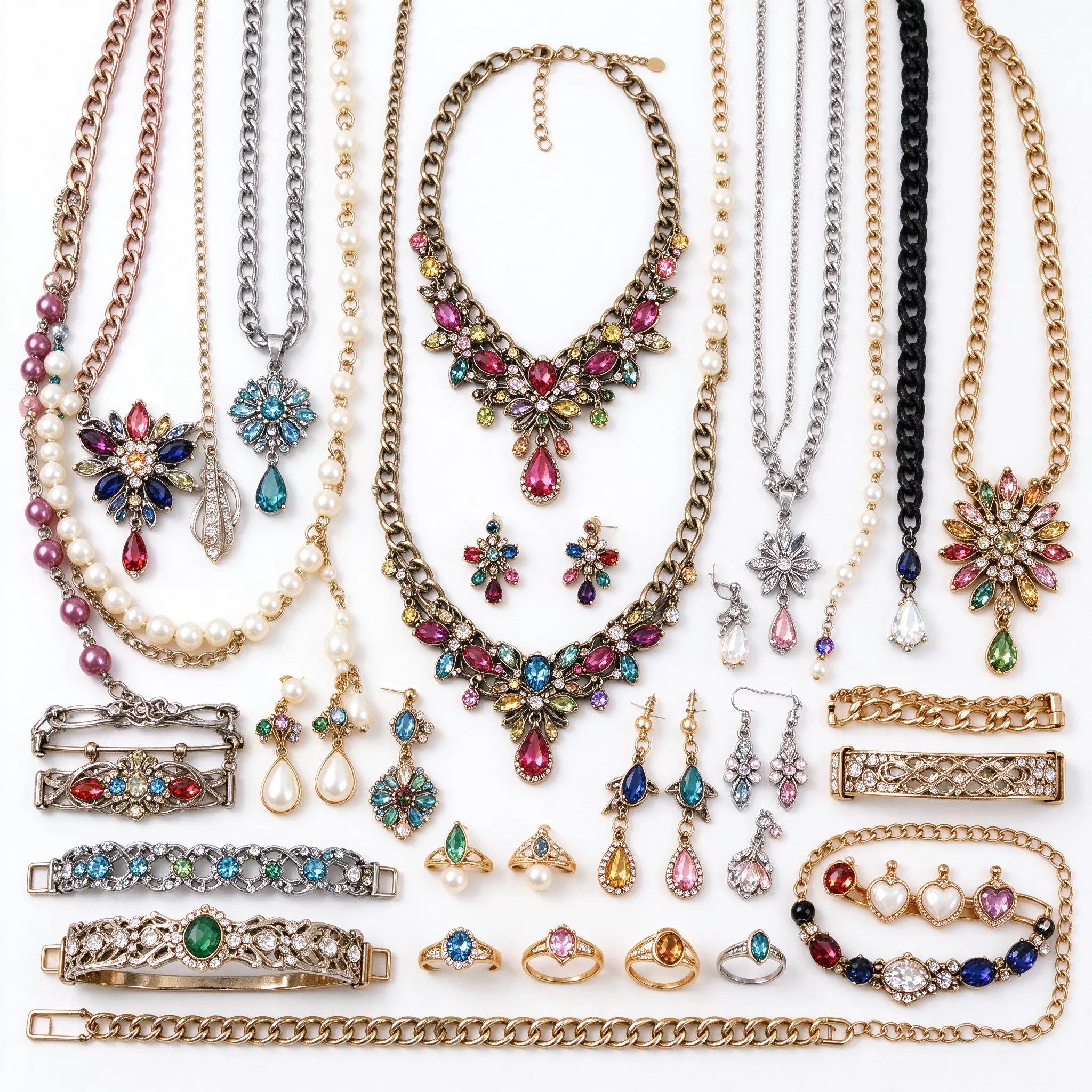
The biggest risk in wholesale jewelry is not paying too much; it is betting a large order on a supplier you have never actually ordered from. A beautiful website and a fast chat reply do not tell you whether the pieces arrive as pictured, whether the plating lasts, or whether the supplier ships on time. The solution is a small trial order. A few hundred dollars worth of sample stock tells you more than a hundred messages with a sales rep. This guide explains how to structure a trial order, what to test, and how to decide when a supplier is ready for bulk.
A trial order is not a purchase; it is due diligence. Treat it as the cost of qualifying a supplier, the same way you might pay for a product sample or a factory audit. The buyers who skip the trial and go straight to a 5,000-piece order are the ones posting about disasters in wholesale groups. The trial exists to prevent that.

What a good trial order looks like
A useful trial order is small but broad. Order 50 to 200 pieces across three to five styles you are genuinely considering for your range. Do not order one style in quantity; that tests nothing about the supplier's consistency. Instead, order a few of several styles so you can see how they handle different castings, finishes and packing. Spend $200 to $500 total. It is enough to judge quality and service without risking real money.
Include a style you are already confident sells, so that even if the supplier disappoints, you have stock you can move. That way the trial order pays for itself regardless of the outcome. Never make a trial order purely a gamble on unknown pieces; always include one known winner.
- 50-200 pieces across 3-5 styles.
- Budget $200-$500 for the trial.
- Include one style you already know sells.
- Order the styles you are seriously considering for bulk.
What to actually test on the trial
The trial order answers specific questions. Write them down before it arrives so you check each one deliberately.
Quality vs photos
Compare each received piece to the listing photo. Is the plating the same tone? Are the stones as bright? Is the weight right? Disappointment here is normal at low price points, but you need to know how much. A small gap is acceptable; a large gap means the supplier's photos are misleading.
Build and durability
Open and close clasps, bend posts, and check welds. A piece that fails in your hands will fail for your customer within a week. This is the most important test, because it drives returns.
Packing and accuracy
Did you receive exactly what you ordered? Were pieces protected from scratching? A supplier who packs well and ships accurately is worth more than one with slightly better product quality but constant mistakes.
Communication and lead time
Note how long the order took and how responsive the supplier was when you had a question. A supplier who vanishes after taking your money will vanish again during a problem. Reliability matters as much as product.
Negotiating the trial and the MOQ
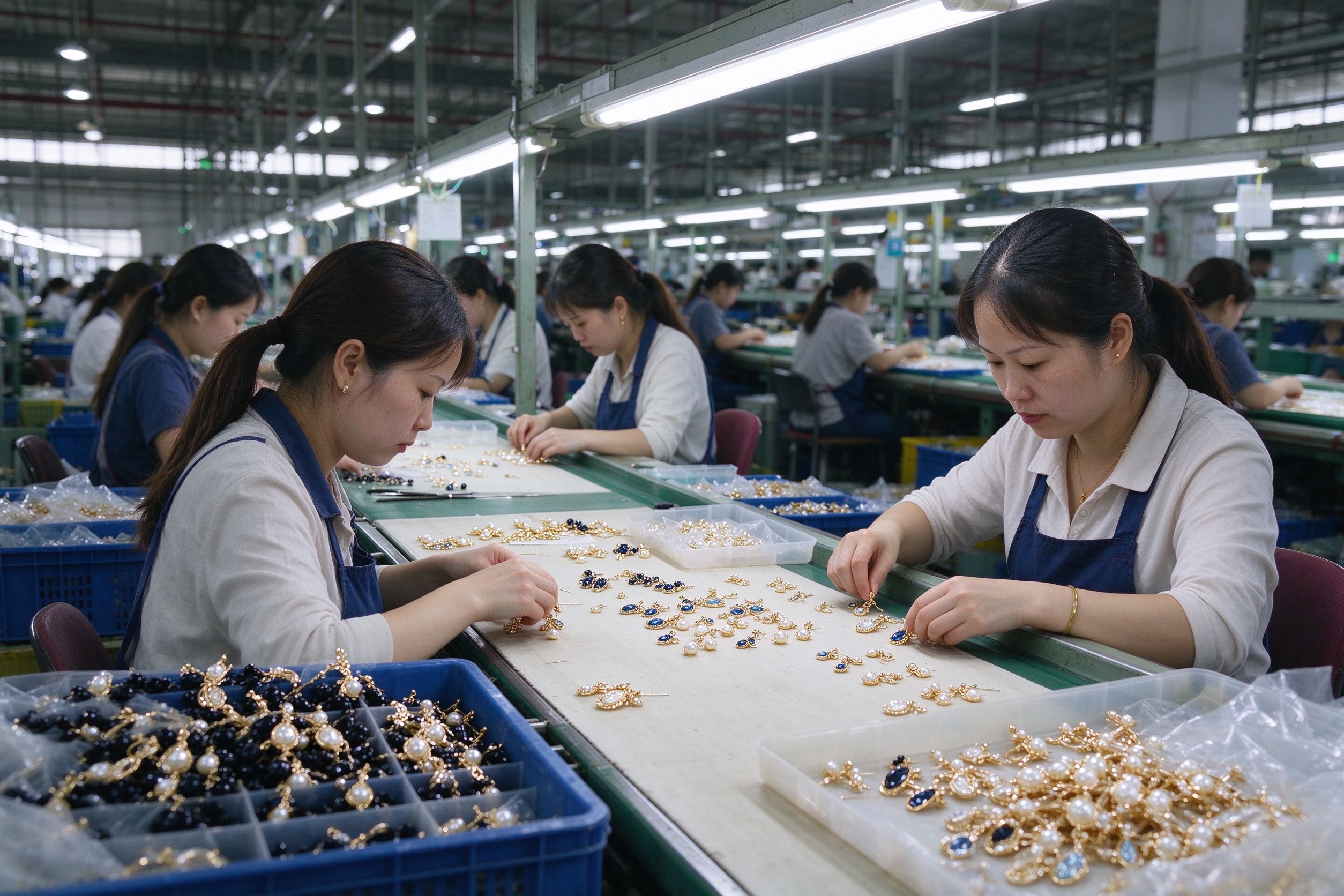
Most factories are happy to accept a small first order because they want a long-term buyer. Ask directly: "Can I start with a small trial order of 100 pieces to test quality before a bulk order?" The answer is almost always yes. Some factories charge a small sample surcharge or a slightly higher unit price on the trial; that is reasonable, and you should accept it. The point is not to squeeze the trial price; it is to test the relationship cheaply.
Once the trial passes, use it to negotiate the bulk MOQ and price. A supplier who has already shipped you a good trial order will usually improve terms on the repeat. Ask for a price break at 500 and 1,000 pieces, and for a lower MOQ on the styles that worked. The trial is your leverage.
Running the trial pieces through your real business
Do not just inspect the trial pieces in your office. Actually sell them. Put them on your shelf or your site and watch how customers react. A piece that looks great to you but sits untouched is not a winner, no matter how nice it feels. A piece that customers pick up and buy is validated. Real sell-through over four weeks is the only test that matters. Quality you can judge yourself; market fit you cannot.
Track any returns or complaints on the trial pieces. A pair of earrings that comes back tarnished after two weeks tells you the plating is not up to your market, even if it looked perfect on arrival. That is exactly the failure a trial exists to catch before you buy 5,000 of them.
When a trial order means "no"
Not every trial should turn into bulk. If the plating is inconsistent, the clasps fail, the supplier ships late or ignores your messages, walk away. There are hundreds of factories in Wuzhou; there is no loyalty to a supplier who disappoints on a $300 order. The cheap cost of the trial is precisely what lets you walk away without pain. The mistake is feeling obligated to place a bulk order because you already bought samples. You are not.
- Walk away on inconsistent plating or weak clasps.
- Walk away on suppliers who disappear after payment.
- Walk away if photos do not match the goods.
- Stay only if sell-through and service both pass.
When a trial means "yes, scale up"
If the pieces match the photos, hold up, sell through in four weeks, and the supplier communicates well, you have a keeper. Now move to a standing relationship. Place a larger reorder of the winning styles, agree on a repeat schedule, and ask for the volume price. A supplier who passed a real trial is worth building a long relationship with, because the hard risk is already behind you. Good suppliers are worth locking in early, before your competitors do.

Keep testing new suppliers over time
Even after you have great suppliers, keep running small trials on new ones. Markets change, prices move, and a new factory may offer better plating or faster lead times. A $300 trial twice a year keeps you sharp and gives you leverage with your existing suppliers. Do not become so loyal that you stop shopping; loyalty in wholesale should be earned, not assumed.
Communicating during the trial order
The trial is your first real test of how the supplier communicates. Note how long they take to reply, whether they answer your specific questions, and whether they push back politely or just say yes to everything. A supplier that agrees to every request without ever asking a clarifying question is usually a trading company that cannot control production. A supplier that asks about your market, your plating requirements and your packaging is a real factory that cares about the outcome. That signal is as valuable as the product itself.
Use the trial to ask about production lead times, packaging options and compliance documents. The answers you get now are the answers you will get later. If the supplier cannot produce a nickel test report on a small order, they will not produce one on a bulk order either. Set your expectations during the trial, not after you are already committed.
Paying for the trial safely
Even a small trial order should be paid through a protected channel. Use a trade assurance service or a credit card where possible rather than a direct wire to a personal account. A small trial is exactly when scam suppliers strike, because the amount feels too small to worry about. If a supplier refuses any protected payment method for a $300 order, that is a warning sign regardless of how nice the chat has been. Protect the small order the same way you would protect a large one.
Building a supplier scorecard
After the trial, write a short scorecard before you forget. Rate the supplier one to five on product quality, plating, packing, communication, lead time and accuracy. That scorecard is your reference for every future order. Over time, as you trial more suppliers, you build a ranked list of who to reorder from and who to avoid. This is how experienced buyers reduce their risk systematically rather than relying on memory and gut feel.
- Note communication style during the trial.
- Pay through a protected channel even for small orders.
- Write a scorecard after every trial.
- Ask for compliance documents now, not later.
Keeping a backup supplier in reserve
Once a supplier passes your trial and becomes your main source, keep one other qualified supplier on the bench. You do not need to order from them, but you should have run a trial and know their quality and price. Factories close, raise prices, or change owners without warning. Having a backup that you already tested means you can switch in a week rather than panic-searching when your main supplier lets you down. The small cost of running one extra trial a year is cheap insurance.
A backup supplier also gives you leverage. When your main supplier quotes a price increase, you can honestly say another qualified source quoted better. That usually brings the price back. Buyers who have only one supplier have no leverage and take whatever price they are given.
What to do when the trial surprises you
Not every trial goes as expected, and the surprise itself is information. If the pieces are better than the photos promised, ask for a second order in a different style to confirm it is not a lucky sample. Factories sometimes send their best work for the trial and then relax on bulk; a second small order confirms consistency. If the pieces are worse than expected, do not argue or hope; ask for a replacement batch and see if they fix it. A supplier who responds well to a fair complaint may still be worth working with; one who blames you or goes quiet has answered the question.
Keep the trial pieces on your own shelf for a month. Wear them, pack them, and see how they hold up under real use. A clasp that survives a month of daily wear is a clasp that will not come back in a week. That month of real-world testing catches defects that a five-minute inspection misses, and it is exactly why the trial order is worth doing properly rather than rushing to scale.
Test small, scale smart
A small trial order is the cheapest insurance in wholesale. For a few hundred dollars, you learn whether a supplier's quality, packing and service will hold up, and you test whether the styles actually sell in your market. Never go straight to a large order on a new supplier. Run the trial, sell the pieces, track the returns, and only then scale. The buyers who treat trials as due diligence avoid the disasters that sink new businesses; the buyers who skip them eventually become a cautionary tale themselves. Build a habit of one trial before every new relationship, keep a backup supplier qualified, and your supplier list gradually becomes a ranked asset that makes your whole business safer and more profitable. The $300 you spend on a trial is the cheapest insurance you will ever buy, because the disaster it prevents is always far more expensive.
