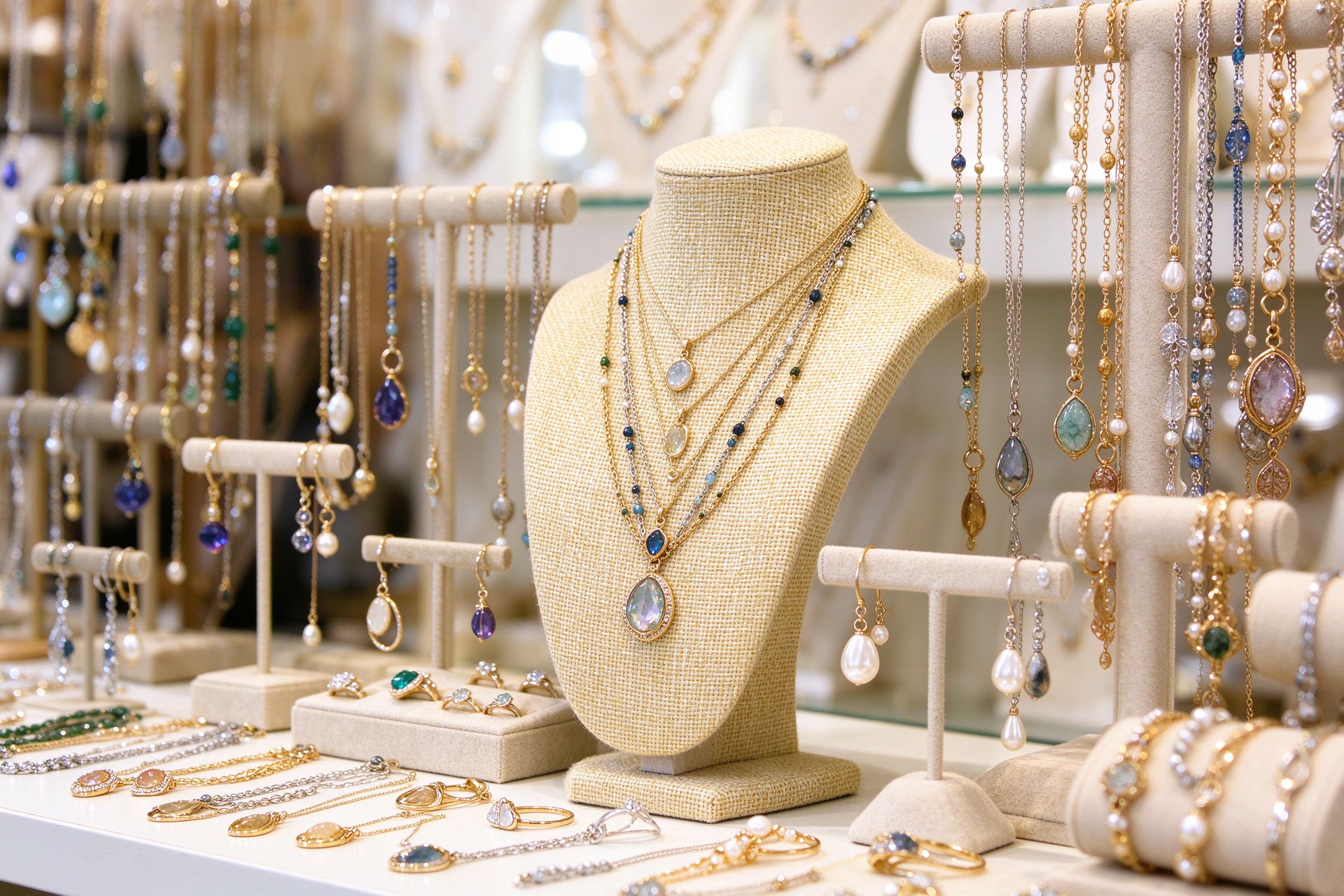
Alloy fashion jewelry is the backbone of the affordable accessory business. It is cheap to make, endlessly versatile, and where most boutiques, market sellers and online stores actually make their margin. But "alloy" is a broad term, and the difference between a good alloy piece and a disappointing one is everything to your customers. This guide walks a new wholesale buyer through sourcing alloy jewelry the right way: what the material is, what to ask factories, how to judge a quote, and how to avoid the mistakes that sink first orders.
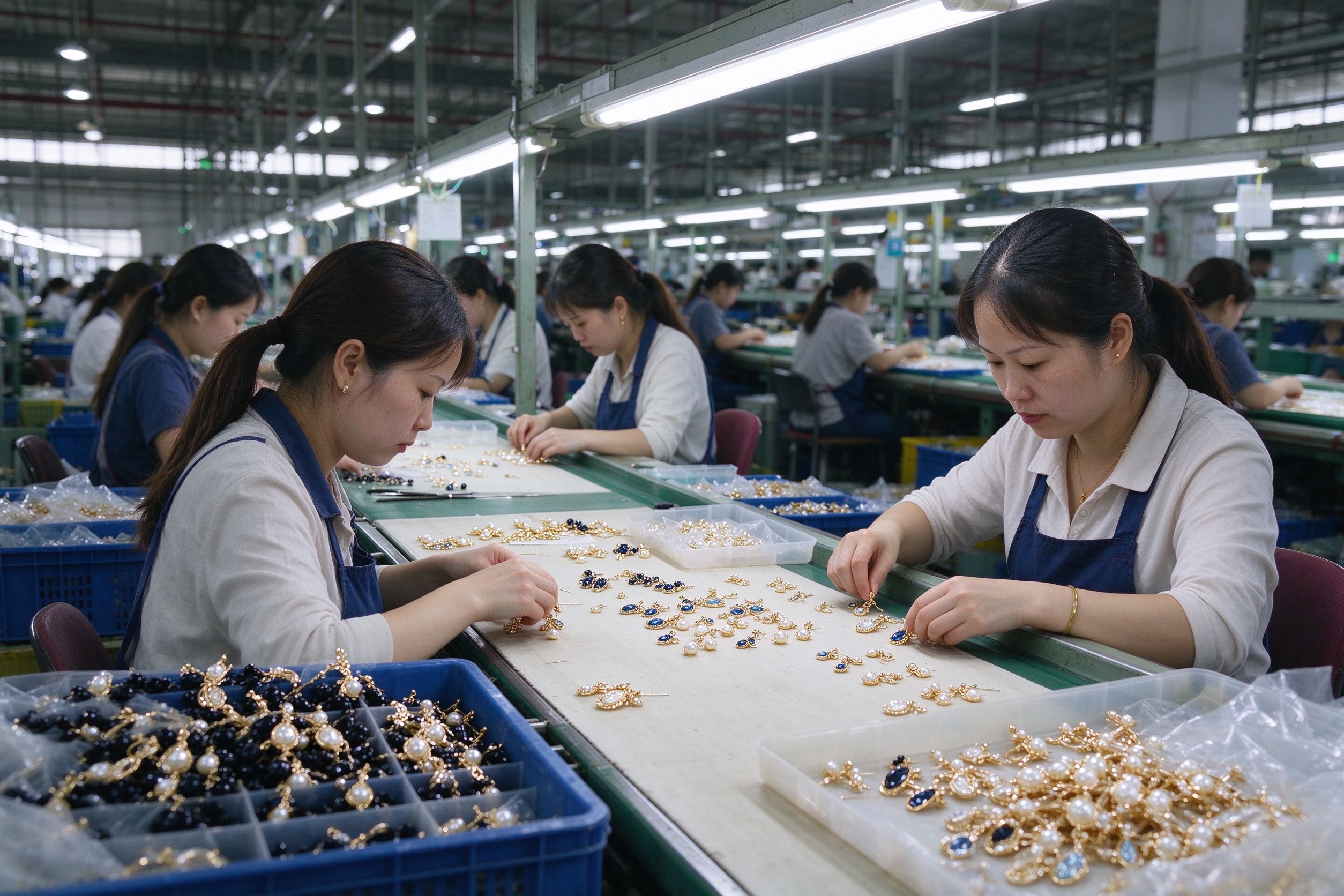
If you are used to buying finished jewelry from a distributor, sourcing directly from a factory in Wuzhou feels like learning a new language. The base material, the plating thickness, the lead time and the compliance rules all matter. The good news is that once you understand the basics, alloy jewelry is one of the most forgiving categories to buy, because the pieces are affordable and the factories are experienced.

What alloy jewelry actually is
Fashion alloy jewelry is made from a base metal, usually zinc alloy, tin alloy or a brass or copper blend, cast or stamped into shape, then plated with a thin layer of gold, silver, rose gold or rhodium. The base metal gives the piece its form and weight; the plating gives it the finish. Because the base metal is inexpensive, the whole piece can be sold at a price point where customers buy on impulse. That is the whole business model.
The alloy itself is not the problem. The problem is cheap plating and bad casting. A well-made alloy piece with a thick e-coat finish can look and wear almost like fine jewelry. A badly made one tarnishes in weeks and turns green. When you source alloy, you are not shopping the metal; you are shopping the plating quality and the casting precision.
The key questions to ask any factory
Before you compare prices, ask every supplier the same questions and compare the answers. A factory that cannot answer clearly is usually a trader, not a maker.
- What is the base metal: zinc alloy, tin alloy or brass?
- What plating do you use, and how thick is the top layer?
- Do you offer nickel-free and lead-safe plating for the US and EU?
- What is the MOQ per style, and what is the sample lead time?
- Can you provide a third-party nickel and lead test report?
- What is your production lead time for a repeat order?
The answers tell you more than any price list. A factory that knows its base metal, offers nickel-free plating and has test reports on file is a professional operation. A supplier who only says "good quality, cheap price" will give you exactly that.
How to read a factory quote
A quote is not just a number. It should break down the unit price, the MOQ, the plating option, the packaging and the lead time. If a quote gives one price with no detail, ask for the breakdown. The price depends heavily on the plating: a basic gold flash costs less than a thick 18k look, and a stone-set piece costs more than a plain casting. Comparing two quotes without knowing the plating is comparing apples to oranges.
Also ask about price breaks. Most factories lower the unit price at 500, 1,000 and 3,000 pieces. Know those tiers before you order, so you can decide whether the extra stock is worth the cheaper unit. Do not order 3,000 pieces just to get a lower price if you can only sell 500; the cheaper unit is a false economy when the rest sits in a box.
Ordering samples before bulk
Never place a bulk order without holding a physical sample. A $50 sample tells you more than ten messages with a sales rep. Order samples of the styles you actually want to stock, and inspect them like a customer would. Check the plating, the weight, the clasp and the finish. Wear the sample for a week and see if it tarnishes or irritates you. If it passes, then and only then do you order bulk.
Samples usually cost more per piece than bulk, and some factories charge a sample fee that is refunded on your first bulk order. Accept that. The sample fee is cheap insurance against a bad thousand-piece order. Buyers who skip samples to save fifty dollars routinely lose thousands.
QC on the first production run
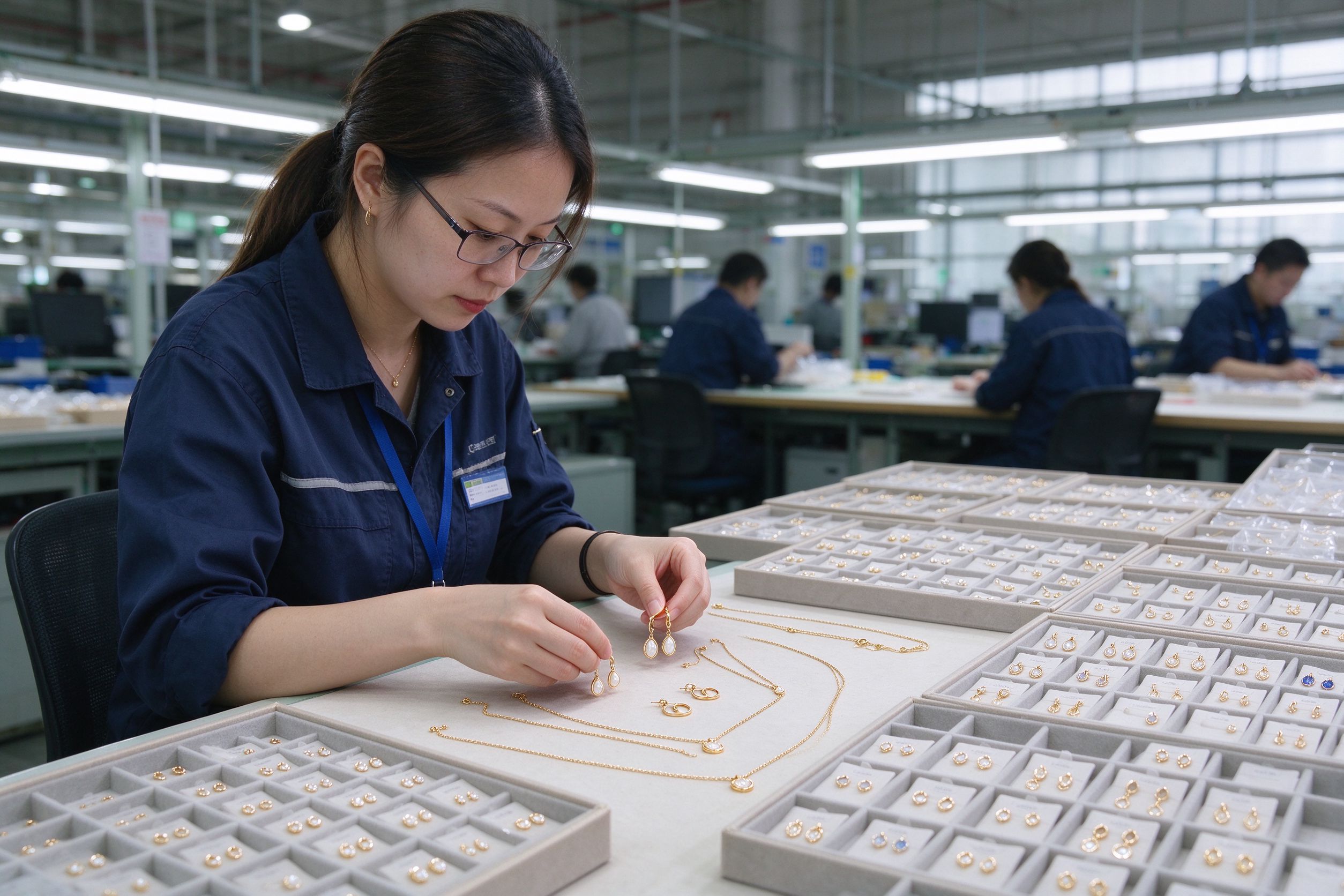
Even when the sample is perfect, the bulk run can drift. Ask the factory for pre-production photos and, for larger orders, a third-party inspection before shipment. Check that the bulk plating matches the sample, that the stones are set, and that the pieces are packed without scratching. The first run is the most important; once you and the factory agree on the standard, repeat orders are easier.
Pricing alloy jewelry for resale
Alloy jewelry carries a high markup because the wholesale price is low. A pair of earrings costing $1 to $2 ex-factory retails at $10 to $20. A necklace costing $3 to $8 retails at $25 to $50. Price by the look and the market, not by the cost. Your customers are buying style, not metal weight. At the same time, do not under-price just because the cost is low; the market sets the retail price, and alloy pieces can command genuine margins when they look and feel good.
- Earrings: cost $1-$2, retail $10-$20.
- Necklaces: cost $3-$8, retail $25-$50.
- Rings: cost $1-$3, retail $10-$18.
- Bracelets: cost $2-$5, retail $15-$30.
The most common new-buyer mistakes
The first mistake is chasing the lowest price. The cheapest quote usually means thin plating and soft castings, which produce returns. The second mistake is ordering too many styles on a first order, which means shallow stock and no data. The third is ignoring compliance, which can get a marketplace listing pulled. Avoid all three by ordering samples, starting small, and asking for test reports.
Build a sourcing process that scales
Sourcing alloy jewelry well is not about finding one magic supplier. It is about building a repeatable process: ask the same questions, order samples, run the QC, reorder the winners, and keep a backup supplier. Once that process works, you can apply it to every category from earrings to brooches. The buyers who treat sourcing as a system outperform the ones who treat it as a one-off bargain hunt.
Choosing a product category within alloy
"Alloy jewelry" is broad. Which sub-category should a new buyer start with? Earrings are the lowest-risk entry: cheap, small, high turnover, no sizing. Necklaces carry a higher price point and margin but need more styling confidence. Rings need size ranges, which complicates inventory. Bracelets sit in between. For a first buyer, earrings and simple necklaces are the safest start because they sell on look rather than fit. Once those are moving, expand into rings and bracelets with the data you have gathered.
Match the category to your customer. A young online buyer should start with trendy earrings and layered necklaces. A boutique serving an older customer should lean toward classic necklaces and brooches. Do not stock a category just because it is popular elsewhere; stock what your own customer buys.
Packaging that protects the margin
Alloy plating scratches easily, so packaging is part of the product. Ask the factory to wrap pieces individually in poly bags or tissue so they do not rub against each other. For retail, add a cheap card or pouch. A $0.10 pouch turns a $2 earring into a $10 product that arrives in good condition. Unpackaged pieces that arrive scratched disappoint the customer and eat your margin through returns. Budget for packaging from the start.
Lead times and reorder planning
Wuzhou factories typically produce a reorder in two to four weeks, plus shipping. That is fast compared with other wholesale categories. Use it. Do not overstock; reorder winners before they run out. Because lead times are short, you can run a leaner inventory than with imported goods from further away. Plan reorders around your sales pace, and keep one month of stock on your fastest sellers so you never sell out of a winner.
- Start with earrings and simple necklaces.
- Budget for individual wrapping and retail cards.
- Reorder in two to four weeks; keep stock lean.
- Plan around your actual sell-through, not guesses.
Frequently asked sourcing questions
Is alloy jewelry good quality?
It depends entirely on the factory. "Alloy" describes the base material, not the finish. A well-made zinc piece with thick e-coat looks and wears well for months. A cheap piece with flash plating tarnishes in weeks. Judge the sample, not the word alloy.
How much should I order for a first order?
Keep it small. Start with samples, then a mixed carton of around 500 to 1,000 pieces across 8 to 12 styles, roughly 50 to 100 pieces each. That is enough to test without risking a garage full of stock.
Can I get my own designs made?
Yes, but custom tooling adds cost and MOQ. Start from existing molds, prove a winner, and only then invest in a custom mold on a style you already know sells.
Shipping and landed cost
The factory price is not the whole cost. Add shipping, any duties, and packaging before you compare suppliers. Air freight is fast but expensive; sea freight is cheap but slow. For a first small order, air or express courier is fine. As orders grow, sea freight dramatically lowers the per-piece landed cost. Always ask the factory for the landed cost to your door, not just the ex-factory price, so your margin math is honest. A slightly cheaper factory on a far port can cost more after shipping.
Start sourcing alloy the smart way
Alloy jewelry is the most accessible entry point into wholesale fashion accessories. Start with a small sample order of three to five styles, inspect them honestly, and reorder the ones that pass. Ask about base metal, plating and compliance on every inquiry. Price for the look rather than the cost. Over a few orders, you will build a supplier relationship and a product range that customers trust. Done right, alloy jewelry is not a cheap compromise; it is a high-margin, low-risk foundation for a real accessory business.
A practical first-order timeline
Once you have chosen a factory, the first order follows a predictable rhythm. Days one to three are for asking questions and requesting samples. Days three to seven are for the samples to arrive; this is when you inspect plating, weight and clasps. Days seven to ten are for placing a small mixed carton. The factory then produces over two to four weeks, ships, and arrives two to four weeks later depending on courier. Plan around six to ten weeks from first contact to stock on your shelf. Buyers who understand this timeline never panic about a two-week delay, because they expected it.
Keep a simple spreadsheet for each supplier: contact, sample date, order date, expected delivery and actual delivery. After a few orders you will know each factory's real lead time, which lets you plan reorders precisely. The factory that promises a week but always takes four is not a villain; it is a data point. Plan to its actual pace, not its sales pitch.
Glossary a new buyer should know
- Ex-factory price: the price before shipping and duty.
- MOQ: the minimum pieces per style or carton.
- E-coat: a clear protective layer over plating that slows tarnish.
- Nickel-free: the outer layer releases no measurable nickel.
- Mixed carton: several styles combined to reach the total MOQ.
Learning these terms lets you read a quote quickly and compare suppliers on an even footing. A buyer who knows the language is treated as a professional, which usually means better service and more honest prices.
