A boutique lives or dies by what it chooses to stock. Jewelry is often the highest-margin category in a boutique, but it is also where buyers over-indulge in pieces they personally like instead of what their customer buys. This guide gives a practical selection strategy: how to curate a jewelry range that fits your store, balances trends with classics, prices well and actually sells through the rack. It is written for boutique owners and small shop buyers rather than big chains.
The core principle is simple: buy for the customer who already walks in, not the customer you wish would walk in. The most common boutique mistake is buying beautiful pieces that do not suit the actual shopper.

Know your customer before you buy
Every buying decision starts with who walks through the door. Are they young and trendy, or mature and classic? Are they buying for work, or for events? Write down your typical customer before you open a supplier catalog. Then buy the jewelry that customer would wear. A boutique serving older professionals should stock elegant classics; a boutique near a university should stock trend pieces. The inventory should mirror the customer, not the buyer's taste.
The eighty twenty rule for buying
Stock roughly eighty percent proven, repeatable pieces and twenty percent new or trend pieces. The eighty percent pays the rent; the twenty percent keeps the shop feeling fresh. New buyers over-index on trends and end up with a beautiful shop that does not sell. Flip the ratio and the business stabilizes. As a trend proves itself, it graduates into the eighty percent.
Price for your shopper
Price points matter. Decide your main price band and stock within it. If your customer spends $20 on a necklace, do not fill the case with $80 pieces. Have a few premium pieces as anchors, but most of the range should sit where your customer actually buys. Too wide a price range confuses shoppers. Anchor the display at the price point that sells, and use one or two higher pieces to make the rest look reasonable.
- Buy for your actual customer, not your taste.
- Eighty percent proven, twenty percent new.
- Anchor pricing where your shopper buys.
Display is part of selection
Even good jewelry does not sell if it is hidden. Display by outfit and occasion: a work section, an evening section, a gifting section. Group pieces into looks so customers can buy a whole set. A well-merchandised display sells two or three pieces where a flat tray sells one. Rotate the display monthly so regular customers see something new. The selection strategy includes how you show it.

Start small and reorder
Resist the urge to fill the shop on day one. Buy a tight range, see what sells in the first month, and reorder the winners. A boutique that starts lean and grows by data beats one that opens packed and slowly discounts dead stock. Inventory that turns is worth more than inventory that looks full. Start small, let the customer vote with cash, and double down on what moves.
Gifting and impulse buys
Every boutique needs a gifting and impulse section near the till. Earrings, small bracelets and hair pieces under a set price are the classic impulse buys. These are cheap to stock and lift average transaction value. A customer who came in for a dress often leaves with a pair of earrings they had not planned to buy. Never underestimate the power of a small, pretty, easy decision at the counter.
Managing dead stock
Some pieces will not sell, and that is normal. Do not let dead stock sit for a year. After a season, move slow pieces to a clearance, a bundle or a grab bag. Freeing the shelf space for a new seller is worth the discount. The goal is a fast-turning case, not a perfect museum. Be ruthless about clearing stock that has not moved in three months.
- Open lean, reorder by data.
- Keep an impulse-buy section by the till.
- Clear dead stock within a season.
Building repeat buyers
The most profitable boutique jewelry is not sold once; it is sold repeatedly. A customer who finds a necklace they love will come back for earrings and a bracelet. That means your range should coordinate so customers can build a look. Take contact details, let regulars know when a favorite restocks, and treat jewelry as the start of a relationship, not a one-off sale.
Buying from a factory, not a market stall
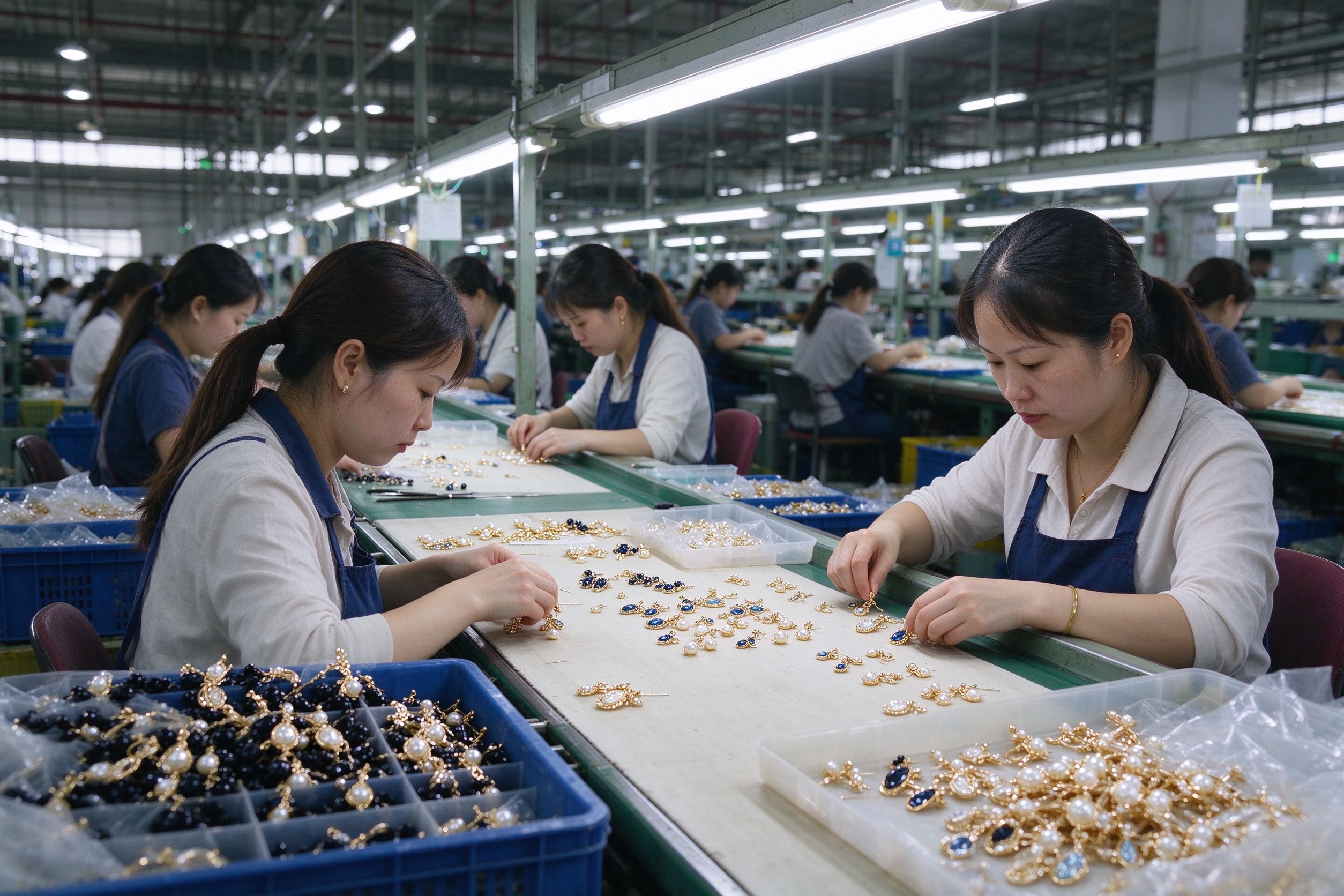
Buying direct from a Wuzhou factory rather than a local distributor raises your margin and gives you consistency. Start with a small mixed carton, test it in your boutique, and reorder the winners. The factory relationship lets you coordinate finishes across your range, which is exactly what a boutique needs to look intentional. Treat the supplier as a partner in curating your shop.
Curate for the customer who walks in
Boutique jewelry selection is not about buying what you love; it is about buying what your customer loves, in a coordinated, well-displayed range that turns. Start lean, balance classics with a little trend, price where your shopper buys, and reorder the winners. Done that way, jewelry becomes the margin driver and repeat-buyer engine that every boutique wants it to be.
A simple open-to-buy example
Suppose a boutique can spend $2,000 a month on jewelry. Use the eighty-twenty rule: $1,600 on proven reorders of winners, $400 on new test styles. Within the $400, spread it across eight small test styles at $50 each. After a month, whichever two or three sell fast get folded into the $1,600 next time. This structured approach prevents emotional, all-in buys and keeps the range refreshing without risking the cash flow. Do not spend the whole budget on new pretty things; that is how boutiques end up with a full but unsold case.
Display layout that sells more
Arrange the display in three zones. A high-impact front zone with a few statement pieces that catch the eye. A middle zone with the everyday staples in coordinated finishes. A small counter zone with impulse earrings and hair pieces. Rotate the front zone monthly so regulars see change. Group by outfit: work, evening, gifting. A customer browsing a themed group buys more than one picking through a flat tray of random pieces. The display is silent sales help.
Building loyalty through jewelry
Jewelry is a relationship product. Take a customer's name when they buy a necklace, and message them when the matching earrings arrive. Remember who wears gold versus silver. That personal touch turns a one-off sale into a regular who buys every season. Boutiques win precisely where online cannot: by knowing the customer. Treat jewelry as the start of that relationship, and the boutique becomes the place they always return to.
Frequently asked boutique questions
How many styles should I open with?
Start small: twenty to thirty coordinated styles is enough for a strong display. More styles dilute depth and slow turnover.
What margin should boutique jewelry carry?
Affine alloy jewelry supports roughly four to six times cost at retail, leaving room for sales and returns. Price against your local market, not just cost.
How do I clear dead stock gracefully?
Bundle slow pieces with winners, run a small seasonal event, or offer them as a gift with purchase. Recovering space matters more than recovering full price.
Listening to the boutique customer
The best buying insight comes from the customer who already walks in. Ask them what they are looking for, what they bought elsewhere, and why a piece did not sell. Those conversations are free product research. A customer who says "I need something small for work" tells you exactly which staple to stock. Over time, you stop guessing and start stocking what you hear. Boutiques that listen outlast boutiques that buy from their own taste alone.
Also watch what customers try on but do not buy. A piece tried on repeatedly but never sold is usually priced too high or needs a better display, not necessarily a bad design. Adjust the price or the placement before you drop it. That feedback loop turns the fitting moment into a buying signal.
The till-side impulse zone
Every boutique needs a small, low-price jewelry zone near the checkout. Earrings, hair slides and small bracelets under a friendly price point turn browsers into buyers and lift average order value. A customer who came in for one thing often leaves with an unplanned pretty pair of studs. This zone costs little to stock and rarely sits, because the price removes the decision. Keep it fresh and rotate it monthly so regulars always see something new.
Selection principles that hold up
- Stock what your actual customer asks for.
- Watch what gets tried on but not bought.
- Keep a rotating impulse zone at the till.
- Start with twenty to thirty coordinated styles.
Making the range feel curated
A boutique wins by feeling intentional, not by carrying everything. Edit ruthlessly. If a style does not fit the customer or the aesthetic, do not stock it even if it is cheap. A tight, coherent range looks far more expensive and trustworthy than a crowded, random one. When every piece looks like it belongs together, customers assume the whole shop is well chosen. That curation is the boutique's real advantage over a marketplace, and it comes down to disciplined selection.
Building a buy-and-replenish rhythm
Once the range is set, buying becomes a monthly rhythm rather than a panic. Review what sold, reorder the winners, and test a handful of new styles. This steady cadence keeps the case fresh without the stress of a full rethink every season. Boutiques that buy in rhythm rarely run out of winners or drown in dead stock. The discipline is boring, and boring is exactly what keeps a small shop open.
Letting data prune the range
Every quarter, look at the slowest sellers. If a style has not moved in three months, stop reordering it and clear it. Do not get attached to pieces you personally love that your customer ignores. The range should shrink to what sells and grow toward what repeats. Pruning hard keeps the boutique focused and the cash flow healthy, which matters far more than carrying a pretty idea nobody buys.
Pair this with the till-side impulse zone and a monthly display refresh, and the jewelry corner becomes a reliable margin center rather than a pretty afterthought. The boutique that listens, buys in rhythm and prunes ruthlessly outlasts the one that shops from taste alone, because its range is shaped by real customers rather than hope.
Boutique buying rhythm
- Monthly: reorder winners, test a few new styles.
- Quarterly: prune anything slow for three months.
- Rotate the display and the impulse zone.
- Let real sales shape the range, not personal taste.
The boutique advantage is curation
A boutique does not need to stock everything; it needs to stock exactly what its customer loves. Listen, buy in rhythm, prune what does not sell, and display the range as a curated collection. The buyers who walk in feel that care, and they return. Over time, disciplined selection turns a small jewelry corner into the most trusted, highest-margin part of the shop. Buy for the customer who is already there, and let the range grow with them.
Ask your next ten customers what they wish you stocked. Those answers are a better buying plan than any trend report you could buy.
Keep buying small, reordering winners and pruning slow stock every quarter. A tight, well-displayed range outperforms a crowded one, and the customers who trust your curation will return season after season.
