Bracelets & Bangles Wholesale: stone grading

Why Stone Grading and Color Consistency Matter for Bracelets & Bangles
For wholesale buyers sourcing Bracelets & Bangles, stone grading paperwork and color consistency across multi-stone settings are the two factors that most often determine whether a shipment sells cleanly or comes back as a dispute. A bracelet places many stones side by side along a single line of sight, so even a small variation in color grade becomes visible in a way it never would on a solitaire ring.
This article walks through the practical decisions you face as a buyer: which grading papers to request, how to specify color matching, how metal naming affects the claim, and what production timelines and inspection steps protect your order.
What Stone Grading Actually Means for Bracelets and Bangles
Moissanite used in Bracelets & Bangles is a lab-created diamond alternative, and it is sold with grading documentation from either GRA or IGI. These papers record the characteristics of the stone, including its color grade and carat weight, and they give your retail customers something tangible to hand over at the point of sale.
For a wholesale buyer, the paperwork is also a purchasing control: it lets you verify that the stones set into your production run match the specification you paid for.
GRA Papers Versus IGI Papers
GRA and IGI papers serve the same basic purpose but come from different laboratories, so you should decide which one your market expects before you confirm an order. IGI is widely recognized by US retailers and carries strong consumer recognition on product pages. GRA documentation is also accepted, and many suppliers issue it as standard on loose stones and finished pieces.
Whichever lab you choose, request the papers per stone or per lot, and match the report numbers to the goods at the pre-shipment stage rather than trusting a sample PDF sent months earlier.
Loose Stones Versus Set Stones
Loose stones are sold by the carat, and finished Bracelets & Bangles are priced per piece, so your grading conversation changes depending on what you order. If you buy loose stones and have them set into bangles or tennis bracelets, you can inspect and grade-match before setting, which is the safest path for color-critical designs. If you buy finished pieces, insist that the factory grade-matches stones during assembly and provides papers for the stones used in each style you stock.
Color Consistency: The Problem Unique to Multi-Stone Bracelets
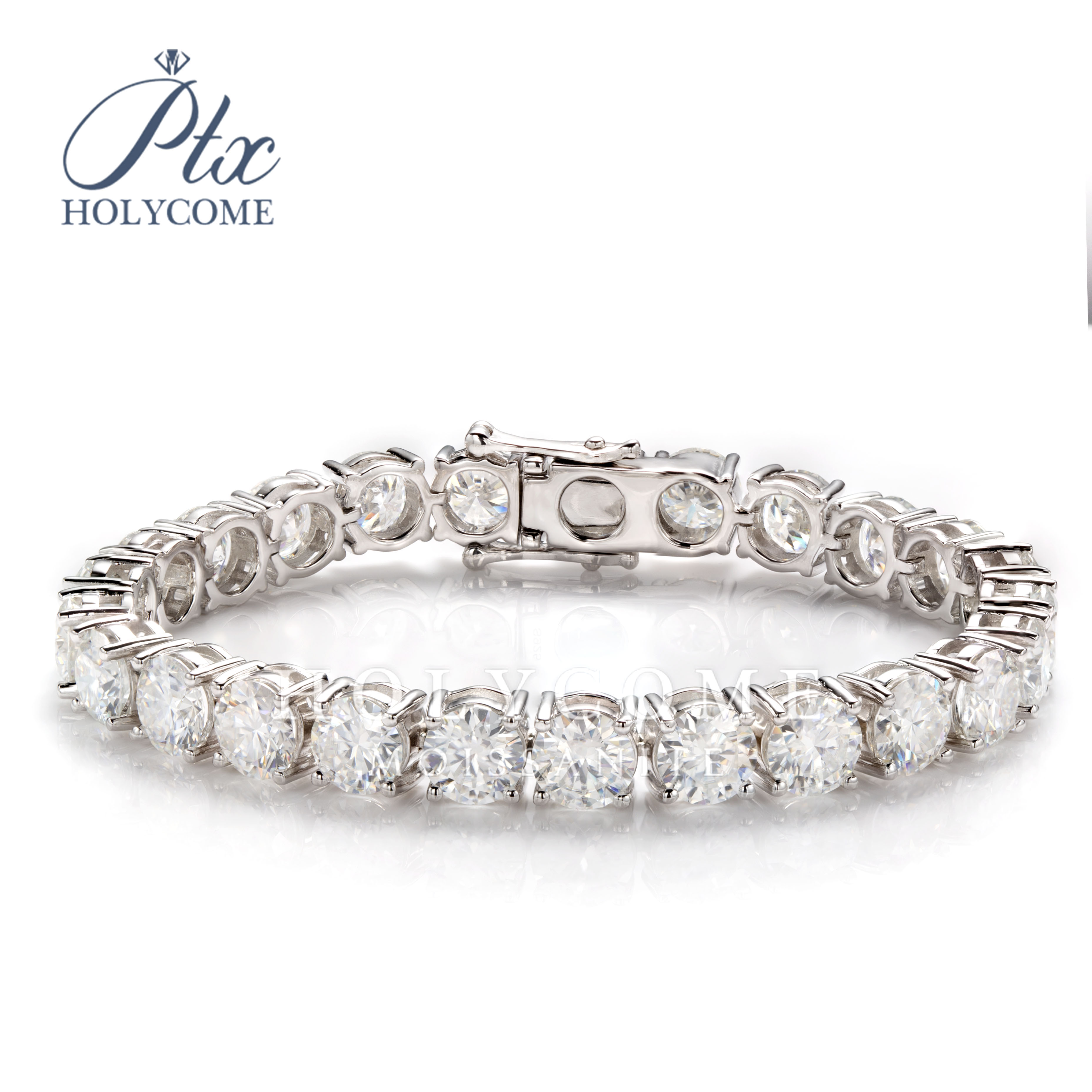
A tennis bracelet or a bangle with a channel of stones presents every stone side by side under the same lighting. Two stones that each look acceptable on their own can look mismatched when set forty millimeters apart on the same line. Color consistency is therefore a production specification, not a hope. Put it in writing before sampling begins.
Writing a Color-Match Specification
State the target color grade, the acceptable tolerance band, and the lighting condition under which matching is done. A useful clause looks like this: all round stones in style XX to be matched within one color grade of the master sample, matched under daylight-balanced light, mixed batches not permitted within a single bracelet. Ask the factory to keep stones from different production lots separated until matching is complete.
This single sentence prevents the most common complaint on multi-stone Bracelets & Bangles.
Metal Color Affects Perceived Stone Color
The metal you name on the order changes how stones read to the eye. Yellow gold vermeil and gold plated brass warm up the reflections inside a stone, while 925 sterling silver and 10K, 14K, or 18K solid gold read cooler or warmer depending on their own alloy color. When you approve a sample, approve the full combination: stone grade plus metal type plus plating thickness.
If you switch metals after sampling, ask for a new sample, because the perceived color of the stones will shift with the setting.
Metal Naming and Honest Product Claims
Name the true metal on every specification and every retail-facing document. The correct terms are 925 sterling silver, 10K/14K/18K solid gold, gold vermeil, or gold plated. Gold vermeil is sterling silver with a thick gold layer; gold plated is a thinner layer over a base metal. Neither should be described as solid gold in your listings, and moissanite should be described as a lab-created diamond alternative, never as a natural or real diamond.
Accurate naming protects you from returns, platform takedowns, and consumer complaints, and it makes the grading papers consistent with the product description.
Ordering Basics: MOQ, Sampling, and Production Timelines
Stock styles carry a minimum order of 1 piece, which lets you test a color-critical design on a small scale before committing. Custom work runs at a minimum of 30 pieces, which is when a written color-match specification pays for itself. Sampling takes 7 to 10 days, and bulk production takes 15 to 25 days after you approve the sample, so plan your buying calendar around roughly a month of lead time from sample approval to shipment readiness.
The comparison below summarizes the two buying paths for stone-set Bracelets & Bangles and how grading applies to each.
| Buying Path | Typical MOQ | Grading Control | Best Use |
|---|---|---|---|
| Stock styles | 1 piece | Verify GRA or IGI paper per piece | Testing new designs quickly |
| Custom production | 30 pieces | Written color-match spec plus papers | Core catalog lines |
| Loose stones by carat | Per carat | Grade-match before setting | High-color-critical styles |
Whichever path you choose, price is quoted per piece or per carat depending on the item, and the quote should be tied to the stone grade in the specification so there is no room for substitution during production.
Payment Terms and How They Map to Quality Control
Standard terms are T/T with a 30 percent deposit and 70 percent balance before shipment; PayPal is available for sample orders. This structure works in your favor on graded, color-matched orders: the deposit starts production, but the balance is due only after the goods are inspected. Ask for the pre-shipment inspection report before you wire the balance, and keep a copy of it with the GRA or IGI papers and the shipping documents.
The Three-Stage QC Process
Quality control runs in three stages: incoming inspection of materials and stones, in-process checks during setting and assembly, and a pre-ship AQL inspection of the finished order. For color consistency, the in-process stage matters most, because that is when stones are matched and laid out before they are set. Ask the factory to photograph the matched stone layout for each bracelet or bangle during in-process QC.
At pre-ship, AQL sampling should include a check that papers match the goods and that no mixed-batch color variation slipped through.
What to Check at Pre-Shipment
Before releasing the balance, review three things from your supplier: the AQL inspection results, the GRA or IGI papers for the stones in the shipment, and photographs of finished pieces taken under the same lighting used for matching. If you ordered custom work, compare the production photos against your approved sample. This review takes an hour and catches the discrepancies that are expensive to fix after DDP delivery.
Delivery to the US and Landed-Cost Planning
Shipments move by DDP delivery to the US and arrive in 5 to 8 days, which means duties and clearance are handled before the goods reach you and your landed cost is predictable. Build that window into your replenishment plan: sample approval, 15 to 25 days of bulk production, then 5 to 8 days in transit.
For seasonal Bracelets & Bangles programs, place the custom order with the 30-piece minimum well ahead of your retail launch, and use the 1-piece minimum on stock styles to fill gaps while the custom run is in production.
Order Terms for Wholesale Buyers
MOQ is 1 piece for stock styles and 30 pieces for custom work, and loose stones are sold by the carat. Sampling takes 7 to 10 days, and bulk production runs 15 to 25 days after the sample is approved. Pricing is quoted per piece or per carat depending on the item. Payment is T/T with a 30% deposit and the 70% balance before shipment, and PayPal is accepted for sample orders.
Frequently Asked Questions
Which grading papers should I request for moissanite bracelets?
GRA or IGI papers are both issued on graded stones, so choose based on what your retail channel recognizes and state the choice on the purchase order. Request papers per stone or per lot and check that report details match the goods during the pre-ship AQL inspection.
How do I keep color consistent across a 30-piece custom run?
Write a color-match clause into the specification: one target grade, a stated tolerance band, matching under a defined light source, and no mixing of stone lots within a single bracelet. Ask for in-process photos of the matched layout before stones are set.
Can I order one piece to test a design first?
Yes. Stock styles carry a minimum order of 1 piece, so you can evaluate the stone grade and color consistency of a finished bracelet before moving to custom production, which runs at a minimum of 30 pieces.
What payment terms apply to sample and bulk orders?
Sample orders can be paid by PayPal. Bulk orders use T/T with a 30 percent deposit and the 70 percent balance before shipment, after you have seen the pre-ship AQL inspection results.
How should I describe the metal and stones in my listings?
Name the metal exactly: 925 sterling silver, 10K/14K/18K solid gold, gold vermeil, or gold plated. Describe moissanite as a lab-created diamond alternative, and keep the description consistent with the grading papers that accompany the piece.
Start Your Bracelet Program with Graded, Color-Matched Stock
Graded stones with GRA or IGI papers and a written color-match specification turn Bracelets & Bangles from a risky category into a repeatable one. Browse the current catalog in our bracelets and bangles product range, read more buying guides on sourcing and inspection in our wholesale jewelry blog, or send your specification and target grades through our contact page to request a sample and a quote.
Sources: Grading references: GIA gem education and GIA laboratory information.