Most earring buyers assume clip-ons are a tiny, dated corner of the market - something your grandmother wore. That assumption costs resellers a real revenue stream. Clip-on earrings serve a much larger and more consistent customer base than the category's image suggests, and because competition in the non-pierced space is lighter, margins tend to be healthier.
Who actually buys clip-ons? Three groups drive most of the demand. The first is the no-piercing customer: people who never got their ears pierced for cultural, medical, or personal reasons and still want to wear statement earrings. The second is the sensitive-ears customer whose piercings reject posts made of anything but the most expensive metals - for them, a clip is the reliable workaround. The third is the event buyer: bridesmaids, prom goers, and costume parties where the whole group wants matching earrings and not everyone is pierced. Add in the vintage resale market, where old clip-ons are common, and the category is broader than it looks.
Comfort is the whole game
The reason clip-ons have a dated reputation is that cheap ones pinch. A customer who buys one uncomfortable clip-on pair decides the whole category is painful. Resellers win by filtering for comfort hardware:
- Padded or cushioned clips. A soft pad on the contact surface makes a multi-hour event wearable.
- Adjustable tension screws. A screw-back clip lets the wearer set the squeeze to their own earlobe thickness, which is the single biggest comfort upgrade.
- Lightweight fronts. A heavy rhinestone cluster on a clip pulls and hurts. The same design in a lighter metal base sells without returns.
This is the same comfort-and-fit discipline behind our guide to earring back types and security, applied to the non-pierced customer. And for the sensitive-ears buyer specifically, the material conversation in hypoallergenic earrings for sensitive ears still matters - even without a post, plating and contact metal can irritate the skin where the pad presses. Nickel content in the clip mechanism is worth checking, not just the front.
What designs sell as clip-ons
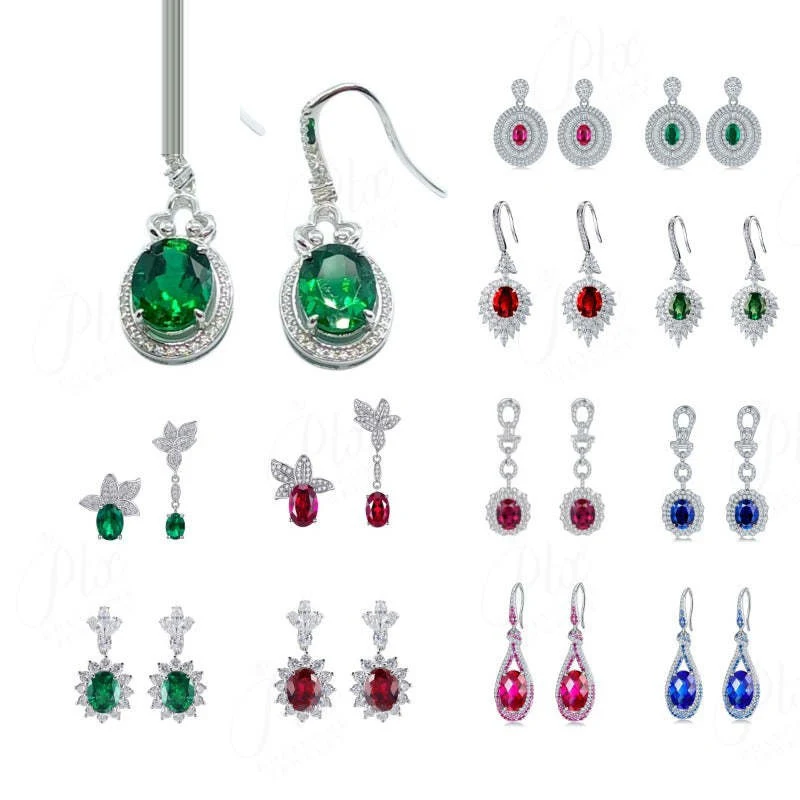
Clip-on demand tracks the same fashion cycles as pierced earrings, so you can convert your best-selling pierced shapes into clip versions. Hoops, studs, and dangles all work; the categories that surprise people are statement drops and bridal chandeliers, because event buyers want big earrings and often cannot all get pierced in time. Pearl drops and rhinestone clusters are the safest year-round reorders, while oversized colorful dangles ride the seasonal trend waves we cover in colorful enamel earrings. The key insight is that you do not need a separate clip-on collection - just offer your proven bestsellers in a clip option.
How to merchandise and price
Clip-ons can carry a small premium because the non-pierced customer has fewer options and shops with intent. Merchandise them with a clear sign that the style comes in a clip option - many customers do not even ask, they simply assume pierced-only and leave. Showing 'also available as clip-on' on your best-selling earring cards converts browsers who would otherwise walk away. Online, a single line in the listing - 'available as pierced or clip-on' - captures demand that otherwise disappears.
Returns are manageable if you filter for comfort hardware. The clips that come back are the unlined pinch ones; the padded, adjustable ones almost never do. Sample a pair and wear them through a full workday before you place a bulk order, paying attention to pressure points behind the earlobe. Treat that wear-test as non-negotiable - it is the cheapest insurance against a wave of discomfort returns.
Clip-on earrings are a steady, under-served market rather than a trend. Stock your best pierced shapes in clip form, filter ruthlessly for comfort hardware, and make the 'clip-on option' visible on your display. That one visible cue captures customers who would never otherwise have bought - and it does it at a margin the crowded pierced-earring market cannot always offer.
There is also a quiet seasonal spike worth planning around: wedding and prom season, when groups of friends or bridesmaids want matching earrings and not every member of the group is pierced. Carrying your best-selling bridal cluster in a clip version during those months captures whole-group orders that a pierced-only shelf would miss entirely. Keep a small dedicated clip-on section - even a rack of ten styles - and watch the customers who walk past your pierced wall suddenly stop. That visibility is the whole point: the market exists, it just needs to be shown that you serve it. Once buyers know a store carries comfortable clip-ons, they come back for every event, because good non-pierced options are genuinely hard to find. Treat that repeat event customer as your long-term upside, not just a one-off sale. The category rewards patience.
EU-wide limits on nickel, lead and cadmium in jewellery are set by the REACH Regulation (EC) No 1907/2006 on EUR-Lex.
Related reading: Why Cheap Earrings Tarnish and How to Keep Them Bright, Clip-On Earrings: Sourcing a Category Pierced Shoppers Ignore, 2024 Fashion Jewelry Market Trends for Wholesale Buyers.
Frequently Asked Questions
What ring sizes can you supply in bulk?
US sizes 5–12 including half sizes. Send a size breakdown with your order and we cast to that curve; comfort-fit inner bands reduce resize requests.
Can I order a mixed size run instead of one size?
Yes. Mixed runs are standard for wholesale: specify quantity per size and we pack and label by size at no extra labor cost.
What is the MOQ for custom ring designs?
50 pieces per design for existing molds; 100–300 pieces when a new mold or CAD model is required.
How should I price rings for retail margin?
Most partners use a 3–4x markup on FOB cost for sterling and 2.5–3x for moissanite solos, which keeps landed cost under 30% of retail.