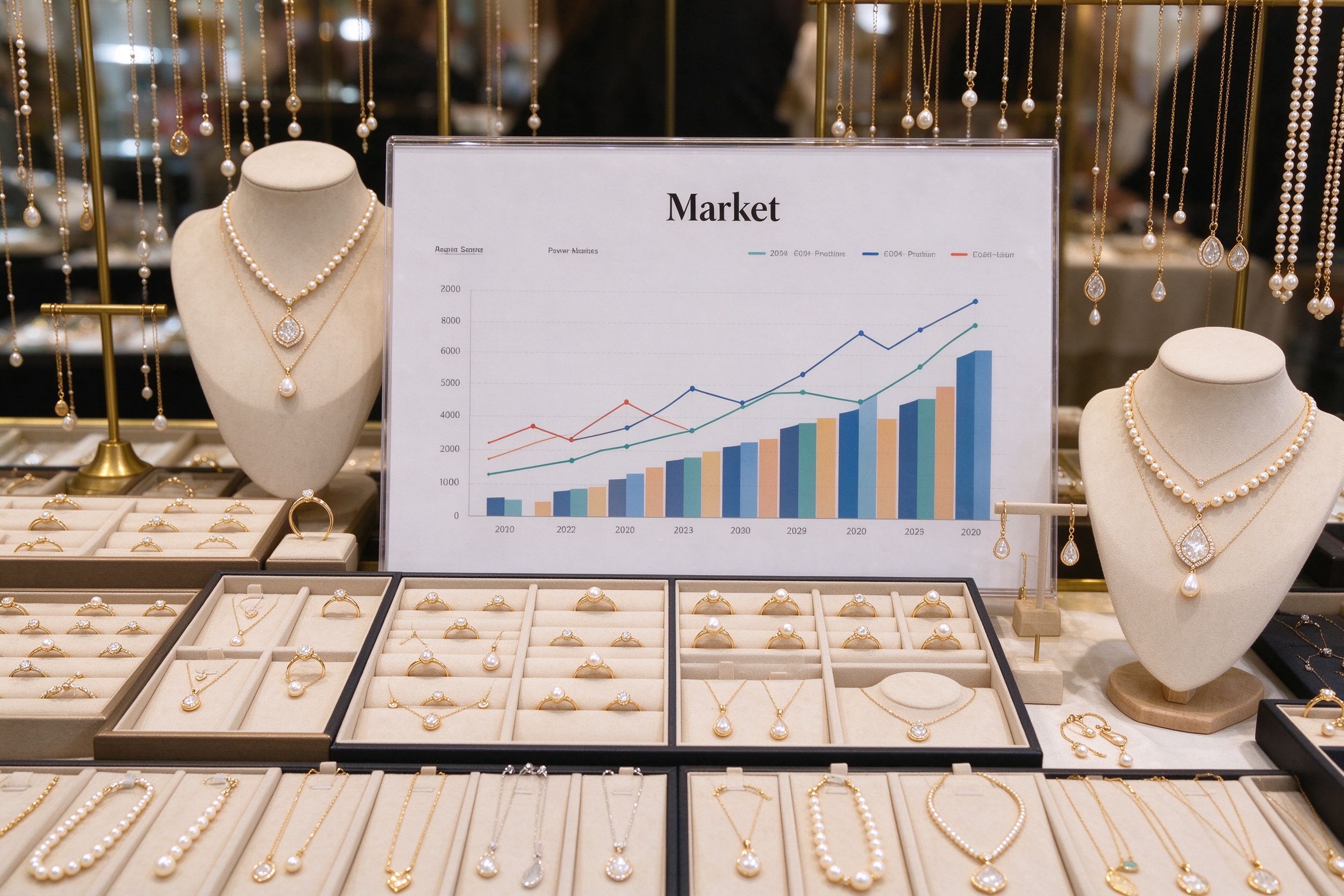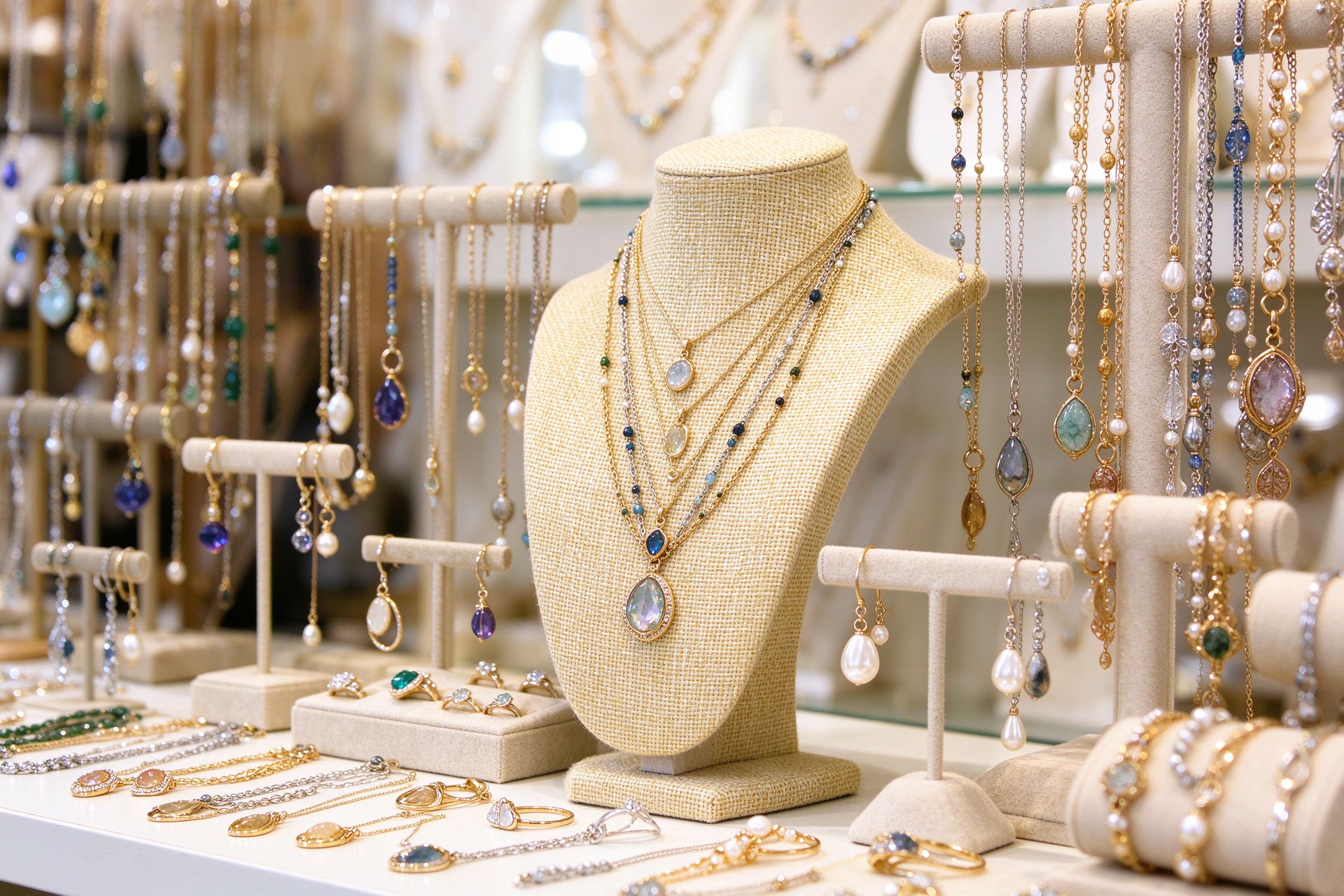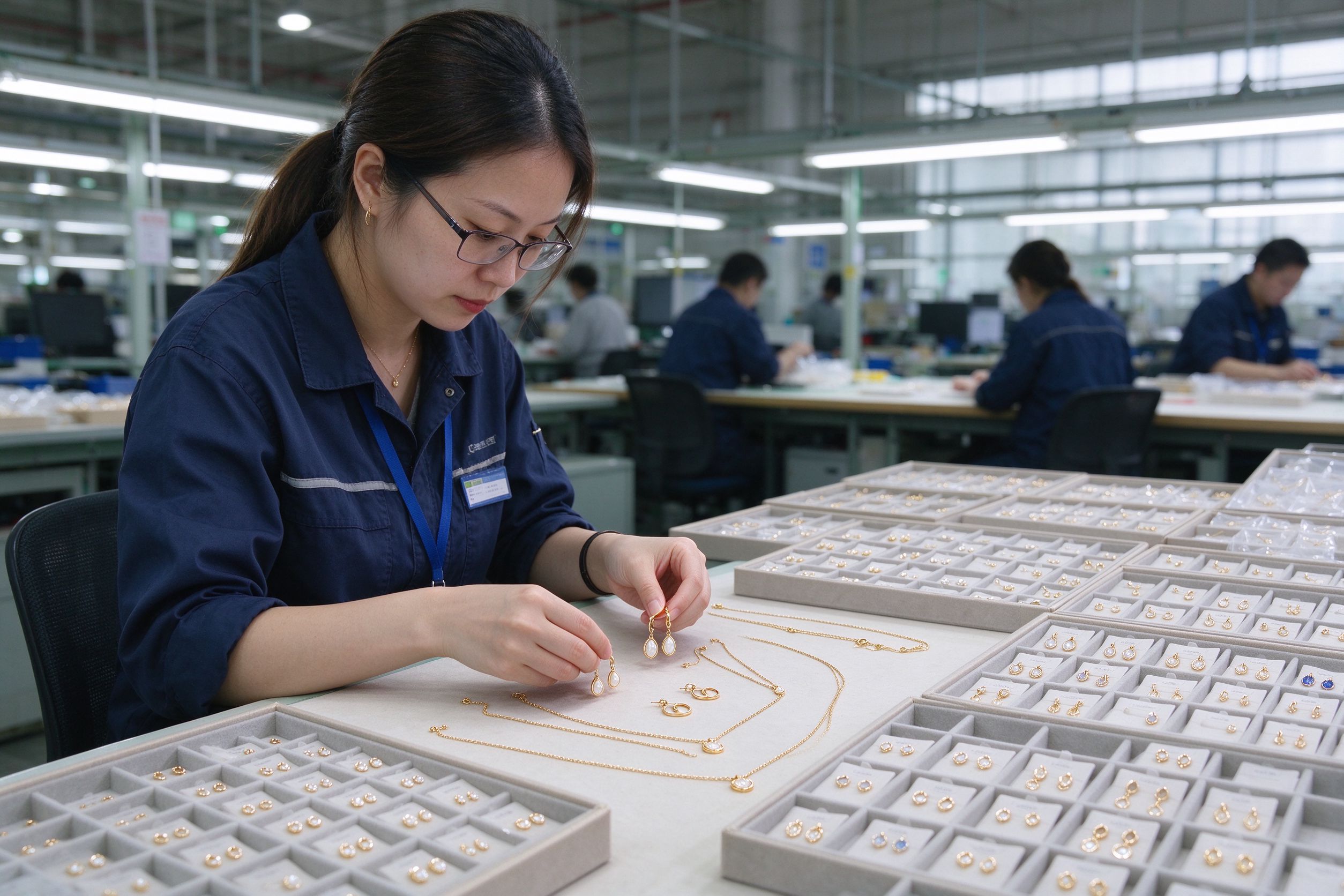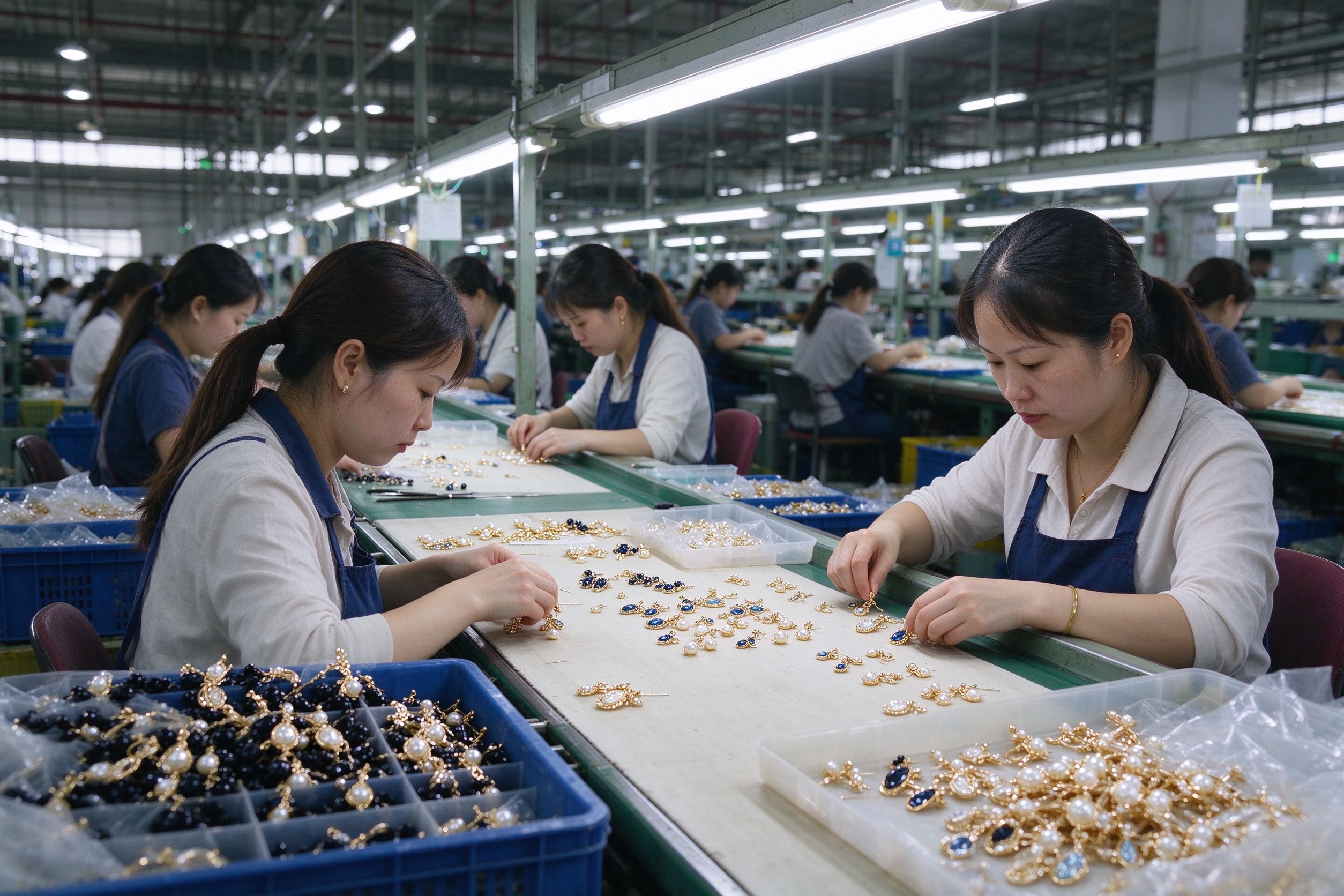
A jewelry set looks effortless, but the coordination you see on a shelf is the result of deliberate factory decisions. Matching a necklace, a pair of earrings and a bracelet into one coherent set is not just buying three pieces that look similar. It requires matching metal tone, stone size, plating thickness and visual weight. Understanding how sets are built helps you buy better and explain your products confidently to customers. Here is what happens behind the scenes.

The Set Starts With One Anchor Piece
A set is usually designed around one hero piece, most often the necklace. The necklace carries the biggest visual weight, so designers start there and build the earrings and bracelet to echo it. If the necklace has a central CZ stone, the earrings use the same stone shape and cut. If the necklace is a matte gold chain, the bracelet matches the finish. This is why a well-made set feels unified rather than assembled.
Matching the Metal Tone
The hardest part of a set is getting the metal tone identical across every piece. Gold plating baths vary slightly between runs, so a necklace plated last month and earrings plated this month can read as different shades. Factories solve this by producing a set in one production run, from the same plating bath. When you compare quotes, ask whether a set is made in a single run or assembled from separate stock. Single-run sets look intentional; mixed-run sets look off.
Matching Stones and Cut
The stones in a set should come from the same batch. A CZ in the necklace and a CZ in the earring that were cut differently will sparkle at different rates under light. Good set manufacturers use the same stone supplier, the same cut and the same color grade across all pieces. This is especially obvious in tennis sets, where a mismatched stone jumps out immediately.
Balancing Visual Weight
A set is not about making every piece identical. It is about balance. A bold statement necklace needs quieter earrings so the face is not overwhelmed. A simple pendant necklace can carry more dramatic earrings. Designers balance scale: if the necklace is heavy, the earrings stay small; if the necklace is dainty, the earrings can be bolder. This balance is what separates a wearable set from a costume.
Plating and Finish Consistency
Every piece in a set should carry the same plating thickness and the same protective e-coat. If the necklace has a durable finish but the earrings have thin plating, the earrings will tarnish first and the set looks broken. When you inspect a sample set, check the backs of the earrings and the inside of the bracelet: these touch skin and show wear earliest. They should match the front in quality.
The Three-Piece vs Four-Piece Set
Sets come in different combinations. A two-piece set (necklace plus earrings) is the most common and most affordable. A three-piece set adds a bracelet. A four-piece set adds a ring. More pieces raise the price and the perceived value, but they also raise the risk that one piece underperforms. We break down the options in our four-piece sets guide.
Why Coordinated Sets Sell Better Than Singles
When a customer buys a necklace and earrings separately, she worries about whether they match. A pre-matched set removes that anxiety and completes the look in one decision. That is why sets carry higher average order value: the customer is not buying one piece, she is buying a solved outfit. We quantify this in coordinated sets vs singles.
Custom Matching: Building Your Own Set Line
If you build a private label brand, you can commission a factory to design sets around your own theme: a color palette, a motif, or a price point. The factory creates the anchor necklace, then mirrors it in earrings and bracelet. Tooling costs apply, but the result is a set range no competitor carries. Read about our OEM and private label program and see our real case examples.
What to Inspect in a Sample Set
Before you bulk-order a set, lay the pieces side by side under daylight. Ask:
- Do the gold tones match exactly, or does one look brassy?
- Do the stones catch light the same way on every piece?
- Do the weights feel balanced when worn together?
- Do the clasps and backs match the finish quality?
If any answer is no, the set was assembled rather than designed.
Conclusion
A jewelry set is a small design project, not a bundle. The best sets share one production run, one metal tone, one stone batch and balanced visual weight. When you buy, ask about the manufacturing process rather than just the price. Our jewelry sets range is produced as coordinated runs, and we are happy to send sample sets so you can compare the matching quality yourself.
Why Single-Run Production Matters on a Set
The most common defect in a low-quality set is a mismatch: the necklace is warm gold, the earrings are cooler. This happens when pieces are pulled from separate stock rather than produced together. Single-run sets avoid it. When you compare suppliers, ask whether a set is made in one production batch. A single batch shares the same plating bath and stone lot, so every piece matches under any light. That consistency is what makes a set look intentional rather than assembled. We cover factory standards in our quality page.
Balancing the Set Price
A set should be priced so it feels like a deal versus buying pieces separately, but not so cheap that it looks disposable. Land the price just below the sum of its parts. Customers perceive a set as a solved outfit, and they will pay a small premium for convenience. The margin comes from buying the set as one coordinated unit from the factory, which is cheaper than sourcing each piece separately. This is the logic behind pricing sets for profit.
Inspecting a Sample Set Side by Side
Before you bulk-order a set, lay the pieces under daylight and compare them directly. Check that the gold tone matches across necklace, earrings and bracelet. Check that the stones sparkle the same way on each piece. Weigh the pieces together to feel the balance. If one piece looks off under natural light, it was likely assembled from separate stock rather than produced as a set. This side-by-side test is the fastest way to judge matching quality. Our QC checklist covers more inspection points.