Wholesale Jewelry Tools: Stone Grading & Color Consistency

Why Jewelry Tools Matter for Stone Grading and Color Consistency
Jewelry tools for stone grading and color consistency are the instruments that let a wholesale buyer verify what they are actually paying for before goods leave the factory. A wholesale jewelry buyer cannot rely on a supplier's word alone; you need calibrated diamond testers, standardized lighting, color comparison sets, and digital carat scales to check that a batch of moissanite or gemstones matches the grade stated on the paperwork.
This article walks through the practical tool decisions a US wholesale buyer faces, from which instruments to keep on your own bench to which checks you should insist your supplier performs at each quality control stage.
Moissanite presents a specific challenge here. It is a lab-created diamond alternative with brilliance and fire that can read close to diamond on some cheap testers, so the tools you use must be able to separate moissanite from diamond and from cubic zirconia. Likewise, color grading is not a matter of opinion: graded stones should come with GRA or IGI papers, and your tools are how you confirm the physical stones match those papers lot by lot.
The Core Tool Kit Every Wholesale Buyer Should Own
You do not need a full gemology laboratory, but a small set of reliable instruments pays for itself the first time you catch a mismatched lot. These are the pieces we consider baseline equipment for any buyer receiving bulk shipments of loose stones or set jewelry.
Diamond and Moissanite Testers
A dual-purpose tester that distinguishes diamond from moissanite is the single most important bench tool for this category. Thermal testers alone can be fooled by moissanite because its thermal conductivity sits close to diamond. Electrical conductivity testers read the silicon carbide structure of moissanite directly, so a combined thermal and electrical unit gives you two independent readings on the same stone.
Test stones loose when possible, and re-test a sample from every carton rather than only the stones shown at the top of the lot.
Calibrated Lighting and Color Comparison Sets
Color grading collapses without controlled lighting. Daylight-balanced lamps in the 5000 to 6500K range, used inside a neutral light box, remove the yellow cast of ordinary office lighting that makes a stone look one or two grades warmer than it is. Pair the lamp with a master color comparison set so you can place a candidate stone next to a known reference and judge the difference side by side.
Judge stones table-down against a white background, and grade them in the same orientation every time so your results are repeatable across inspections.
Digital Carat Scales and Measuring Gauges
Loose stones are sold by the carat, so the scale on your receiving bench is effectively a cash register. A milligram-resolution digital scale lets you verify invoiced carat weight against physical weight, and a caliper or millimeter gauge confirms diameter and depth measurements match the certificate. If a lot of one-carat stones consistently weighs short after accounting for tolerance, that is a conversation to have with your supplier before the balance payment moves.
Loupes, Microscopes, and Inclusion Documentation
A 10x triplet loupe is the standard for quick bench inspection; a stereo microscope with darkfield illumination handles the deeper work of documenting inclusions, polishing marks, and color zoning. Photographing representative stones from each lot under consistent magnification builds a visual record you can compare against future orders, which is how you catch drift in a supplier's output over multiple production runs.
How Tools Fit Into a Three-Stage Inspection Workflow
Tools only add value when they are assigned to specific checkpoints. Our production runs a three-stage QC process, and the same logic applies whether the inspection happens at the factory or on your receiving dock.
Incoming inspection covers raw materials and loose stones as they arrive. In-process checks catch problems while a piece is still on the bench, when a reset costs hours instead of a remake. Pre-ship inspection follows AQL sampling standards, meaning a defined number of pieces from the finished lot are pulled at random and checked against the approved sample. The table below maps the instruments to each stage.
| QC Stage | What Is Checked | Primary Tools |
|---|---|---|
| Incoming | Loose stone grade and weight | Tester, carat scale, loupe |
| In-process | Stone seat, metal finish, color match | Loupe, light box, caliper |
| Pre-ship AQL | Random lot sample vs. approved sample | Microscope, comparison set |
After the table, the practical takeaway: if you are buying custom work with a 30-piece minimum, ask which of these stages your supplier documents and whether you can request photos from the pre-ship AQL pull. A supplier running incoming, in-process, and pre-ship checks with documented results gives you far more confidence than one who only inspects at the end.
Verifying GRA and IGI Paperwork Against Physical Stones
Graded stones should arrive with GRA or IGI papers, but the certificate is only useful if the stone it describes is the stone in the parcel. Your tools close that gap. Start by matching the carat weight on the report to your scale reading, allowing for normal rounding tolerance. Then measure the stone's dimensions with a caliper and compare them to the report.
Finally, check color under your standardized light box against a master set, and compare the stone's internal features under magnification with any plot on the certificate.
For moissanite, the tester result matters as much as the color grade. A lot described as near-colorless should show no visible warmth when placed table-down next to your reference stones under daylight-balanced light. If stones in the same lot grade differently from each other, that is a color consistency problem: inconsistent lots create returns when customers compare pieces bought from the same collection.
Checking Color Consistency Across a Production Run
Single-stone grading is straightforward; lot consistency is where wholesale buyers get burned. Three habits keep a run uniform.
- Grade every stone in the same lighting setup, same orientation, and same background, so results are comparable across the whole lot.
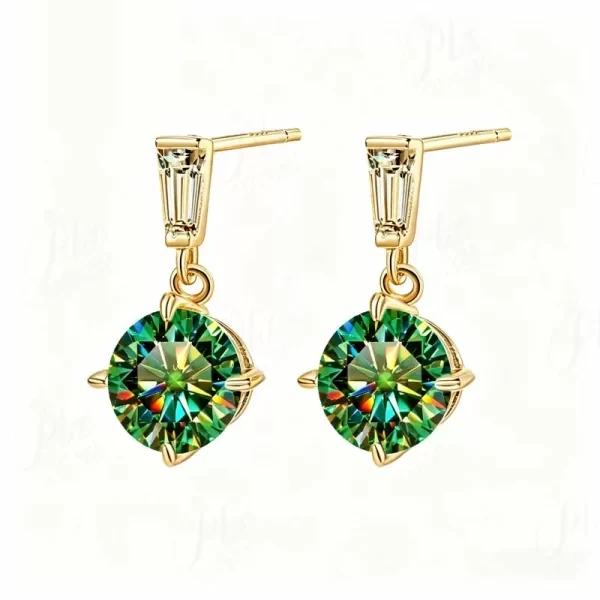
- Sort stones into matched pairs or sets before setting, especially for earrings, where a visible color mismatch between left and right is an immediate return.
- Keep a sealed reference stone from the approved sample and compare every production lot against it, not against memory.
For gold vermeil, 925 sterling silver, and solid gold settings, metal color interacts with stone color. A warm-toned 14K solid gold setting can make a near-colorless stone read slightly warmer, while rhodium-plated silver reads cooler. Evaluating stones in the actual setting metal, under the same lighting you used for loose grading, gives you the most accurate picture of what your customer will see.
Sampling, Lead Times, and Payment: The Practical Side of Tool-Verified Orders
Tools and workflow only matter once the commercial terms are settled. For stock styles the minimum order is 1 piece, which makes sampling cheap: order one unit, put it on your bench, and grade it against your references before committing to volume. Custom work carries a 30-piece minimum, so your sampling decision carries more weight.
Sampling takes 7 to 10 days, and bulk production runs 15 to 25 days after you approve the sample, so a thorough bench evaluation of the sample costs you nothing in timeline if done while the sample is in transit or in hand.
Payment structure follows the same logic. Sample orders can go through PayPal, which keeps your risk low while you verify grade and color on your own equipment. Bulk orders move on T/T terms with a 30 percent deposit and the 70 percent balance before shipment, which is exactly why the pre-ship AQL inspection matters: your tools and your inspection checklist should be satisfied before that balance payment is released.
Once goods ship, DDP delivery to the US takes 5 to 8 days, and pricing is quoted per piece or per carat depending on whether you are buying finished jewelry or loose stones.
Order Terms for Wholesale Buyers
MOQ is 1 piece for stock styles and 30 pieces for custom work, and loose stones are sold by the carat. Sampling takes 7 to 10 days, and bulk production runs 15 to 25 days after the sample is approved. Pricing is quoted per piece or per carat depending on the item. Payment is T/T with a 30% deposit and the 70% balance before shipment, and PayPal is accepted for sample orders.
Frequently Asked Questions
Can a cheap diamond tester tell moissanite from diamond?
Often it cannot. Basic thermal testers read moissanite and diamond similarly because of moissanite's thermal conductivity. Use a combined thermal and electrical conductivity tester, which detects the silicon carbide structure that separates moissanite from diamond.
What lighting should I use to grade stone color?
Daylight-balanced lighting in the 5000 to 6500K range inside a neutral light box, with stones graded table-down against a white background. Avoid mixed lighting sources and colored walls, both of which shift your perception of a stone's color grade.
Do I need to verify GRA or IGI certificates myself?
Yes. Match the certificate's carat weight and dimensions to your own scale and caliper readings, then check color and clarity against the report under your standardized setup. A certificate describes one stone; confirming the stones in your lot match it is your job at receiving.
How do I check color consistency across a whole lot?
Grade stones under identical lighting, orientation, and background, then sort them so paired and set pieces match. Compare every lot against a sealed reference stone from the approved sample rather than relying on memory or photos alone.
Which tools should I buy first on a limited budget?
Start with a dual thermal and electrical tester, a milligram digital carat scale, a 10x triplet loupe, and a daylight-balanced lamp. Add a master color comparison set and a stereo microscope as your order volumes grow.
Build Your Bench Before Your Next Order
A modest set of calibrated jewelry tools turns stone grading and color consistency from a supplier claim into a verified fact on your own bench. Pair that bench workflow with a supplier whose three-stage QC includes incoming checks, in-process checks, and pre-ship AQL inspection, and you protect both your margin and your customer reviews.
To review stock and custom options across moissanite jewelry and loose stones, browse our product catalog, read more buying guidance on the wholesale jewelry blog, or contact our sales team to request a sample and start your evaluation.
Sources: Grading references: GIA gem education and GIA laboratory information.