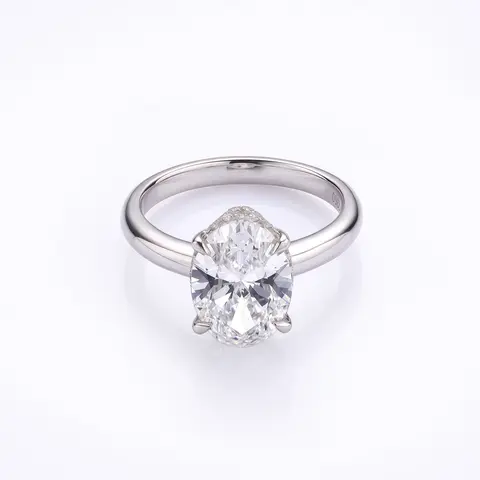
Wholesale Loose Moissanite: Stone Grading & Color Consistency

Why Color Consistency Is the Deciding Factor When You Buy Loose Moissanite
Loose Moissanite is sold by the carat, and the grading paperwork behind each stone determines whether your finished jewelry matches batch after batch. Wholesale buyers who source loose stones for production runs need two things from a supplier: documented color grades that hold true across the parcel, and certification from a recognized gem lab.
This article walks through how moissanite is graded, what color grades mean for your inventory, and how to structure a buying decision that protects your margins and your brand.
How Moissanite Grading Works in Practice
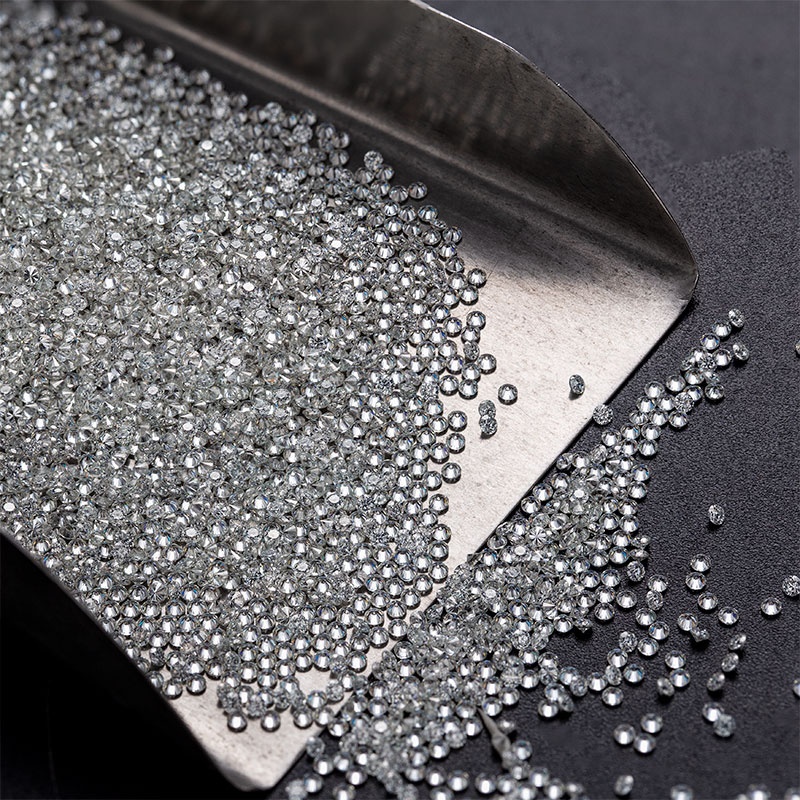
Moissanite is a lab-created diamond alternative grown in controlled conditions, which means its optical properties can be reproduced within narrow tolerances. Grading follows a color scale adapted from the diamond system, and most production-quality stones fall in the near-colorless to colorless range. Independent labs such as GRA and IGI issue certificates for graded stones, documenting color, clarity, cut, and carat weight. A certified stone gives you a third-party reference you can show retail customers without building the claim yourself.
When you order loose stones from us, pricing is per carat and each graded stone ships with its GRA or IGI paper. That documentation matters most when you resell set jewelry, because the certificate travels with the piece and supports the retail story you tell.
Color Grades: Colorless vs. Near-Colorless
The practical choice for most buyers is between colorless and near-colorless grades. Colorless stones are the safer pick for solitaire engagement settings and any design where the stone sits alone against white metal. Near-colorless stones can perform well in yellow or rose gold settings, where the warm metal tone masks the slight body color and lets you buy at a lower per-carat cost.
Mixing grades inside one production run is where buyers get burned. A near-colorless stone next to a colorless stone in a side-stone layout shows the difference at the counter. Specify one grade per order and ask that the parcel be matched before shipment.
Clarity and Cut Grades on the Certificate
Clarity grading on moissanite certificates is more forgiving than on diamond papers because inclusions in grown crystals are less common at production sizes. Cut grade deserves closer attention: the cut determines how the stone handles light, and moissanite has a higher refractive index than diamond, so a well-cut stone shows strong brilliance and fire. A stone with a strong color grade but a weak cut will look dull next to a better-cut near-colorless stone.
Read all three grades together rather than buying on color alone.
Matching Stones Across Production Runs
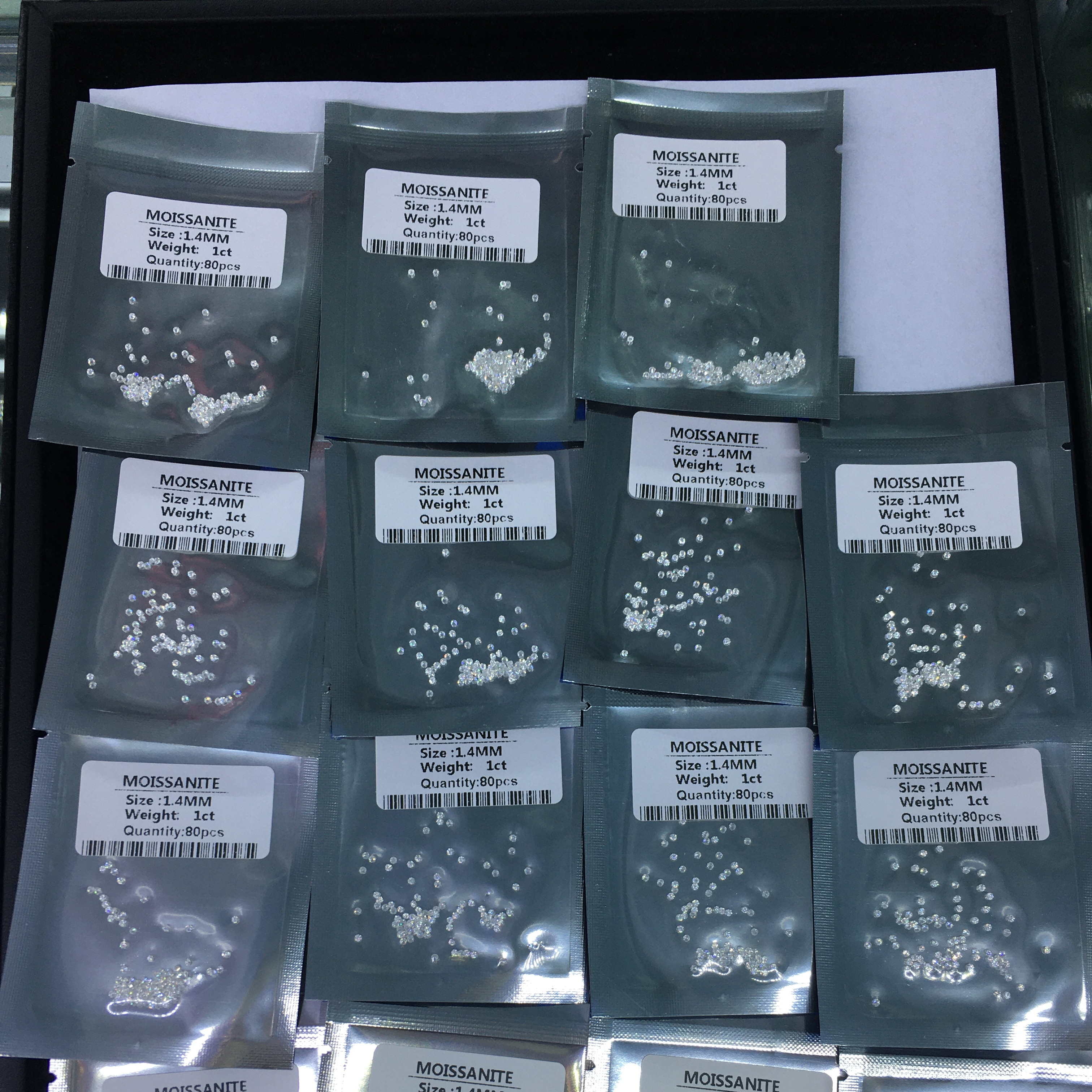
Color consistency is not just about one certificate. It is about whether the stones in this month's reorder look identical to last month's. Because moissanite is lab-created, a capable manufacturer can match color within a tight range, but only if the supplier sorts and matches parcels before packing. Ask your supplier directly whether they match stones within an order or pull from general stock. Pulling from general stock is how mixed lots happen.
Our three-stage quality control process supports this: incoming inspection verifies stones against their paperwork, in-process checks confirm consistency during setting or parceling, and a pre-ship AQL inspection samples the finished order before it leaves the factory. If a stone fails to match its certificate at any stage, it is pulled and replaced before shipment.
Parcel Matching for Multi-Stone Designs
Designs with a center stone and melee require deliberate parcel matching. Order the full stone set for a given design as one SKU, specified by grade and matched before production. This costs slightly more than buying center stones and melee separately, but it removes the visible color mismatch that generates returns at retail.
Carat Weight and Sizing Decisions
Loose stones are sold by the carat, so plan your bill of materials in carat weights, not millimeter approximations alone. Note that moissanite weighs less per unit volume than diamond, so a moissanite stone of the same millimeter size will have a lower carat weight than its diamond counterpart. Quote your retail sizing based on millimeter dimensions to avoid confusion, and use carat weight for procurement costing.
Certification Papers: GRA and IGI
Two certificate sources cover most graded loose moissanite: GRA and IGI. An IGI certificate is widely recognized across the jewelry trade, which helps if your retail channel requires named lab papers. GRA papers serve the same core function of documenting grade and weight. Confirm with your retail partners which paper they expect before placing the order, and make the certificate requirement part of your purchase order rather than a verbal agreement.
Uncertified stones carry a lower per-carat price, but they shift the grading burden onto you. For production runs where the certificate becomes part of the retail sale, certified stones with GRA or IGI papers are the practical choice. For industrial applications, and for components where the paper never reaches the customer, uncertified stock can be the better cost decision.
A Comparison Framework for Your Sourcing Decision
The table below summarizes the trade-offs buyers weigh when choosing loose moissanite stock for production.
| Option | Best Use | Pricing Basis | Key Consideration |
|---|---|---|---|
| Certified colorless | Solitaires, white metal settings | Per carat | Higher cost, strongest retail story |
| Certified near-colorless | Yellow and rose gold designs | Per carat | Metal tone masks body color |
| Matched parcels | Multi-stone and side-stone designs | Per carat | Matching done before production |
| Uncertified stock | Components, industrial uses | Per carat | You verify grade in-house |
Whichever option you choose, request a sample parcel before committing to bulk quantities. Matched samples let you check color against your existing inventory under the same lighting your retail partners use.
Ordering Process: From Sample to Bulk
Sampling takes 7 to 10 days, which is enough time to inspect grade consistency, check certificates, and compare the parcel against your reference stones. Bulk production takes 15 to 25 days after sample approval. Plan reorder cycles around these timelines, especially if your retail calendar has fixed launch dates.
Minimum order quantities are flexible: 1 piece for stock styles and 30 pieces for custom work. Loose stones are priced per carat. Payment runs on T/T with a 30 percent deposit and the 70 percent balance before shipment; sample orders can be paid through PayPal. Delivery to the US is DDP and takes 5 to 8 days, with duties handled before the goods reach you.
Verifying Your Sample Parcel
When the sample arrives, check each stone under daylight-balanced light and under store-style lighting, comparing against any existing stock you plan to match. Confirm each certificate number against the stone it accompanies, and photograph the parcel for your purchase records. A consistent sample parcel is your best predictor of the bulk lot.
Building the Grade Specification Into Your PO
Write the color grade, cut grade, carat range, and certificate type directly into your purchase order. Include a clause requiring matched parcels within the order. Clear specifications give both sides an objective standard if a discrepancy appears at the pre-ship AQL inspection or on receipt.
Order Terms for Wholesale Buyers
MOQ is 1 piece for stock styles and 30 pieces for custom work, and loose stones are sold by the carat. Sampling takes 7 to 10 days, and bulk production runs 15 to 25 days after the sample is approved. Pricing is quoted per piece or per carat depending on the item. Payment is T/T with a 30% deposit and the 70% balance before shipment, and PayPal is accepted for sample orders.
Frequently Asked Questions
What color grade should I choose for engagement-style settings?
Colorless grades are the common choice for solitaires and white metal settings where nothing masks body color. Near-colorless works well in yellow or rose gold, where the warm metal tone reduces visible color differences and lowers your per-carat cost. Match the grade to the metal color of the design line.
Do all loose moissanite stones come with certificates?
No. Graded stones come with GRA or IGI papers, and pricing is per carat with the certificate included. Uncertified stock is available at lower cost, but you take on the verification work. For stones sold at retail with documentation, certified stock is the practical route.
How do I keep color consistent across repeat orders?
Specify the grade and matched-parcel requirement in every purchase order, and keep reference stones from your first approved lot. Our incoming, in-process, and pre-ship AQL inspections check consistency at each stage. Reordering against a locked specification is far more reliable than re-describing what you want each time.
Is moissanite the same as a diamond?
No. Moissanite is a lab-created diamond alternative with its own optical properties, including a higher refractive index than diamond. It should be presented to customers as moissanite, not as a natural diamond. The GRA or IGI certificate documents it as moissanite with its specific grades.
What is the minimum order for loose stones?
Loose stones are sold by the carat, and the minimums are 1 piece for stock styles and 30 pieces for custom work. Sampling takes 7 to 10 days, and bulk production takes 15 to 25 days after approval. US delivery is DDP in 5 to 8 days.
Source Graded Loose Moissanite With Documented Color Consistency
Color grading and parcel matching determine whether your moissanite jewelry line looks cohesive at retail and holds its story across reorders. Start with a sample parcel in your target grade, confirm the GRA or IGI paperwork, and lock the specification into your purchase orders.
Browse available inventory and stone options on our products page, read more sourcing guidance on the wholesale jewelry blog, or contact our sales team to request a matched sample parcel and a quote for your next production run.
Sources: Grading references: GIA gem education and GIA laboratory information.