Wholesale Necklaces: Stone Grading & Color Consistency

Why Stone Grading and Color Consistency Decide the Success of Your Necklace Program
When you buy necklaces at wholesale, the single most technical decision you make is how the stones are graded and how consistently their color matches across an order. A pendant with a beautifully cut center stone can still generate returns if the side stones lean brown, or if two units in the same batch show visibly different color tones.
This article walks through the practical choices a US wholesale buyer faces on grading certificates, color consistency, and how to verify both before and after bulk production of necklaces.
What a Grading Report Actually Tells You Before You Order
Graded stones in our necklaces come with either GRA or IGI paperwork. These are the two documents you will encounter most often, and they serve different purposes depending on the item you are sourcing.
GRA Papers for Lab-Created Stones
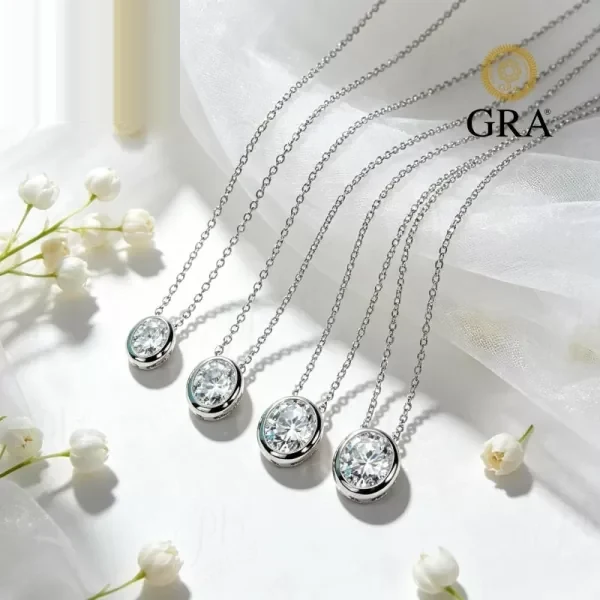
GRA reports accompany moissanite and other lab-created stones used in our necklace range. The report records the stone's carat weight, color grade, clarity grade, and cut details. Because moissanite is a lab-created diamond alternative, the GRA report lets you present verified specifications to your retail customers without making claims about the stone being a natural diamond. When you request a quote, ask which styles ship with GRA papers so you can plan your product listings accordingly.
IGI Papers and When They Matter
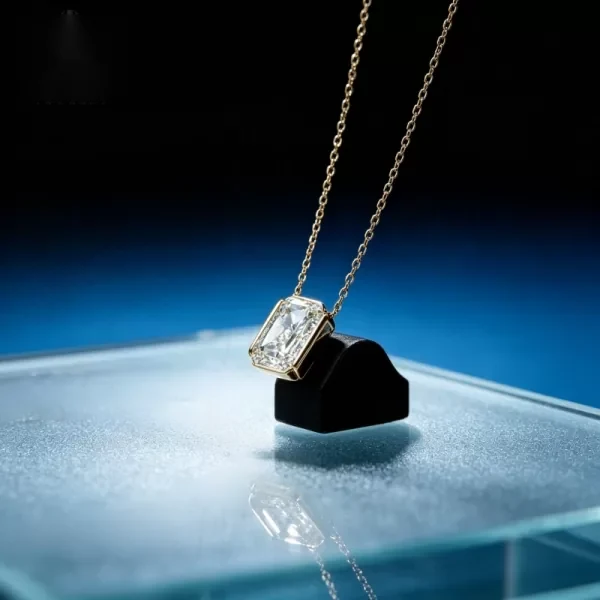
IGI certificates appear on higher-specification items and on loose stones sold by the carat. If your necklace program uses a large center stone, an IGI report gives your retail team an independent document to reference at the point of sale. Loose stones are sold by the carat, so the grading paper and the carat weight together form the basis of your per-piece or per-carat pricing.
Reading Color Grades on the Certificate
The color grade on a report is a starting point, not the whole story. A D-color grade tells you the stone sits at the top of the colorless range, but your visual check still matters. Ask your supplier to photograph graded stones under the same lighting used for production QC photos, then compare the certificate grade against what you see. Any gap between paper and appearance is a question worth raising before you approve a sample.
Color Consistency Across a Necklace Batch
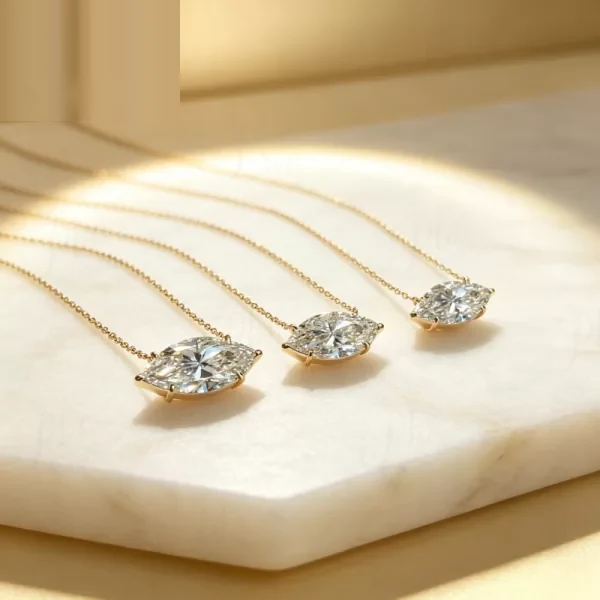
Color consistency is a different problem from grading. A certificate verifies one stone; consistency is about whether every stone in every necklace across your order sits in the same color range. This matters most on styles with multiple stones, such as tennis necklace formats and multi-stone pendants, where mismatched tones are visible side by side.
Matching Side Stones to Center Stones
On a multi-stone necklace, the side stones should be sourced within a narrow color range relative to the center stone. Ask your supplier how they sort side stones before setting. A reliable production workflow groups stones by color grade before they reach the setting bench, which reduces the chance of a warmer stone sitting next to a colorless one.
Request that your sample includes the same stone sorting process planned for bulk, since a hand-picked sample can look more consistent than a production run.
Metal Color and Perceived Stone Color
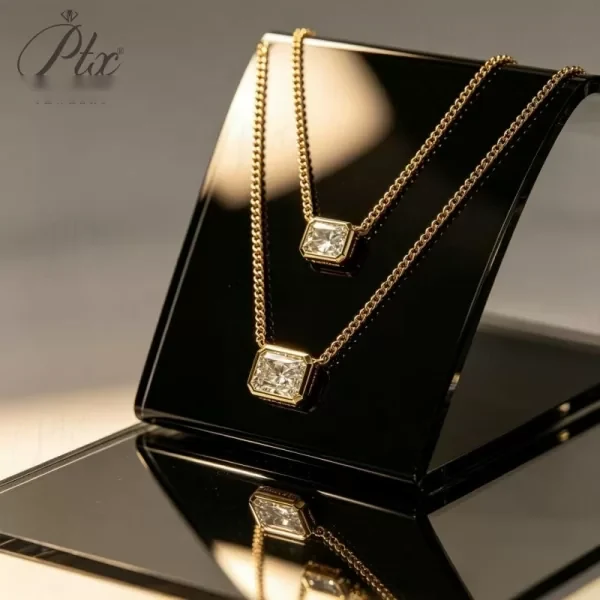
The metal you choose changes how stone color reads to the eye. The same stone can appear slightly warmer set in yellow gold vermeil than in 925 sterling silver. We offer necklaces in 925 sterling silver, 10K, 14K, and 18K solid gold, gold vermeil, and gold plated finishes. When you evaluate color consistency, review the stones in the exact metal you intend to order. A color match approved on silver may need re-checking on a yellow metal setting.
Metal Truth in Advertising
Be precise about metal naming in your own listings. Gold vermeil is sterling silver with a thick gold overlay; gold plated is a lighter deposit over a base metal. Neither should be described as solid gold. Solid gold necklaces in our range are 10K, 14K, or 18K. Clear metal naming protects you from returns and marketplace compliance issues in the US.
Sampling: Your First Checkpoint for Grading and Color
Sampling takes 7 to 10 days, and it is where you confirm that the graded stones and the color matching meet your standard. For stock styles, the minimum order is 1 piece, so you can order a single unit to inspect. For custom work, the minimum order is 30 pieces, and the sample stage becomes even more important because you are approving a specification that will repeat across the run.
During sampling, verify three things: that the certificate matches the stone in hand, that all stones on the piece fall within your agreed color range, and that the metal finish is what you specified. PayPal payment is accepted for sample orders, which keeps the approval stage low-risk while you validate quality.
Bulk Production and the Three-Stage QC Process
After you approve the sample, bulk production takes 15 to 25 days. Quality control runs at three stages: incoming inspection of materials and stones, in-process checks during setting and assembly, and a pre-ship AQL inspection on finished necklaces. Here is how each stage connects to grading and color consistency.
The incoming stage verifies that stones received from cutting match the GRA or IGI documentation and fall in the ordered color range. The in-process stage catches mismatched stones before they are permanently set. The pre-ship AQL inspection samples finished units against the approved standard, so color drift discovered late in the run can still be addressed before shipment. Ask for inspection records with your shipment so you can trace any issue back to its stage.
| QC Stage | What Is Checked | Grading Relevance | Color Relevance |
|---|---|---|---|
| Incoming | Materials and loose stones | Certificate match | Color range sorting |
| In-process | Setting and assembly | Stone identity | Side stone matching |
| Pre-ship AQL | Finished necklaces | Paperwork attached | Batch consistency |
This table is a working reference you can adapt into your own supplier audit checklist. Each stage should produce a documented result, and your purchase agreement should state the color tolerance and grading requirement you expect at each point.
Payment, Shipping, and Getting Inventory to the US
Payment terms follow a standard structure: T/T with a 30 percent deposit and the 70 percent balance before shipment, while sample orders can be paid by PayPal. Pricing is quoted per piece for finished necklaces or per carat for loose stones, so clarify which basis applies to each line item before you confirm the deposit.
Delivery to the US uses DDP terms and takes 5 to 8 days. DDP means duties and shipping are handled through the quoted price, which simplifies your landed cost calculation. Build the 5 to 8 day transit window into your restock planning alongside the 15 to 25 day production time so you can time reorders before stock runs thin.
Order Terms for Wholesale Buyers
MOQ is 1 piece for stock styles and 30 pieces for custom work, and loose stones are sold by the carat. Sampling takes 7 to 10 days, and bulk production runs 15 to 25 days after the sample is approved. Pricing is quoted per piece or per carat depending on the item. Payment is T/T with a 30% deposit and the 70% balance before shipment, and PayPal is accepted for sample orders.
Frequently Asked Questions
Do all necklaces come with grading papers?
Graded stones come with GRA or IGI papers depending on the item and stone type. When you request a quote, ask which styles include certificates so you can plan listings and pricing. Loose stones sold by the carat are graded as well.
How do I check color consistency before bulk production?
Approve a sample produced under the same stone sorting process planned for the bulk run. Specify your color tolerance in writing, then confirm that the pre-ship AQL inspection checks against that tolerance. Photographs under consistent lighting help you compare the sample to production units.
What is the minimum order quantity?
Stock styles have a minimum order of 1 piece, which makes testing color and grading straightforward. Custom work requires 30 pieces. Loose stones are sold by the carat with no piece-based minimum.
Can I mix metals within one order?
Yes, you can order the same necklace design across 925 sterling silver, gold vermeil, gold plated, or 10K, 14K, and 18K solid gold. Because metal color affects how stone color reads, review stone color consistency in each metal finish you plan to carry.
How long does the full cycle take?
Sampling runs 7 to 10 days, then bulk production takes 15 to 25 days after approval, and DDP shipping to the US takes 5 to 8 days. Plan roughly a month to six weeks from sample approval to stock on your shelf.
Start Your Necklace Order
Stone grading and color consistency are decisions you control through the sample, the specification, and the QC checkpoints described above. Review our full range of necklaces and other jewelry in the product catalog, read more buying guides like this one on the wholesale jewelry blog, and request samples or a quote through our contact page. Our team can confirm grading paperwork, color tolerances, and delivery timelines for your specific styles.
Sources: Grading references: GIA gem education and GIA laboratory information.