Wholesale Necklaces: Supplier Vetting & Audit Red Flags

Why Supplier Audits Matter When Sourcing Wholesale Necklaces
Necklaces are one of the highest-turn categories in any jewelry wholesale program, but they are also one of the easiest categories for a weak supplier to hide problems in. A supplier audit for necklaces should focus on three concrete areas: metal honesty, stone documentation, and production consistency. If a prospective partner cannot verify any one of those three, that is a red flag worth pausing on before you place a first order.
This article walks through the specific red flags US wholesale buyers encounter when evaluating necklace suppliers, and what verifiable evidence a credible manufacturer should be able to provide at each stage.
Red Flag One: Vague or Misleading Metal Descriptions
The most common problem in necklace sourcing is metal mislabeling. A supplier who lists a chain as "gold" without stating the base material is leaving critical information out. Legitimate manufacturers name the true metal in every listing: 925 sterling silver, 10K, 14K, or 18K solid gold, gold vermeil, or gold plated over a stated base. Each of those carries a very different cost structure and a very different durability profile for your retail customers.
Ask for the Plating Spec in Writing
For plated and vermeil necklaces, request the plating thickness and the base metal in writing before sampling. A vermeil piece is sterling silver underneath, while a generic plated chain may sit over brass or an unnamed alloy. If a sales rep answers "good quality gold" instead of a spec sheet, treat that as a signal to dig deeper. Reputable suppliers respond to this question quickly because their plating lines are already documented for their own QC process.
Confirm Karat Claims with Stamping and Paperwork
Solid gold necklaces should arrive stamped with the correct karat mark, and the stamp should match the invoice description. During your audit, ask whether the supplier can show mill certificates or assay documentation for the gold they purchase. A manufacturer working with 14K solid gold on a regular basis has established refining relationships and will not hesitate to discuss them. Evasion here is one of the clearest audit red flags in the category.
Red Flag Two: Missing Stone Documentation on Moissanite Necklaces
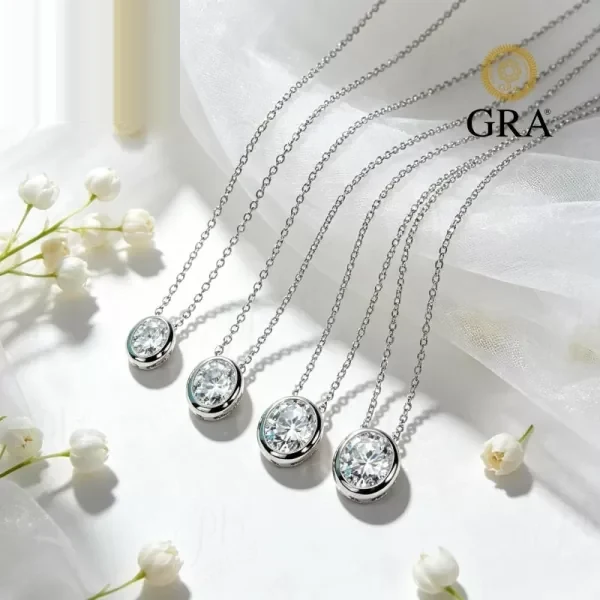
Moissanite is a lab-created diamond alternative, and it performs well in pendant and solitaire necklace programs when it is honestly described and properly graded. The audit question is not whether the supplier offers moissanite, but whether they can document what they sell. Graded stones should come with GRA or IGI papers, and loose stones sold by the carat should match the stated weight when independently checked.
Spot-Check Carat Weights on Loose Stones
If you are buying loose stones by the carat for your own setting program, weigh a random sample on your own scale when the goods arrive. Discrepancies between invoiced carat weight and actual weight are a serious finding. Build this spot-check into your receiving process for every necklace order that includes loose stones, and keep records across orders so you can spot drift over time.
Test the Certificate Trail
Ask a prospective supplier to send a sample GRA or IGI paper alongside a stone you can verify. Some operations produce convincing-looking certificates that do not correspond to the stones shipped. Cross-checking one certificate early in the relationship costs you very little and tells you a great deal about how the supplier handles documentation at scale.
Red Flag Three: No Visible Quality Control Process
A credible necklace manufacturer can describe its QC system in specific terms. Our own process runs in three stages: incoming material inspection, in-process checks during production, and a pre-ship AQL inspection before anything leaves the floor. When you audit a supplier, ask what happens at each stage for necklaces specifically, because chains, clasps, and pendant bails fail differently than rings or earrings.
What to Ask About Chain and Clasp Assembly
Necklace-specific QC questions include how solder joints on chains are checked, whether clasps are pull-tested, and how pendant alignment is verified before packing. A supplier who answers these questions with process detail, rather than general assurances, is showing you a real production floor. Ask to see photos or video of the in-process inspection step if you cannot visit in person.
Red Flag Four: Lead Times That Do Not Add Up
Realistic production timelines are a useful audit tool because they are hard to fake consistently. Sampling for a necklace style takes 7 to 10 days. Bulk production takes 15 to 25 days after approval. If a supplier promises sampling in two days and a full necklace program in a week, they are either skipping QC stages or planning to subcontract to a shop you have never audited. Both outcomes put your brand at risk.
Check Whether MOQs Match the Production Model
MOQ structure also reveals how a factory actually operates. A low MOQ of 1 piece for stock styles is reasonable, because the item already exists. Custom work at an MOQ of 30 pieces is reasonable, because new tooling and molds need volume to justify setup. Be cautious when a supplier claims fully custom, from-scratch designs with no minimum, since that usually means they are reselling rather than manufacturing.
Red Flag Five: Unclear Payment and Shipping Terms
Payment structure tells you who carries the risk in the relationship. Standard wholesale terms are T/T with a 30 percent deposit and the 70 percent balance before shipment, with PayPal accepted for sample orders. That structure protects both sides: the deposit covers material purchases, and the balance is due only after production and pre-ship inspection are complete. A supplier demanding full payment upfront for a bulk order, with no inspection window, is shifting all the risk onto you.
Shipping terms deserve the same scrutiny. DDP delivery to the US takes 5 to 8 days once goods are ready, which means the supplier handles customs clearance and duties. If a potential partner quotes vague transit times or asks you to arrange clearance yourself on a first order, factor that into your audit scorecard before committing.
Building a Simple Necklace Supplier Audit Checklist
A written checklist keeps your evaluations consistent across suppliers and across seasons. The table below summarizes the core checks for a necklace-focused audit, with the evidence you should request from each candidate.
| Audit Area | Red Flag | Evidence to Request |
|---|---|---|
| Metal description | "Gold" with no base named | Written plating spec or karat stamp photos |
| Stone grading | No papers offered | GRA or IGI certificate sample |
| Quality control | No defined stages | Three-stage QC description with AQL pre-ship |
| Timeline | Sampling in days, bulk instantly | 7 to 10 day samples, 15 to 25 day bulk |
Keep the completed checklist on file for each supplier you evaluate. Revisit it annually, since plating specs, grading partners, and QC staffing can change. Consistent documentation across audits makes it far easier to compare suppliers on substance rather than on salesmanship.
Order Terms for Wholesale Buyers
MOQ is 1 piece for stock styles and 30 pieces for custom work, and loose stones are sold by the carat. Sampling takes 7 to 10 days, and bulk production runs 15 to 25 days after the sample is approved. Pricing is quoted per piece or per carat depending on the item. Payment is T/T with a 30% deposit and the 70% balance before shipment, and PayPal is accepted for sample orders.
Frequently Asked Questions
What is a reasonable MOQ for testing a new necklace supplier?
Start with stock styles, which carry an MOQ of 1 piece, so you can evaluate quality with minimal exposure. Move to custom work at the 30 piece MOQ only after samples have passed your own inspection. This staged approach limits risk while still giving you real production output to assess.
How long does a full necklace sampling and production cycle take?
Sampling takes 7 to 10 days, and bulk production runs 15 to 25 days after you approve the sample. Add DDP shipping to the US of 5 to 8 days. Plan your retail calendar around roughly six weeks from first sample to goods in hand.
Should moissanite necklaces come with certificates?
Graded stones should include GRA or IGI papers. Loose stones are sold by the carat, so documentation supports the weight and quality you are invoiced for. Verify at least one certificate early in the relationship to confirm the paper trail is genuine.
What payment terms are standard for wholesale necklace orders?
T/T with a 30 percent deposit and the 70 percent balance before shipment is the standard structure for bulk orders. PayPal is typically accepted for sample orders, which keeps small trial purchases simple. Avoid suppliers who demand full bulk payment before any inspection stage.
How do I verify metal claims without a lab?
Check karat stamps against invoice descriptions, and request written plating specifications for vermeil or plated pieces. A simple magnet test and a weight check against stated dimensions catch the most obvious mismatches. For higher-volume programs, an independent assay on one shipment per season is a worthwhile investment.
Move Forward with a Supplier You Can Verify
The audit red flags above all share one trait: a strong supplier removes them with documentation, not promises. Browse our current necklace programs and stone options on our wholesale product catalog, read more sourcing guidance on our jewelry wholesale blog, and request samples or start a custom necklace program through our contact page. A short conversation, backed by real specs and real papers, is the fastest way to separate a reliable manufacturing partner from a risky one.
Sources: Grading references: GIA gem education and GIA laboratory information.