Wholesale Necklaces: Pricing Basis & Wholesale Price Lists

How Wholesale Necklace Pricing Actually Works
Necklaces are priced either per piece for finished stock styles or per carat for designs built around loose stones, and your wholesale price list will reflect that split from the very first line item. Understanding which pricing basis applies to each SKU is the first practical decision every buyer faces, because it determines how you compare quotes, calculate landed cost, and set your own retail margins.
A stocked 925 sterling silver pendant chain is quoted per piece, while a custom tennis necklace set with graded moissanite is quoted per carat based on total carat weight. This article walks through how each basis works, what goes into a wholesale price list, and how to structure your order so pricing stays predictable from sampling through bulk delivery.
Per-Piece Pricing for Stock Necklace Styles
Stock styles are the simplest part of any wholesale necklace price list. You order from existing molds and inventory, the minimum order quantity is 1 piece, and the quote is a flat per-piece price. This basis works well when you are testing new designs, filling small boutique orders, or comparing multiple suppliers on identical catalog items.
What a Per-Piece Quote Includes
A per-piece quote should cover the finished necklace as shipped: the metal (925 sterling silver, gold plated over silver, gold vermeil, or 10K/14K/18K solid gold), any set stones, the clasp, and standard packaging. When you compare price lists from different suppliers, check that the metal specification matches.
A gold plated silver necklace and a 14K solid gold necklace in the same design can differ in cost by a wide margin, and mixing them up on a purchase order is one of the most common buyer errors. Confirm the exact metal name in writing before you approve a sample.
Comparing Price Lists Across Suppliers
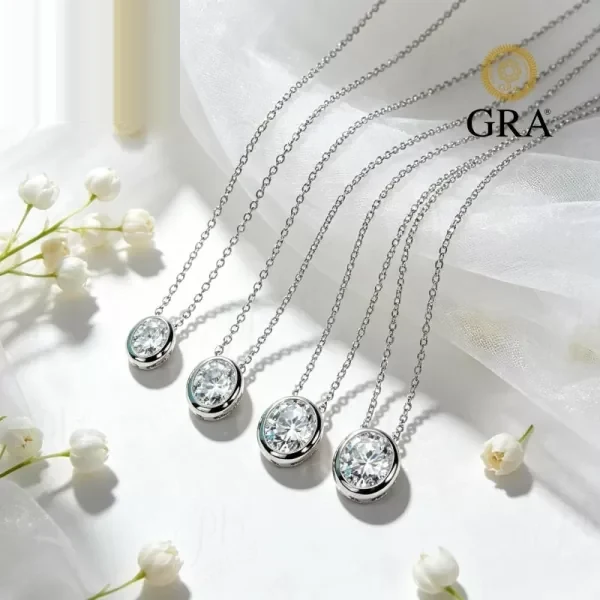
Because stock styles are quoted per piece, comparison shopping is straightforward: same design, same metal, same stone spec, lower price wins. The catch is that low quotes sometimes hide differences in stone grading paperwork or metal thickness. Ask whether stones in stock styles come with GRA or IGI papers, since graded stones carry documentation that supports your own retail claims. A slightly higher per-piece price with verified grading papers often costs less once returns and disputes are factored in.
Per-Carat Pricing for Stone-Led Necklace Designs
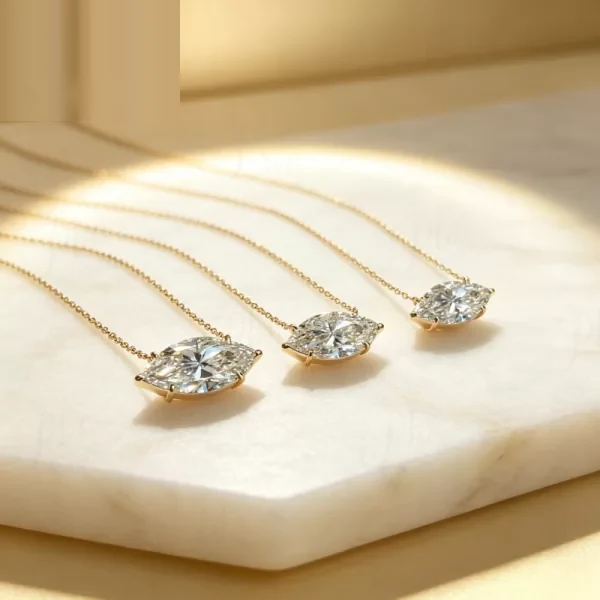
When a necklace design is defined by its stones rather than its metal work, pricing shifts to a per-carat basis. Loose stones are sold by the carat, and a custom pendant or riviere built around those stones is quoted on total carat weight. This basis is standard for moissanite tennis necklaces, halo pendants, and graduated stone designs where the stone package drives the cost.
How Total Carat Weight Is Calculated
For a tennis necklace, total carat weight is the sum of every stone in the piece. For a solitaire pendant, it is the center stone plus any accents. Your supplier should state the total carat weight on the quotation along with the per-carat rate, so you can verify the math yourself. If a quote lists a per-carat rate but no total weight, ask for the breakdown before committing.
Clear carat documentation also matters at the grading stage, since GRA or IGI papers reference the specific stone details.
Why Custom Work Carries a 30-Piece Minimum
Custom necklace work, including any design where you specify stone layout, metal, or carat weight, requires a 30-piece minimum order. That minimum exists because custom production involves mold creation, stone procurement, and setup labor that only makes sense across a production run. Per-carat pricing on a 30-piece run is more stable than per-piece pricing on scattered singles, which is why the price list for custom items is usually issued after your specifications are locked.
Sampling takes 7 to 10 days, and bulk production runs 15 to 25 days after you approve the sample.
Sample Wholesale Price List Structure
A well-organized wholesale price list for necklaces separates stock per-piece items from custom per-carat items and states the metal and stone basis for each. The table below shows the structure to expect when you request a list, using representative line-item formats rather than fixed figures.
| Line Item | Metal | Pricing Basis | MOQ | Documentation |
|---|---|---|---|---|
| Stock pendant chain | 925 sterling silver | Per piece | 1 piece | Spec sheet |
| Stock tennis necklace | Gold vermeil | Per piece | 1 piece | GRA paper |
| Custom halo pendant | 14K solid gold | Per carat | 30 pieces | IGI paper |
| Custom riviere | 18K solid gold | Per carat | 30 pieces | IGI paper |
| Loose stones for setting | N/A | Per carat | By carat | GRA or IGI |
Use this format as a checklist when you review any supplier list. Every row should answer four questions: what the metal actually is, whether pricing is per piece or per carat, what the minimum order is, and what paperwork comes with the stones. If any of those fields is missing, fill it in before you issue a purchase order.
Payment Terms and How They Affect Your Cash Flow
Pricing basis and payment terms work together. Standard terms are T/T with a 30 percent deposit and the 70 percent balance before shipment, which applies to bulk production orders on either pricing basis. Sample orders are handled through PayPal, keeping the sampling phase low-commitment while you verify design and quality.
Planning Cash Flow Around the 30/70 Split
With a 30 percent deposit, you commit a third of the order value upfront and the remainder only when goods are ready to ship. On a per-carat custom necklace order, the deposit is calculated on the quoted total, so an accurate carat breakdown directly affects how much cash you lock in early. Budget for the 70 percent balance to fall due right before the DDP shipment departs, which lands in the US within 5 to 8 days.
Quality Control as Part of the Price
Every necklace passes through a three-stage QC process: incoming material inspection, in-process checks during production, and a pre-ship AQL inspection before the balance payment is due. This matters to your pricing math because rejected goods and re-shipments are the hidden costs that a low headline price can conceal. Ask which AQL level the pre-ship inspection uses and whether you can review the inspection report before releasing the 70 percent balance.
Suppliers with structured QC justify their position in the price list with fewer post-delivery problems.
Building Your Own Retail Margin on Wholesale Necklace Pricing
Once you understand the two pricing bases, the practical work is converting supplier quotes into landed cost per unit. For per-piece stock items, landed cost is the unit price plus your share of freight on the DDP shipment, which is usually minimal since DDP delivery to the US takes 5 to 8 days with duties handled.
For per-carat custom items, divide the total quoted amount across the 30-piece minimum to find your true unit cost, then layer in sampling fees if the design required multiple sample rounds.
Keep your price list updated by pricing basis, not by product category alone. Buyers who track per-piece stock items and per-carat custom items in separate columns spot cost movement faster, negotiate renewals with better information, and avoid the common mistake of comparing a per-piece quote on a stone-light chain against a per-carat quote on a stone-heavy tennis necklace. The two numbers are not comparable until you convert them both to landed unit cost.
Order Terms for Wholesale Buyers
MOQ is 1 piece for stock styles and 30 pieces for custom work, and loose stones are sold by the carat. Sampling takes 7 to 10 days, and bulk production runs 15 to 25 days after the sample is approved. Pricing is quoted per piece or per carat depending on the item. Payment is T/T with a 30% deposit and the 70% balance before shipment, and PayPal is accepted for sample orders.
Frequently Asked Questions
What is the minimum order for wholesale necklaces?
Stock styles have a minimum order of 1 piece, so you can buy a single unit to test a design. Custom work requires a 30-piece minimum because of mold and setup costs. Loose stones are sold by the carat with no fixed piece minimum.
How long do sampling and bulk production take?
Sampling takes 7 to 10 days from specification to sample in hand. Bulk production takes 15 to 25 days after you approve the sample. DDP delivery to the US then takes 5 to 8 days.
Why are some necklaces priced per carat instead of per piece?
Designs built around loose stones are priced per carat because the stone package drives the cost. Stock styles with standardized components are priced per piece. Your price list will state the basis on each line item.
What payment methods are accepted?
Bulk orders use T/T with a 30 percent deposit and the 70 percent balance before shipment. Sample orders are paid through PayPal. Both methods are confirmed on your quotation.
Do the stones come with grading papers?
Graded stones ship with GRA or IGI papers documenting the stone details. Moissanite is a lab-created diamond alternative, and the papers support accurate product descriptions in your own listings. Confirm the grading document type when you request your quote.
Request a Wholesale Necklace Price List
If you are ready to price necklaces for your store, start by browsing current stock and custom options on our wholesale jewelry catalog, then read more buying guides like this one on our jewelry wholesale blog. When you have a shortlist of designs, reach out through our contact page to request a price list by pricing basis, arrange samples, and confirm lead times for your first order.
Sources: Grading references: GIA gem education and GIA laboratory information.