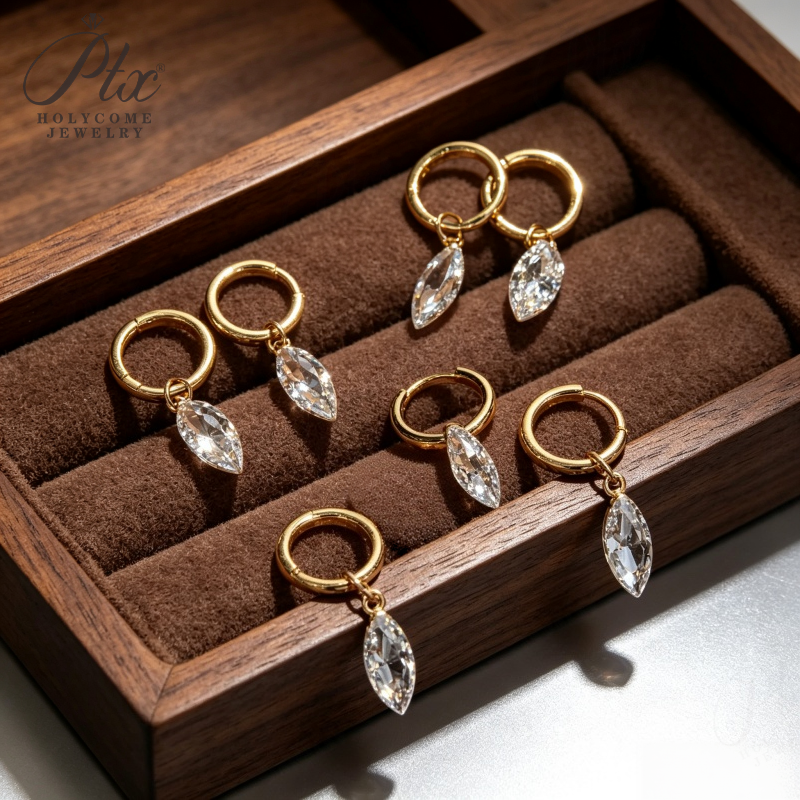
Hair accessories are one of the fastest-moving categories in the whole fashion accessory department, and most buyers still under-buy it. A hair clip costs almost nothing to source, sells on impulse, and travels in the same small parcel as a pair of earrings. Yet walk into a boutique and the jewelry case is full while the hair clip rack is either bare or stocked with tangled, faded pieces from a dollar bin. That mismatch is the opportunity. This guide is for boutique owners, Amazon and TikTok sellers, beauty-supply buyers and distributors who want to buy hair clips, barrettes, claw clips and scrunchies factory-direct from Wuzhou without ending up with a drawer of broken clips.
Hair accessories behave differently from jewelry. Customers buy them on a whim, in multiples, and they forgive a low price point but not a broken hinge or a tarnished clip. The buyers who win in this category are the ones who treat the hinge, the plating and the fabric as the product, not afterthoughts. The rest of this guide walks through what actually sells, what breaks, and how to price and stock it.

Why hair accessories deserve a bigger slice of your buy
The numbers favor hair accessories. A claw clip that costs you $0.60 to $1.50 ex-factory retails at $6 to $15. A metal barrette costs $0.30 to $0.90 and retails at $5 to $10. The markup is among the highest in accessories because customers shop the look and the trend, not the material. Unlike earrings, hair clips rarely trigger allergic reactions because they touch hair rather than skin, which removes a whole category of returns and complaints.
Hair accessories also have a near-perfect repeat-purchase dynamic. A customer who buys one pretty clip will come back for a second and a third in a different color. That is why the category lives on a spinner rack or a tray near the till: it is built for incremental, multi-piece purchases. Stock a wide range of colors and shapes at low individual prices, and the average transaction quietly climbs.
- High markup: 5 to 10 times landed cost on most clips.
- Low allergy risk: clips touch hair, not skin.
- Impulse purchase: racks near the till convert browsers.
- Multi-buy: customers collect clips in several colors.
- Cheap to ship: lightweight and small.
The hair clip formats that sell in 2026
Not every clip format moves equally. Based on what resellers reorder, the following categories form a reliable core range. Build around them, then add one or two trend shapes each season.
Claw clips and jaws
The chunky claw clip is the backbone. Matte resin, tortoiseshell and pearlescent finishes move year-round. Stock them in three sizes: small for half-up styles, medium for everyday, and large for thick hair. The large size is the one buyers complain about when it does not hold; test the spring on samples before ordering.
Metal barrettes and snap clips
Enamel, pearl and rhinestone barrettes dress up a simple ponytail. They skew feminine and sell well through wedding and party seasons. Snap clips for children and fine hair are a steady niche. Keep these in gold and silver tones so they coordinate with the rest of your jewelry.
Hair ties and scrunchies
Fabric scrunchies and printed hair bands are a low-cost, high-turnover filler. They pair naturally with clips and sell in packs rather than singles. Fabric quality matters: a thin, stretched scrunchie looks cheap, while a well-filled one looks like a product.
Pearl and bridal clips
Pearl-embellished and crystal-encrusted clips overlap with the bridal category and carry a higher price. These are the gift and occasion pieces rather than the everyday impulse buys.
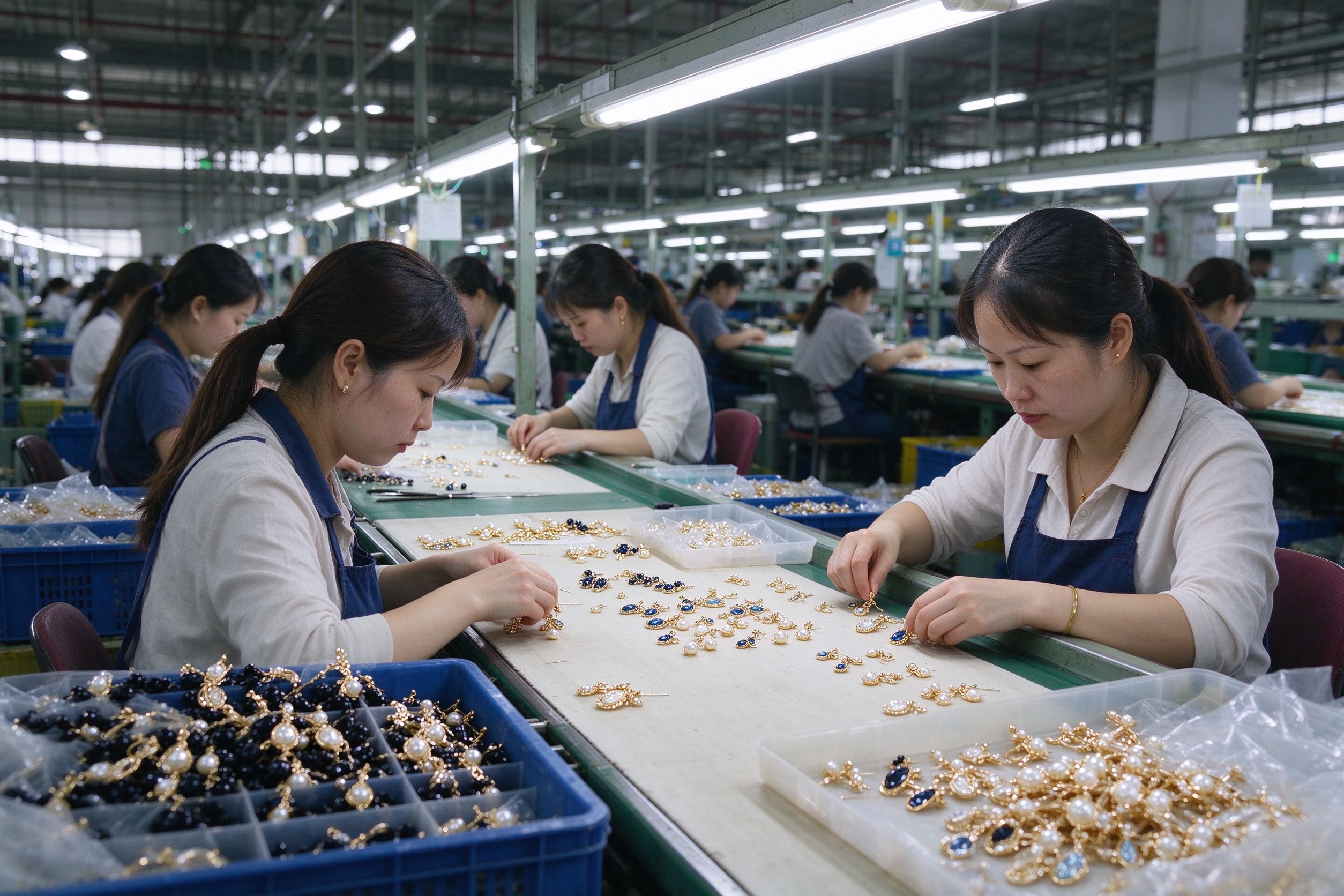
What breaks in hair clips: QC before you order
The single most common complaint about cheap hair clips is a weak spring or a hinge that snaps after a few weeks of use. Unlike a brooch, a clip is opened and closed dozens of times a week, so the mechanism takes real abuse. When you sample, open and close each claw clip at least twenty times and watch for any wobble or stiffness. The hinge should feel smooth and powerful from the first opening to the twentieth.
- Claw clip spring opens firmly and grips without slipping.
- Hinge pin is tight; no side-to-side wobble.
- Plating on metal clips is even with no black edges.
- Rhinestones and pearls are glued tight; shake and listen for rattles.
- Resin claws have no sharp flash along the mold line.
- Fabric scrunchies are sewn with even tension, not stretched thin.
Pricing and MOQ for hair accessories
Factory pricing for hair accessories is tiered by format and material. Resin claw clips run $0.40 to $1.20 per piece at 200 to 500 pieces per style. Metal barrettes with enamel or stones run $0.30 to $1.50. Scrunchies and fabric ties run $0.20 to $0.60. As a reseller, retail clips at a friendly $5 to $15 ladder and sell scrunchies in packs of three or five to reach $10 to $15 per pack.
MOQs are low precisely because the items are cheap. A factory will happily start a new buyer at 100 pieces per style across a mixed carton, which lets you test ten styles in one order. Do not over-commit to a single color; colors date fast, and a trend pink that sells out in March may be dead stock by June. Buy depth on shapes, breadth on colors.
- First order: 100-200 pieces per style, 8-12 styles mixed.
- Reorder: 500+ of the shapes that prove out.
- Buy more shapes, fewer colors per shape.
- Resin and tortoiseshell are year-round; pastels are seasonal.
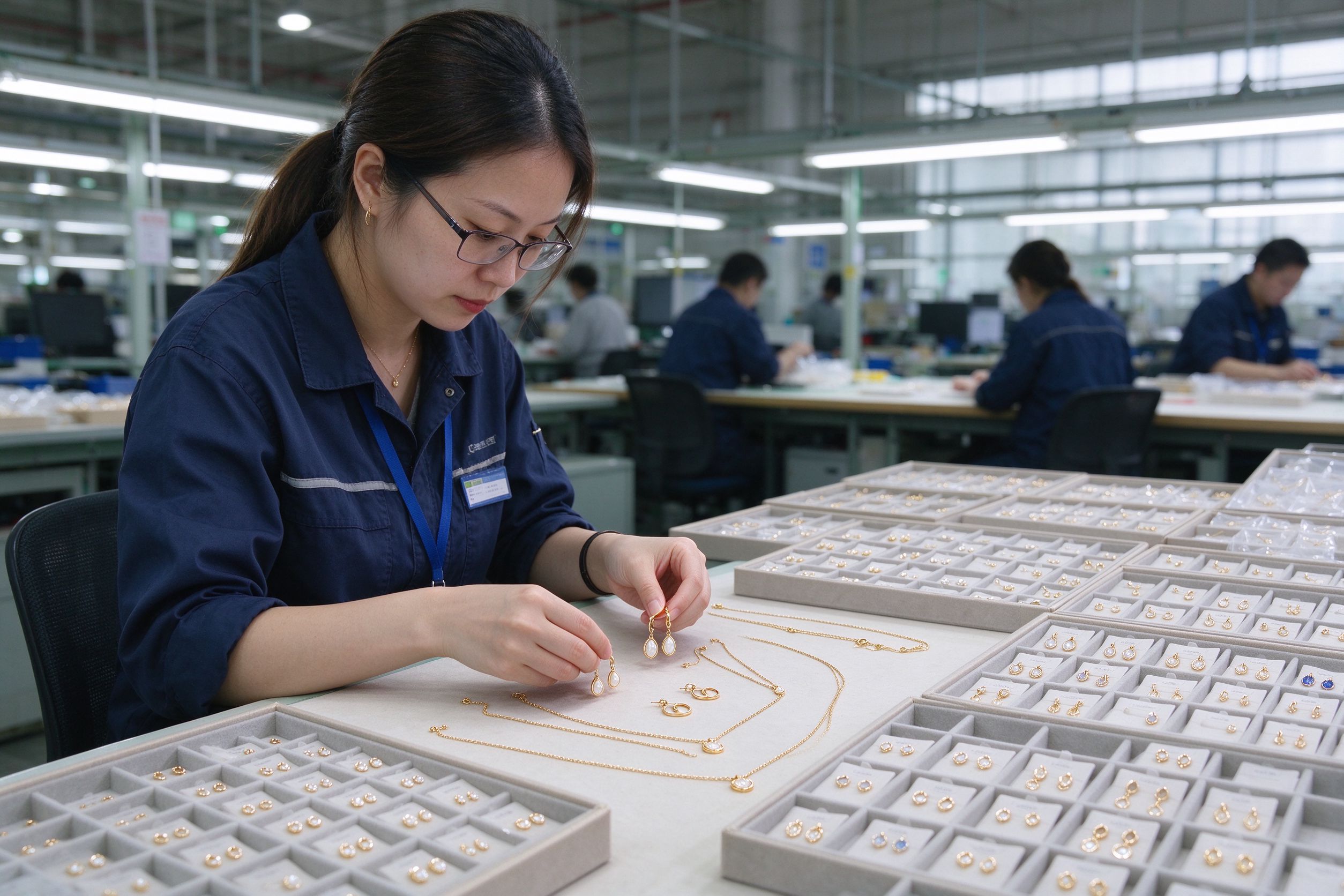
Merchandising hair clips so they fly off the rack
A hair clip hidden in a bag does not sell. Display is everything. Use a spinner rack, a velvet board or a clear tray where customers can run their fingers over the clips. Group by finish rather than by shape: all the pearls together, all the tortoiseshell together, all the enamel together. Customers shop the finish to match their outfit, and grouping by finish makes the rack look curated instead of chaotic.
Cross-merchandise with what customers already buy. Put hair clips next to the handbag rack, the dress wall and the checkout counter. A customer buying a blouse for an evening out will very often add a sparkly barrette. Online, show each clip in styled hair, not as a flat lay; the customer needs to see how it sits, and a clip pictured on hair outsells a clip pictured on white.
Avoiding the common buying mistakes
Three mistakes hurt new hair-accessory buyers. The first is ordering too many novelty shapes that will look dated by next season. Novelty is for fast test orders, not for depth. The second is ignoring the spring quality, which is the difference between a five-star and a one-star review. The third is mixing too many finishes on one display, which makes the whole rack look cheap. Keep the finishes coherent, test the hinges, and buy depth on the classics.
How hair clips are made, and why it matters
Most cheap hair clips are either stamped sheet metal for barrettes and snap clips, injection-molded resin for claw clips and jaws, or fabric-wrapped elastic for scrunchies. Each process has its own failure mode. Stamped metal clips can have sharp edges if the die is worn; resin claws can have a visible mold line or uneven color; fabric scrunchies can be over-stretched at the elastic. Knowing the process helps you ask the right question. For resin claws, ask whether the factory polishes the mold line. For metal clips, ask whether the edges are tumbled smooth. For scrunchies, ask about the elastic tension.
The spring in a claw clip is the heart of the product. Factories source springs separately and fit them by hand. A strong spring costs a few cents more but is the difference between a clip that holds thick hair and one that slides open by lunchtime. When you compare quotes, a suspiciously cheap claw clip almost always means a weak spring. Pay the few cents and protect your reviews.
Packaging and cards that lift the price
A hair clip in a loose poly bag reads as a dollar-bin item. The same clip on a branded card reads as a $12 product. For a few cents per card, you turn a commodity into a branded line. Card decorated barrettes and pearl pins; leave functional bobby pins in bulk bags. Display the cards upright on a spinner so customers can read the finish and color at a glance.
For scrunchies, sell in packs of three on a cardboard band rather than individually. A single scrunchie is hard to price; a pack of three at $12 feels like a deal. The pack also uses up the colors that sell less individually. Branding the card is optional on a first order, but once you have a repeat customer base, it is the cheapest brand-building you will ever buy.
Seasonal rhythm for hair accessories
Hair clips have a quieter seasonality than jewelry. Resin claws and fabric scrunchies sell steadily year-round, with a small dip in the depths of winter when customers put hair up less under coats. Decorated and pearl clips spike around wedding season and the December holidays. Bright colors and pastels sell in spring; deep jewel tones and metallics sell in autumn. Plan a small color refresh each season rather than a full reset, because the shapes stay the same even when the colors turn.
Back-to-school season is an underrated hair-clip moment. August and September bring parents and students buying functional clips and scrunchies in volume. Stock plenty of neutral and basic shapes for that window, and keep the dressy pieces for the party season that follows.
Building a repeat hair-clip customer
Hair accessories are a habit, not a one-off. A customer who starts with one claw clip will, if she likes it, come back for more colors and shapes. The way to turn that habit into revenue is to make the first purchase easy and pleasant. Price fairly, card the pieces, display them well, and remember what she bought. A customer who bought a tortoiseshell claw clip in spring is a good candidate for the autumn jewel-tone version. Email her when the new colors arrive. That repeat loop costs almost nothing to run and turns a $10 sale into a $50 customer over a year.
Because the items are cheap, a loyalty program works well. Offer the seventh clip free, or a discount after three purchases. The customer feels rewarded, and she keeps coming back to add to a collection she is building. Hair clips are one of the few accessories customers genuinely collect, which makes the loyalty loop unusually effective.
Build a hair clip line that reorders
Hair accessories are one of the easiest categories to start selling because the entry cost is low and the failure mode is small. Order a mixed sample carton of claw clips, barrettes and scrunchies across neutral and seasonal finishes, test which ones customers actually pick up, and reorder the winners at factory volume. Because the items are cheap to ship and fast to reorder, you can keep the rack fresh without tying up much capital. Done well, the hair clip tray becomes the highest-turnover corner of your whole accessory business.
Do not underestimate how much display and staff training matter in this category. A customer who has never thought about buying a hair clip will buy one the moment a staff member holds it up to a mirror and shows how it sits. That single gesture converts more clips than any online listing. Train your team to suggest a clip when they ring up a blouse, a dress or an accessory purchase. The hair clip is the easiest upsell in the store, and the buyers who treat it that way quietly outsell the ones who leave it on the rack. Start this season with one test carton and let the sell-through numbers decide where you go next. You will be glad you started.
