Hair pins, barrettes and combs are the quiet workhorses of the accessory business. They are not the flashiest pieces in the case, but they sell steadily, cost almost nothing to stock, and anchor the rest of your hair range. A customer who comes in for a single bobby pin leaves with two barrettes and a comb. This guide explains the materials, the finishes, the quality traps and the wholesale strategy for these everyday hair staples.
Because these items are cheap, buyers often assume they are interchangeable. They are not. A bent bobby pin, a slippery barrette and a comb that snags hair are the details that make a customer shop elsewhere next time. The buyers who treat the humble pin as a real product build a loyal everyday following. The rest of this guide shows you how.

The everyday hair pin formats you should stock
A coherent everyday range covers the formats customers reach for on a normal Tuesday. These are the pieces that sell regardless of fashion.
Bobby pins and hair pins
Plain bobby pins are a commodity, but decorated bobby pins are where the margin lives. Pearl-tipped, rhinestone-encrusted and pearl-strung pins dress up an everyday updo. Sell them in cards of three to six so the unit price feels like a deal while the margin stays high.
Side combs and French combs
Plastic and metal side combs hold half-up styles and french twists. Stock a few with decorative edges and a few plain functional ones. The plain combs sell on utility; the decorated ones sell on style.
Barrettes and snap clips
Metal barrettes with enamel, pearl or stone finishes are the dressy end of the everyday range. They work for office, school and weekend. Keep them in gold and silver so they coordinate with earrings.
Ponytail holders and wraps
Fabric-wrapped and metal-tipped ponytail holders are the cheapest add-on in the whole category. They sell in packs and pair with everything.
- Decorated bobby pins: sold in cards of 3-6.
- Side combs: plain and decorated.
- Barrettes: gold and silver tones.
- Ponytail holders: sold in packs, high turnover.
Materials and finishes that last
The cheapest pins use thin sheet metal that bends open after a week. A better pin uses thicker wire and a welded tip. When you compare suppliers, ask for the wire gauge on bobby pins and the spring tension on barrettes. On samples, bend a bobby pin gently; it should spring back rather than stay bent. A barrette should snap shut with a firm click and stay put in fine hair.
Plating on hair pins wears off quickly because they touch hair product, sweat and styling sprays. For pieces meant to last, ask for an e-coat or lacquer over the plating. For cheap disposable pins, plating longevity matters less because the customer expects to replace them. Know which tier you are selling and match the plating to the price point.
QC checklist for everyday hair pins
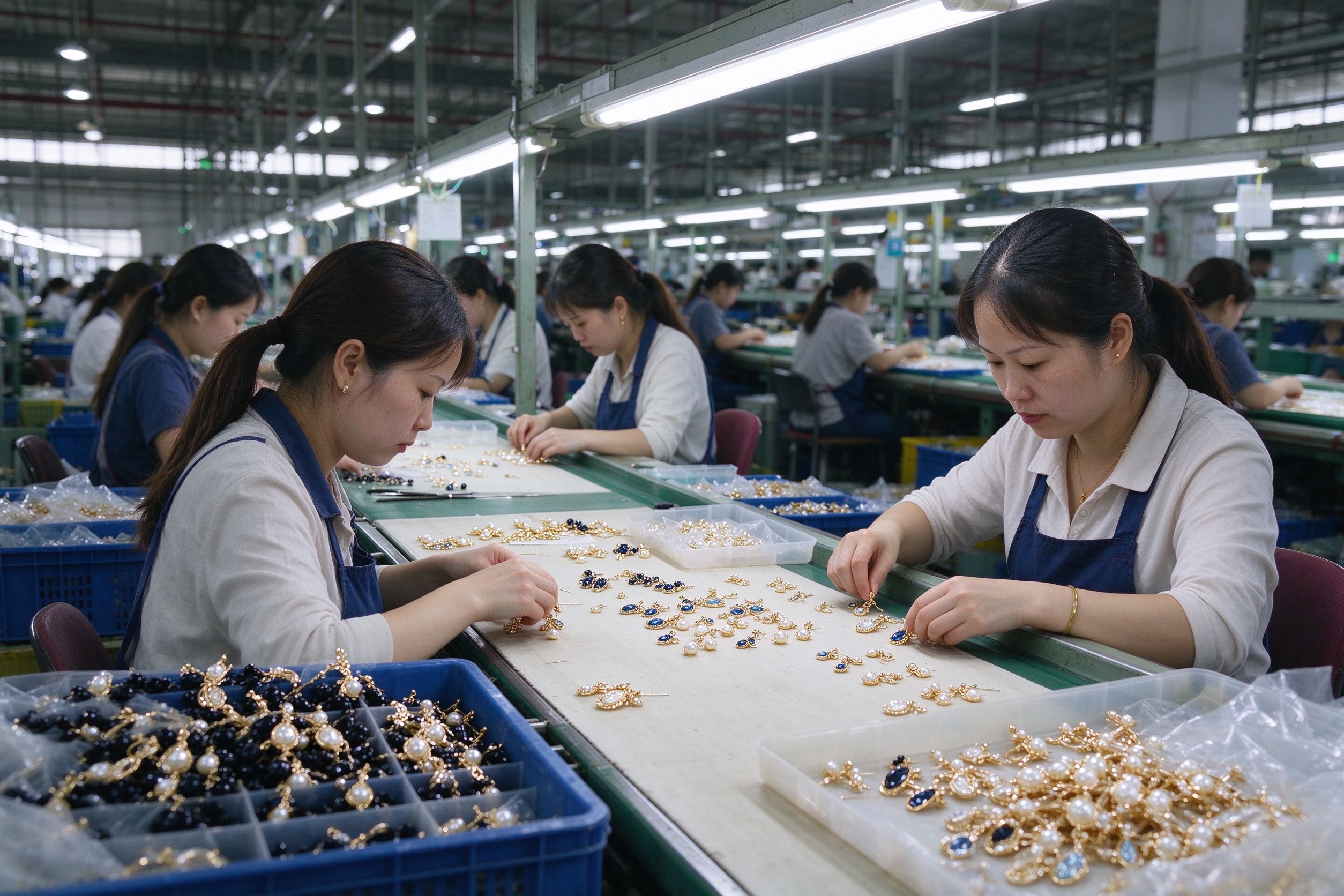
Everyday pins are small, so defects hide in bulk. Run these checks on samples and pre-shipment photos.
- Bobby pins spring back after a gentle bend; no permanent kink.
- Barrette snap holds in fine hair without sliding.
- Comb teeth are smooth, no sharp edges that catch hair.
- Glue-on pearls and stones do not flake when scraped lightly.
- Plating is even, no black at the folds.
- Pins are not rusty; ask about storage humidity in the factory.
Pricing and MOQ for pins and combs
Because these are low-cost items, the MOQ is naturally low. Decorated bobby pins run $0.08 to $0.30 per piece at 500 pieces. Side combs run $0.20 to $0.80. Barretes run $0.30 to $1.20. Sell decorated pins in cards, combs individually, and barrettes at a $5 to $12 price point. The whole range is built around the customer picking up three or four pieces on impulse.
The smart move is to card them yourself or have the factory card them. A plain bag of ten bobby pins sells for $2. A card of six decorated pins with your logo sells for $10. The card costs a few cents and multiplies the perceived value. Private-label cards are the fastest way to turn a commodity into a branded product.
- MOQ naturally low; test 10 styles in one carton.
- Card decorated pins yourself for margin.
- Price in a $5-$12 ladder for impulse buying.
- Buy the everyday shapes deep; trend shapes shallow.
Merchandising the everyday hair wall
An everyday hair range lives on a wall or a spinner, not in a closed drawer. Customers want to run their eyes over the options. Organize by use: a section for everyday basics, a section for dressy clips, a section for bridal-adjacent pieces. Price points should be obvious so a customer can decide quickly. The whole point is to let the customer add one more piece without thinking.
Cross-merchandise with the handbag and scarf areas. A customer buying a scarf will often add a barrette to pin it. Online, group the pieces into "everyday edit" and "dressy edit" collections so the customer shops by occasion rather than scrolling a flat list of identical clips.
Avoiding the cheap-pin trap
The biggest risk in this category is buying the absolute cheapest pins, which look fine in the factory photo but bend, rust and shed stones within a week. That generates returns, bad reviews and a lost customer. Pay a few cents more per piece for a thicker wire and a coated finish. The difference in product quality is huge; the difference in your cost is tiny. The cheapest pins are almost never the most profitable once returns and reviews are counted.
How to price everyday pins for maximum turn
Everyday hair pins are a volume game, not a margin-per-piece game. The profit comes from selling many units, not from a fat markup on each one. Price decorated bobby pins at $3 to $5 a card, side combs at $6 to $10, and barrettes at $8 to $15. Keep the prices close together so a customer adds two or three without doing math. A $5 card next to a $9 barrette next to a $12 comb encourages a three-piece purchase that totals $26, which is a healthy transaction for a category that feels like an impulse buy.
Resist the urge to discount individual pins. Instead, offer a "buy three, save" bundle that lifts the basket without marking down the whole range. Bundles protect your margin while giving the customer a reason to add one more card.
Selling to salons and beauty businesses
Everyday pins have a wholesale channel most resellers ignore: hair salons. Salons buy bobby pins, side combs and clips in steady quantities for styling, and they recommend retail pieces to clients. A salon that stocks your decorated pins on its front desk is a distribution point that reaches exactly the customer who needs hair accessories. Offer salons a small wholesale discount and a display stand, and you get recurring bulk orders plus free word-of-mouth.
Beauty schools and barber colleges are another steady buyer of functional pins. They buy in plain, no-frills packs, but the volume is reliable and the reorders are predictable. Treat them as a separate bulk account rather than a retail customer.
Storage and shelf life
Everyday pins are small, but they have enemies: humidity tarnishes plated metal, and elastic dries out over time. Store stock in a dry room, off the concrete floor, and rotate older stock to the front. Do not buy more than you can sell in six months of fabric scrunchies, because the elastic weakens. Metal pins keep almost indefinitely if kept dry. A little storage discipline prevents the quiet loss of stock that nobody notices until a customer pulls a tarnished clip off the rack.
Sizing and fit for different hair types
A pin that works for fine straight hair fails for thick curly hair, and the customer blames the product. Stock a range that covers the hair types your customers actually have. For fine hair, small snap clips and thin bobby pins grip best. For thick hair, wide combs and strong-spring claw clips are a must. For updos, pearl pins and U-shaped pins give the most secure hold. When you write listings, note which hair type each piece suits. A customer with thick hair who buys a small clip that slips will return it; the same customer buying the wide comb will be a fan forever. Fit guidance reduces returns and builds trust.
Hair length matters too. Long hair needs more holding power than short hair. A small decorative pin that sits beautifully in a chin-length bob will disappear into long hair. Photograph the piece on hair of a similar length to what your customer likely has, so she can judge the scale. This is the same logic as showing jewelry on a wrist rather than on a white background.
The care and longevity conversation
Customers treat hair pins harshly. They spray hairspray directly on them, toss them in a handbag, and leave them in a damp bathroom. A few simple care instructions extend the life of your pieces and reduce complaints. Tell customers to spray hairspray before, not after, putting the pins in, because the spray dulls plating. Tell them to store pins in a dry pouch rather than loose in a bag where the stones rub off. Print one line on the card: "keep away from sprays and water." That one line prevents a surprising number of tarnish complaints and positions your brand as thoughtful.
Building an everyday private-label range
Once you have sell-through on a few everyday shapes, private label is the obvious next step. A custom-embossed bobby pin card or a branded scrunchie band costs almost nothing extra and turns a commodity into your brand. Start with the two shapes that reorder most, because those are the ones customers actively ask for by name. Do not private label a slow seller; private label amplifies winners, it does not rescue losers. Within a year, a small private-label hair range gives customers a reason to buy from you specifically rather than from the cheapest seller online.
Build an everyday range that customers restock
Everyday hair pins are a replenishment business. Customers lose bobby pins, break barrettes and come back for more. That repeat purchase is the prize. Stock the basics deep, card the decorated pieces, price them for impulse, and keep the wall organized by use. Start with a mixed carton across bobby pins, combs and barrettes, watch which ones vanish fastest, and reorder those. Because the items are cheap and fast to reorder, you can run this category on a small amount of working capital while it quietly becomes one of your most reliable repeat-purchase lines.
Treat the everyday wall as the foundation of your whole hair business. The trend pieces and the bridal pieces get the attention, but the bobby pins and combs are what bring the customer in the door every month. Once she is in for a three-dollar card of pins, she sees the new claw clips and the bridal comb too. The everyday range is not glamorous, but it is the traffic engine that makes the glamorous categories sell. Buy it well, keep it stocked, and let it do the quiet work of bringing people back. Over a year, the bobby pins and combs that sell for a few dollars each will add up to more revenue than many higher-priced categories, precisely because customers replace them and return for more. Treat the everyday wall as your floor, not your afterthought, and the rest of the hair business stands on it. A well-stocked wall of bobby pins and combs costs almost nothing to maintain, requires almost no marketing, and keeps customers walking through your door week after week. Once those customers trust the quality of your basics, they will happily reach for the more decorative pieces you place beside them. That trust is the foundation of everything else you sell. Start small, test honestly, and reorder the winners again and again. It works every time.
