Wholesale Bracelets: Sourcing Checklist for Buyers

Why Bracelets Deserve a Spot on Your Wholesale Buy Sheet
Bracelets remain one of the most reliable revenue drivers for US jewelry retailers, and the difference between a profitable order and a disappointing one usually comes down to how disciplined your wholesale sourcing checklist is. Rather than relying on supplier promises, a strong buyer verifies metal composition, stone certification, minimum order quantities, quality control stages, payment terms, and delivery timelines before releasing a deposit.
This article breaks down each of those decision points with concrete detail, so your next bracelet order arrives on specification, on schedule, and ready for your sales floor. Whether you are stocking silver chain styles for a trend-focused boutique or building a moissanite tennis bracelet program for a fine jewelry counter, the checklist below applies to every tier of the category.
Step One: Define the Metal in Writing
The most common sourcing error in the bracelet category is accepting vague metal descriptions such as gold-tone or gold finish. Every style you order should be specified by its true material, and that specification belongs on the quotation and the purchase order, not just in a phone conversation. A supplier who works with documented materials will provide this without hesitation.
Match the Metal to Your Retail Tier
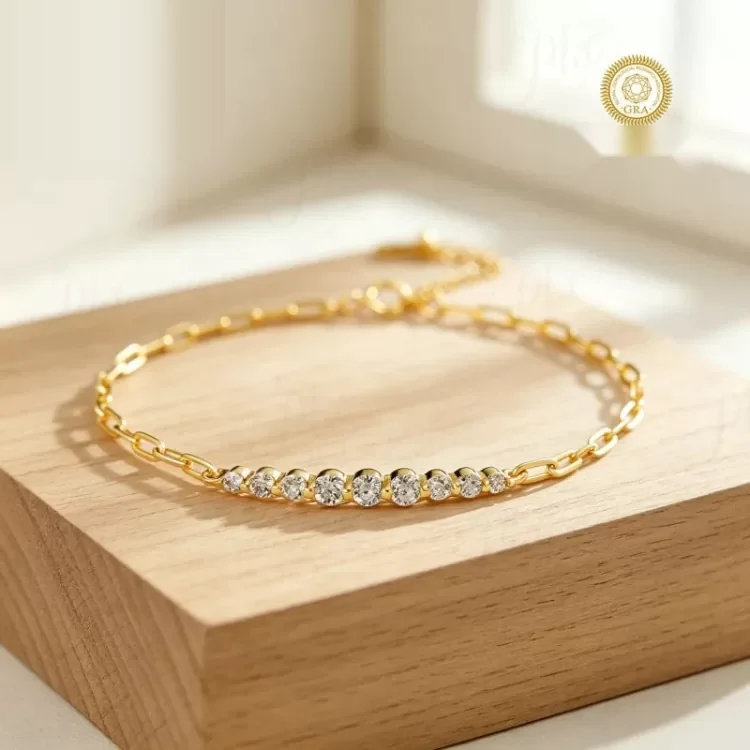
Start by deciding where each bracelet style sits in your assortment. 925 sterling silver offers the lowest material cost and suits trend-driven inventory that turns quickly. Gold vermeil, which is sterling silver with a heavy gold plating, delivers a richer appearance at a mid-tier price point and appeals to customers who want a substantial feel without solid gold pricing.
Gold plated styles fill out entry-level price points, while 10K, 14K, and 18K solid gold serve your fine jewelry customers who buy for milestone occasions. Each option carries a different cost per piece, so lock your retail tiers before requesting quotes. A mixed-metal assortment also gives your buyers a reason to return as their budgets change across the year.
Confirm Plating Specs and Finish Standards
For vermeil and plated styles, ask for the plating thickness and the exact base metal in the specification sheet. Request physical samples and inspect them under store lighting as well as daylight, because the same yellow tone can read noticeably different on a silver base compared with a brass base. Once you approve a finish, photograph the sample and attach the image to your purchase order as the binding quality reference.
This one step prevents the majority of finish-related disputes later in production.
Step Two: Verify Stone Documentation
If your bracelet program includes stones, the paperwork deserves as much attention as the stones themselves. Graded stones in this category come with GRA or IGI papers, and your supplier should confirm which certificate applies to each style before you confirm the order.
Position Moissanite Accurately
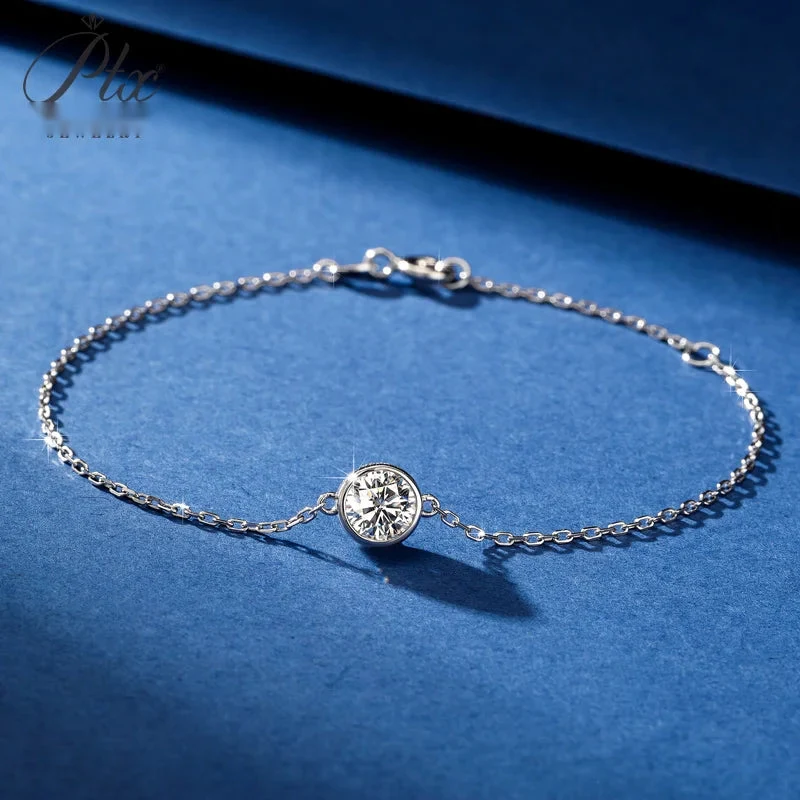
Moissanite is a lab-created diamond alternative with strong brilliance and durability, and it has become a leading choice for tennis bracelets and station styles in the US market. When you merchandise it, describe it accurately as a lab-created stone, never as a natural or real diamond. Clear labeling protects your store's credibility, keeps returns low, and builds the kind of customer trust that drives referrals.
Train your floor staff on the same language so the story your website tells matches the story told at the counter.
Buying Loose Stones by the Carat
If you purchase loose stones for custom assembly or for setting into finished bracelets, remember that loose stones are sold by the carat and priced accordingly. Ask how the stones are sorted before they are packed, request the certificate numbers for the lots assigned to your order, and match the carat weights on the papers to the stones you receive during incoming inspection.
A lot that matches its paperwork on arrival is the clearest early signal that the rest of the order will hold to spec.
Step Three: Plan Around Minimums and Pricing Structure
Wholesale bracelets follow a straightforward minimum order structure, and planning around it from the start saves weeks of back-and-forth.
- Stock styles carry a minimum order of 1 piece, which lets you test designs before scaling.
- Custom work carries a minimum order of 30 pieces per style.
- Loose stones are sold by the carat and priced per carat.
- Finished bracelets are priced per piece, with the quote tied to the metal and stone specification.
Because stock styles start at a single piece, you can build a mixed sample cart across several bracelet designs before committing to larger quantities. This makes sampling inexpensive relative to the information it produces. Reserve custom development for the styles that prove themselves in your first sell-through, since a 30-piece minimum is best spent on a design you have already validated with real customers rather than a guess.
Step Four: Put the Timeline on Paper
Two production windows govern every bracelet order, and your buying calendar should be built backward from them. Sampling takes 7 to 10 days, which covers the time from your design submission to a physical sample in your hands. Bulk production takes 15 to 25 days after you approve the sample, not from the day you place the order. Buyers who forget that the production clock starts after approval routinely overestimate how fast a reorder can arrive.
Build a Seasonal Buying Calendar
Work backward from your ship dates for holidays and promotional windows. If a bracelet line must reach your customers before a major selling season, allow roughly a full week for sampling, up to 25 days for production, and the transit window described in the next section. Add buffer days for your own approval decisions, since a sample that sits unanswered for a week erases any schedule cushion you built.
Sharing a firm approval date with your supplier keeps both sides aligned.
Step Five: Lock In Payment and Delivery Terms
Payment and logistics terms should be confirmed in the same conversation as pricing, not negotiated after production starts.
Payment Terms You Should Expect
Standard bulk orders run on T/T with a 30 percent deposit and the 70 percent balance paid before shipment. Sample orders are handled through PayPal, which keeps small transactions simple and low-friction. Confirm these terms on the proforma invoice so there is no ambiguity about when funds are due relative to the production and shipping schedule.
Delivery to the US
Shipments to the United States move on DDP terms and take 5 to 8 days in transit. DDP means the quoted price includes duties and delivery to your door, which simplifies landed-cost math considerably. When you calculate margins, use the quoted per-piece price plus nothing else for freight, and note the 5 to 8 day window in your inventory planning so replenishment orders are placed with the same lead time in mind.
Step Six: Audit the Quality Control Process
A supplier's quality control process is the strongest predictor of how your order will look on arrival. Ask how inspections are structured and what happens at each stage. A credible operation runs a three-stage QC program covering incoming materials, in-process checks during production, and a pre-ship AQL inspection before goods leave the factory.
Each stage catches a different class of problem. Incoming inspection verifies raw materials against your specification sheet, which is where off-spec metal or stones should be stopped. In-process checks catch assembly issues on chain links, clasps, and stone settings while correction is still inexpensive. The pre-ship AQL inspection samples finished goods against an accepted quality limit, giving you a documented defect rate before the balance payment is due.
Ask for inspection records with your shipment documents, and keep them on file alongside the approved sample photos and certificates.
Your Consolidated Bracelet Sourcing Checklist
The table below condenses the decisions above into a single reference you can keep beside your purchase orders. Run through it line by line before you approve any bracelet program.
| Checklist Item | What to Confirm | Reference Document |
|---|---|---|
| Metal type | Sterling silver, vermeil, plated, or solid gold named exactly | Quotation and purchase order |
| Stone papers | GRA or IGI certificate issued per graded stone | Certificate copies |
| Order minimum | 1 piece stock, 30 pieces custom | Proforma invoice |
| Timeline | Sampling 7 to 10 days, production 15 to 25 days | Order confirmation |
| QC stages | Incoming, in-process, pre-ship AQL | Inspection records |
Print it, attach it to each new style file, and review it with your supplier before every deposit. The few minutes it takes is negligible against the cost of a full production run that misses spec.
Common Sourcing Mistakes to Avoid
Beyond the checklist, three habits separate experienced bracelet buyers from frustrated ones.
Approving Samples Too Quickly
A sample approved under time pressure becomes the standard you are locked into for the entire run. Wear the sample, open and close the clasp repeatedly, check the stone settings under magnification, and compare the finish against your reference photos. Ten days of sampling exists precisely so you can test thoroughly.
Skipping the Reorder Review
Reorders deserve the same scrutiny as first orders, especially for custom work. Confirm that the approved sample still governs the production run, request updated inspection records, and verify that certificate numbers match the current stone lots. Assumptions on repeat orders are where specification drift begins.
Underestimating Assortment Planning
A bracelet wall converts better with a deliberate spread across metals, widths, and price tiers. Use the 1-piece stock minimum to assemble a broad test assortment cheaply, read the sell-through, and concentrate your 30-piece custom runs on the two or three designs with clear momentum. Depth follows demand, not the other way around.
Frequently Asked Questions
What is the minimum order for wholesale bracelets?
Stock styles have a minimum order of 1 piece, so you can sample and test a design individually. Custom work requires a minimum of 30 pieces per style. Loose stones are sold by the carat.
How long does a bracelet order take from start to shipment?
Sampling runs 7 to 10 days from design submission. Bulk production takes 15 to 25 days after sample approval, and DDP delivery to the US adds 5 to 8 days in transit.
What payment methods are accepted?
Bulk orders are paid by T/T with a 30 percent deposit and the 70 percent balance due before shipment. Sample orders are handled through PayPal for convenience on smaller amounts.
Do moissanite bracelets come with certification?
Graded stones come with GRA or IGI papers, and you should confirm which certificate applies to each style before ordering. Match certificate numbers to the stones at incoming inspection. Moissanite should be marketed as a lab-created diamond alternative, not as a natural diamond.
What quality checks happen before my bracelets ship?
Every order passes a three-stage QC process: incoming material inspection, in-process checks during production, and a pre-ship AQL inspection of finished goods. Request the inspection records with your shipment documents and file them with the approved sample references.
Build Your Bracelet Program With a Supplier Who Documents Everything
A sourcing checklist only works when your supplier backs every line with documentation, from metal specifications and GRA or IGI papers to three-stage QC records and clear DDP terms. Browse the current bracelet and jewelry assortment in our wholesale product catalog, read more buying guides like this one in our jewelry sourcing blog, or request samples and a quotation through our contact page to put this checklist to work on your next order.
Order Terms for Wholesale Buyers
MOQ is 1 piece for stock styles and 30 pieces for custom work, and loose stones are sold by the carat. Sampling takes 7 to 10 days, and bulk production runs 15 to 25 days after the sample is approved. Pricing is quoted per piece or per carat depending on the item. Payment is T/T with a 30% deposit and the 70% balance before shipment, and PayPal is accepted for sample orders.
Sources: Grading references: GIA gem education and GIA laboratory information.