Wholesale Bracelets: Moissanite vs CZ: What to Compare

Moissanite and Lab-Grown CZ Bracelets: A Wholesale Buyer's Selection Guide
Moissanite and lab-grown CZ bracelets give wholesale buyers two clearly defined tiers of lab-created stone jewelry, and choosing between them for each bracelet style comes down to price positioning, durability expectations, and paperwork. Moissanite, a lab-created diamond alternative, serves fine jewelry programs with GRA or IGI graded stones, while lab-grown CZ covers entry-level fashion lines at a lower unit cost.
This guide covers the practical decisions you face when building a bracelet assortment around these two stone types, from stone selection and metal naming through MOQ, sampling, payment terms, quality control, and delivery to the US.
Bracelets take more daily wear than most jewelry categories. They contact desks, countertops, and clothing throughout the day, so stone hardness, setting security, and base metal honesty matter more here than on pendants or earrings. Buyers who structure their bracelet programs with these facts in mind see fewer returns and clearer product positioning at retail.
Moissanite vs Lab-Grown CZ: Where Each Stone Fits in a Bracelet Line
The first decision is which stone goes into which bracelet style. Moissanite and CZ are both lab-created stones, but they serve different price tiers and different customer expectations. Treating them as a two-tier system rather than a one-or-the-other choice is how most successful wholesalers build the category.
Moissanite for Tennis Bracelets and Featured Styles
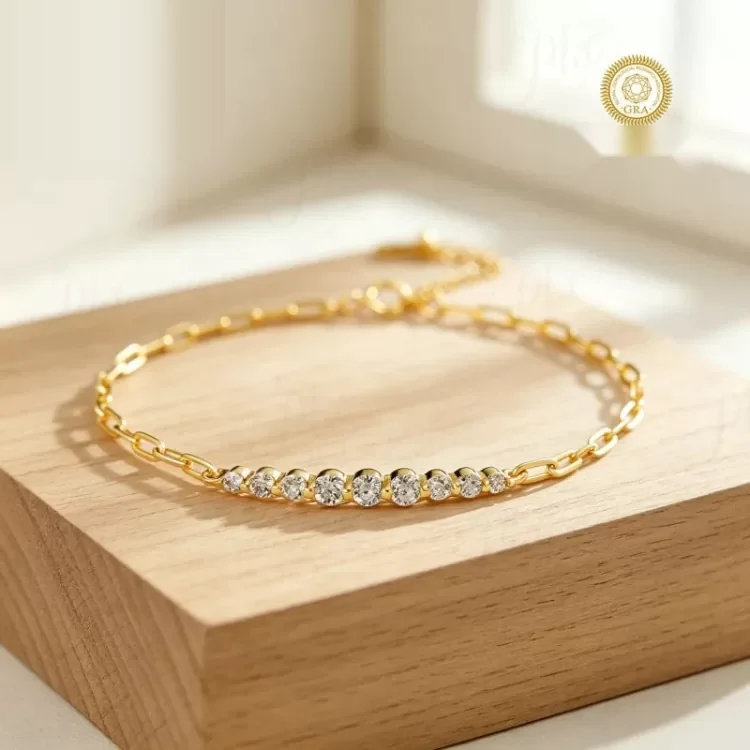
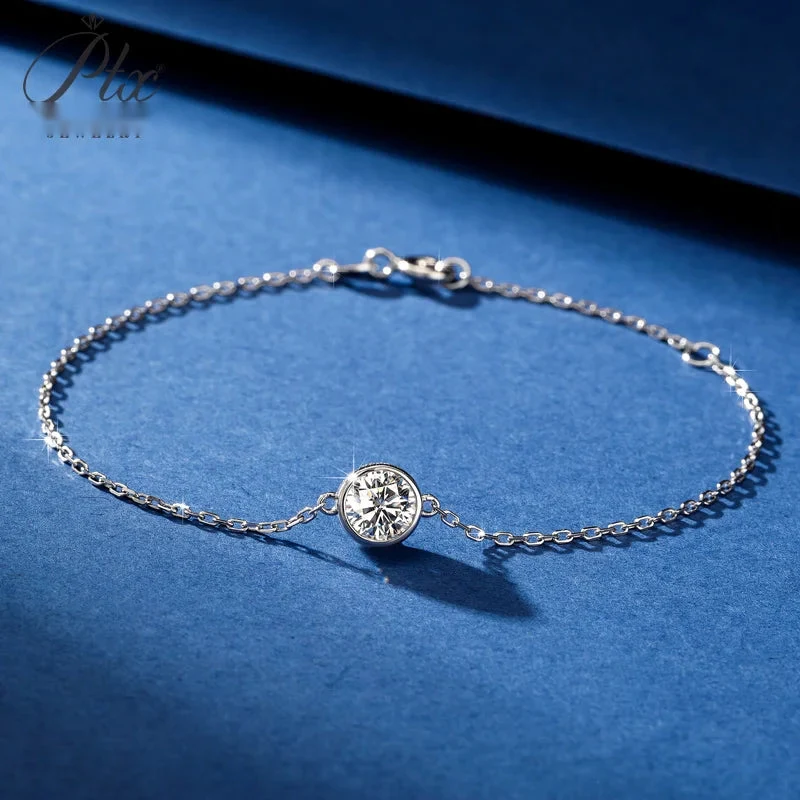
Moissanite carries high refractivity and strong brilliance, which makes it well suited to tennis bracelets, baguette-lined bangles, and station styles where individual stones are large enough to display fire. Graded moissanite ships with GRA or IGI papers, giving your retail customers documentation at the point of sale.
When you request a quote, confirm whether the price is per piece for finished bracelets or per carat for loose stones intended for setting, since loose stones are sold by the carat and finished stock styles are priced per piece.
Moissanite ranks high on the hardness scale for daily wear, second only to diamond among common jewelry stones. That matters on a bracelet, where prongs and stones rub against surfaces all day. Position moissanite bracelets as your fine jewelry tier and price them accordingly.
Lab-Grown CZ for Entry-Level Fashion Bracelets
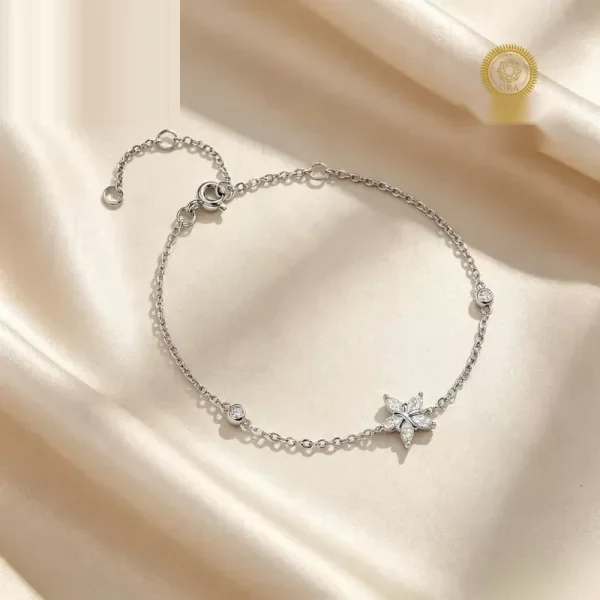
Lab-grown CZ keeps unit costs low and suits fashion bracelets, charm chains, and seasonal capsule designs where the retail price cannot support moissanite. CZ is softer than moissanite and loses surface polish faster under abrasion, so it should be presented clearly as fashion jewelry rather than fine jewelry. Many wholesalers run CZ bracelets as high-turn impulse products while moissanite bracelets carry the margin.
A mixed approach also works well within a single design: moissanite as the featured center stones and CZ as accent stones along the chain or band. If you go this route, require the stone breakdown on the specification sheet so your retail copy can label each stone type accurately.
Setting Styles That Protect Stones on the Wrist
Prong settings show the most light in a tennis bracelet but expose stone edges to snagging. Channel and bezel settings protect stone edges and reduce catch risk, which lowers your return rate on everyday-wear styles. During sampling, inspect setting tightness across a full strand rather than judging a single link, and ask the factory to torque-test prongs on sample bracelets before bulk production begins.
Naming the Metal Correctly on Every Bracelet
Your product listings, invoices, and retail-ready copy must name the true metal of every bracelet. The acceptable descriptions are 925 sterling silver, 10K/14K/18K solid gold, gold vermeil, or gold plated. Gold vermeil means a sterling silver base with a thicker gold layer than standard plating, and it sits as a mid-tier option between gold plated silver and solid gold.
Never describe a plated or vermeil bracelet as solid gold, since mislabeled metal content creates chargebacks and platform penalties for US sellers.
A common program structure pairs 925 sterling silver with rhodium or gold plating on CZ fashion bracelets, gold vermeil on the mid tier, and 14K solid gold settings on the moissanite fine line. Confirm the base metal and plating thickness in writing at the quotation stage, and repeat the exact metal name on the specification sheet for each style so no listing drifts into vague wording.
Plating wear shows fastest on the underside of a bracelet and on clasp edges. If you want heavier plating on wrist-contact surfaces, raise it during sampling rather than after bulk production, when changes trigger rework costs.
MOQ, Sampling, and Production Timelines for Bracelet Orders
Stock bracelet styles carry a MOQ of 1 piece, which allows you to test a tennis bracelet or bangle design before committing to volume. Custom bracelet work requires a MOQ of 30 pieces per style, which covers custom stone layouts, custom lengths, or branded clasp work. Loose moissanite and CZ stones for your own setting programs are sold by the carat rather than by the piece.
What to Test During the 7 to 10 Day Sampling Window
Sampling takes 7 to 10 days. Use that window to check stone alignment along the strand, clasp operation under repeated opening and closing, plating color against your reference, and total wrist length against your stated size range. Photograph the approved sample and attach it to the purchase order so bulk production has a fixed physical reference.
Bulk Production and Pre-Ship Inspection
Bulk production runs 15 to 25 days after sample approval. Quality control follows a three-stage structure: incoming inspection of stones and metal components, in-process checks during setting and assembly, and a pre-ship AQL inspection on the finished lot. Ask which AQL level applies to your order and whether the pre-ship report can be shared, since a documented pre-ship inspection reduces disputes on receipt.
Pricing Structure and Payment Terms You Should Expect
Pricing is quoted per piece for finished bracelets or per carat for loose stones, depending on the item. Get the pricing basis stated on the quotation itself so a per-carat stone quote is never confused with a per-piece finished-bracelet price when you compare suppliers. Request the quote to itemize stone cost, metal cost, and setting labor separately on custom work, which makes negotiating the 30-piece custom MOQ easier if you want to split a style across two metal finishes.
Payment follows T/T terms with a 30 percent deposit and the 70 percent balance before shipment. Sample orders can be paid through PayPal, which lowers your risk while you evaluate stone quality and setting work. Plan cash flow around the balance-before-shipment requirement so the pre-ship AQL inspection and shipping booking are not delayed by pending payment approval.
Delivery to the US: DDP Timing and What It Covers
DDP delivery to the US takes 5 to 8 days after shipment, with duties and shipping handled so the goods arrive at your door without additional clearance steps. Build the full timeline into your buying calendar: 7 to 10 days for sampling, 15 to 25 days for bulk production after approval, then 5 to 8 days for DDP transit to the US.
A bracelet program planned this way moves from first sample request to goods in hand in roughly four to six weeks on a first order, with repeat orders of stock styles skipping the sampling stage entirely.
The following table summarizes how the two stone tiers compare across the decisions covered in this guide:
| Factor | Moissanite | Lab-Grown CZ |
|---|---|---|
| Positioning tier | Fine jewelry line | Fashion jewelry line |
| Documentation | GRA or IGI papers | Spec sheet only |
| Best styles | Tennis, baguette bangles | Charm chains, seasonal |
| Pricing basis | Per piece or per carat | Per piece |
Use the table as a starting framework, then adjust per style based on your retail price points and the abrasion profile of each design. A charm bracelet with small CZ accents and one moissanite feature stone can straddle both tiers if the specification sheet names each stone clearly.
Building Your Bracelet Assortment: A Practical Sequence
A disciplined ordering sequence keeps risk low on a new stone program. Start with stock styles at the 1-piece MOQ to test retail response, then move winning designs into custom work at the 30-piece MOQ with your own length ranges and clasp branding. This sequence uses sampling to lock specifications before volume, and the three-stage QC process to protect the bulk lot.
- Order single-piece samples of both a moissanite tennis bracelet and a CZ fashion bracelet to compare retail presentation.
- Verify GRA or IGI paperwork matches the stones on the moissanite samples before approving bulk.
- Confirm metal naming on the specification sheet: 925 sterling silver, gold vermeil, gold plated, or solid gold.
- Approve the sample photograph as the bulk production reference.
- Schedule payment of the 70 percent balance against the pre-ship AQL inspection date.
Buyers who repeat this sequence across seasons build bracelet programs where each tier has clear stone identity, honest metal labeling, and documented inspection history, which is what US retail partners ask for when they review a wholesale line sheet.
Order Terms for Wholesale Buyers
MOQ is 1 piece for stock styles and 30 pieces for custom work, and loose stones are sold by the carat. Sampling takes 7 to 10 days, and bulk production runs 15 to 25 days after the sample is approved. Pricing is quoted per piece or per carat depending on the item. Payment is T/T with a 30% deposit and the 70% balance before shipment, and PayPal is accepted for sample orders.
Frequently Asked Questions
Can I order one bracelet sample before committing to bulk?
Yes. Stock bracelet styles carry a MOQ of 1 piece, so you can order a single unit to evaluate stone quality and setting work. Custom bracelet designs require a MOQ of 30 pieces per style, and sampling on either path takes 7 to 10 days.
Do moissanite bracelets come with grading documents?
Graded moissanite stones ship with GRA or IGI papers. Confirm at the quotation stage that the papers cover the stones in your bracelet styles, and keep copies with your lot documentation for retail presentation.
How should I list the metal in my product copy?
Name the true material: 925 sterling silver, 10K/14K/18K solid gold, gold vermeil, or gold plated. Plated and vermeil pieces must never be described as solid gold, and moissanite must be described as a lab-created diamond alternative rather than a natural diamond.
What payment terms apply to bracelet orders?
Bulk orders run on T/T with a 30 percent deposit and the 70 percent balance paid before shipment. Sample orders can be paid through PayPal, which suits the lower sample order value.
How long until finished bracelets arrive in the US?
Sampling takes 7 to 10 days, bulk production runs 15 to 25 days after approval, and DDP delivery to the US takes 5 to 8 days. A first order with custom work lands in roughly four to six weeks end to end.
Start Your Moissanite and CZ Bracelet Program
If you are ready to build a bracelet line with moissanite at the fine tier and lab-grown CZ at the fashion tier, the next step is a sample order at the 1-piece stock MOQ so you can judge stone performance and setting quality in hand.
Browse the current bracelet range and stone options on our product catalog, read more buying guides on stone selection, metal naming, and inspection workflows in our wholesale jewelry blog, and reach out through our contact page to request a quotation with pricing per piece or per carat, sampling timelines, and DDP shipping details for your market.
Sources: Grading references: GIA gem education and GIA laboratory information.