Budget earrings look deceptively simple. A pair of studs can be quoted from twenty cents to a dollar fifty, and at first glance they look identical on a supplier's sheet photo. The difference lives in the posts, the plating thickness, the stone grade and the earring backs. This guide breaks the wholesale earring market into price tiers so you buy with confidence instead of guessing.

The Disposable Tier: $0.20 to $0.40
Earrings at this price are built for short life. The posts are thin iron, the plating is a quick dip, and the stones are basic CZ or acrylic. They sell in grab bags, at festivals, and as add-on items at checkout. They have a genuine role: a $1 retail earring that gets worn three times and replaced is a fine business model for the right channel. But expect bending posts, irritated ears, and a high discard rate. Do not build a brand on this tier.
The Everyday Tier: $0.40 to $0.80
This is where most profitable resellers live. At this price, posts are thicker and often nickel-protected, plating is a proper 0.3 microns, and stones are decent CZ that stays bright. A pair here survives weeks of regular wear without tarnishing. This is the tier that earns repeat customers: the earrings look good, the customer returns for more, and your reviews stay clean. The majority of our budget earring range sits here.
The Elevated Tier: $0.80 to $1.50
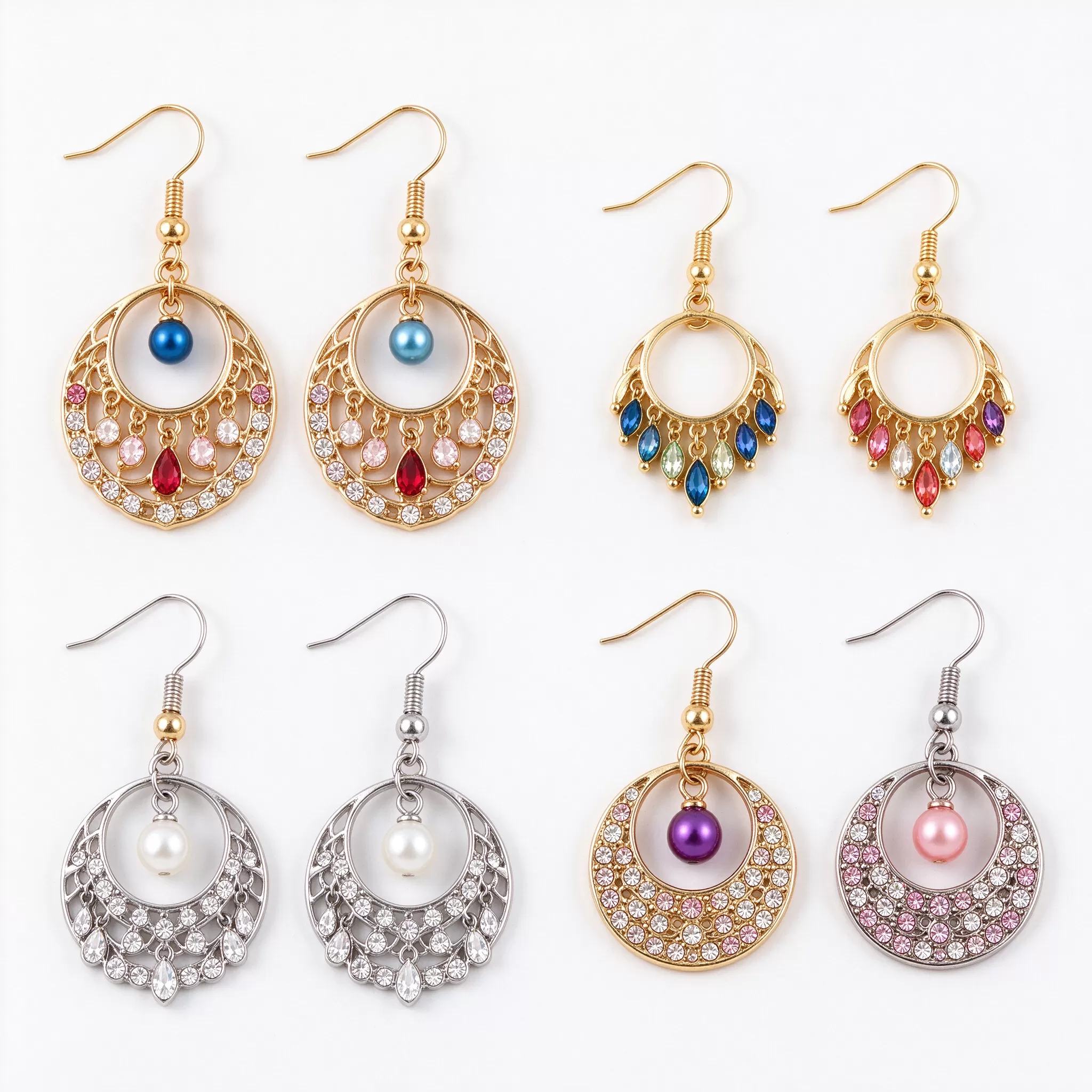
Past eighty cents, earrings start to look and feel like fashion jewelry rather than disposable. Posts may be stainless steel or brass, plating reaches 0.5 microns with an e-coat, and stones are higher-clarity CZ or shell pearl. Hoops in this band hold their shape, drops swing evenly, and the pair feels balanced in the hand. These are the earrings you display in a boutique case rather than in a bin. They carry lower volume but a much higher margin and perceived quality.
The Ear Post Is Where Quality Shows
Most customers never see the post, but they feel it immediately. A thin iron post bends when you push it through, snaps if it catches, and can trigger nickel reactions. A quality post is straight, smooth, and stiff enough to hold its shape. When you inspect samples, bend the post gently: it should flex a little and spring back, not fold. This one test separates the tiers faster than anything else.
Backs Matter More Than You Think
The back is the small part that keeps the earring on the ear. Cheap backs are loose rubber or thin metal that slides off. Better pairs come with snug butterfly backs or secure screw backs. Lost earrings are a top customer complaint, and almost every loss traces back to a weak back. We cover this fully in our earring backs guide.
Stone and Finish Differences
At the low tier, stones are flat acrylic or low-grade CZ that looks dull under light. At the everyday tier, CZ has fire and sparkle. At the elevated tier, you see better cuts, real pearls, or hand-set enamel. The same logic applies to plating: cheap gold plating looks brassy and yellow; better plating looks like real warm gold under daylight.
Match the Tier to Your Customer
Your channel should dictate the mix:
- Festival and market stalls — disposable tier; customers expect low price and fast turnover.
- Online boutiques and Etsy — everyday tier; reviews punish tarnish and bent posts fast.
- Brick-and-mortar boutiques — elevated tier; customers touch and compare.
- bridal and occasion — elevated tier; the moment demands quality.
Channel strategy is something we expand on in our reselling margins guide.
The Hidden Cost of Cheap Earrings
A pair that costs twenty cents less per unit sounds like a saving until you count returns, bad reviews, and customers who never come back. In fashion earrings, a happy repeat buyer is worth far more than the few cents saved on the invoice. A practical target: build your core range around the everyday tier, use disposable pieces only as loss leaders, and let elevated pieces carry the brand image.
How to Sample Smart
Order two or three pairs from each tier from the same supplier. Wear them for a week. Notice which posts you trust, which backs stay secure, and which earrings still look new after a shower of perfume. The difference between tiers becomes obvious within days. This thirty-dollar sample order will save you from a three-thousand-dollar mistake.
Conclusion: Price Is a Signal
Budget earrings are not one product; they are four quality levels wearing the same photo. Read the price, inspect the post, check the back, and match the tier to where you sell. Done well, budget earrings become a reliable, repeatable revenue stream rather than a box of returns. Explore our budget earrings wholesale range and request samples and a quote to compare tiers yourself.
The Test That Separates Tiers in Seconds
You do not need a lab to judge an earring. Bend the post gently: it should flex and spring back, not fold. Pinch the back: it should grip without sliding. Hold the stone under a lamp: it should sparkle evenly, not look flat. Smell the metal: no sharp chemical scent. These four tests reveal tier quality instantly. A pair that passes all four at the workhorse price is a good buy; a pair that fails at the elevated price is being oversold. Samples are always worth it. We cover the same inspection logic in bulk quality control.
How Tier Mix Drives Repeat Buys
The most profitable earring buyers carry a deliberate mix. About half their stock is the workhorse tier that earns trust, a quarter is the disposable tier used as loss leaders and add-ons, and a quarter is the elevated tier that anchors the brand image. This mix means every customer finds something, and the quality customers keep coming back. Avoid the trap of selling only the cheapest: that attracts one-time price shoppers. Read about channel strategy in bulk reselling margins.
Reading the Supplier's Spec Sheet
A good supplier lists the post material, the plating thickness and the stone grade on request. If a supplier cannot answer these questions, they are reselling someone else's stock rather than manufacturing. That gap in knowledge usually shows up later as inconsistent quality. When you compare quotes, ask the same three questions to each supplier and compare the answers directly. The supplier who explains the details confidently is the one likely to stand behind the goods. This is the same audit logic we describe in vetting a jewelry supplier.