Wholesale Budget Earrings: Sourcing Checklist for Buyers

Why Budget Earrings Deserve a Place in Your Wholesale Assortment
Budget Earrings are one of the most reliable volume drivers in a jewelry wholesale catalog, and sourcing them well comes down to running a disciplined checklist before you commit to a supplier. Because the price point is low, margins depend on getting the basics right the first time: material quality, plating thickness, stone selection, minimum order quantities, and inspection standards.
This article walks through a practical wholesale sourcing checklist for Budget Earrings aimed at US-based buyers, covering every decision you need to make before placing a first order.
Start With Materials: Know Exactly What You Are Buying
The single most common mistake in this category is unclear metal naming. A supplier listing that says "gold earrings" tells you nothing about whether you are handling 925 sterling silver, 10K, 14K, or 18K solid gold, gold vermeil, or gold plated brass. Each of these carries a different cost, a different price point at retail, and a different customer expectation.
Your checklist should require the supplier to name the true metal in writing for every SKU, and you should reflect that same language on your own product pages.
Plated, Vermeil, and Solid Gold Are Not Interchangeable
Gold plated earrings have a thin layer of gold over a base metal, which keeps them firmly in the budget tier. Gold vermeil uses a thicker gold layer over sterling silver and sits at a higher price point. Solid gold in 10K, 14K, or 18K is a fine jewelry product, not a budget item. If a supplier describes a plated or vermeil piece as solid gold, treat that as a disqualifying red flag and move on.
Stones: Graded Moissanite and Its Paperwork
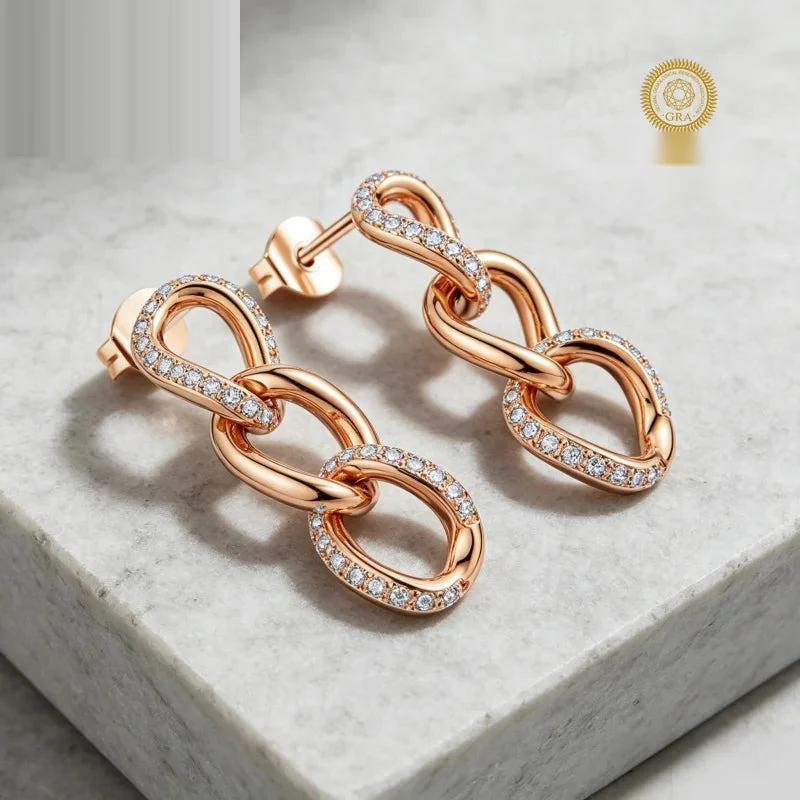
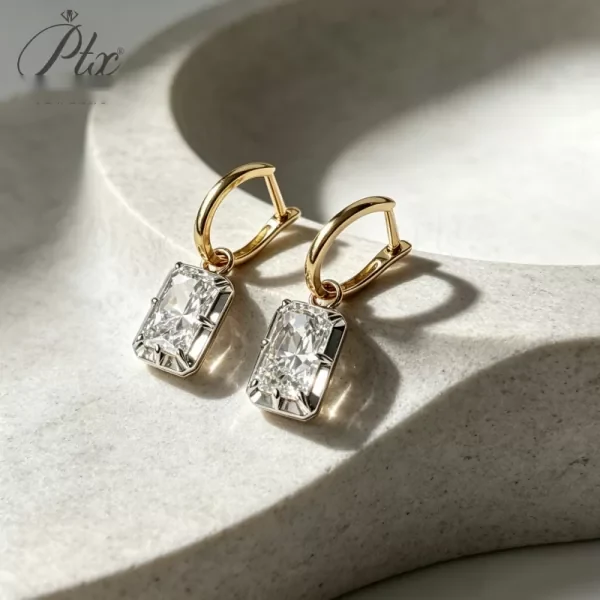
Many budget earring styles feature moissanite, a lab-created diamond alternative that offers strong brilliance at a fraction of the cost of mined stones. It is not a natural diamond and should never be marketed as one. When your styles include graded moissanite, ask whether stones ship with GRA or IGI papers. Loose stones are sold by the carat, and pricing follows the same per-carat structure, so documentation matters for both your pricing and your customer communication.
Confirm Minimum Order Quantities Before You Design Anything
Order terms shape your cash flow, so put them at the top of the checklist. For stock styles, the minimum order is 1 piece, which lets you test a style on your own storefront before committing to depth. Custom work requires a 30 piece minimum per style. Loose stones, if you are setting your own designs, are sold by the carat rather than by the piece.
Knowing these thresholds early lets you plan a launch: buy single pieces of several stock styles, identify winners, then move the best performers into custom production once you can justify 30 pieces per style.
Build a Sampling Routine Into Your Timeline
Sampling is where budget earrings succeed or fail. A low unit price means little if the posts bend, the plating scratches in the first week, or the stones rattle loose. Order samples of every candidate style before bulk production.
Sampling takes 7 to 10 days, and bulk production runs 15 to 25 days after sample approval. Build both windows into your buying calendar, especially if you are timing a seasonal launch. A typical first-order timeline looks like this: sample request, 7 to 10 days of sampling, your inspection and approval, then 15 to 25 days of bulk production followed by DDP delivery to the US in 5 to 8 days.
That is roughly five to seven weeks from decision to stock on hand, so plan reorder cycles accordingly.
What to Check on Every Sample
Inspect samples against a written list rather than impressions. Points worth checking include post straightness and secure backs, clasp and hinge function on hoops, plating uniformity and color match across pairs, stone setting tightness, and weight consistency between left and right pieces. Photograph any defect and send it back to the supplier in writing so the correction is documented before bulk production begins.
Price Structure and Payment Terms
Pricing for Budget Earrings is quoted per piece, while loose stones are priced per carat. Ask for a written quote that states the metal, stone type, stone size, and quantity basis for each SKU, because a per-carat price and a per-piece price can look similar at a glance but mean very different things.
Payment terms follow a standard structure: T/T with a 30 percent deposit and the 70 percent balance before shipment, while sample orders can be paid through PayPal. The PayPal option on samples lowers your risk during the testing phase, since you are not wiring funds until you have approved physical goods. Confirm in writing that the deposit applies to bulk orders and PayPal to samples, so there are no surprises at invoice time.
Quality Control: Three Stages You Should Verify
A supplier's quality process should be visible to you, not a black box. The three-stage structure covers incoming material inspection, in-process checks during production, and a pre-ship AQL inspection on finished goods. Ask your supplier to confirm that all three stages apply to your order, and request the pre-ship inspection results before authorizing the 70 percent balance.
The table below summarizes the checklist items discussed so far and what a satisfactory answer looks like for each.
| Checklist Item | What to Confirm | Satisfactory Answer |
|---|---|---|
| Metal identity | Written metal spec per SKU | 925 silver, 10K/14K/18K gold, vermeil, or plated |
| Stones | Moissanite grading papers | GRA or IGI papers supplied |
| Order minimums | Stock vs custom thresholds | 1 piece stock, 30 pieces custom |
| Timeline | Sampling and production windows | 7 to 10 days sampling, 15 to 25 days bulk |
| QC and terms | Inspection stages and payment | Three-stage QC, 30/70 T/T, PayPal samples |
Keep this table in your sourcing folder and reuse it for every new supplier conversation. Consistency in how you evaluate vendors makes it easier to compare quotes and spot weak answers early.
Shipping and Delivery to the US Market
Delivery terms matter as much as unit price for budget categories, where freight can represent a meaningful share of landed cost. DDP delivery to the US takes 5 to 8 days, meaning duties and shipping are handled before the goods reach you and no surprise brokerage fees appear at the border. For low-ticket, high-volume items, DDP terms simplify your landed-cost math and make retail pricing straightforward.
Planning Your Reorder Cadence
Once a style proves itself, calculate your reorder point using the full production-to-door timeline: 15 to 25 days of production plus 5 to 8 days of DDP transit. If a style sells through in four weeks, you should be placing the next bulk order roughly when the previous shipment arrives, not when stock runs out. Buyers who skip this step end up paying for expedited options or losing sales on their fastest-moving earring styles.
Building a Balanced Budget Earring Assortment
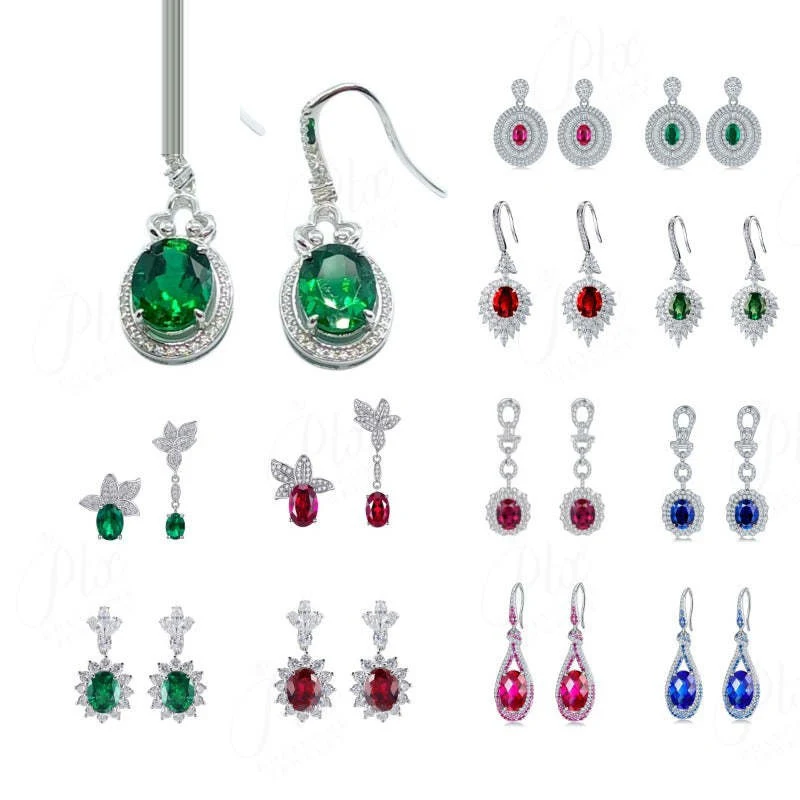
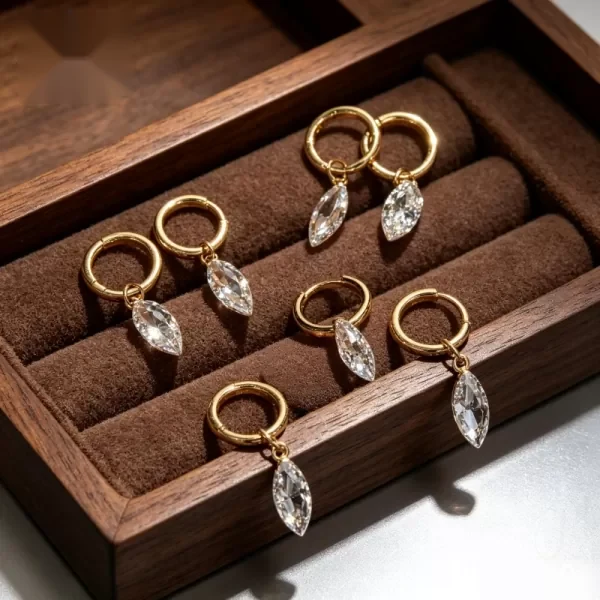
A workable budget assortment mixes staples and statement pieces. Studs and small hoops in sterling silver or gold plated settings form the everyday base, while a few moissanite-accented styles with GRA papers give you a "fine-look" tier at an accessible price. Use the 1 piece minimum on stock styles to test breadth cheaply, then commit 30 piece custom runs to the designs your customers respond to.
Order Terms for Wholesale Buyers
MOQ is 1 piece for stock styles and 30 pieces for custom work, and loose stones are sold by the carat. Sampling takes 7 to 10 days, and bulk production runs 15 to 25 days after the sample is approved. Pricing is quoted per piece or per carat depending on the item. Payment is T/T with a 30% deposit and the 70% balance before shipment, and PayPal is accepted for sample orders.
Frequently Asked Questions
What is the minimum order for Budget Earrings?
Stock styles have a minimum of 1 piece, so you can test individual designs without depth. Custom work requires 30 pieces per style. Loose stones are sold separately by the carat.
How long does sampling and production take?
Samples take 7 to 10 days to produce. Once you approve a sample, bulk production runs 15 to 25 days, followed by 5 to 8 days of DDP shipping to the US.
Are the moissanite stones graded?
Yes, graded stones come with GRA or IGI papers. Moissanite is a lab-created diamond alternative and should be marketed as such, never as a natural diamond.
What payment methods are accepted?
Sample orders can be paid via PayPal. Bulk orders use T/T with a 30 percent deposit and the 70 percent balance due before shipment.
What quality checks happen before shipment?
Every order passes a three-stage process: incoming material inspection, in-process checks during production, and a pre-ship AQL inspection on finished goods.
Ready to Source Budget Earrings With Confidence
Working through this checklist before your first purchase order protects your margins and your reputation with retail customers. Browse the current catalog of earring styles on our products page, read more buying guides like this one on our wholesale jewelry blog, and reach out through our contact page to request samples or a custom quote for your store.
Sources: Grading references: GIA gem education and GIA laboratory information.