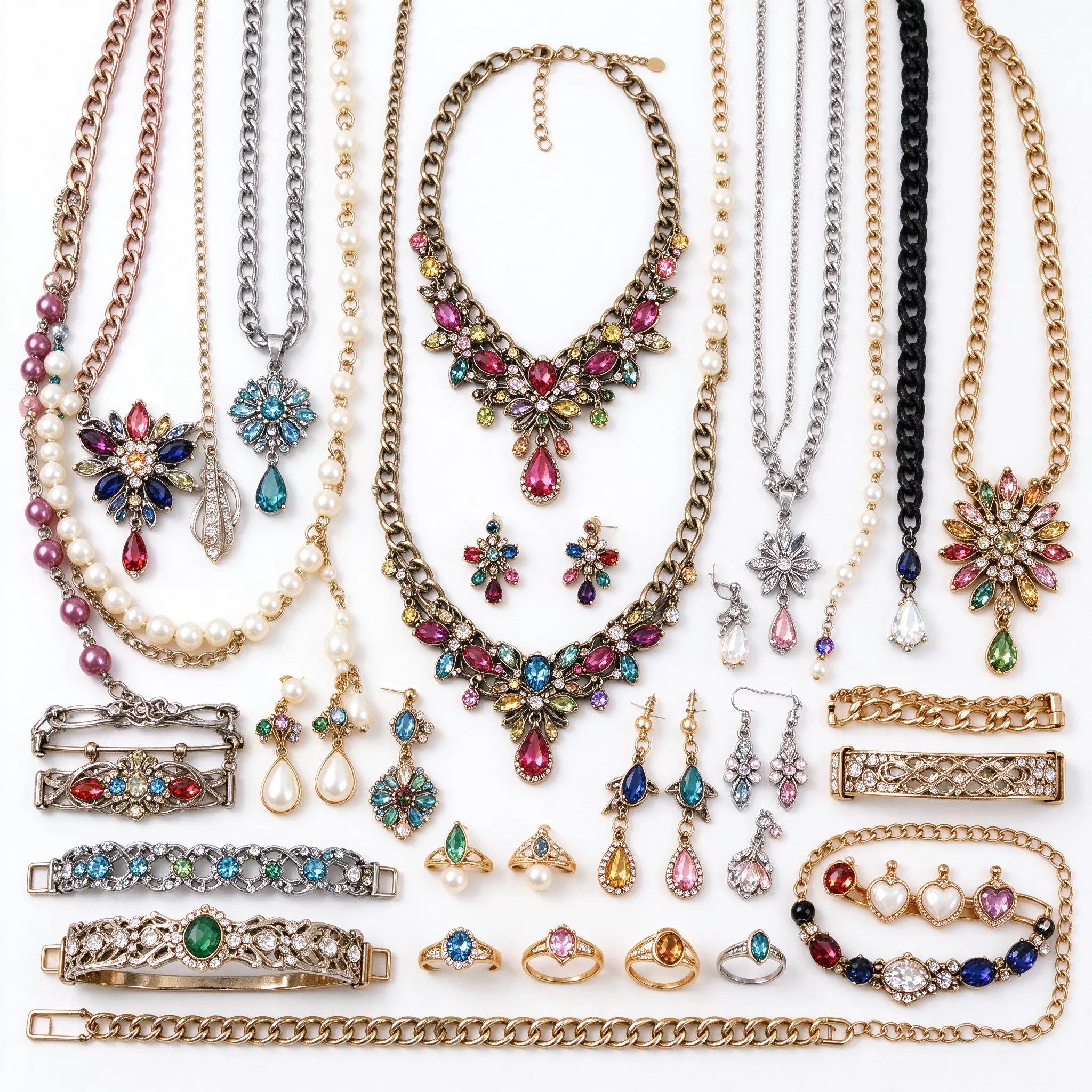
A bulk mix lot is a carton of assorted jewelry sold together at a low per-piece price. For a small boutique, a market stall or an online seller just starting out, it is the fastest way to fill a display without buying hundreds of any single style. But a mix lot is also the fastest way to end up with a box of pieces nobody wants if you choose poorly. This guide explains what a mix lot actually is, how to judge whether an assortment is any good, what questions to ask the factory, and how to buy your first mix lot without getting stuck with dead stock.
Think of a mix lot as a sampler on a pallet. You are not betting on one style; you are buying exposure to twenty or thirty styles at once. The upside is variety and low risk. The downside is that you do not control every piece, and some of what arrives will be filler. The buyers who win at mix lots are the ones who understand the tradeoff and use the assortment strategically rather than hoping every piece sells.

What a mix lot actually contains
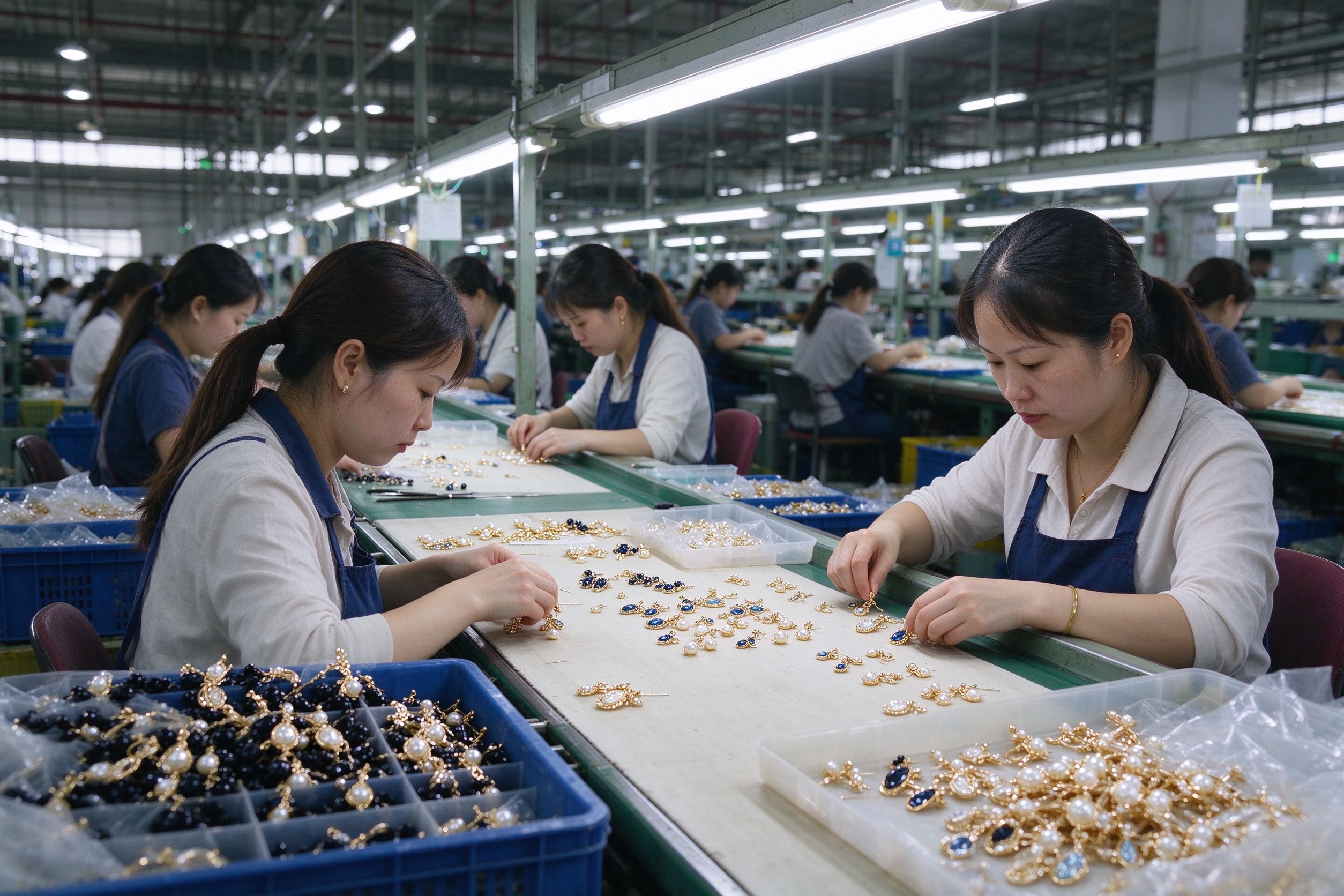
A typical mix lot from a Wuzhou factory is a carton of, say, 50 to 500 pieces, drawn from the factory's existing stock rather than made to your order. The contents might be a random mix of earrings, necklaces, rings and bracelets, or a themed mix such as "all earrings" or "all gold-tone." Because the factory is clearing existing stock, the per-piece price is low, often far below what a custom order would cost. That is the whole appeal: low price, instant variety, no waiting for production.
There are two kinds of mix lot. The first is a random clearance lot, where you take whatever the factory has. The second is a curated mix, where you tell the factory roughly what categories and tones you want and they assemble the carton accordingly. The first is cheaper; the second is far safer. As a new buyer, always ask which kind you are being quoted. A "mystery box" at a knockdown price is fun for hobbyists but risky for a reseller who needs to know what she is paying to stock.
Why buyers use mix lots
Mix lots solve three real problems. First, they let a new buyer test a category without committing to a 500-piece minimum on one style. Second, they fill a display fast. A new boutique needs a full-looking rack on day one, and a few mix lots do that overnight. Third, they are cheap enough that a miss does not hurt. If half the carton sits, the other half still paid for the order.
- Test a category without a large MOQ commitment.
- Fill a new display quickly and cheaply.
- Discover which styles your customers actually buy.
- Keep the cash tied up in many small bets rather than one.
How to judge a mix lot before you buy
The danger with mix lots is that you cannot see everything. Before you buy, ask the factory for a detailed contents list and photos of a sample carton. A reputable seller will send a spreadsheet of how many earrings, necklaces and rings are in the lot, the metal tones, and the price per piece. If they refuse or send only a pretty marketing photo, walk away. You are buying blind otherwise.
Ask specifically about the filler ratio. In a cheap mix lot, up to thirty percent of the pieces may be low-value filler that exists to make the carton look full. That is normal, but you should know it. A good mix lot has sixty to seventy percent genuinely sellable pieces. Negotiate the price down if the filler ratio is high. The factory knows what is in the box; you should too.
Mix lot pricing: what a fair price looks like
Pricing depends entirely on what is inside. A lot of mostly earrings at $0.50 to $1.20 per piece is reasonable. A lot that includes necklaces and bracelets at $1.50 to $3.00 is fair. If the per-piece price seems too good to be true, the lot is heavy filler. Compare the per-piece price to what you would pay for the same item on a custom order. The mix lot should be at least thirty percent cheaper, because you are taking assortment risk.
Calculate your worst-case margin before you buy. Assume only seventy percent of the lot sells at your normal retail, and the remaining thirty percent moves at half price or cost. If you still make money on that basis, the lot is a safe buy. If the math only works out if everything sells at full price, the lot is risky. Be conservative; mix lots reward pessimists.
- Earrings-only lot: $0.50-$1.20 per piece.
- Mixed jewelry lot: $1.00-$2.50 per piece.
- Necklace-heavy lot: $2.00-$4.00 per piece.
- Build your margin on 70% sell-through, not 100%.
Choosing the right categories for your market
A mix lot is only as good as its relevance to your customers. A boutique serving young women should not buy a lot heavy with men's rings. A market stall targeting bargain hunters wants earrings and simple necklaces, not high-end statement pieces. Tell the factory who your customer is and ask them to assemble a carton to match. A factory that sells many mix lots will know which assortments sell through fastest for which type of buyer.
Start with a category you already understand. If you already sell earrings well, buy an earring-heavy mix lot to add depth rather than branching into a category you know nothing about. The mix lot is for filling and testing, not for learning a new category from scratch.
Inspecting a mix lot when it arrives
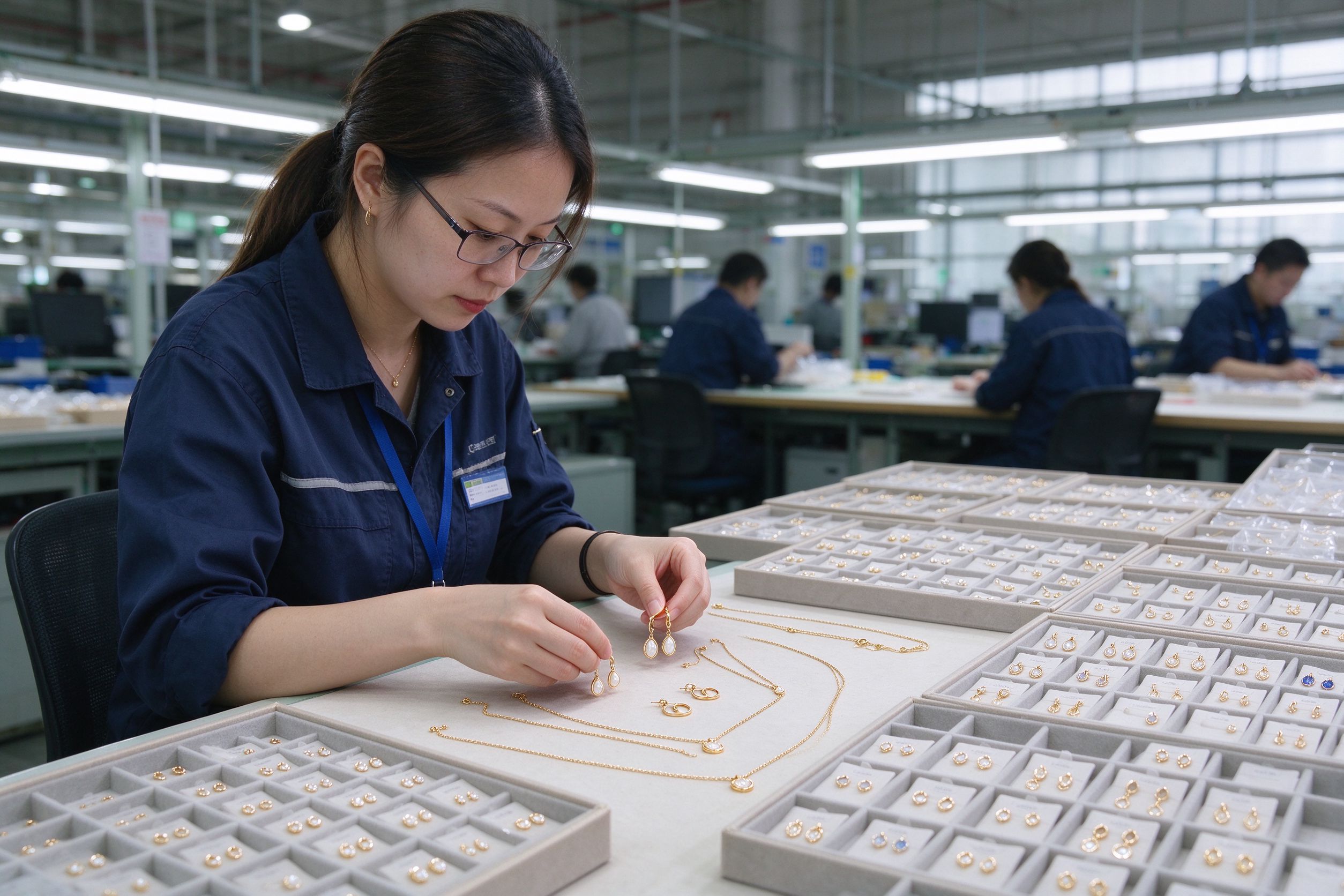
Because you could not see everything before purchase, the arrival inspection matters. Count the pieces, check the categories, and pull aside any obvious defects. Compare the contents to the contents list the factory promised. If there is a large shortfall or the lot is mostly filler, raise it immediately while the order is fresh. Most factories will make good on a clearly misdescribed lot, especially if you are a repeat buyer.
- Count pieces against the promised list.
- Sort by category and tone immediately.
- Pull defects aside and photograph them.
- Report major shortfalls within a week.
Mistakes to avoid with mix lots
The first mistake is buying a huge mystery lot on price alone. A $199 lot of 500 pieces sounds like a steal until half of it is ugly. The second mistake is buying a lot in a style you cannot sell, because the price was cheap. Cheap stock you cannot sell is the most expensive stock of all. The third mistake is treating a mix lot as permanent inventory rather than a test. Sell through the good pieces, note what moved, and reorder those specific styles on a custom basis next time.
Using mix lots as a discovery tool
The smartest way to use a mix lot is as market research. Sort the carton, tag each piece as it sells, and after two months you have real data on what your customers buy. The winners become your next custom order; the losers teach you what not to buy again. A mix lot is cheap tuition for learning your market. Treat it that way and every carton makes you a better buyer, not just fills a shelf.
Random vs themed mix lots
Not all mix lots are the same, and choosing the right type matters as much as choosing the price. A random lot is whatever the factory has, with no theme. It is the cheapest, but it can contain styles that do not suit your customer at all. A themed lot is built around a category, a metal tone or a season. A "gold-tone earring lot" or a "spring floral lot" is far more predictable. For a reseller who needs to match a specific shop aesthetic, themed lots are worth the small premium. Random lots suit bargain stalls and grab-bag builders who can sell almost anything cheaply.
Ask the factory whether they can custom-assemble a mixed lot to your brief. Many Wuzhou factories will, for a slightly higher per-piece price, pull together a carton of exactly the categories and tones you ask for. That is the safest mix lot of all: you get the low price of existing stock but the control of a custom order. The extra ten or twenty cents per piece is well worth it for the reduction in dead stock.
How mix lots fit a new business
For a brand-new seller with limited capital, mix lots are often the only realistic way to fill a display. Buying 500 pieces of one style on day one is a big bet. Buying five small mix lots across five categories fills the shop with variety at the same total cost, and the variety itself attracts browsers. A customer walking into a shop that looks full stays longer than one walking into a half-empty rack. Mix lots solve the cold-start problem for new stores.
Once the business has some sales data, the mix lots should taper off. The first few months are for learning what sells; after that, custom orders of proven winners are more profitable. A common mistake is staying on mix lots forever because they feel easy, which means never building a distinctive range. Use them to launch, then graduate.
Comparing mix lots from different suppliers
When two suppliers quote a similar mix lot at similar prices, the contents decide it. Ask both for a sample photo or a small sample carton before committing to the full lot. A $30 sample from each tells you which factory has better finishes and fewer fillers. Never buy a large mix lot sight unseen based on a price alone; the cheapest lot is often the one with the worst fillers. The few dollars spent on samples protects a hundred-dollar carton.
- Themed lots suit a curated shop; random lots suit bargain stalls.
- Ask for a custom-assembled lot to your brief.
- Use mix lots to launch, then move to custom orders.
- Always sample a supplier's mix lot before buying in bulk.
The cash-flow advantage of small mix lots
One reason mix lots suit small businesses is cash flow. A custom order ties up $3,000 in inventory you cannot touch for six weeks. A series of small mix lots lets you turn over $300 at a time, getting your money back within weeks and reinvesting it. That faster cash cycle matters when your working capital is limited. You do not need a big warehouse or a big budget to keep a small shop stocked this way. Each carton pays for the next.
This also reduces the pain of a wrong bet. If a $300 mix lot disappoints, you are out $300. If a $3,000 custom order disappoints, you are out $3,000 and the stock sits for a year. Small bets spread the risk. As a buyer grows, the bets can grow, but staying disciplined about small first orders keeps the business safe through its early years.
Buy your first mix lot the safe way
Start small. Buy one 50-to-100-piece curated lot in a category you already understand, at a price that works on a conservative sell-through assumption. Inspect it on arrival, sort it immediately, and tag what sells. Use the data to place your first custom reorder. Done this way, mix lots are a low-risk way to fill your display, test your market and learn what your customers love. They are not a gamble; they are a research budget that happens to leave you with inventory. Treat the first carton as an experiment rather than a commitment, and let the sell-through numbers guide every decision that follows. Start this week with one small lot, and build your data one carton at a time. The first one is always the hardest, but it gets easier with every reorder.
