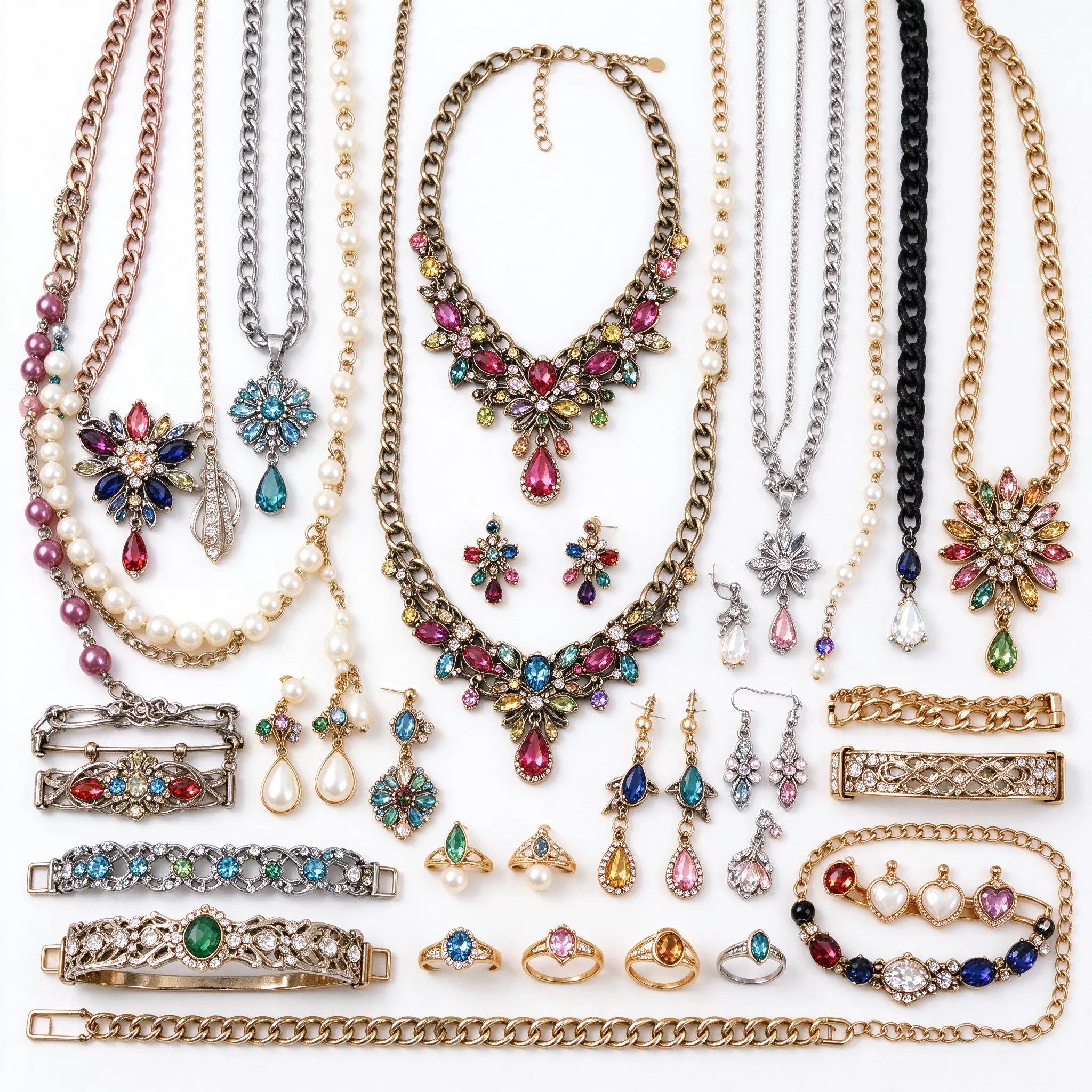
Buying a mix lot is easy; making the contents actually sell is the hard part. A carton of assorted jewelry arrives looking like a treasure chest, and two months later half of it is still sitting on the shelf. The difference between a mix lot that earns its money and one that becomes dead stock is the inventory strategy you apply the day it arrives. This guide covers how to sort, price, tag and push a mix lot so that the good pieces sell fast, the fillers move cheaply, and you learn exactly what to reorder next.
The core idea is simple: a mix lot is not inventory to be stored, it is a batch of experiments to be run quickly. The faster you sort and sell it, the faster you learn what works and the faster your cash comes back. Treat every mix lot as a two-month sprint, not a permanent shelf.

Sort the lot the day it arrives
The moment a mix lot arrives, sort it into three piles: keep, discount, and reject. The keep pile is pieces you would happily display at full price. The discount pile is sellable but plain or dated, destined for a clearance rail. The reject pile is defective or off-market pieces to report to the factory or write off. Do this before you put anything on the shelf. A mix lot that sits unsorted becomes a tangled mess nobody wants to browse.
Within the keep pile, sort further by category and metal tone. Group all the earrings together, all the necklaces together, and within those, group gold with gold and silver with silver. A display grouped by finish sells far better than a jumble, because customers shop by what matches their wardrobe. Sorting takes an afternoon, but it doubles the sell-through.
- Sort into keep, discount and reject piles immediately.
- Group keep pieces by category and metal tone.
- Photograph rejects for the factory claim.
- Do not shelve an unsorted lot.
Price for fast sell-through, not for margin per piece
With mix lots, the goal is to turn the whole carton over quickly, not to squeeze maximum margin from each piece. Price the keep pieces at a normal retail, but price the discount pieces aggressively to move. A $0.50 earring that you sell for $3 rather than $5 still makes money, and it frees up shelf space and cash. The mistake is holding every piece at full price, which means the slow pieces sit for a year and tie up the cash you needed to buy winners.
Run a clear-out rail or a sale section for the discount pile. Mark it honestly as a deal. Customers love a bargain rail, and it gives the filler pieces a fast exit. The keep pieces carry the margin; the filler pieces carry the turnover. Let them do different jobs.
Tag and track what actually sells
The real value of a mix lot is the data it gives you. As each piece sells, note the style, category and tone. After two months, look at what actually moved. Did the gold earrings sell but the silver ones sit? Did the simple necklaces fly but the statement pieces stall? That pattern is gold. It tells you exactly what to order on a custom basis next time, with confidence rather than guesswork.
You do not need fancy software. A simple notebook or spreadsheet with a tally per style is enough. The point is to stop treating sell-through as a feeling and start treating it as a number. The buyers who track what sells are the ones who stop wasting money on lots full of what their customers do not want.

Reorder the winners, not the lot
After the mix lot sells through, the winners should be reordered as custom orders, not as another mix lot. By now you know exactly which earrings, which necklaces and which tones your customers buy. Order those specific styles at volume, where the unit price is lower and you can control quality. The mix lot did its job: it showed you what to bet on. Now bet deliberately.
A common mistake is buying another similar mix lot hoping to recapture the winners. That is lazy. The winners are now known; order them directly. The mix lot was the discovery, not the strategy. Once you have data, graduate to custom orders and your margins improve immediately because you are no longer paying the assortment risk premium.
Liquidate the fillers without guilt
Some pieces in every mix lot will not sell at any price. Do not let them occupy prime shelf space for a year. Move them to a clearance bin, bundle them into grab bags, or donate them for a tax receipt. A slow piece on a shelf costs you opportunity cost every month it sits. The goal is a fast-turning, fresh display, not a museum of every piece you ever bought.
Grab bags are a great filler tool. Bundle five slow earrings into a mystery bag at $10 and they sell as a fun impulse buy. The customer feels she is getting a deal; you clear dead stock and recover most of your cost. Never let filler pieces sit quietly; give them a fast, fun exit.
- Clearance rail for slightly slow pieces.
- Grab bags for the stubborn filler.
- Donate or write off the unsalvageable.
- Prime shelf space only for proven sellers.
Keep your cash cycle fast
Mix lots work because they are cheap and fast. If you let a mix lot sit unsold for a year, you have destroyed that advantage. Set an internal deadline: a mix lot should be mostly sold through within 60 to 90 days. If it is not, mark it down harder. The cash you recover in month three is worth more than the small extra margin you might squeeze in month twelve. Fast turnover is the whole point of buying cheap assorted stock in the first place.
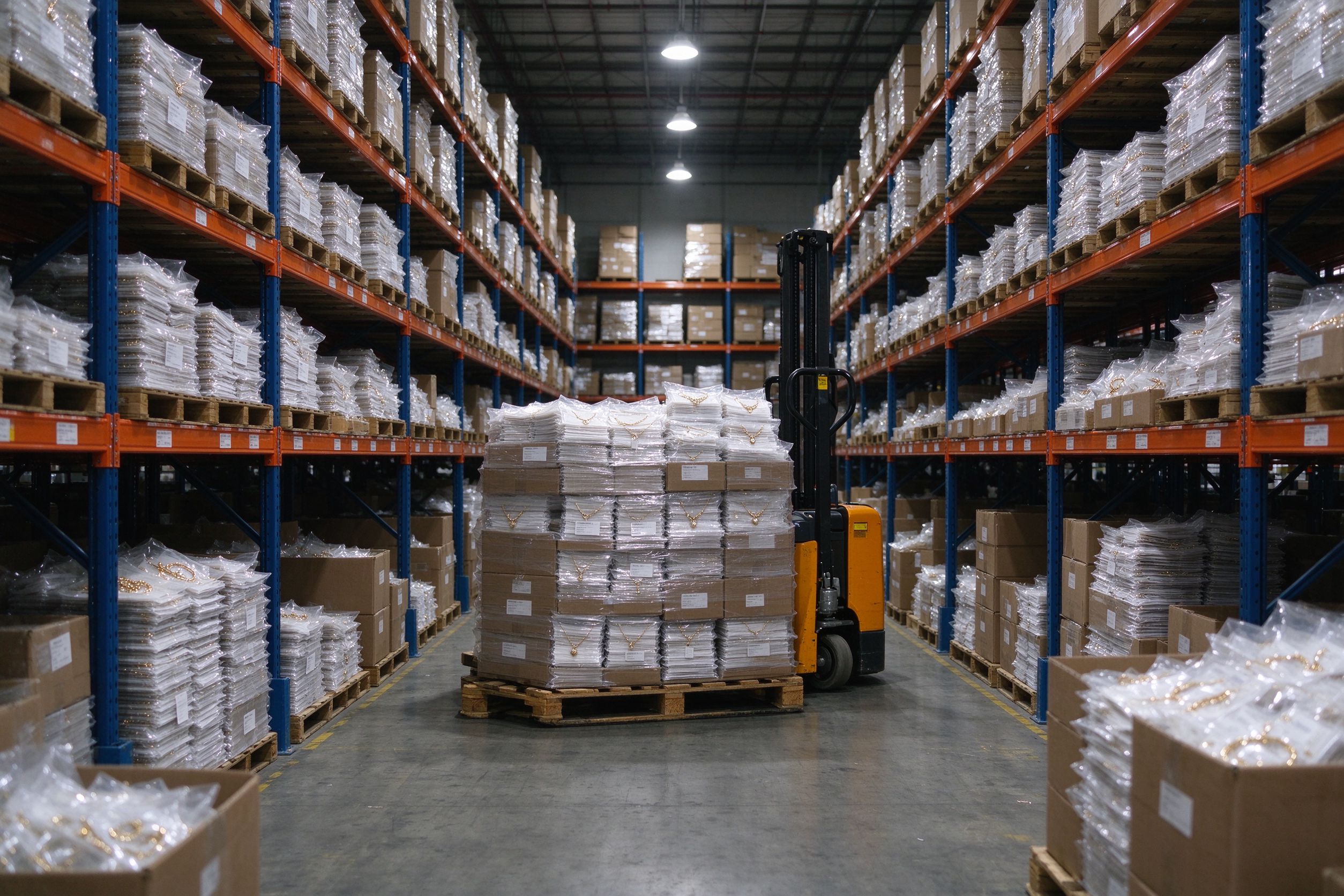
Mix lots as a steady filler, not the whole business
Used well, mix lots are a permanent part of a healthy buying mix. They fill gaps in the display, test new trends cheaply, and add surprise for repeat customers. But they should not be the whole business. The core of your range should be custom orders of proven winners, with mix lots layered on top for variety and discovery. Relying entirely on mix lots means you never build a brand, because every carton is different and you cannot promise repeat customers a consistent look.
Space the display so nothing gets lost
A mix lot can produce a lot of small pieces that all look similar if they are crammed together. Give each piece room to be seen. Use display stands, busts and trays so the good pieces have a stage. When everything is piled in one bin, the customer buys the cheapest thing she can grab. When pieces are spaced out by tone and category, she browses longer and buys a nicer piece. The same inventory sells for more simply because it is displayed better.
Rotate the mix lot pieces through your best display spots. Do not put the newest lot on the bottom shelf. Treat the arrival of a fresh carton as a mini-merchandising event. Move a few new pieces to the front window or the top shelf so regular customers notice the refresh. A display that changes looks like a shop worth returning to; a static shelf looks abandoned.
Online sellers: photograph the whole lot as a range
If you sell online, a mix lot is a content goldmine. A carton of fifty pieces gives you fifty product photos and fifty listings. Photograph them in styled groupings so customers see the range, not just isolated pieces. Group the earrings into a "mixed earring box" and the necklaces into a "stacking necklace bundle." The mix lot becomes a whole category on your store rather than fifty one-off listings.
Online, the filler problem is easier to solve because you can sell the slow pieces as "mystery" or "lucky dip" listings, which have a loyal audience. A mystery box of mixed jewelry is a product in its own right. The same fillers that sit on a physical shelf fly out as an online mystery box, because the buyer wants the surprise.
Set a hard deadline on every carton
Without a deadline, mix lots drag on for months. Set a date: this carton must be eighty percent sold through in ninety days. After that, whatever remains gets bundled into grab bags and cleared. This artificial deadline forces action. It prevents the slow bleed of pieces sitting on shelves while you wait for them to sell. Most of the time, a carton sold under a deadline is more profitable than the same carton sold leisurely, because the cash comes back faster and can be reinvested.
- Give each carton a 90-day sell-through deadline.
- Space pieces on real displays, not in bins.
- Online, turn fillers into mystery boxes.
- Rotate new arrivals into prime display spots.
Knowing when a lot has failed
Not every mix lot works out, and the fastest way to limit the damage is recognizing a failed lot early. If a carton has been on sale for three weeks and barely anything has moved, it has failed. Do not hope it will turn around. Discount the whole lot hard, bundle it, or sell it on as a job lot to another seller. A failed lot acknowledged early recovers most of the cost; a failed lot ignored for a year recovers almost none. The discipline of cutting losses fast is what separates profitable mix-lot buyers from those who end up with a storeroom of junk.
Sometimes the failure is not the lot but the display. A carton that sits in a corner may sell the moment it moves to the front. Before you write off a lot, move it to prime space and try a different price point. If it still does not move after a week in the best spot, then it is genuinely a failure and you should cut it loose.
Build a mix lot rhythm that works
Buy a small curated mix lot every quarter, sort it within a day, run it as a two-month sprint, track what sells, and reorder the winners as custom stock. The fillers move fast on a clearance rail. Over a year, that rhythm keeps your display fresh, tests new trends cheaply, and steadily sharpens your sense of what your customers want. Mix lots are not a way to avoid choosing; they are a way to choose faster, with real data instead of guesswork. The buyers who run this rhythm well turn a cheap carton of assorted pieces into a steady stream of informed reorders, and that is how a small accessory business grows without ever betting the farm on a single style. Over time, the mix lot habit teaches your eye what sells faster than any course or article ever could, because every carton is a lesson paid for in inventory you can still sell. The buyers who stick with this method stop guessing and start knowing, and that confidence shows in a full, fast-turning, profitable display. Remember: a mix lot is a sprint, not a storage box. Sort it, sell it, learn from it, and let the winners graduate into your permanent range.
