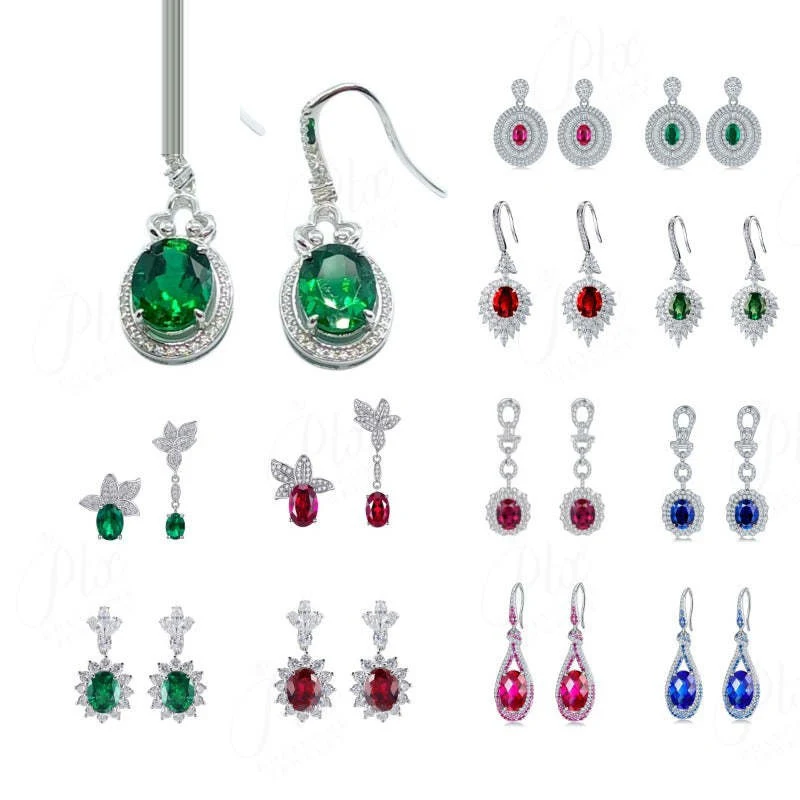
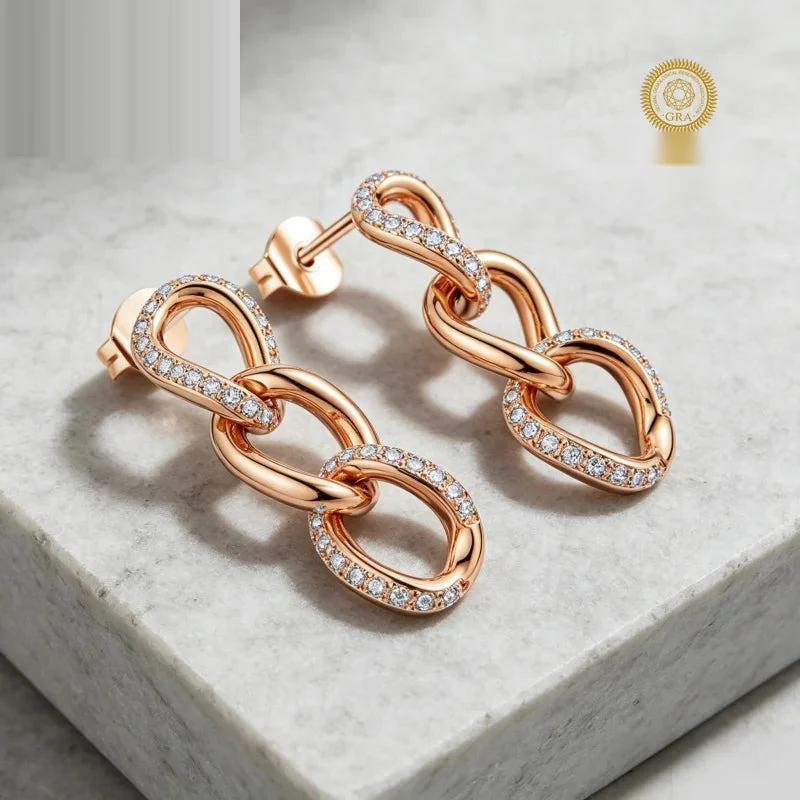
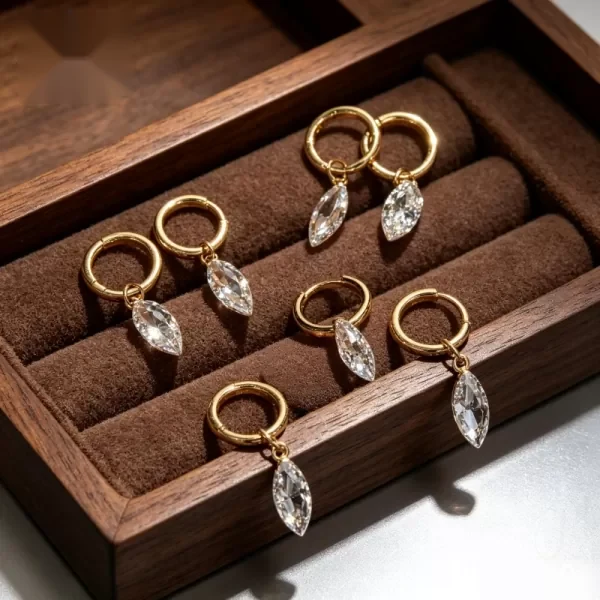
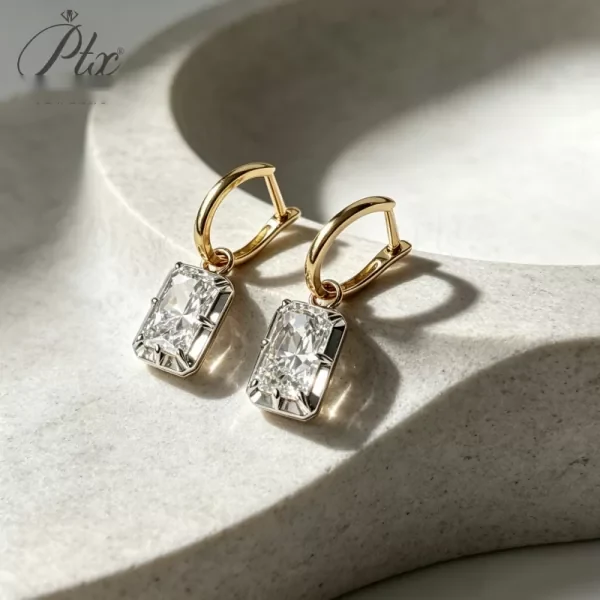
Wholesale Earrings: Reorder Timing & Stock Depth

Why Reorder Timing Decides Your Earrings Margin
Earrings are the fastest-turning category in most jewelry assortments, which makes them the category where reorder timing matters most. A stud or hoop that sells steadily at retail will expose a stock-out within weeks if your wholesale reorder window is too short, and it will tie up cash in slow SKUs if your orders run too deep.
This article walks through the practical decisions US wholesale buyers face when planning earrings restocks: how to read sell-through, how to set reorder points, how deep to go on each SKU, and how supplier lead times shape the whole calendar.
Because earrings span a wide price range, from 925 sterling silver studs to 14K solid gold huggies set with graded stones, the right stock depth is not uniform across your assortment. A one-size-fits-all reorder rule produces both gaps and overstock. The sections below break the decision into steps you can apply to a single supplier relationship or to a mixed vendor base.
Reading Sell-Through Before You Reorder
The first input to any reorder decision is honest sell-through data, not gut feel. Track three numbers per SKU: units sold per week, current on-hand units, and units already committed to pending retail orders. When weekly velocity is stable, the basic reorder point is simple: weekly velocity multiplied by the total replenishment cycle, plus the safety stock you want on the shelf.
The replenishment cycle for earrings from an overseas supplier is longer than many buyers assume. Sampling takes 7 to 10 days, bulk production runs 15 to 25 days after approval, and DDP delivery to the US adds 5 to 8 days. That is a realistic cycle of roughly four to six weeks from purchase order to goods on your shelf, longer if a custom style needs tooling or a new sample round.
Any reorder point built on a two-week assumption will leave you empty-handed.
Separate Core Styles From Seasonal Styles
Not all earrings behave the same way. Core styles, such as classic round moissanite studs set in 925 sterling silver or 14K solid gold hoops, sell at a predictable weekly rate year-round and should carry the deepest stock. Seasonal or trend styles, such as statement drops tied to a holiday window, need shallower buys and tighter reorder triggers, because velocity collapses after the season ends.
A practical split: identify the 20 percent of earring SKUs that generate the majority of units sold and treat them as core stock with full replenishment depth. Treat the remainder as assortment fillers, ordered in small batches and allowed to sell down without restock if velocity drops below your threshold.
Calculate Your Reorder Point
Use a simple formula your team can maintain in a spreadsheet: reorder point equals average weekly units sold multiplied by replenishment cycle weeks, plus safety stock. If a sterling silver stud style sells 8 units per week and your full cycle runs 5 weeks, you need 40 units in the pipeline cycle, plus a safety cushion for demand spikes. When on-hand plus on-order inventory falls to that number, the purchase order goes out.
Build the cycle weeks from your supplier's actual stated lead times, not optimistic ones. With sampling at 7 to 10 days, bulk production at 15 to 25 days after approval, and DDP shipping at 5 to 8 days to the US, a realistic planning figure of 5 to 6 weeks covers the typical stock style without requiring sample rounds.
Setting Stock Depth by Earring Sub-Category
Stock depth means how many units you hold per SKU at any moment, spread across the pipeline and the shelf. Deeper stock protects availability but consumes cash and storage; shallower stock protects cash but raises stock-out risk. The right depth depends on price point, velocity, and how easily the style can be substituted.
The table below offers a starting framework for a typical US retail assortment of earrings sourced from one wholesale supplier. Adjust the depth bands to your own velocity data after two reorder cycles.
| Sub-category | Typical metal | Velocity profile | Suggested depth |
|---|---|---|---|
| Classic studs | 925 sterling silver | Steady year-round | Deep, 8 to 12 weeks |
| Huggies and hoops | 14K solid gold | Steady, higher value | Medium, 5 to 8 weeks |
| Statement drops | Gold vermeil | Seasonal spikes | Shallow, 3 to 4 weeks |
| Graded stone pieces | 18K solid gold | Slower, high ticket | Shallow, order per carat |
Graded stone earrings deserve special handling. Stones arrive with GRA or IGI papers and are sold by the carat, so depth planning happens at the stone level as well as the finished-piece level. Because each piece carries a higher price, holding fewer finished units and restocking against confirmed retail demand usually protects cash better than deep speculative stock.
Match Depth to Metal and Price Tier
Metal choice drives both cost and turnover. Gold plated and gold vermeil earrings on sterling silver cores occupy the entry tier, where velocity is high and unit cost is low enough to justify deeper shelves. 10K, 14K, and 18K solid gold earrings sit in the fine tier, where buyers pay more per unit and prefer to hold fewer pieces while restocking more frequently.
Match depth to price tier rather than treating earrings as one category. A deep shelf of silver studs might cost less in total than a shallow shelf of solid gold huggies, so cash exposure and turnover risk have to be evaluated per tier, not per category average.
How Supplier Lead Times Shape the Calendar
Once your reorder points are set, the calendar is driven by the supplier's process. For stock styles with a minimum order of just 1 piece, you can top up quickly, which is useful for emergency gap-filling but costly per unit compared with bulk runs. For custom work at a 30-piece minimum per style, lead times lengthen and the reorder trigger must fire earlier, since sampling of 7 to 10 days precedes the 15 to 25 day production window.
Pricing structure also follows the order shape: per piece for finished earrings and per carat for loose or graded stones. Plan reorder quantities so that production runs land in the pricing tier you want, and use sample orders, which can be paid through PayPal, to validate a new style before committing to bulk under T/T terms of a 30 percent deposit and 70 percent balance before shipment.
Use Small Stock Orders as a Bridge
The 1-piece minimum on stock styles is a practical bridge tool. When a core SKU is about to gap before a bulk order arrives, a small stock order can cover the shortfall window. This costs more per unit than a bulk run, so treat it as insurance rather than a routine channel, and price the emergency quantity so the margin still works.
Bridge orders also help when testing depth on a new style. Order a small stock quantity, watch two to three weeks of velocity, then fold the style into the next bulk reorder if the data supports it. This prevents deep buys on styles that never find their audience.
Plan Around QC, Not Just Production
Quality control adds time that buyers often leave out of reorder math. A supplier running three-stage QC, meaning incoming inspection, in-process checks, and pre-ship AQL inspection, protects you from defects but adds days between production completion and shipment. Include that inspection window in your replenishment cycle weeks, or your reorder point will fire too late.
Ask your supplier how long pre-ship AQL inspection and packing typically take, and whether DDP shipping to the US is scheduled at fixed weekly intervals. Fixed sailing or air schedules let you plan arrival dates accurately; ad hoc shipments introduce variance that safety stock has to absorb.
Building a Reorder Calendar That Holds Up
With reorder points, depth bands, and lead times defined, assemble them into a calendar. Map every core earring SKU against its trigger level, its cycle weeks, and its next scheduled purchase order. Review the calendar every two weeks, update velocity numbers, and shift orders earlier whenever a style accelerates. The calendar is a living document, not a set-and-forget plan.
Two habits keep the calendar honest. First, count inventory on a fixed weekly schedule so velocity data stays clean. Second, keep a written log of every stock-out, including the days lost, so you can size safety stock based on actual gap events rather than guesses. Over two or three cycles, most buyers find their safety stock bands stabilize and their stock-outs on core earrings drop close to zero.
Order Terms for Wholesale Buyers
MOQ is 1 piece for stock styles and 30 pieces for custom work, and loose stones are sold by the carat. Sampling takes 7 to 10 days, and bulk production runs 15 to 25 days after the sample is approved. Pricing is quoted per piece or per carat depending on the item. Payment is T/T with a 30% deposit and the 70% balance before shipment, and PayPal is accepted for sample orders.
Frequently Asked Questions
How early should I reorder core earring styles?
Fire the reorder when on-hand plus on-order stock hits your calculated reorder point, built on a 5 to 6 week cycle: 7 to 10 days of sampling if needed, 15 to 25 days of bulk production after approval, and 5 to 8 days of DDP delivery to the US. For custom work at 30 pieces per style, trigger earlier to absorb an extra sample round.
What stock depth should I start with on a new earring style?
Start shallow. Use the 1-piece minimum on stock styles to test with a small bridge order, watch two to three weeks of retail velocity, then move the style into bulk reorders only if the data holds. This keeps cash free for styles with proven turnover.
How do I plan depth for earrings set with graded stones?
Plan at both the piece and stone level. Finished pieces are priced per piece, while loose or graded stones are priced per carat and come with GRA or IGI papers. Hold fewer finished units at the high ticket tier and restock against confirmed demand rather than carrying deep speculative inventory.
What payment terms should I expect on earring reorders?
Bulk orders run on T/T with a 30 percent deposit and the 70 percent balance before shipment. Sample orders can be paid through PayPal, which keeps early-stage testing low friction before you commit deposit funds to production.
Does QC add meaningful time to the reorder cycle?
Yes, and it should be in your math. Three-stage QC, covering incoming inspection, in-process checks, and pre-ship AQL inspection, adds days between production completion and dispatch. Confirm the inspection window with your supplier and build it into your cycle weeks.
Plan Your Next Earrings Reorder
Reorder timing and stock depth are learned through cycles, not spreadsheets alone, but the framework above gets you close on the first pass. Set reorder points from real lead times, split your earrings into core and seasonal depth bands, use small stock orders as bridges, and review velocity every two weeks.
If you are building or refreshing an earrings program, browse our current catalog of studs, hoops, and drops on the product catalog, read more sourcing and restocking guides on the wholesale jewelry blog, and reach out through our contact page to discuss lead times and order quantities for your next shipment.
Moissanite is a lab-created diamond alternative, not a natural diamond; listings and customer-facing copy should describe it that way.
Sources: Grading references: GIA gem education and GIA laboratory information.