Wholesale Earrings: Moissanite vs CZ: What to Compare

Moissanite, Lab-Grown Stones, or CZ: Which Should You Stock in Earrings?
Wholesale buyers choosing between moissanite, lab-grown stones, and cubic zirconia for earrings are really choosing between three different price points, three different customer expectations, and three different reorder patterns. Moissanite is a lab-created diamond alternative with strong brilliance and durability, CZ is an affordable simulated stone that suits fashion-driven designs, and lab-grown diamonds occupy the premium end of the range.
The right answer depends on your customer base, your price positioning, and how much documentation you want to hand to your retail customers. This guide walks through each option, the practical decisions tied to each, and the logistics of sampling, production, and delivery so you can build an earrings assortment that sells through rather than sits in inventory.
Understanding the Three Stone Options
Before placing a purchase order, it helps to see how each stone type performs in a wholesale context. Moissanite is silicon carbide grown in a laboratory; it is a lab-created diamond alternative, not a natural or real diamond, and your product listings should describe it that way. Cubic zirconia is a synthesized zirconium dioxide material that offers an attractive look at a low cost per piece, which makes it a favorite for trend-driven fashion assortments.
Lab-grown diamonds are actual diamond material produced in a laboratory setting, and they carry grading papers when supplied in larger sizes.
The practical differences that matter to a buyer are hardness, refractive appearance, certification availability, and how each one positions your retail customers. Moissanite and lab-grown diamonds support premium pricing with documentation behind them. CZ supports volume and frequent style rotation. A side-by-side comparison makes ordering conversations with your own clients easier and reduces back-and-forth during the quotation stage.
| Stone type | Typical earring use | Pricing basis | Certification | Best suited for |
|---|---|---|---|---|
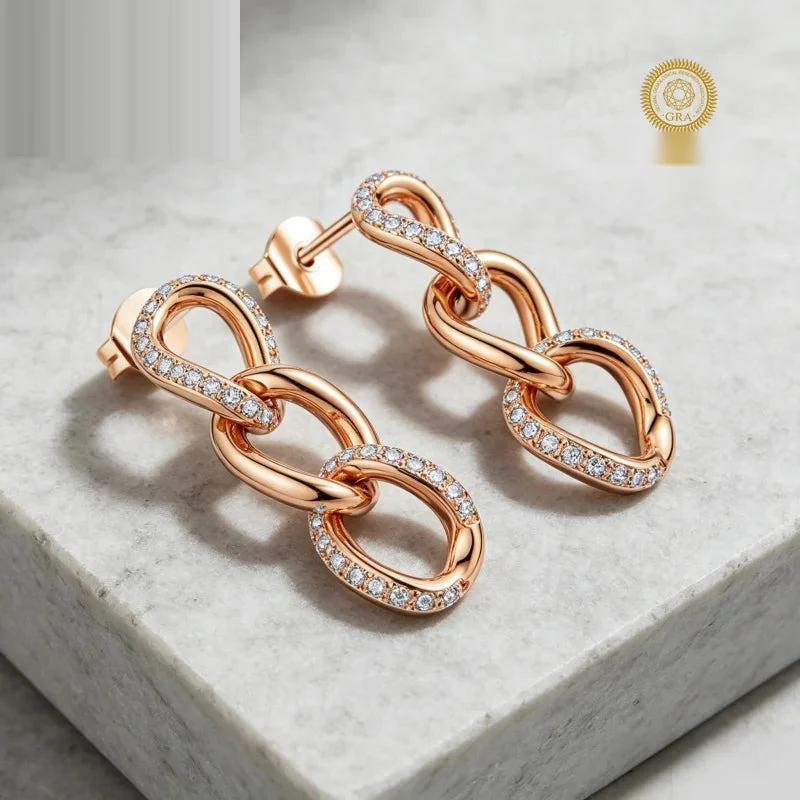
| Moissanite | Studs, hoops, drops | Per piece or per carat | GRA or IGI papers | Diamond-alternative buyers |
| Cubic zirconia | Fashion and statement styles | Per piece | No grading papers | Trend-driven assortments |
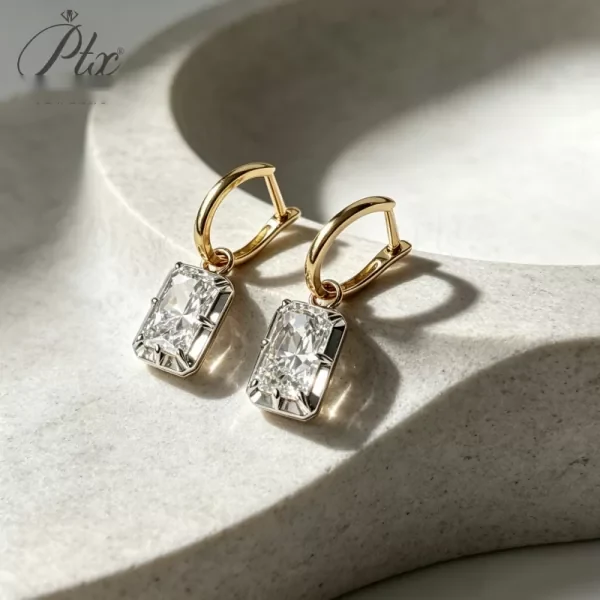
| Lab-grown diamonds | Premium studs and drops | Per carat | IGI papers | Fine jewelry retailers |
Once the stone choice is settled, the metal decision usually follows. Most moissanite and CZ earrings in the wholesale market are set in 925 sterling silver, often finished with gold plating or gold vermeil. If your buyers ask for solid gold, 10K, 14K, and 18K solid gold settings can be produced on request.
Label the metal accurately in all catalogs and listings; plated and vermeil pieces should never be presented as solid gold, and the description on your purchase order should match the description your retail customers see.
Why Moissanite Anchors the Diamond-Alternative Assortment
Moissanite has become the default choice for retailers serving customers who want the look of a diamond without the price tag of one. Its refractive properties produce a distinctive sparkle, and its hardness makes it suitable for earrings that get daily wear. For wholesale buyers, the key selling points to communicate downstream are durability and documented quality.
Because graded stones come with papers, your retail customers can present documentation at the point of sale, which shortens the conversation and supports a higher ticket price.
Grading Papers: GRA and IGI
Graded moissanite earrings come with GRA papers, and lab-grown diamond earrings can be supplied with IGI papers. These documents list stone specifications and give your retail customers something tangible to include in the gift box. When you request graded stones, confirm at the quotation stage whether papers are included in the per-piece or per-carat price, since this affects landed cost calculations.
Buyers running a mixed assortment of graded and ungraded styles should keep the paperwork flow organized by order number so nothing gets separated in transit.
Sizing Strategy for Stud Earrings
Studs remain the highest-velocity moissanite earring style for most wholesale programs. A sensible opening assortment covers a range of carat weights so retail customers can choose between everyday sizes and statement sizes. Because loose stones are sold by the carat and finished earrings are priced per piece or per carat depending on the item, ask for itemized quotations so you can compare stone cost and setting cost separately.
This gives you a clear picture of where the margin sits and lets you adjust the assortment if stone prices move between order cycles.
Matching Stone Grade to Customer Segment
Not every retail account needs the same grade. Boutiques serving gifting occasions tend to benefit from graded moissanite with papers, while fashion retailers focused on seasonal color stories and fast rotation often do better with CZ set in gold-plated or vermeil silver. Map your accounts before you order: list each account, the price band they sell into, and the documentation their customers expect.
That exercise usually reveals that you need both a moissanite program and a CZ program rather than one or the other.
Where Cubic Zirconia Still Earns Its Place
CZ should not be dismissed as a budget-only option. In fashion earrings, the setting, the finish, and the silhouette drive the sale far more than the stone itself. CZ allows you to offer broad style variety at a low cost per piece, test new silhouettes without heavy risk, and refresh your catalog each season.
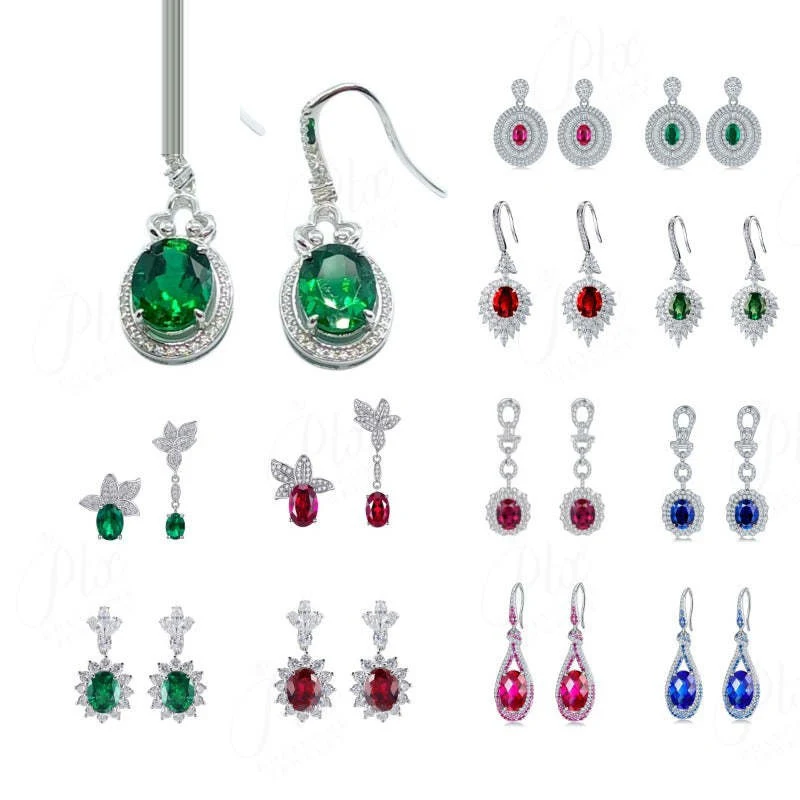
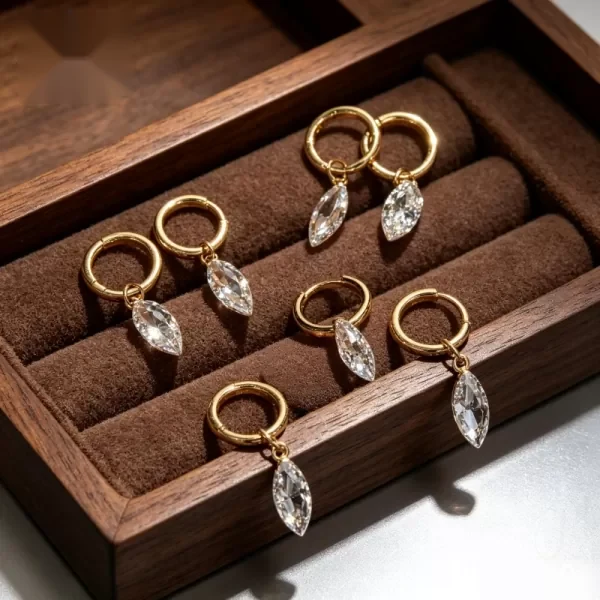
Hoops, ear climbers, statement drops, and clustered designs all perform well with CZ because the visual impact comes from scale and arrangement rather than the stone grade.
The trade-off is documentation and positioning. CZ carries no grading papers, so your retail customers sell it on design rather than certification. That works well for impulse and trend purchases. It works less well for occasions where the buyer expects papers in the box. Keep CZ styles clearly separated from your moissanite line in catalogs so downstream customers do not confuse the two categories, and make sure the product descriptions identify CZ as a simulated stone.
Metal and Setting Decisions That Affect Price and Positioning
925 Sterling Silver as the Workhorse Base
Sterling silver offers the widest style range and the lowest entry cost for both moissanite and CZ earrings. Plated finishes in gold tone and vermeil finishes expand the look without moving to solid gold pricing. Confirm with your supplier how each finish is described on the order, and mirror that language in your own listings. Gold vermeil means a thick gold layer over sterling silver; gold plated means a thinner layer.
Both are legitimate categories, but they are different products with different price points and different care instructions for the end customer.
Solid Gold Requests
When a retail account asks for solid gold earrings, 10K, 14K, and 18K solid gold settings can be produced. Solid gold changes the economics of the order because the metal cost moves with the market, so request quotes close to the time you plan to confirm production. Solid gold settings pair most naturally with moissanite and lab-grown diamonds, since the customer buying into that price band usually expects graded stones with papers alongside.
Ordering, Sampling, and Quality Control
The minimum order quantity is 1 piece for stock styles and 30 pieces for custom work, which gives you room to test a new earring style before committing to volume. Loose stones are sold by the carat when you are sourcing stones separately from settings. Sampling takes 7 to 10 days, and bulk production runs 15 to 25 days after approval.
Build that timeline into your buying calendar, especially for seasonal programs: if you want new styles on shelves for a holiday season, count backward from your delivery date and add the shipping window on top.
Payment terms follow the standard structure for wholesale production: T/T with a 30 percent deposit and the 70 percent balance before shipment. PayPal is available for sample orders, which lowers the risk of testing a new supplier or a new design. This split lets you validate the sample before the larger production payment is due, and it keeps cash flow smoother across a multi-style order.
Quality control runs in three stages: incoming inspection of materials and stones, in-process inspection during production, and a pre-ship AQL inspection before goods leave the factory. For earring orders specifically, ask that the pre-ship AQL check cover stone security in the setting, clasp function, and surface finish on plated and vermeil pieces. Earrings are small, high-handling items, so clasp and post defects are the most common reason for downstream returns.
Specifying those checkpoints in writing before production begins reduces surprises at inspection.
What to Check on Samples
When your sample arrives, evaluate it the way your retail customers' shoppers will. Check the stone alignment between the pair, since mismatched pairs are a leading complaint on studs and drops. Verify the post and clasp close securely and sit comfortably. Confirm the metal description matches what you ordered: sterling silver, vermeil, plated, or solid gold. If the sample includes graded moissanite, match the stone to its GRA papers.
Photograph the sample and keep the paperwork together; both become the reference standard for the bulk production run and the pre-ship inspection.
Delivery to the US Market
DDP delivery to the US takes 5 to 8 days after shipment, which means duties and clearance are handled before the goods reach you. Add that window to your production planning: sampling at 7 to 10 days, bulk at 15 to 25 days after approval, then 5 to 8 days in transit. For a straightforward reorder of a stock style with no sampling stage, the full cycle can run inside a month.
For custom work with a sampling round and revisions, plan for more. Communicating this timeline to your retail accounts keeps their shelf planning realistic and protects your reorder relationships.
Building a Balanced Earrings Program
The strongest wholesale assortments layer the three stone types rather than picking one. A practical structure looks like this: a core moissanite studs and drops line with GRA papers for gifting and occasion buyers, a CZ fashion line in plated and vermeil silver for trend rotation and entry-level price points, and a smaller solid gold and lab-grown diamond capsule for your finest retail accounts.
Pricing is quoted per piece or per carat depending on the item, so review each line's margin structure on its own terms rather than averaging across the program.
Review sell-through each season and let the data drive the next order. Styles in the CZ line turn over faster and can be rotated more aggressively. The moissanite core line should trend toward steady replenishment of proven sizes and settings. The premium capsule can stay small and curated. With MOQs of 1 piece on stock styles, you can adjust the mix order by order without overcommitting capital, and the 30-piece threshold on custom work keeps new design experiments disciplined.
Order Terms for Wholesale Buyers
MOQ is 1 piece for stock styles and 30 pieces for custom work, and loose stones are sold by the carat. Sampling takes 7 to 10 days, and bulk production runs 15 to 25 days after the sample is approved. Pricing is quoted per piece or per carat depending on the item. Payment is T/T with a 30% deposit and the 70% balance before shipment, and PayPal is accepted for sample orders.
Frequently Asked Questions
Is moissanite a real diamond?
No. Moissanite is a lab-created diamond alternative made of silicon carbide. It offers diamond-like brilliance and durability, but it is a distinct material and should be described as such in all product listings and marketing materials.
What is the minimum order for earrings?
Stock styles have a minimum order of 1 piece, so you can test a design before committing. Custom work requires 30 pieces per style. Loose stones, if you are sourcing them separately, are sold by the carat.
How long do sampling and production take?
Sampling takes 7 to 10 days. Bulk production takes 15 to 25 days after sample approval. DDP delivery to the US adds 5 to 8 days, so plan your buying calendar around the full cycle.
Do moissanite earrings come with certification?
Graded moissanite stones come with GRA papers, and lab-grown diamonds can be supplied with IGI papers. Confirm at the quotation stage whether papers are included in the quoted price for your specific styles and stone sizes.
What payment terms apply to earring orders?
Bulk orders run on T/T with a 30 percent deposit and the 70 percent balance paid before shipment. Sample orders can be paid through PayPal, which makes testing new designs low-friction.
Start Building Your Earrings Assortment
Choosing between moissanite, lab-grown stones, and CZ comes down to matching each stone type to the accounts you serve, then locking in the metal, certification, and timeline details before production begins. With clear specifications, three-stage quality control, and DDP shipping to the US, a well-planned earrings program can move from sample to shelf in a single buying cycle.
Browse our current earring styles and stone options on the product catalog, read more sourcing guidance in the wholesale jewelry blog, and request a quotation or sample through our contact page to get your program started.
Sources: Grading references: GIA gem education and GIA laboratory information.