On a product page, a fashion necklace is just "alloy pendant, chain included". Behind that line is a small engineering decision that decides whether the necklace lasts two months or two years. As a reseller, understanding the materials helps you answer customer questions, pick the right price tier, and stop blaming yourself when a cheap chain breaks. Here is what fashion necklaces are actually made of.

The Base Metal: Zinc Alloy vs Brass vs Iron
Three base metals dominate the fashion necklace world.
Zinc alloy is the most common. It casts finely, holds detail well, and is cheap. It is light, which is good for pendants but can feel tinny at the low end. Most pendants under $2 wholesale are zinc alloy.
Brass is denser and warmer. Brass pendants have real weight, take plating beautifully, and are the choice for mid-range and "affordable luxury" pieces. A brass pendant feels expensive in the hand, and customers notice.
Iron is used mainly for chains, not pendants. Iron chain is strong and inexpensive but rusts if plating is damaged. It is fine for short-lived fashion but not for keepsake pieces. Quality chains in better necklaces are brass-based.
The Chain: More Than a Thin Wire
Chain type and metal matter a lot. A delicate cable chain in iron will kink and snap. The same design in brass holds its shape. When you compare quotes, ask what the chain is made of and how thick it is measured. A chain width under 1mm is breakage-prone for everyday wear. Lobster clasps should be spring-loaded and snug; a loose clasp loses necklaces. We cover chain anatomy in detail in our necklace chain types guide.
The Plating: Gold, Rhodium and Rose
The color you see is almost always plating, not the base metal itself. Gold plating over brass or zinc is the classic warm finish. Rhodium plating gives a bright, cool silver look that resembles white gold and resists tarnish well. Rose gold plating adds copper to the gold bath for a pink tone. Plating thickness matters: 0.3 microns is acceptable for fast fashion, 0.5 microns and above is durable. Our guide to jewelry plating explained goes deeper into e-coat and anti-tarnish finishes.
The Stones: CZ, Pearl, Enamel and Resin
Fashion necklaces use a rotating cast of stones:
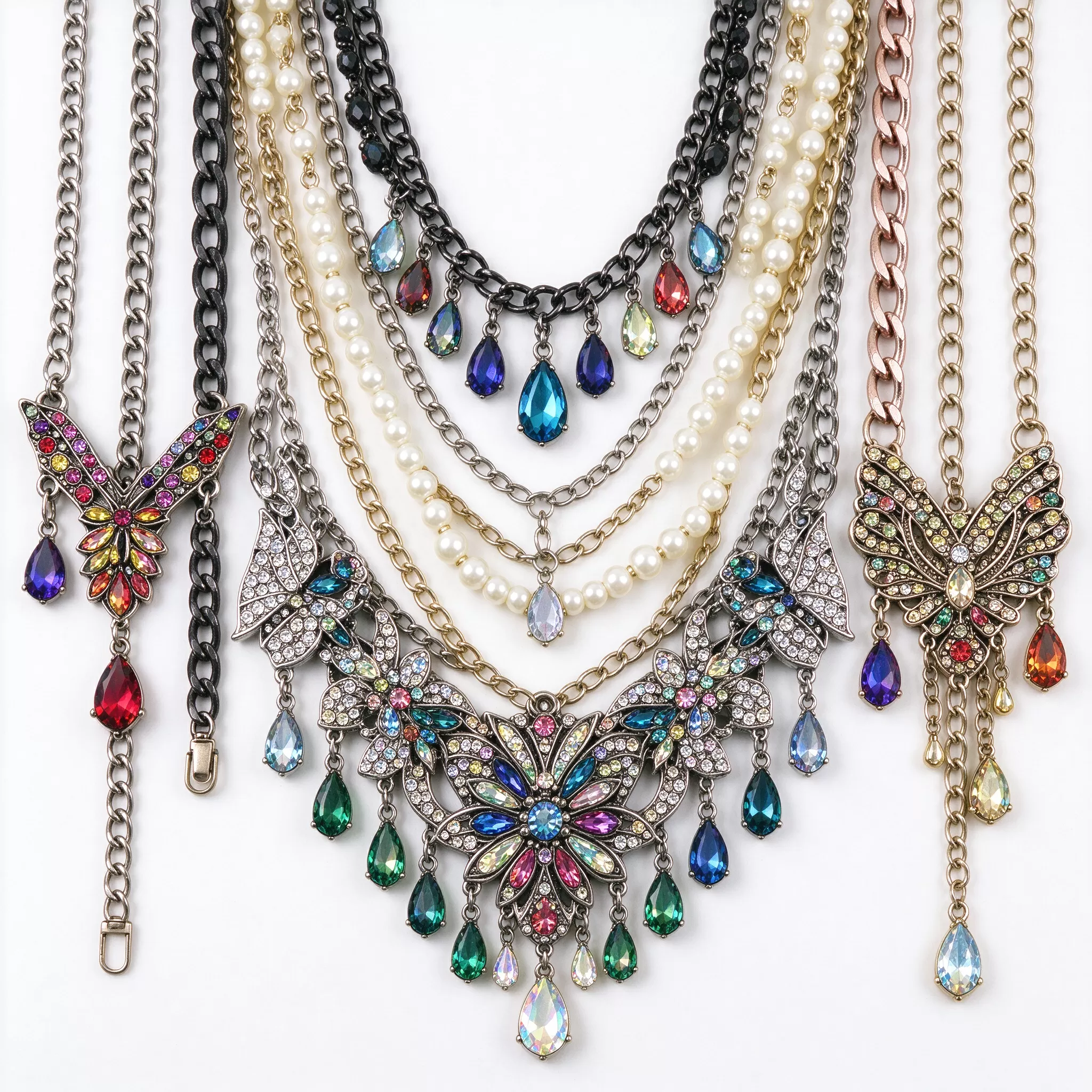
- Cubic zirconia — the sparkly workhorse; grade varies widely, A-grade CZ stays bright far longer.
- Pearl — mostly shell pearl or glass pearl; shell pearl looks and feels the most natural.
- Enamel — colored glass-fired paint; great for bold, affordable color.
- Resin and acrylic — lightweight statement pieces, good for chunky trends.
The stone material changes both the price and the care instructions. A resin pendant is nearly indestructible; a pearl pendant needs to stay away from perfume.
The Findings: Clasps, Jump Rings and Bails
The small parts decide real-world durability. Jump rings should be soldered shut on pendants that get daily wear; an open jump ring opens and the pendant falls off. The bail (the loop the chain passes through) should be thick enough not to bend. When you inspect samples, tug gently on the pendant and the clasp. If anything moves, reject it.
What This Means for Your Buying
When you compare two necklaces that look identical in photos, the price difference is usually hiding one of these choices. A $1.20 necklace may have brass chain, brass pendant, 0.4 micron gold plating and soldered jump rings. A $0.50 lookalike likely has iron chain, zinc pendant, 0.15 micron plating and open rings. Both photograph the same. Only the customer finds out which is which after a month. Buying samples is the only way to tell.
Weight as a Quality Signal
Weight is a surprisingly honest quality metric. Pick up a necklace in a store: a substantial pendant that sits naturally on the chest usually means a denser base metal. A feather-light pendant that flops around suggests thin zinc and iron chain. When suppliers list technical specs, look for the gram weight. Heavier is almost always better in this price band.
Tarnish Expectations You Can Honest About
No fashion necklace is tarnish-proof the way solid gold is. Set honest expectations with your customers: avoid perfume, sweat and water, store in a dry pouch, and the necklace will stay bright for months. An e-coated piece lasts longer. We explain this in our tarnish prevention guide, and the same logic applies to necklaces.
Conclusion: Read the Spec Sheet
The next time you source fashion necklaces, stop at "alloy". Ask for base metal, chain material, plating thickness and stone type. Those four answers tell you whether you are buying a two-month piece or a repeat-customer piece. We list full technical specs on every style in our fashion necklaces collection, and you can request samples or a quote before committing to a bulk run.
How to Inspect a Necklace Sample
When a sample arrives, run a quick set of tests before you reorder in bulk. Tug gently on the pendant to check the jump ring. Open and close the clasp ten times; it should stay firm. Lay the necklace flat and check that the chain does not kink or twist. Smell the piece: sharp chemical fumes mean poor flux cleaning that may irritate the skin. Wipe the plated surface with a wet white cloth; if color transfers, the plating is thin. These five checks take two minutes and reveal far more than any product photo. We describe the same inspection discipline in quality control for bulk orders.
Why Weight Tells the Truth
Weight is a surprisingly honest quality signal. Pick up a necklace: a substantial pendant that sits naturally on the chest usually means a denser base metal. A feather-light piece that flops around suggests thin zinc and iron chain. When suppliers list technical specs, look for the gram weight. Heavier is almost always better in this price band, because it signals material density and a chain that will not tangle. A well-made chain also drapes instead of coiling. These are the details customers feel in their hands, and they are the details that build trust.
Caring Advice You Can Pass On
Set honest expectations with your customers so the necklace lasts. Tell them to store it in a dry pouch, away from perfume and sweat, and to take it off before showering. An e-coated piece lasts longer. Customers who understand basic care blame themselves less and your product more fairly when plating eventually dulls after months of wear. We cover this in tarnish prevention, and the same logic applies to every plated piece you sell.