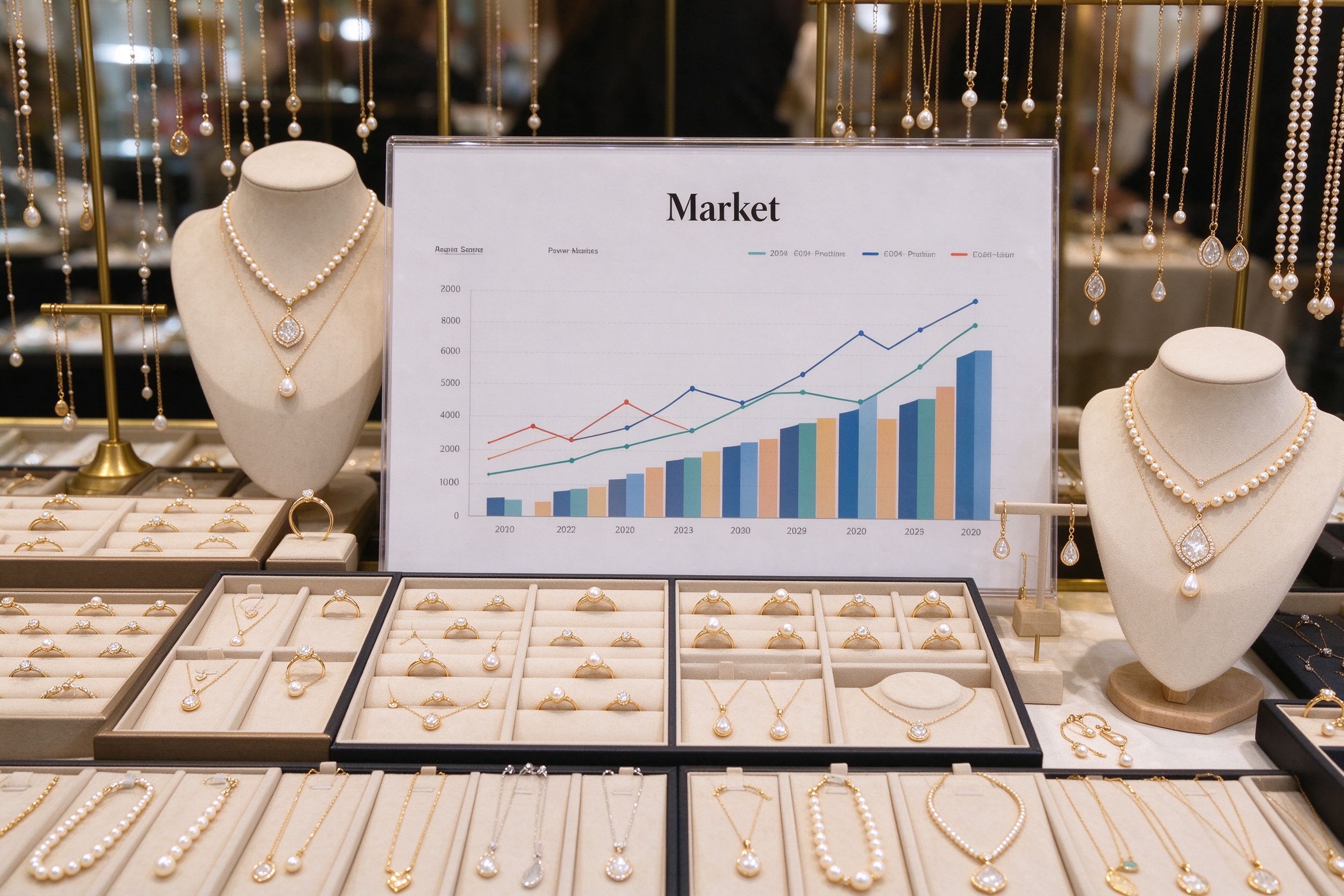
The plating is what makes an affordable alloy piece look like gold or silver. It is also the first thing customers notice when it wears off. Understanding how plating works lets you ask factories the right questions, choose finishes that last, and stop buying pieces that tarnish within weeks. This guide explains the common plating finishes, why thickness and e-coat matter, and what to specify when you order wholesale.
Plating is a thin layer of metal electro-deposited onto the alloy base. It is measured in microns, and the difference between a piece that lasts a month and one that lasts a year is mostly the plating process. Once you understand it, you can stop paying for "gold" that fades and start buying finishes that hold up.

The common plating finishes
Factories offer a handful of standard finishes, each with a different look and cost.
Gold plating
Gold plating gives the warm yellow finish most customers expect. It ranges from a thin gold flash to a thicker 14k or 18k look. Thicker gold plating costs more but stays bright longer. Ask whether the piece is a true gold finish or a brass-colored gold that fades to copper.
Rhodium and silver tone
Rhodium plating gives a bright, cool silver finish that resists tarnish better than plain silver tone. It is the standard for fine-looking silver jewelry at budget prices. Rhodium tends to hold up well because it is a hard, bright metal.
Rose gold and other tones
Rose gold plating is warm and pinkish, popular for romantic and bridal pieces. Black and gunmetal plating give an edgy, modern look. Each is achieved by adjusting the plating bath, and the price difference between finishes is usually small.
Why plating thickness matters
Plating wears off fastest where the piece touches skin, clothing and perfume. A thin flash plating may last weeks; a thicker plating with a clear top coat can last a year or more. Ask the factory for the plating thickness in microns. For everyday jewelry, look for at least a reasonable plating plus a protective top coat. The exact number matters less than confirming the factory applies a protective layer.
- Thin flash plating: cheap, wears quickly.
- Thicker plating: better value, longer life.
- Protective top coat: the key to anti-tarnish.
- Ask for microns on everyday pieces.
E-coat and lacquer: the anti-tarnish secret
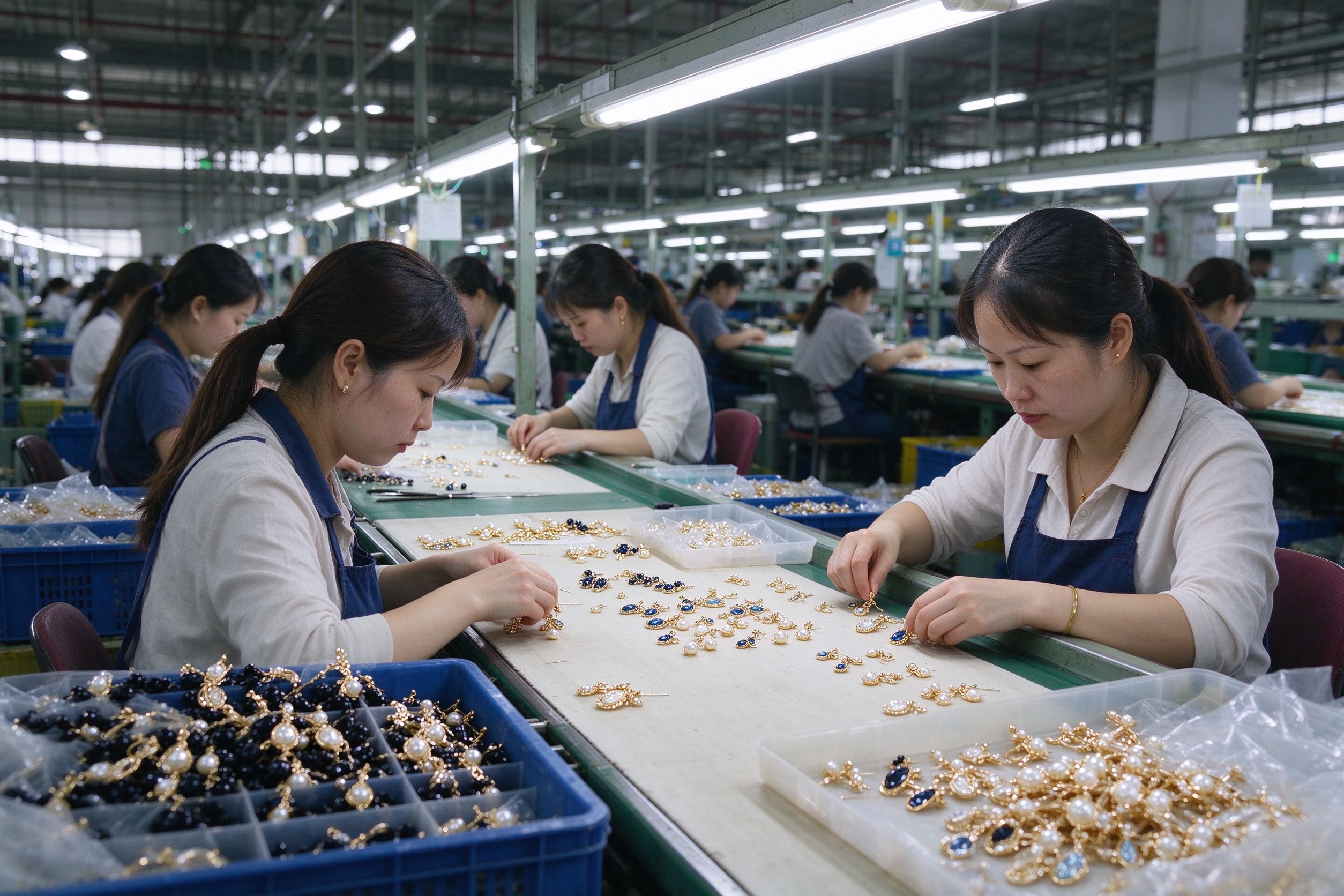
The single most effective thing a factory can do to keep plating bright is apply a clear e-coat or lacquer over the top. This invisible layer seals the plating against air, moisture and skin contact, dramatically slowing tarnish. A piece with e-coat looks new months after a piece without it has dulled. Always ask whether the pieces include e-coat. If the factory does not offer it, expect faster tarnish and lower repeat purchases.
E-coat is especially important for pieces that touch skin, like rings and earrings. Necklaces and brooches touch less skin, but e-coat still helps. It costs the factory very little, so there is rarely a reason to buy pieces without it.
What causes tarnish and green skin
Tarnish happens when the plating wears and the base metal reacts with air, moisture and skin acids. Green skin happens when copper in the base or plating reacts with sweat. Nickel in cheaper plating is a common cause of skin reactions. Proper e-coat, nickel-free plating and a thicker top layer prevent all three. When a customer complains of green skin or tarnish, the root cause is almost always a plating that was too thin or lacked a protective coat.
Choosing the right finish for your market
Different markets expect different finishes. Gold tone is universal and safest. Rhodium silver suits a minimalist customer. Rose gold suits romantic and bridal ranges. Black and gunmetal suit an edgy, modern customer. Stock the finishes your customer base already wears, and offer the same shape in both gold and silver where possible. Coordinating finishes with your customer's existing jewelry makes the pieces more wearable and reduces returns.
Questions to ask the factory about plating
- What plating finish do you use, and how thick is it?
- Do you apply e-coat or lacquer over the plating?
- Is the plating nickel-free and lead-safe?
- How does the bulk plating match the sample?
- Do you offer a plating upgrade at higher order volumes?
A factory that answers these confidently knows its process. One that says "it is good quality" without specifics is guessing, and your pieces will likely tarnish faster than you want.
Caring for plated jewelry
No plating lasts forever, but care extends it dramatically. Advise customers to keep plated jewelry away from perfume, hairspray, lotion and water, to store it in a dry bag, and to put it on last after getting dressed. A simple care card prevents most complaints. For your own stock, keep pieces dry and sealed, and do not let plated surfaces rub against each other in storage.
Plating consistency across reorders
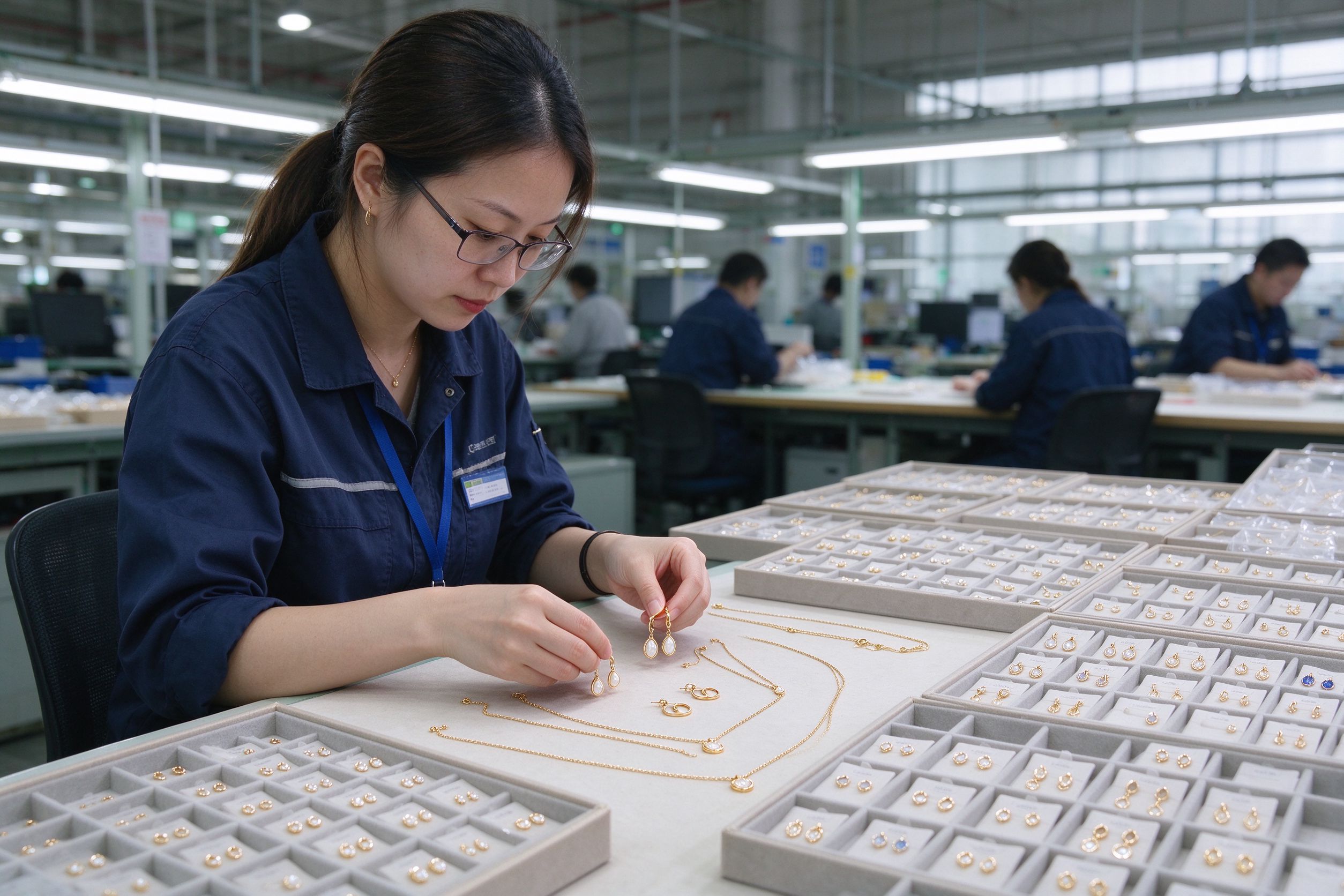
One hidden risk is plating drift between orders. A gold that looked right on the first order can come out slightly more orange on the third. Keep an approved sample and compare every reorder against it. If the plating drifts, raise it early. Most factories will correct a plating match if you point it out with a physical reference. Consistency is what builds a recognizable brand; inconsistent plating makes customers unsure whether they are buying the same product.
Why some plating wears faster than others
Even among "gold-plated" pieces, wear rates differ. The base metal matters: a brass base under gold holds plating better than a zinc base. The preparation matters: a poorly cleaned surface means the plating does not adhere and flakes early. And the top coat matters: e-coat seals everything. When a supplier offers two gold finishes at different prices, the difference is usually in these layers, not in the color. Asking why one is cheaper reveals whether the saving is in durability.
Frequently asked plating questions
How long should plated jewelry last?
With e-coat and sensible care, months to a year of everyday wear. Without a top coat, weeks. The expectation you set on the product page should match the plating quality you bought.
Is rhodium better than silver tone?
Rhodium is harder and brighter, and resists tarnish. For a silver look, rhodium is the better buy even if it costs a little more.
Can I re-plate a piece myself?
Not practically at home. A local jeweler can re-plate, but for budget jewelry it is rarely worth the cost. Buy the finish right the first time.
Storing inventory to protect the plating
Plating degrades even before a piece reaches a customer if stock is stored badly. Keep inventory in a dry, cool room, sealed in bags, away from direct sunlight. Do not let pieces rub together in an open box; the contact scratches the finish. Silica gel sachets absorb moisture and slow tarnish. Well-stored stock arrives at the customer looking new; badly stored stock looks old the day you list it. The same e-coat that protects the piece on a customer's neck also protects it on your shelf, but only if the shelf is dry.
Buy plating that lasts
Plating is not a detail; it is the finish your customers live with. Ask about thickness, confirm e-coat, choose nickel-free finishes for sensitive markets, and compare every reorder to the approved sample. The extra few cents for a proper top coat is the best investment in your whole range, because it is what keeps a customer coming back instead of returning a faded piece. Buy the plating as carefully as you buy the design, and your jewelry will look the way your customers expect.
Plating defects to know by sight
Once you know what good plating looks like, defects are obvious. "Spotting" is dull patches where the plating missed. "Peeling" is where the layer lifts away, usually because the surface was not clean. "Tarnish in storage" means no protective top coat. "Color drift" means the gold came out too orange or too pale. When you inspect a sample, run a finger over edges and curves; these areas wear thinnest and reveal problems first. Catching a plating defect on the sample saves a thousand returns.
Testing plating before you reorder bulk
There is a simple home test. Wear the sample for a week, spritz it lightly with water, and leave it on a dry surface. If it stays bright, the plating and e-coat are sound. If it spots or dulls, the top coat is weak. You can also rub a cotton bud on the surface; color transfer means the plating is wearing. This week-long test takes no effort and predicts how the bulk will behave. Never skip it on a style you plan to reorder.
Why two golds are never the same
"Gold" is not one finish. There is bright yellow gold, warm 18k-style gold, brushed matte gold and antique gold. Each reads differently on a customer. When you reorder, specify which tone you want, and keep the approved sample as the reference. Mixing two subtly different golds across a range looks careless. Consistency of tone is what makes a collection look curated rather than assembled.
Plating cost breakdown
- Basic gold flash: cheapest, shortest life.
- Thicker gold with e-coat: small upcharge, months of wear.
- Rhodium or rose gold finishes: modest premium, trendy look.
- Upgrade plating only on pieces that touch skin.
Plating on moving parts and edges
Plating wears fastest where the piece flexes or rubs. Earring backs, necklace clasps, bracelet edges and the underside of rings all lose their shine first. When you inspect a sample, run a finger along these contact points; rough spots or thin plating there mean early wear. Ask the factory whether these high-friction areas get the same protective e-coat. On daily-wear pieces, upgrading the finish at the clasp is a cheap way to prevent the most common complaint.
Storing and handling plated stock
Even before a piece reaches a customer, poor storage ruins plating. Keep inventory dry and sealed, away from sunlight, and do not let plated surfaces rub together. Silica gel absorbs moisture. When you pack an order, wrap each piece so surfaces do not touch. A piece that arrives scratched or dull because of bad packing undoes every other quality decision. Treat the e-coat as needing protection all the way to the customer's door.
Making plating claims you can stand behind
On your product page, describe the finish honestly rather than overpromising. Say "gold-tone with protective e-coat" instead of "18k gold." Customers who receive what you described are satisfied; customers expecting solid gold are not. Honest, specific plating descriptions set the right expectation and reduce returns, which is worth more than a flashy product page.
When a piece does wear, respond quickly. Offer an exchange within a short window. That goodwill costs little and keeps a customer who otherwise would have left a public complaint. Plating is not permanent, and customers know that; how you handle the wear is what they remember.
Plating is a promise, not a finish
Think of the plating as the promise you make to the customer: that the piece will still look good next month. Honest descriptions, e-coat on skin-contact pieces and a friendly returns policy all back that promise. The factories that do plating well are the ones worth growing with, because they protect the reputation you are building. Choose the finish as carefully as you choose the design, and the jewelry will keep its value on the customer's neck.
Keep one approved sample per finish and compare every new delivery against it. Tone and thickness drift silently, and only a physical reference catches it early.
