Wholesale Fashion Necklaces: Stone Grading & Color Consistency

Why Stone Grading and Color Consistency Decide Whether Fashion Necklaces Sell Through
Fashion necklaces succeed or fail at retail based on how consistent the stones look across a production run, and that consistency is only achievable when every stone is graded against a documented standard. Wholesale buyers who skip the grading conversation often receive lots where one pendant carries a bright, white stone and the next looks slightly warm or dull, which leads to customer returns and weakened trust with retail accounts.
This article walks through the practical decisions you face when sourcing fashion necklaces built on graded stones: which grading papers to require, how to specify color consistency, what to check at sampling, and how quality control should be structured so the bulk order matches the approved sample.
Understanding Graded Stones in Fashion Necklaces
Moissanite is a lab-created diamond alternative, and it is the dominant center stone in contemporary fashion necklaces because it delivers strong brilliance at a price point that supports volume retail. Because moissanite is grown under controlled conditions, its quality can be measured objectively, and reputable manufacturers back their stones with documentation.
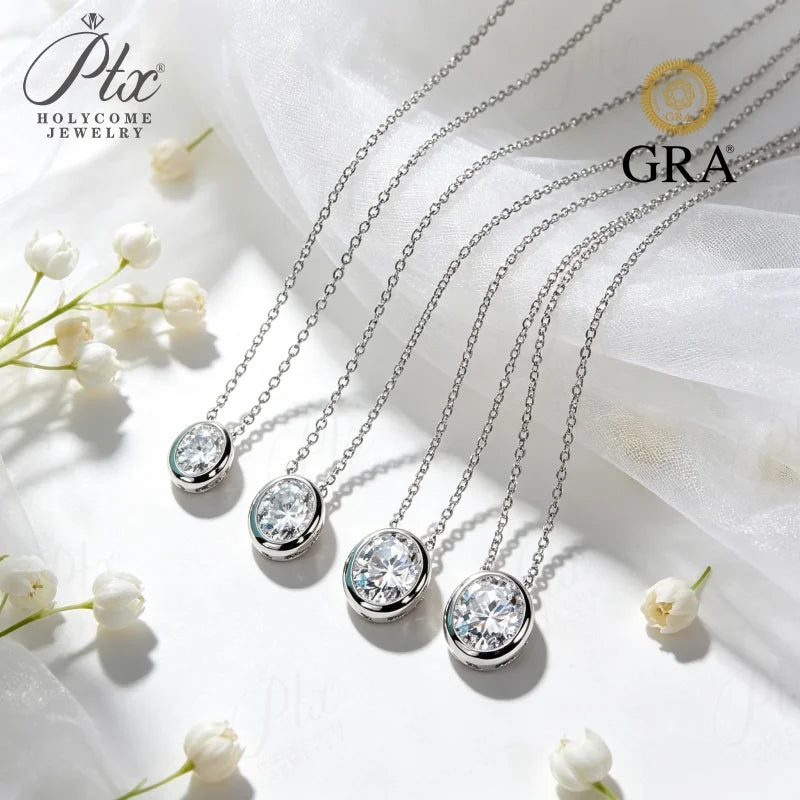
The two grading papers you should recognize are GRA and IGI certificates, which record the stone's specifications and allow you to verify what you are buying before it is set into a pendant or chain.
What GRA and IGI Papers Actually Tell You
A grading paper gives you a written record of a stone's characteristics rather than a subjective sales claim. For a wholesale buyer, the practical value is accountability: if a stone in a delivered lot does not match its paperwork, you have a documented basis for a claim. When evaluating a supplier for fashion necklaces, ask whether graded stones are accompanied by GRA or IGI papers and whether those papers are available for review during sampling.
A supplier who can produce grading documentation at the sample stage is far more likely to maintain that standard through bulk production.
Why Loose Stones Are Sold by the Carat
Loose stones are priced per carat, which gives you a transparent way to compare cost across suppliers and carat weights. When you buy loose stones by the carat for setting into fashion necklaces, you can request stones within a defined grade range rather than accepting whatever comes out of the parcel.
This matters most for necklaces, where the center stone sits at eye level and any variation between pieces in a retail display is immediately visible to shoppers comparing pendants side by side.
Specifying Color Consistency Across a Production Run
Color consistency is the single most common source of complaints in wholesale fashion necklaces. Stones from different production batches can shift slightly in body color, and even a small shift becomes obvious when ten pendants hang on the same retail display bar. Your purchase specification should state that all stones in one order must come from a matched lot, and your sampling process should lock in the reference color before bulk production begins.
Writing Color Into Your Purchase Specification
Put color requirements in writing rather than relying on photos. A usable specification identifies the approved sample as the color reference, requires stones to be matched to that sample under both natural daylight and standard retail lighting, and states that substitutions require written approval before production. Suppliers who run structured quality control can work with this kind of specification; suppliers who cannot will resist it, which itself is useful information.
Matching Metal Color to Stone Color
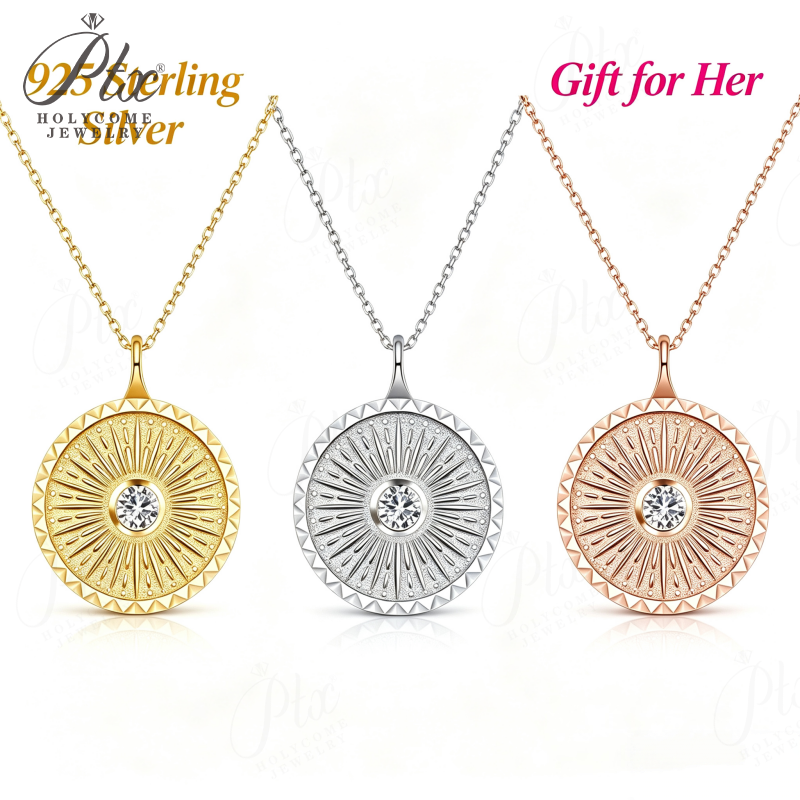
Color consistency also involves the setting. A bright white moissanite reads differently over warm-toned gold plated brass than over 925 sterling silver, and vermeil settings change the perceived tone again. Decide which metal base your collection uses before sampling: 925 sterling silver, 10K/14K/18K solid gold, gold vermeil, or gold plated.
Each option carries a different cost structure and a different positioning at retail, and the plating color should be specified in the same document as the stone grade so the finished necklace is matched as a whole unit.
The Sampling Stage: Where Consistency Is Won or Lost
Sampling takes 7 to 10 days, and this window is your only real opportunity to approve exactly what bulk production will replicate. Treat the sample not as a design check but as a physical standard: the stone in the approved sample becomes the color reference for the entire order, and the sample necklace itself becomes the quality benchmark for pre-shipment inspection.
What to Request With Your Sample
A disciplined sample request for fashion necklaces should include several items beyond the finished piece:
- The GRA or IGI paper for the sample stone, so the documented grade matches what you see
- Photos of the sample under daylight and indoor retail lighting, from multiple angles
- Written confirmation of the metal base and plating color used in the sample
- Confirmation that bulk stones will be drawn from a single matched lot
- The agreed per-piece or per-carat pricing structure for the style
If a supplier sends a beautiful sample but cannot supply the grading paper for its stone, treat that as a warning sign. Documentation gaps at the sample stage tend to widen at the bulk stage, when correcting them is far more expensive.
Bulk Production and the Approved Sample
Bulk production runs 15 to 25 days after sample approval, and every stage of that run should trace back to the approved sample. Ask your supplier how stone matching is handled during production: whether stones are graded against the sample before setting, whether mixed lots are separated, and who signs off on color at the setting bench.
Suppliers with in-process inspection built into the line can catch a mismatched lot before stones are set, which saves the cost of resetting and redelivery.
Minimum Order Quantities and How They Affect Consistency
Order structure has a direct effect on color consistency. Stock styles carry a minimum order of 1 piece, which lets you test a design in the market before committing to volume. Custom work carries a minimum order of 30 pieces, which is the level at which stone matching and lot control become manufacturing decisions rather than assembly decisions.
Loose stones, meanwhile, are sold by the carat, so buyers setting custom necklace runs can purchase exactly the carat weight needed for a matched set.
The 30-piece threshold for custom work is a useful planning tool. At that volume, a supplier can reserve stones from one lot for your entire order, and the cost of matching stays proportionate. Smaller ad hoc orders assembled from stock pieces are where color drift appears, because pieces may be pulled from different production batches at different times.
Three-Stage Quality Control for Fashion Necklaces
Color and grade consistency cannot be inspected in at the end; they need checkpoints throughout production. A three-stage quality control structure gives you that coverage, and it is the structure you should expect from any supplier handling graded stones at volume.
How the Three Stages Work Together
Incoming inspection checks stones and components as they arrive, verifying that stones match the approved sample and that grading papers correspond to the parcels received. In-process inspection runs during production, catching color drift or setting faults before assemblies are completed. The final stage is a pre-ship AQL inspection, a statistically based sampling of the finished order against the approved standard.
If a lot of stones failed to match at incoming inspection, the AQL inspection at the end would surface the consequence, but the earlier stages let the supplier correct the problem without delaying your shipment.
What to Ask for in Inspection Records
For orders where color consistency is a priority, request that pre-ship AQL inspection records note stone color checks specifically, not just workmanship and plating. Some buyers also arrange for photos of the AQL sample pieces against the approved sample under matched lighting. These records give you a documented trail from approved sample to shipped goods, which simplifies any post-delivery discussion and protects your retail accounts from receiving inconsistent stock.
Comparing Specification Options at a Glance
The table below summarizes the key specification decisions you will make when ordering fashion necklaces built around graded stones. Use it as a checklist when drafting your purchase specification or comparing supplier quotations.
| Decision | Option to Specify | Why It Matters |
|---|---|---|
| Stone documentation | GRA or IGI paper | Objective record supports claims if lots mismatch |
| Stone sourcing | Loose stones by the carat | Enables matched-lot purchasing per order |
| Metal base | Silver, vermeil, or plated | Sets cost tier and perceived stone tone |
| Order structure | 1 piece stock, 30 custom | Volume threshold enables lot control |
Once these decisions are locked into a written specification, your sampling round becomes a verification exercise rather than a discovery process, and the 7 to 10 day sampling window is used efficiently.
Delivery Terms and Timing for US Buyers
Timing and payment terms shape how you plan color-sensitive orders. Sampling runs 7 to 10 days, and bulk production runs 15 to 25 days after approval, so a color-matched custom necklace order typically moves from approved sample to finished goods in under five weeks. Payment is handled by T/T with a 30 percent deposit and the 70 percent balance before shipment, with PayPal available for sample orders, which lets you validate quality at low cost before committing bulk funds.
Shipping to the US operates on DDP terms and takes 5 to 8 days, meaning duties and delivery are handled through the quoted price and the goods arrive at your door. For fashion necklaces where the stone grade and color are documented through GRA or IGI papers, DDP delivery with a short transit window lets you replenish retail accounts quickly when a matched design sells through, without the clearance delays that complicate replenishment on consignment-style stock.
Frequently Asked Questions
Should I require GRA or IGI papers for every stone in a necklace order?
Require grading papers at minimum for the sample stone and for center stones in custom orders. For high-volume stock styles, confirm that stones come from graded lots and ask for representative papers. The documentation gives you a basis for verification and claims if a delivered lot does not match the approved standard.
How do I keep stone color consistent across repeat orders?
Keep the approved sample as your standing color reference and state in repeat purchase orders that stones must match that sample. Ask the supplier to source from the same stone lot where possible, since moissanite from different production runs can shift slightly in body color. Building this requirement into the purchase order keeps consistency enforceable.
Is moissanite a real diamond?
No. Moissanite is a lab-created diamond alternative with its own optical properties, and it should be described that way in your retail materials. Marketing moissanite accurately protects your retail accounts and keeps product descriptions compliant with consumer expectations.
Can I order a single sample necklace before committing to custom volume?
Yes. Stock styles carry a minimum order of 1 piece, so you can evaluate a finished necklace before scaling. For custom work the minimum order is 30 pieces, but loose stones are sold by the carat, so you can also source loose matched stones separately and plan setting runs around them.
What happens if the bulk order does not match my approved sample?
The pre-ship AQL inspection is your checkpoint: it tests finished goods against the approved sample before shipment, and mismatched color should surface there. This is why the approved sample should be defined as the color standard in your purchase specification. Orders that pass AQL inspection ship after the 70 percent balance is settled, with DDP delivery to the US in 5 to 8 days.
Build a Consistent Fashion Necklace Program
Stone grading and color consistency are manageable when they are specified in writing, verified at sampling, and enforced through three-stage quality control. Start by reviewing our available inventory of fashion necklaces and related pieces in the product catalog, then read more sourcing guidance on grading, metals, and production timelines in the wholesale blog.
When you are ready to discuss a matched-lot order or request samples with GRA or IGI documentation, reach out through our contact page and our team will walk you through sampling, pricing per piece or per carat, and DDP delivery to the US.
Order Terms for Wholesale Buyers
MOQ is 1 piece for stock styles and 30 pieces for custom work, and loose stones are sold by the carat. Sampling takes 7 to 10 days, and bulk production runs 15 to 25 days after the sample is approved. Pricing is quoted per piece or per carat depending on the item. Payment is T/T with a 30% deposit and the 70% balance before shipment, and PayPal is accepted for sample orders.
Sources: Grading references: GIA gem education and GIA laboratory information.