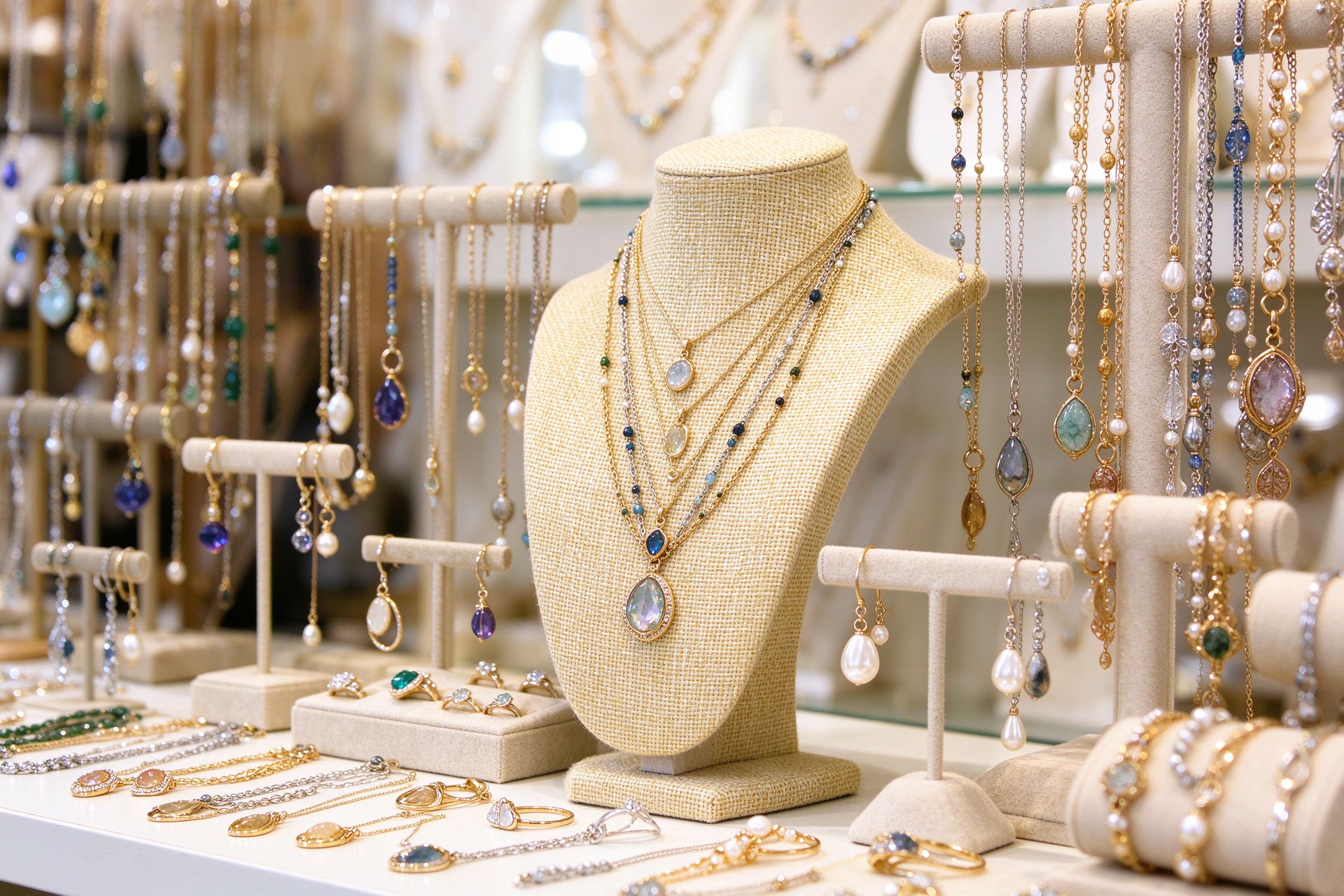
"Alloy" sounds like a catch-all word for cheap costume jewelry, but it is actually a precise category of materials, and understanding it separates buyers who make informed decisions from those who guess. The base metal, the plating and the finish determine how a piece looks, how long it lasts and what you can sell it for. This guide explains the common alloy bases, how they are plated, what the grades mean, and why material knowledge protects both your margin and your customers' trust.
You do not need a metallurgy degree to buy alloy jewelry well. You just need to know the main materials, what they cost, and what questions to ask a factory. Once that is clear, every quote you receive becomes easier to judge.

The common alloy base metals
Most fashion jewelry starts from one of a few base metals, each with its own character.
Zinc alloy
Zinc alloy is the workhorse of affordable fashion jewelry. It casts well into detailed shapes, is lightweight, and is cheap. Most of the earrings, rings and brooches you see at wholesale are zinc alloy. It takes plating well. Its weakness is that it can be a bit brittle, so thin posts need care.
Brass and copper
Brass is heavier and more durable than zinc, with a warmer base color. It is used for mid-range pieces that feel more substantial. Copper is sometimes used as a base under plating because it adheres well. Brass pieces cost a little more but wear better.
Tin alloy
Tin alloy is softer and often used for finer, more delicate castings. It is less common in mass fashion jewelry but appears in detail-sensitive pieces.
When a factory says "alloy," ask which one. The answer tells you the price tier and the expected durability. Zinc is the budget standard; brass is the upgrade.
How plating turns alloy into a finished piece
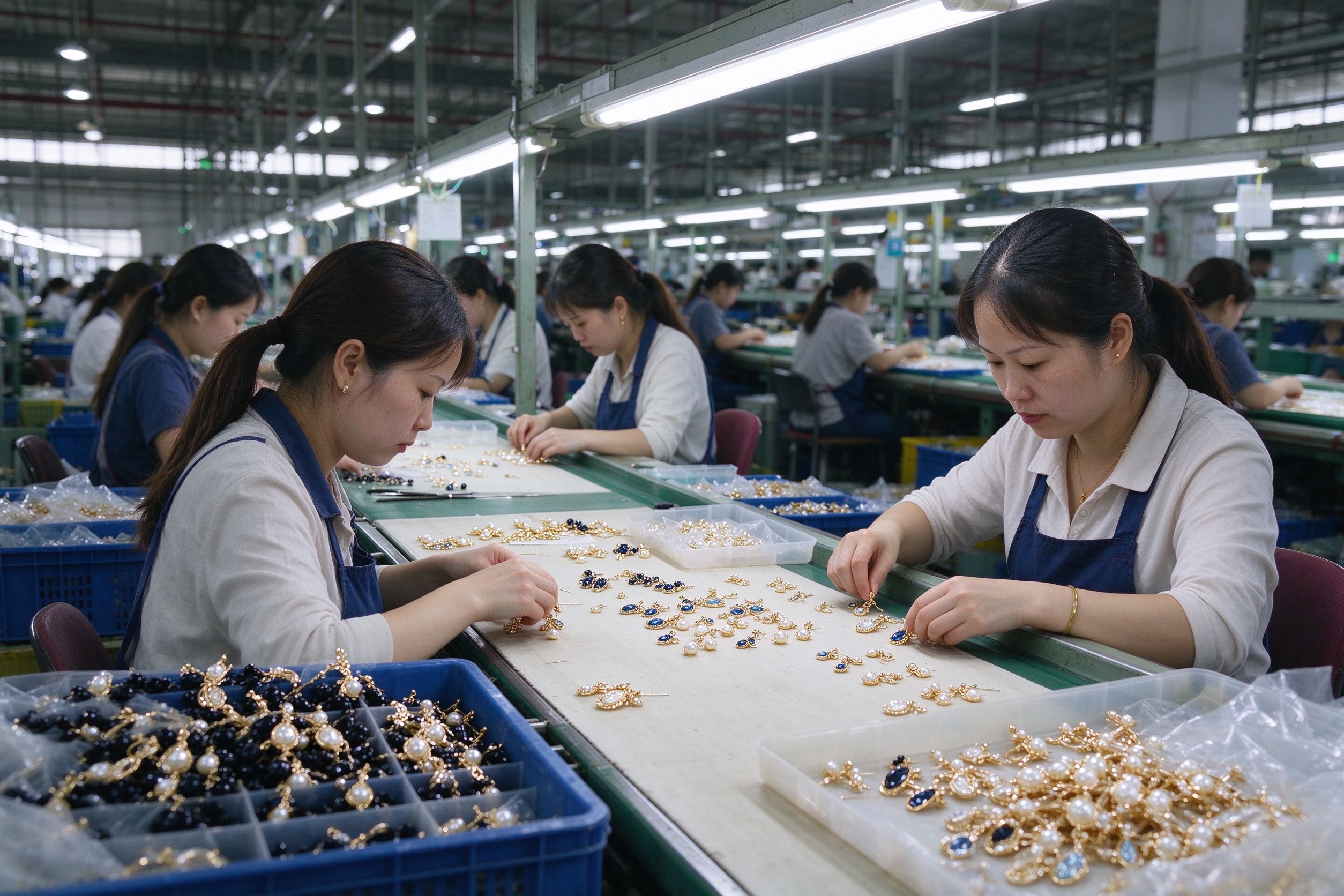
The base metal is rarely worn as-is. It is plated with a thin decorative layer. A typical piece goes through copper plating as a base layer, then the final finish: gold, silver tone, rose gold, black or rhodium. The base layer helps the finish adhere and smooths the surface. The final layer is what the customer sees and feels.
Plating thickness is measured in microns. A thin flash plating is cheap but wears off quickly. A thicker plating, especially with a clear e-coat or lacquer over it, lasts far longer. Ask the factory about plating thickness and whether they use e-coat. That answer is the single best predictor of how long the piece will look new.
- Zinc alloy: budget, lightweight, detailed casting.
- Brass: heavier, more durable, mid-tier.
- Plating: copper base plus a decorative finish.
- E-coat or lacquer: the key to longer life.
What "grades" mean in alloy jewelry
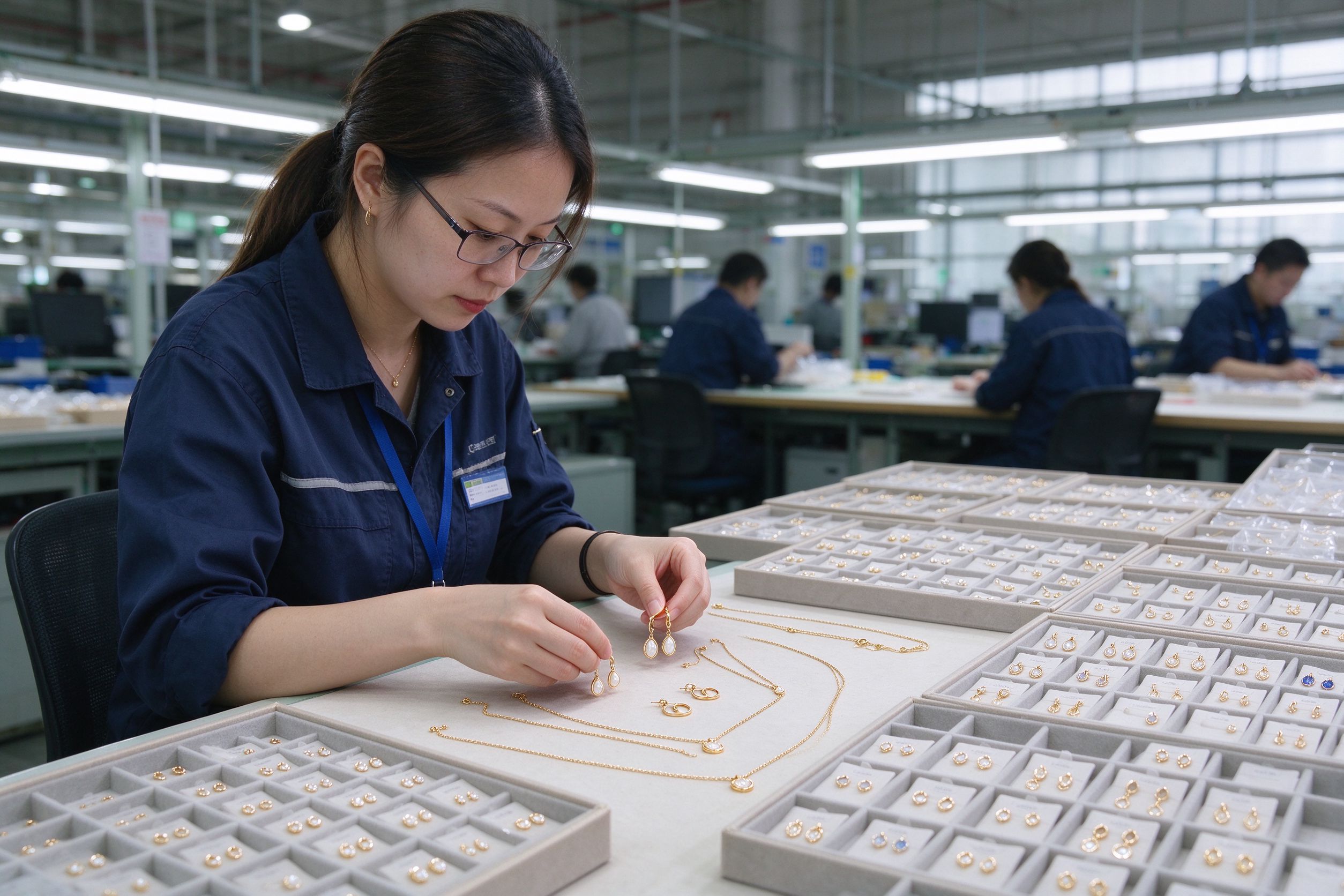
Suppliers often refer to A-grade, B-grade or similar tiers, but the terms are not standardized. What they usually mean is the quality of the casting, the plating and the stones. A high-grade piece has smooth casting, even plating and tight stones; a lower-grade piece may have visible seams, thin plating and loose stones. Treat grade claims as marketing, and judge the actual sample yourself. The sample is the grade, not the label.
Durability and what customers actually notice
Customers do not care about the base metal, but they do notice tarnish, green skin and faded plating. These problems come from thin plating, poor e-coat, or a base metal with high copper content that reacts with skin and product. Choosing pieces with proper e-coat and nickel-free plating prevents most complaints. When you source, ask specifically about these; a factory that understands them is selling to repeat buyers, not one-off tourists.
How material affects your resale price
The material justifies a price tier. A zinc piece with thin plating belongs at the impulse price point. A brass piece with thick e-coat and clean stones can sit at a higher tier. Do not price a budget piece as if it were premium; the customer will notice the difference within weeks. Conversely, do not under-price a well-made brass piece just because it is "alloy." The market rewards pieces that look and feel the way they are priced.
Caring for alloy jewelry advice to give customers
A little care advice extends the life of every alloy piece and reduces complaints. Tell customers to keep plating away from perfume, hairspray and water, to store pieces dry, and to put jewelry on last after getting dressed. Printed on a small care card, this advice prevents most tarnish complaints and positions your brand as thoughtful. The same care rules apply to every plated piece, so one card works across your whole range.
- Avoid perfume, hairspray and water on plated pieces.
- Store dry, separately, to prevent scratching.
- Put jewelry on last, after makeup and perfume.
- Send a simple care card with every order.
Why alloy is a smart wholesale choice
Understanding the material removes the stigma from "cheap alloy." A well-made alloy piece with proper plating is not a compromise; it is an affordable way for customers to wear current styles without paying fine-jewelry prices. That value proposition is exactly why the category grows. Your job as a buyer is to choose the factories that make alloy well, so that the affordable price does not come with disposable quality.
Casting vs stamping
Alloy pieces are made either by casting molten metal into a mold or by stamping sheet metal under pressure. Casting produces three-dimensional, detailed shapes like charms and brooches. Stamping produces flat pieces like simple earrings and thin bands. Cast pieces can be more detailed but slightly heavier; stamped pieces are lighter and cheaper. When a factory describes a piece, ask which process it uses, because it affects both the look and the durability. A detailed brooch is cast; a flat stud earring is usually stamped.
Why weight signals quality
Weight is a quick quality cue. A piece that feels surprisingly light may be a thin casting that will bend or break. A piece with a satisfying heft usually means a solid casting and a durable build. When you hold a sample, compare its weight to a similar piece you know. Sudden lightness on a reorder is a sign the factory has thinned the casting to cut cost. Trust your hand; weight rarely lies.
Frequently asked alloy material questions
Is alloy jewelry waterproof?
No. Even good alloy plating tarnishes faster with water. Advise customers to take pieces off before showering or swimming. Waterproof claims on plated alloy are usually overstated.
Does alloy turn skin green?
Cheap alloy with copper content can, especially with sweat. Nickel-free plating and e-coat prevent it. If a customer reports green skin, switch that style to a nickel-free, e-coated version.
Is brass better than zinc?
Brass is heavier and more durable but costs more. For everyday fashion, well-finished zinc is fine. Upgrade to brass when the piece needs to feel more substantial.
Sizing and fit in alloy jewelry
Alloy rings come in standard sizes, and ordering the right size mix is part of buying the material well. Stock the middle sizes most people wear, and order fewer extremes. Bracelets and necklaces have length options; adjustable chains and stretch bracelets sidestep sizing entirely, which is why they are popular for beginners. When a piece needs a specific fit, make the size clear on the product page so customers do not order the wrong one. Fit mistakes are returns, and returns eat the margin on even the best-made alloy piece.
Know your materials, buy with confidence
Alloy jewelry is a material system, not a single cheap thing. Learn the base metals, ask about plating thickness and e-coat, and judge every piece by the sample rather than the grade label. That knowledge lets you quote fairly, price confidently, and set customer expectations that protect your reviews. The more you understand the material, the more you can offer affordable jewelry that still feels like a quality product. That is the real skill in wholesale alloy buying.
Casting defects to inspect on arrival
When a carton arrives, look for the common casting flaws. A visible seam line that should have been filed smooth means rushed finishing. A slightly lopsided charm means the mold is wearing. Air bubbles or pits on the surface mean a casting problem. Loose stones that move under a finger mean poor setting. A well-made sample should have none of these. If the first carton shows these defects while the sample did not, the production line drifted and you should raise it before reordering.
Stone and embellishment quality
Fashion jewelry uses rhinestones, glass pearls and enamel. Cheap rhinestones cloud and dull quickly; better ones stay bright. Glass pearls should be smooth and lustrous, not chalky. Enamel should be even and free of cracks. When you inspect a sample, tilt it in the light; cloudiness or uneven color shows immediately. Asking the factory about the grade of stone lets you choose a better embellishment tier at a small upcharge, and the visible difference justifies the price.
How the alloy market is changing
The alloy jewelry market is shifting toward better finishes and more responsible materials. Customers increasingly reject pieces that tarnish in a week, and factories respond by improving e-coat and nickel-free options. For a buyer, this means "cheap alloy" is becoming a better category. You no longer have to choose between affordable and acceptable; a well-finished alloy piece now looks and wears well. That improvement is the quiet story behind the affordable jewelry boom.
A quick material checklist
- Base metal confirmed: zinc, brass or tin.
- Plating plus e-coat confirmed.
- Nickel-free option available.
- Weight feels solid, not flimsy.
- No visible seams, pits or loose stones.
Posts, clasps and fasteners matter too
The body of the piece is only half the story; the fastener determines whether it survives real wear. Earring posts should be straight and sturdy, not bent. Bracelet clasps should snap shut cleanly and not spring open. Necklace lobster claws should hold. When you inspect a sample, open and close the clasp a dozen times; a weak clasp fails in a week. Cheap fasteners are the most common complaint on otherwise fine pieces. Ask the factory about the clasp quality and choose sturdier options on pieces meant for daily wear.
Why weight and feel build trust
A piece that feels right in the hand sells itself. Surprising lightness signals flimsiness; a solid, balanced feel signals quality. When you photograph and describe pieces, honest weight notes help. Customers who receive a piece that feels as good as it looks leave better reviews and buy again. The material conversation ultimately comes down to feel: the customer should not notice the alloy, only that the piece looks and feels like it belongs on them.
Trusting the material over the marketing
Names like "titanium tone" or "platinum look" are marketing, not material. When in doubt, ask the factory for the actual base metal and plating, and judge the sample. A piece that looks and feels good with honest labeling sells better than one that promises more than it delivers. Material honesty protects both your margin and your reviews.
Keep learning as the market moves
Materials and finishes improve every year, so keep asking your factory what is new. A small upgrade in plating or fastener quality can lift a whole range without raising prices much. Stay curious, compare samples each season, and let real feel rather than terminology guide you. The buyer who understands the material buys with confidence, and that confidence shows in a range that customers trust.
Send the next sample order a simple note asking for the actual base metal and plating. That one habit turns guesswork into knowledge on every reorder.
