Wholesale Rings: Sizing, Setting & Durability

Why Sizing, Setting, and Durability Decide Ring Profitability
Rings are the most size-sensitive category in any jewelry assortment, which makes sizing, setting, and durability the three decisions that separate a profitable wholesale program from a returns-heavy one. A buyer who specifies correct size runs, sets stones to match the metal, and confirms wear-test performance before bulk production can sell confidently into the US market. A buyer who leaves these decisions late in the process often absorbs the cost in exchanges, remakes, and damaged margins.
This article walks through the practical choices wholesale buyers face on each point, with the production and QC details you need before you commit to an order.
Getting Ring Sizing Right for the US Market
The United States uses its own ring size scale, running roughly from size 3 to size 15, with size 6 through 8 covering the largest share of women's demand and size 9 through 12 covering most men's demand. Wholesale buyers should decide on a size run before sampling begins, because the run affects tooling, stone layout, and unit cost.
A half-size step between sizes is standard for US retail, and offering whole sizes only will cost you sales at the counter even if it simplifies production.
Building a Size Run That Sells
For stock styles, our MOQ is 1 piece, which lets you test a single size before committing to a range. For custom work, the MOQ is 30 pieces, and buyers typically split that quantity across three to five core sizes rather than ordering one size in depth. A practical starting distribution for a women's style is sizes 6, 7, and 8 in roughly equal weight, with 5 and 9 as smaller tail quantities.
Men's bands concentrate around sizes 9, 10, and 11. Confirm the run during sampling, since our sampling takes 7 to 10 days and any size change afterward restarts part of the process.
Resizing Limits by Construction
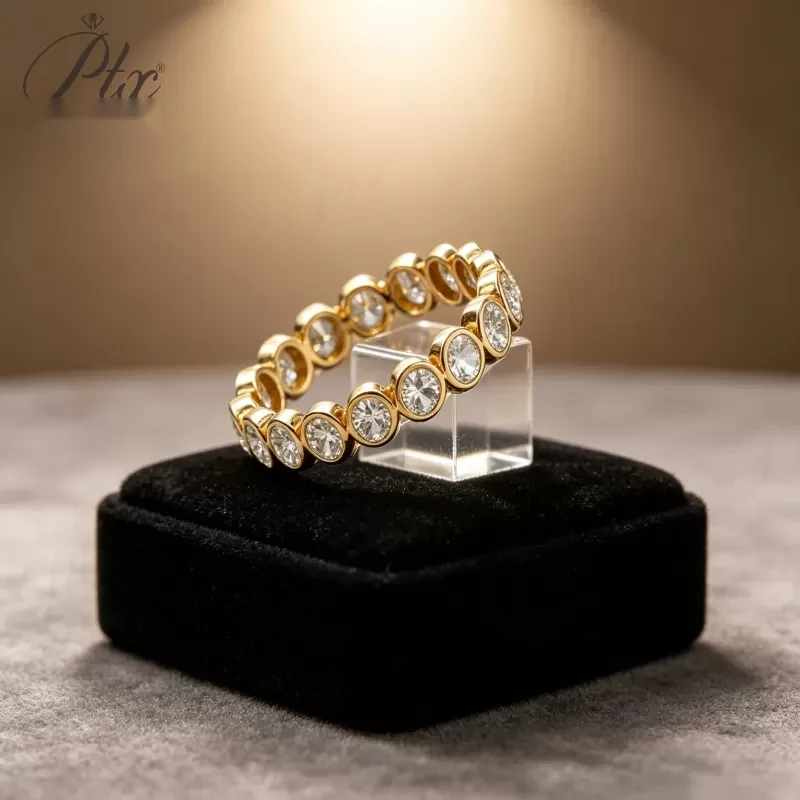
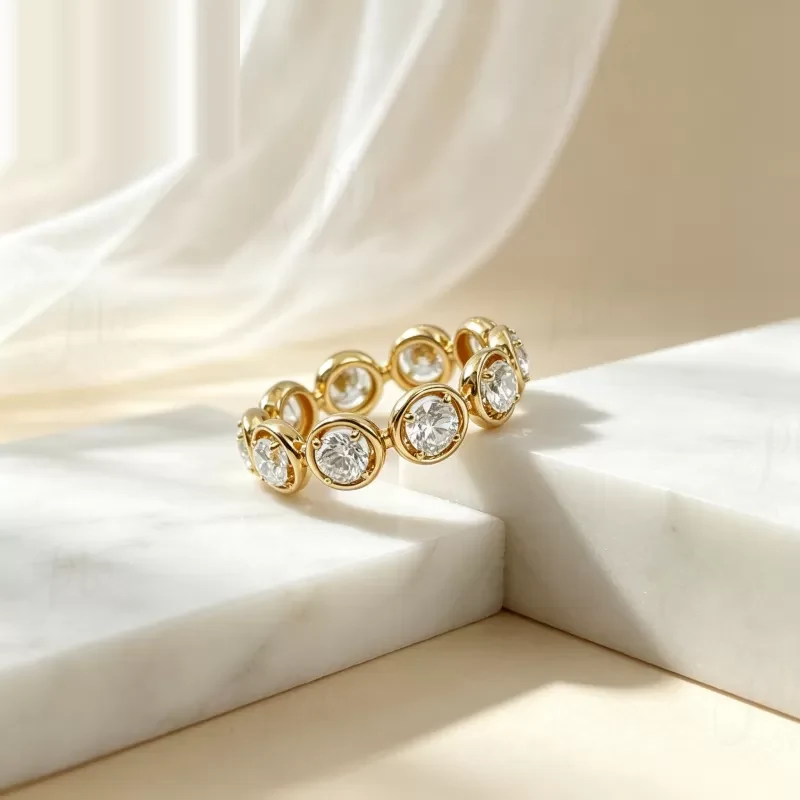
Not every ring can be resized after sale, and buyers should know the limits before listing products. Solid gold bands in 10K, 14K, and 18K resize within one to two sizes in most cases. Eternity bands and tension-set rings resize poorly or not at all, so accurate sizing at purchase matters more for those constructions. Channel-set and pavé bands tolerate limited resizing before stones loosen.
Build this information into your product listings and staff training, because it directly affects exchange volume.
Setting Styles and How They Affect Cost and Wear
The setting is the structural heart of a ring, and the choice between prong, bezel, channel, pavé, and tension settings changes both unit price and long-term durability. When the center stone is moissanite, a lab-created diamond alternative, the setting must hold the stone securely while presenting it cleanly, because moissanite rates high on the hardness scale but still needs correct seat depth and prong tension to stay secure over years of wear.
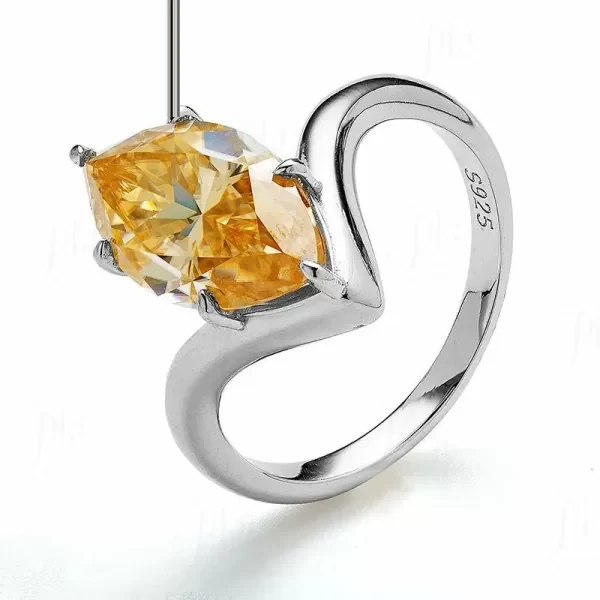
Match the setting to the metal as well: 925 sterling silver is softer than solid gold, so heavy prong work on silver needs thicker gauge stock to hold up.
Prong Settings
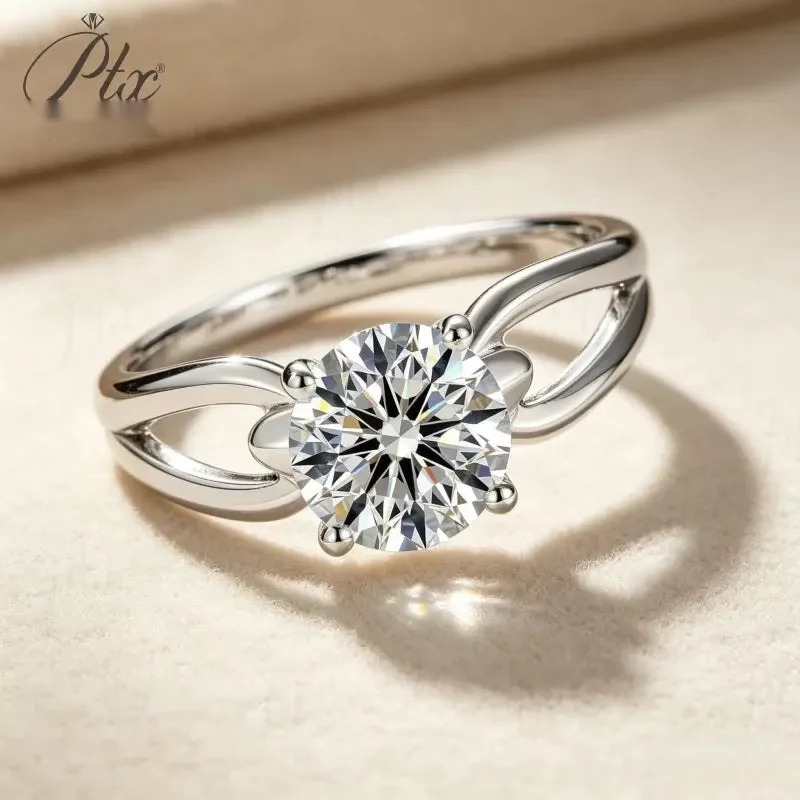
Four-prong settings expose more of the stone and cost less in labor, while six-prong settings add security at a modest weight increase. For wholesale programs, six-prong heads on solitaires reduce stone-loss claims, which matters more than the small added cost per piece. Check that prong tips are polished and evenly tensioned; our three-stage QC includes in-process checks specifically for prong seating before the ring moves to pre-ship inspection.
Bezel and Channel Settings
Bezel settings wrap the stone in a metal rim and are the strongest option for daily-wear rings, making them popular for men's bands and stacking styles. Channel settings protect stones inside a groove between two metal walls and suit straight band designs. Both styles cost more in metal and labor than prongs, but they reduce after-sale service issues.
Buyers positioning rings as everyday wear should favor bezel and channel work; buyers positioning statement pieces can accept prong settings with a clear care guide.
Metal Choice and Real Durability Expectations
Durability starts with the metal, and the description on your listing must name the true material. The honest options are 925 sterling silver, 10K, 14K, or 18K solid gold, gold vermeil, or gold plated. Each behaves differently under daily wear, and setting your customer expectations correctly protects your reviews and return rate.
| Metal | Hardness and wear | Sizing flexibility | Best use |
|---|---|---|---|
| 925 sterling silver | Softer, needs thicker stock for prongs | Resizes well | Fashion and stackable styles |
| 10K solid gold | Hardest gold option offered | Resizes well | Everyday and men's bands |
| 14K solid gold | Balanced wear and color | Resizes well | Core bridal and solitaire lines |
| 18K solid gold | Softer, richer color | Resizes with care | Premium statement pieces |
| Vermeil or plated | Coating wears over time | Limited resizing | Trend-driven, lower price points |
Use this table as a conversation tool with your own customers, not as a ranking. Plated and vermeil rings are legitimate products with their own price positioning; the failure point is calling them solid gold, which they are not. Vermeil is a thick gold coating over sterling silver, and gold plated is a thinner coating over a base metal. Both are honest categories when labeled correctly.
Quality Control from Raw Material to Carton
Durability claims are only as strong as the inspection behind them. Our production runs a three-stage QC system: incoming inspection of materials and loose stones, in-process checks during setting and polishing, and a pre-ship AQL inspection on finished goods. For rings, the in-process stage is where sizing accuracy and prong tension get verified, because correcting a mis-sized shank after full setting wastes both stone and labor.
Stone Grading and Paperwork
Loose stones are sold by the carat, and larger moissanite stones can ship with GRA or IGI grading papers. Buyers building bridal or engagement lines should request graded stones and keep the paperwork flowing to end customers, since documentation supports resale value and reduces disputes. Match the grading documents to the actual stones through the pre-ship AQL check so paperwork and product never diverge.
Sampling Before Bulk
Sampling takes 7 to 10 days and is the stage where sizing, setting, and metal decisions get physically confirmed. Wear the sample, resize it once, and stress the prongs deliberately before approving. Bulk production runs 15 to 25 days after sample approval, so a thorough sample review costs you nothing in schedule and saves remakes later.
Sample orders can be paid through PayPal, which keeps the trial low-risk; bulk orders move to T/T terms with a 30 percent deposit and 70 percent balance before shipment.
Pricing and Logistics for Ring Programs
Rings are priced per piece or per carat depending on the item. Solitaires and simple bands price per piece, while designs featuring larger loose stones price per carat for the stone plus the setting work. Ask for a per-piece quotation at your target size run, because a wider run with more half sizes adds tooling and labor that a single-size order does not carry.
Shipping to the US moves DDP and takes 5 to 8 days, meaning duties and delivery are handled before the goods reach you and you can land stock without customs surprises. Plan reorder cycles around the 15 to 25 day production window plus transit, and hold safety stock on your core sizes 6 through 8 and 9 through 11.
Order Terms for Wholesale Buyers
MOQ is 1 piece for stock styles and 30 pieces for custom work, and loose stones are sold by the carat. Sampling takes 7 to 10 days, and bulk production runs 15 to 25 days after the sample is approved. Pricing is quoted per piece or per carat depending on the item. Payment is T/T with a 30% deposit and the 70% balance before shipment, and PayPal is accepted for sample orders.
Frequently Asked Questions
Can I order a single sample ring before committing to bulk?
Yes. Stock styles carry a MOQ of 1 piece, so you can buy one ring to evaluate sizing and finish. Custom designs start at 30 pieces, and samples for those are produced first so you approve the exact construction before the full run.
How long does the full process take from sample to delivery?
Sampling takes 7 to 10 days, bulk production takes 15 to 25 days after approval, and DDP delivery to the US takes 5 to 8 days. A typical custom order therefore moves from first sample to your warehouse in roughly four to six weeks.
Do moissanite stones come with grading documents?
Graded stones use GRA or IGI papers, and you can request them for larger center stones. Loose stones are sold by the carat, so documentation travels with the stone from selection through pre-ship inspection.
Which metal should I choose for a daily-wear ring line?
10K or 14K solid gold offers the strongest balance of hardness and wear for daily-wear programs, with 14K favored for bridal lines. Sterling silver works well for fashion and stacking styles when the setting stock is appropriately thick. Plated and vermeil pieces serve trend-driven assortments where lower price points matter and coating wear is an accepted trade-off.
How are payment terms structured for bulk ring orders?
Bulk orders use T/T with a 30 percent deposit to start production and the 70 percent balance before shipment. Sample orders can be paid through PayPal. Pricing is quoted per piece or per carat depending on the item.
Build Your Ring Line with a Clear Specification
Sizing, setting, and durability are not details to fix after production; they are the specification itself. Decide your size run, match your setting style to your metal, and confirm both on a physical sample before bulk begins. Our team can quote your ring program, produce samples in 7 to 10 days, and ship DDP to the US in 5 to 8 days.
Browse current designs in our wholesale ring catalog, read more buying guides on our jewelry wholesale blog, and request samples or a quotation through our contact page to start your program.
Sources: Grading references: GIA gem education and GIA laboratory information.