Wholesale Bracelets: Sizing, Setting & Durability

Why Bracelet Sizing, Settings, and Durability Decide Your Sell-Through
Bracelets are one of the trickiest categories to buy wholesale because sizing errors, weak settings, and thin plating show up fast in returns and reviews. A ring that fits poorly can be resized; a bracelet that arrives in the wrong length or loses stones in week two usually becomes a refund.
This guide walks through the three decisions that matter most when sourcing bracelets for the US market: choosing the right size range, selecting a setting that survives daily wear, and matching the metal and finish to your customer's expectations. Get these right at the ordering stage and your inventory turns cleaner and your margin holds.
Getting Bracelet Sizing Right for the US Market
US retail bracelet sizing is measured in inches, and buyers who order without a size plan end up with dead stock in unpopular lengths. Chain and tennis bracelets for women most commonly sell in 6.5, 7, and 7.5 inch lengths, with 7 inches as the safest core stock size. Men's bracelets and Cuban link styles typically run 8 to 9 inches.
Bangle and cuff styles are sold by circumference and wrist width instead, so request internal diameter measurements from your supplier before committing to a run.
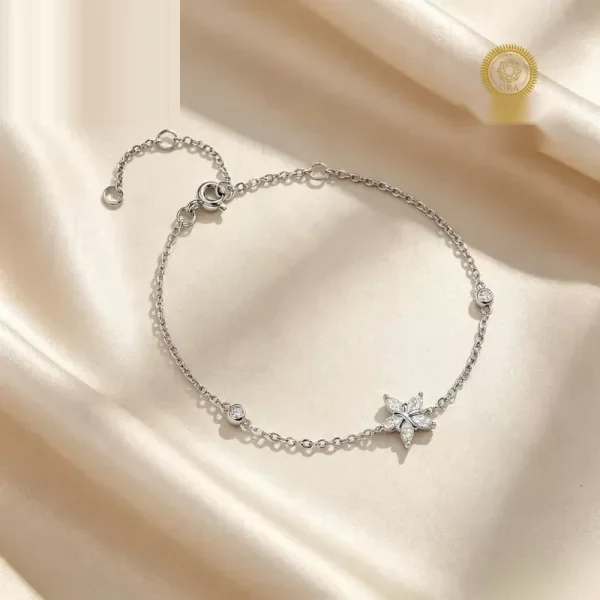
Extension chains are a practical compromise for mixed retail. A 7 inch bracelet with a 1 inch extender covers a wide wrist range with a single SKU, which reduces your sizing risk on first-time orders. For custom runs, our minimum is 30 pieces per style, and we recommend splitting that quantity across two lengths on a first order rather than committing the full run to one size.
Stock styles carry a 1 piece minimum, so you can sample a 7 inch and an 8 inch version before scaling.
Wrist Measurement Standards Your Supplier Should Follow
Ask how the factory measures length: from clasp tip to end link, or inside circumference when closed. The difference between the two methods can be a quarter inch or more, which is enough to cause fit complaints. A reliable supplier states the measuring method on every spec sheet and keeps tooling consistent between sampling and bulk production. Confirm this detail in writing before the bulk stage begins.
Sizing for Tennis Bracelets and Stone-Set Styles
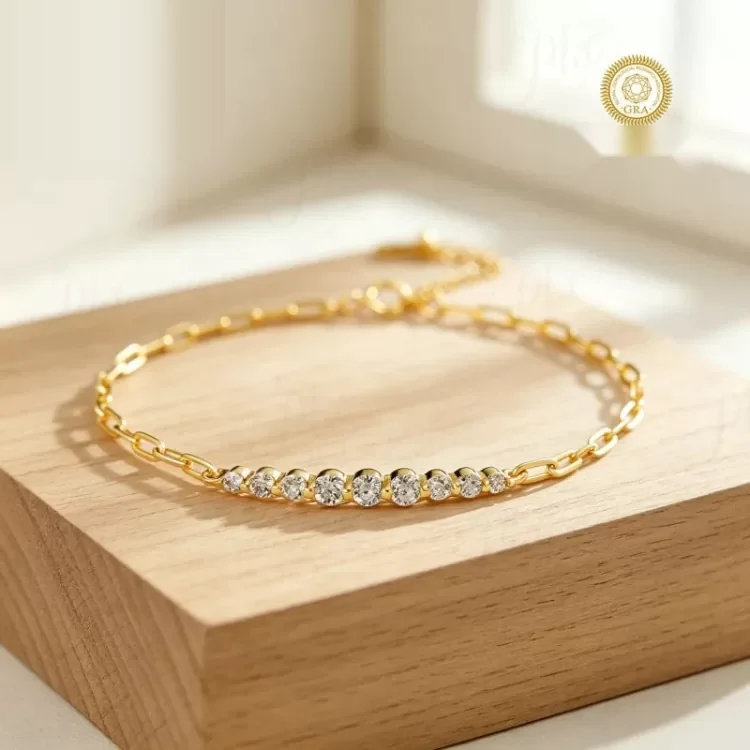
Tennis bracelets need slightly more care because stone settings add stiffness. A bracelet that is too short puts constant tension on the setting edges, which is one of the most common causes of stone loss in this category. Order stone-set styles a half inch looser than a plain chain of the same wrist size, and check that the clasp has a double-lock or box mechanism rather than a simple spring ring for higher-value pieces.
Settings: Matching Stone Security to Price Point
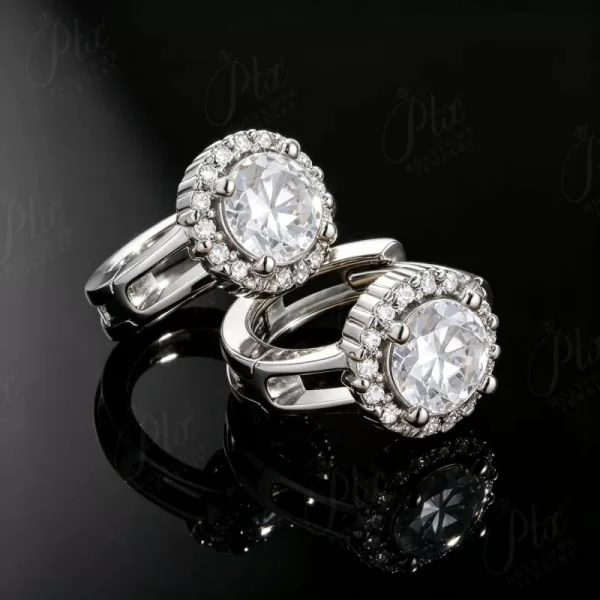
The setting determines how well stones survive wear, and it also drives production cost. For moissanite bracelets, we offer prong, bezel, channel, and pavé settings in both stock and custom styles. Prong settings maximize light entry and are standard on tennis bracelets, but they need adequate metal thickness; thin prongs on gold plated silver are the first failure point under daily wear.
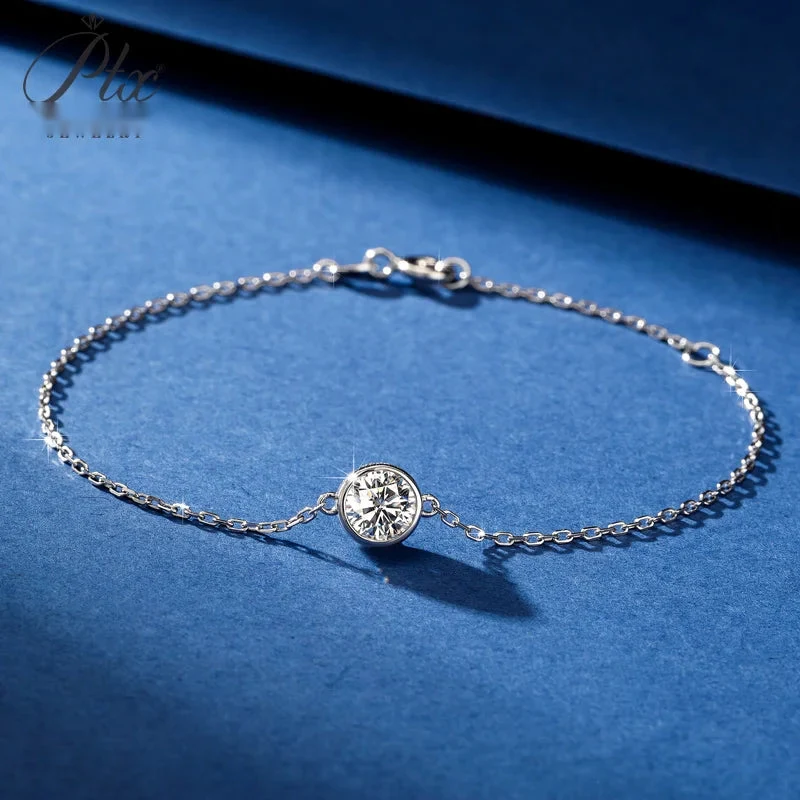
Bezel settings wrap the stone edge in metal and handle impact far better, making them the smarter choice for bangles and cuffs that take knocks on desks and doorframes.
Channel settings suit bar-style and station bracelets, holding round or baguette stones between two metal rails with no exposed prongs. Pavé work on bracelets is where QC matters most: tiny stones set in rows across a curved surface depend on consistent in-process inspection. Our production runs three QC stages, covering incoming material checks, in-process setting checks during assembly, and a pre-ship AQL inspection on finished pieces.
Graded center stones carry GRA or IGI papers, so you can document what each bracelet contains.
One compliance note for your own listings: moissanite is a lab-created diamond alternative, not a natural diamond, and your product copy should describe it that way. Accurate labeling protects you from marketplace takedowns and customer disputes.
Metal Choice and Durability Expectations
Name the base metal honestly in your listings, because durability expectations follow from it. We produce bracelets in 925 sterling silver, gold vermeil, gold plated finishes, and solid gold in 10K, 14K, and 18K. Sterling silver with rhodium plating resists tarnish reasonably well for everyday wear; gold vermeil adds a thicker gold layer over sterling silver and holds up better than standard plating.
Solid gold costs more per piece but removes plating wear as a concern entirely, which suits higher price points and heavier link styles.
Vermeil and plated styles should never be marketed as solid gold, and the same honesty applies to stone descriptions. Set expectations in your product copy about water contact and care, since most plating complaints trace back to customers treating plated pieces like solid gold. Clear care cards in the packaging reduce returns at a negligible cost per unit.
Clasp Types and Their Failure Rates
Clasps are the most common mechanical failure on bracelets. Lobster clasps are inexpensive and dependable for mid-weight chains. Box clasps with safety latches suit tennis bracelets and heavier Cuban links. Toggle and magnetic clasps look premium but should be reserved for light styles; magnetic closures on a stone-set bracelet invite loss. Specify the clasp type on your purchase order rather than leaving it to the factory's default.
Link Construction for Cuban and Curb Styles
Cuban link bracelets fail at two points: hollow links that dent, and solder joints that crack under tension. For men's styles in the 8 to 9 inch range, ask whether links are solid or hollow and request the link gauge in millimeters. Solid links weigh more and cost more per gram, but they carry a far lower return rate on heavier gauges. Confirm solder joint inspection is part of the in-process QC stage before bulk production starts.
Sampling, Lead Times, and Ordering Logistics
Sampling takes 7 to 10 days, which gives you time to verify clasp action, link movement, stone security, and true wrist fit before committing to volume. Bulk production runs 15 to 25 days after approval. Pricing is quoted per piece for finished bracelets and per carat for loose stones if you are sourcing stones separately for your own setting program.
Payment terms are T/T with a 30 percent deposit and the 70 percent balance before shipment; PayPal is available for sample orders, which lowers your risk on first contact. Delivery to the US on DDP terms takes 5 to 8 days after shipment, with duties handled so landed cost is predictable at the quote stage.
Comparing Bracelet Styles at a Glance
The table below summarizes the three core decisions across the most common bracelet categories, so you can map each style to the right size plan, setting, and durability expectation before ordering samples.
| Style | Typical Sizes | Recommended Setting | Durability Note |
|---|---|---|---|
| Tennis bracelet | 6.5 to 7.5 inches | Four-prong with box clasp | Order half inch looser |
| Cuban link | 8 to 9 inches | Solid links, lobster clasp | Check link gauge |
| Bangle | By internal diameter | Bezel for stones | Handles impact well |
| Station chain | 7 to 8 inches | Channel or bezel | Light daily wear |
Use this as a starting framework rather than a fixed rule set. Your customer base may skew toward longer lengths or heavier gauges, and sampling at the 1 piece minimum for stock styles lets you test those variations before a 30 piece custom run.
Order Terms for Wholesale Buyers
MOQ is 1 piece for stock styles and 30 pieces for custom work, and loose stones are sold by the carat. Sampling takes 7 to 10 days, and bulk production runs 15 to 25 days after the sample is approved. Pricing is quoted per piece or per carat depending on the item. Payment is T/T with a 30% deposit and the 70% balance before shipment, and PayPal is accepted for sample orders.
Frequently Asked Questions
What is the minimum order for bracelets?
Stock styles carry a 1 piece minimum, which makes them ideal for sampling fit and finish. Custom designs require 30 pieces per style. Loose stones for your own setting work are sold by the carat.
How long does production take?
Sampling takes 7 to 10 days, and bulk production runs 15 to 25 days after you approve the sample. DDP delivery to the US adds 5 to 8 days. Plan reorder cycles around these windows so you do not stock out on core sizes.
Can I order multiple bracelet sizes within one custom run?
Yes, and we recommend it. Splitting a 30 piece custom run across two or three lengths reduces sizing risk on a first order. Confirm the size breakdown when you approve the sample so production planning stays on schedule.
What papers come with moissanite stones in bracelets?
Graded stones ship with GRA or IGI papers documenting the stone. Moissanite is a lab-created diamond alternative and should be described as such in your listings, never as a natural diamond.
Which metal should I choose for daily-wear bracelets?
Gold vermeil and rhodium-plated sterling silver suit mid-range price points with reasonable durability. Solid gold in 10K, 14K, or 18K removes plating wear concerns and fits heavier link styles and higher price tiers. Match the metal to how often your customers will actually wear the piece.
Start Your Bracelet Program With a Sample
The fastest way to validate sizing, settings, and durability is to order samples of your shortlisted styles and test them against the framework above. Browse our current bracelet and jewelry lines in our product catalog, read more sourcing guides on our wholesale blog, and reach out through our contact page to request a quote or start a custom 30 piece run.
Sampling takes 7 to 10 days, so you can have fit and finish verified within two weeks of your first inquiry.
Sources: Grading references: GIA gem education and GIA laboratory information.