Wholesale Earrings: Sizing, Setting & Durability

Why Sizing, Setting, and Durability Decide Earring Orders
Earrings succeed or fail in wholesale based on three practical decisions: the size range you stock, the setting style you choose, and how the finished piece holds up after daily wear. A buyer who nails these three factors reorders consistently; one who guesses on weight, post length, or stone security ends up with returns and dead inventory.
This guide walks through each decision with the specifics you need before placing an order, whether you are buying stock styles at a one piece minimum or commissioning custom work at 30 pieces.
Getting Earring Sizes Right for Your Customer Base
Size is the first filter shoppers apply, and it is where many wholesale buyers overstock. Stud earrings between 4mm and 8mm cover everyday wear and first-time buyers, while 9mm to 12mm stones serve customers who want a statement without the weight of a drop earring. Above 12mm, perceived value climbs but sell-through slows in most US retail settings, so treat large carat weights as a depth order rather than a core range.
Total Carat Weight Versus Visual Diameter
Moissanite is sold by the carat, but shoppers judge by diameter. A 1 carat round stone reads roughly 6.5mm across, so a pair at 2 carat total weight looks like two 6.5mm studs. When you write product copy or train floor staff, lead with millimeters and support with carat weight; it prevents disappointment and reduces exchange requests. Our loose stone listings list both measurements, and graded stones ship with GRA or IGI papers so you can verify what you ordered.
Drop Length and Wearability
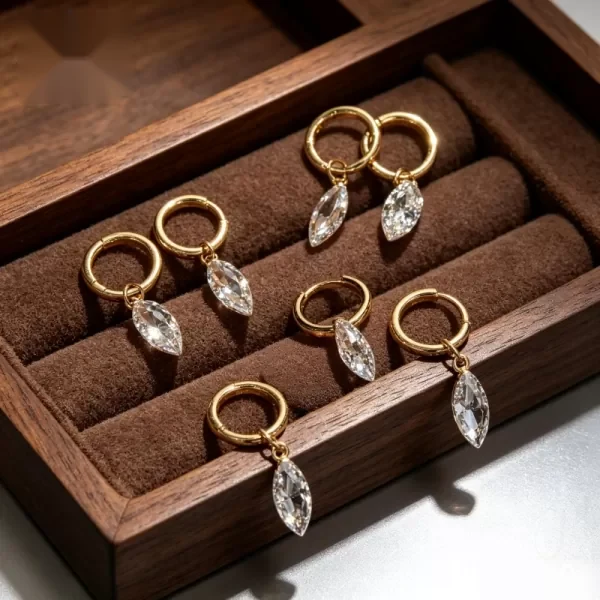
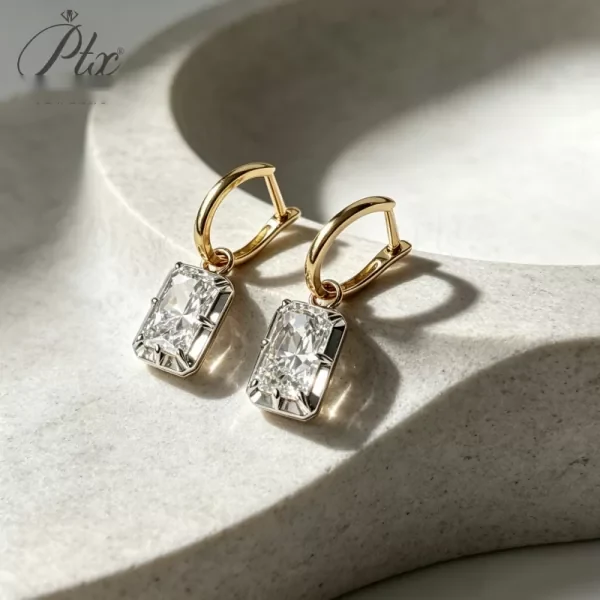
For drops and hoops, total earring length matters as much as stone size. Drops under 25mm clear collars and suit office wear; 25mm to 40mm works for occasions. Hoops between 10mm and 20mm are the safest volume movers. Ask for a dimensioned spec sheet with every style, and confirm the weight in grams per pair so you can judge comfort before committing to bulk production.
Choosing Post Material and Backing
The post is the part of an earring that touches skin for hours, so it determines both comfort and your compliance story. Name the true metal in every listing. Our earrings are set in 925 sterling silver, 10K, 14K, or 18K solid gold, gold vermeil, or gold plated finishes, each with a distinct price point and durability profile.
Sterling Silver Posts for Entry Price Points
925 sterling silver posts keep entry-level earring pairs affordable and are widely accepted by sensitive ears when finished with rhodium plating. Silver requires more care in storage and display, so plan packaging that limits tarnish exposure. For volume accounts, silver studs are the fastest-turning segment of the earring category.
Solid Gold Posts for Premium Lines
10K and 14K solid gold posts justify a higher retail price and hold finish through years of wear. 18K offers a richer color for collections positioned at luxury counters. When a client asks for solid gold at a vermeil price, clarify the difference early: vermeil is a thick gold layer over sterling silver, and gold plated is a thinner layer over a base metal. Accurate naming protects your store from misrepresentation claims.
Setting Styles That Protect the Stone
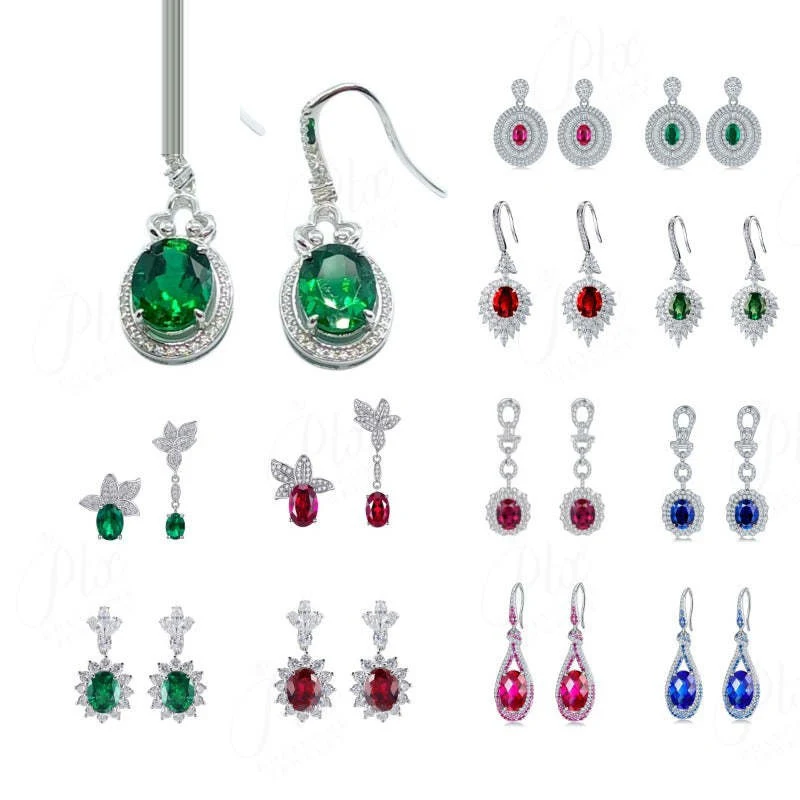
Setting choice controls how much light reaches the moissanite and how well the stone survives daily handling. The four settings below cover nearly every earring application a wholesale buyer needs.
| Setting | Best For | Stone Security | Light Return | Maintenance |
|---|---|---|---|---|
| Prong | Studs and solitaires | Moderate, prongs can catch | High | Check prongs yearly |
| Bezel | Hoops and daily wear | High, full metal rim | Medium | Minimal |
| Halo | Statement studs | High, center is protected | High | Check melee stones |
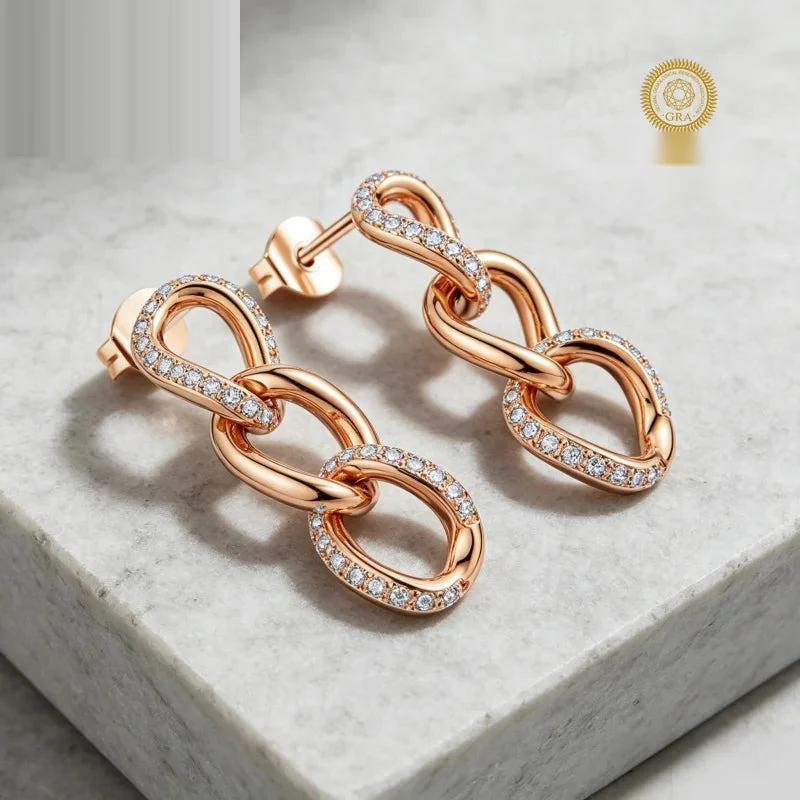
| Pave | Drops and hoops | Moderate, many small stones | High sparkle | Inspect after wear |
Bezel settings cost slightly more in metal and labor but survive the roughest handling, which makes them a smart default for hoops and children's lines. Prong settings maximize brilliance on larger solitaires but need periodic checks, so include a care card with every prong-set pair.
Stone Security in Custom Work
When you commission custom earrings at the 30 piece minimum, specify prong count and tip finish on your spec sheet. Four-prong settings on round stones are standard; six prongs add security for stones above 2 carats each. Request a sample first: sampling runs 7 to 10 days, and bulk production follows at 15 to 25 days after you approve the sample.
Approving a physical sample is the single best way to confirm that seat depth, prong tension, and post alignment are right before the full run.
Durability of Moissanite in Earrings
Moissanite is a lab-created diamond alternative with high hardness, which makes it well suited to earrings that face knocks, hair products, and daily handling. Unlike soft simulants, it resists scratching through ordinary wear. That said, earrings are small and settings are exposed, so durability depends on the metal and setting as much as the stone.
A bezel-set moissanite in 14K solid gold will outlast a thin gold plated prong setting under identical conditions, and you should price and position each line accordingly.
Quality Control Before Your Earrings Ship
Earring defects tend to be small and easy to miss: a bent post, a loose prong, a mismatched pair of stones. Our three-stage QC process addresses this directly. Incoming materials are checked at receipt, production is inspected in process so problems are caught before assembly finishes, and every order passes a pre-ship AQL inspection that covers post alignment, stone seating, plating thickness, and pair matching.
For graded center stones, GRA or IGI papers travel with the goods so you can reconcile carat weight against the invoice, which is priced per piece or per carat depending on the item.
What to Verify on Receipt
When the shipment arrives, check pairs for matched diameter and color, test post threading or backing fit, and spot-check prong tips under magnification. DDP delivery to the US takes 5 to 8 days after production, so build a small buffer into your launch calendar for this inspection window. Flag any issue immediately; the AQL report from pre-ship inspection gives you a documented baseline for any claim.
Payment and Ordering Terms for Earring Programs
Standard terms keep new programs simple. Stock styles order at a one piece minimum, so you can test a size range before scaling. Custom earring work starts at 30 pieces per style. Payment is by T/T with a 30 percent deposit and the 70 percent balance before shipment; sample orders can be paid through PayPal, which lowers the risk of testing a new design.
Pricing is quoted per piece for finished earrings or per carat for loose stones you supply to the setting line.
Order Terms for Wholesale Buyers
MOQ is 1 piece for stock styles and 30 pieces for custom work, and loose stones are sold by the carat. Sampling takes 7 to 10 days, and bulk production runs 15 to 25 days after the sample is approved. Pricing is quoted per piece or per carat depending on the item. Payment is T/T with a 30% deposit and the 70% balance before shipment, and PayPal is accepted for sample orders.
Frequently Asked Questions
What earring sizes should a new retailer stock first?
Start with round studs between 4mm and 8mm, add 9mm to 12mm statement studs, and include hoops in the 10mm to 20mm range. This covers daily wear, gifting, and occasion buyers without tying up cash in slow-moving large carat pairs. Expand into drops once you can see which silhouettes move in your market.
Which setting is most durable for everyday earrings?
Bezel settings offer the most protection because a metal rim surrounds the stone on all sides. Combined with 925 sterling silver or solid gold posts, a bezel-set stud handles daily wear with minimal maintenance. Prong settings show more brilliance but should be inspected periodically for stone security.
How long does a custom earring order take?
Sampling takes 7 to 10 days, then bulk production runs 15 to 25 days after you approve the sample. Add 5 to 8 days for DDP delivery to the US. Plan roughly four to six weeks from design sign-off to goods on your shelf.
What are the payment terms for wholesale earrings?
Custom and bulk orders are paid by T/T with a 30 percent deposit and the 70 percent balance before shipment. Sample orders can be paid through PayPal. Pricing is quoted per piece for finished earrings or per carat for loose stones.
How is moissanite different from a diamond?
Moissanite is a lab-created diamond alternative with its own optical properties, including notable fire and brilliance. It is a genuine gemstone in its own right and is not marketed as a natural diamond. Graded stones include GRA or IGI papers for verification.
Build Your Earring Program With Us
Sizing, setting, and durability are decisions you can make with confidence when you have the right factory partner. Browse the current range of stock earring styles and loose stones in our product catalog, read more buying guides like this one on the wholesale jewelry blog, and request a sample or a custom quote at 30 pieces through our contact page.
Send us your size range and metal preference, and we will return a spec sheet with weights, dimensions, and pricing per piece or per carat.
Sources: Grading references: GIA gem education and GIA laboratory information.