Wholesale Jewelry Sets: Stone Grading & Color Consistency

Why Stone Grading Decides the Value of Wholesale Jewelry Sets
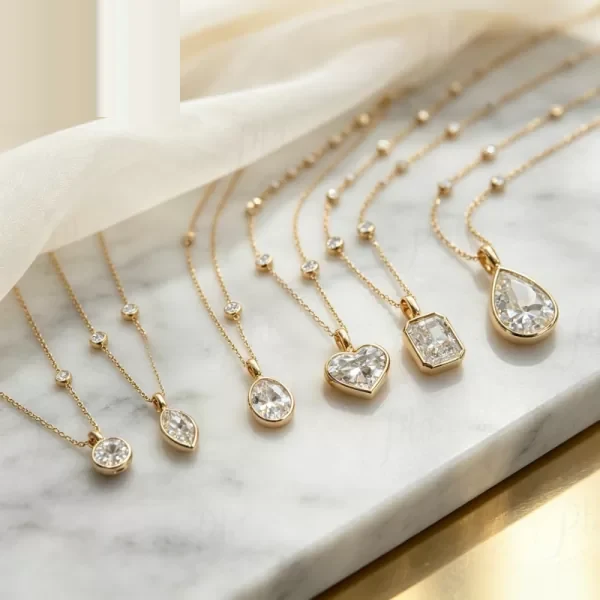
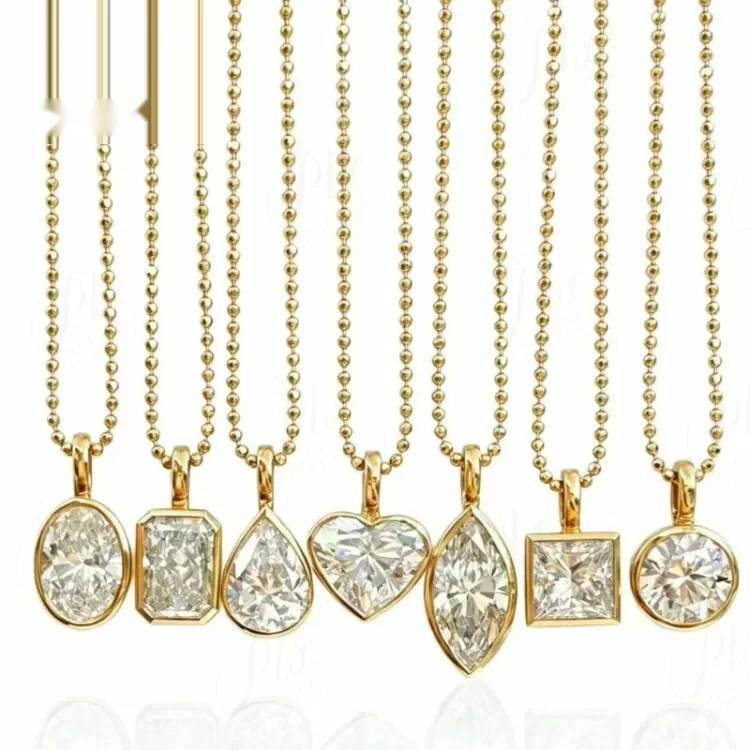
Jewelry sets succeed or fail at wholesale on one factor above most others: whether every stone in the set matches in color, clarity, and grade. A single-ring order can hide a slightly off-color stone; a necklace, earrings, and bracelet worn together cannot. When the pieces sit side by side on a retail display, even a minor mismatch in body color or fire becomes obvious to the end customer.
This article explains how graded stones, matching protocols, and color consistency controls work in a jewelry sets program, and what questions a US wholesale buyer should ask before committing to an order.
Moissanite, a lab-created diamond alternative, is graded on the same visual criteria buyers use for diamonds: color, clarity, and cut. Reputable suppliers pair loose stones with grading papers from GRA or IGI so every stone has a documented grade before it is set. For jewelry sets, the grading paperwork is only half the story.
The other half is the matching process that ensures the pendant stone, the earring stones, and the bracelet stones come from the same color band and the same cut batch.
Understanding Grading Papers: GRA and IGI
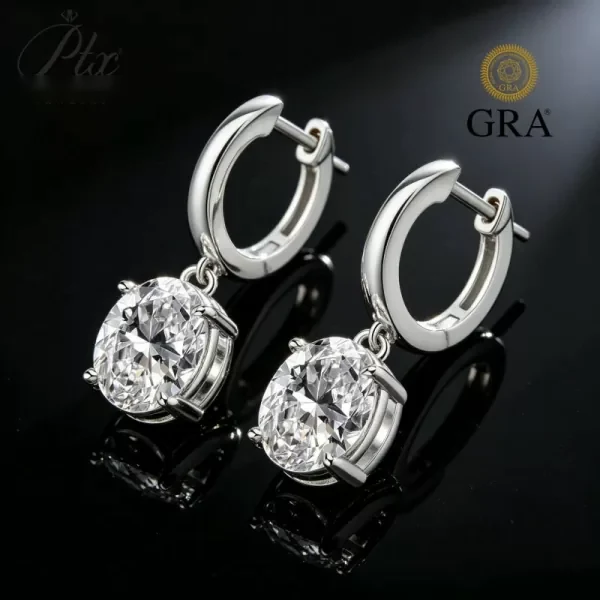
Loose moissanite sold by the carat typically arrives with a GRA certificate, while some premium lots carry IGI papers. Both documents record carat weight, color grade, clarity grade, and cut details. For a buyer assembling jewelry sets, the certificate serves three practical purposes: it verifies the grade you are paying for, it gives your retail customers documentation to hand over at point of sale, and it creates a reference record if a stone is ever questioned.
IGI papers are widely recognized in the US jewelry trade and carry strong retail credibility. GRA papers are common in the moissanite segment and provide similar documentation of each stone's characteristics. Ask your supplier which paper accompanies each grade tier, and request copies of sample certificates before you commit to bulk production. A supplier who cannot produce certificate examples for the exact stones in your set should be treated with caution.
What a Certificate Does and Does Not Tell You
A grading paper describes one loose stone. It does not describe how that stone compares to the stones set beside it. Two stones can both grade as colorless on paper yet sit visibly apart in body color when viewed together under store lighting. That is why jewelry sets require a matching step beyond the certificate. Ask how the supplier groups stones: by certificate color band, by visual side-by-side comparison, or by both.
Color Consistency Across a Multi-Piece Set
Color consistency is the hardest quality problem in jewelry sets. Loose stones are sold by the carat, and stones from different production lots can vary slightly in body color even when they carry the same grade on paper. A bracelet that uses stones from three different lots can show a patchwork effect under daylight.
Preventing this requires lot control: the supplier must allocate stones for an entire set order from a single production batch, or visually match across batches before setting.
The practical control is simple to specify in your purchase order: request that all stones in one set order come from one lot, or that cross-lot stones be matched side by side under standardized lighting before setting. Suppliers with disciplined in-process QC already sort stones this way; suppliers without that discipline will not volunteer it.
Metal Choice Affects Perceived Stone Color
The metal around a stone changes how its color reads. A near-colorless stone set in warm 18K solid gold can pick up a faint warmth from reflections, while the same stone in 925 sterling silver reads cooler and whiter. If your set mixes a gold vermeil pendant with rhodium-finished sterling silver earrings, the stones may appear to differ even when they grade identically.
For jewelry sets, keep the metal finish consistent across pieces, or approve a plated sample of each piece side by side before bulk production begins.
Know exactly what metal you are buying. 925 sterling silver, 10K/14K/18K solid gold, gold vermeil, and gold plated each describe different materials with different price points and durability profiles. Gold vermeil is a thick gold layer over sterling silver; gold plated uses a thinner layer over a base metal. A supplier should name the metal precisely in the quotation, and your spec sheet should repeat it so there is no ambiguity between sales, production, and QC.
How Three-Stage QC Protects Set Consistency
A structured quality process matters more for jewelry sets than for single-piece orders, because a defect in any piece affects the whole set. A capable factory runs a three-stage QC system: incoming inspection of materials and loose stones, in-process checks during setting and assembly, and a pre-ship AQL inspection on finished goods. Each stage catches a different class of problem.
Incoming inspection verifies that the loose stones received match the certificates and fall within the agreed color band. In-process checks confirm that the setter placed matching stones in matching pieces and that prongs, bezels, and finish are consistent across the set. The pre-ship AQL inspection samples finished sets against the acceptance quality limit, checking stone security, color match, metal finish, and packaging. Ask which AQL level the factory uses and request the inspection report with your shipment.
The Approval Sample Is Your Contract
Before bulk production, approve a physical sample of the complete set, ideally with certificate copies for the stones used. The approved sample becomes the reference standard for color, stone size, metal finish, and assembly quality. Production should be measured against that sample, not against a photo or a written description alone. Budget time for this: sampling takes 7 to 10 days, and bulk production runs 15 to 25 days after approval.
Build both windows into your retail calendar so consistency is never sacrificed to a deadline.
Practical Decisions That Shape Your Set Order
Wholesale buyers face a handful of concrete decisions when specifying jewelry sets. The table below summarizes the main ones and the specification detail each requires.
Each decision below should be written into your purchase order, not left to verbal agreement. Clear specifications reduce disputes and shorten the pre-ship inspection cycle.
| Decision | Specify This | Why It Matters |
|---|---|---|
| Stone grade tier | Color and clarity band, GRA or IGI paper | Sets retail documentation and cost |
| Stone matching | Single-lot allocation for the full set | Prevents visible color patchwork |
| Metal material | Sterling silver, vermeil, plated, or solid gold | Controls price and color perception |
| Order size | 1 piece stock, 30 pieces custom | Determines sampling and tooling path |
| Delivery terms | DDP to the US, 5 to 8 days | Landed cost clarity and speed |
Once the table items are locked, the remaining commercial terms are straightforward. Pricing is quoted per piece for finished sets or per carat for loose stones, depending on the item. Payment for bulk orders follows T/T terms with a 30 percent deposit and the 70 percent balance before shipment; sample orders can be paid through PayPal, which lowers the risk of testing a new supplier.
Testing a Supplier Before Scaling
A low-risk way to evaluate a new source for jewelry sets is to order one piece of a stock style, funded through PayPal, and inspect the stone grade, color match across pieces, and metal finish against the certificate. If the sample passes, move to a 30-piece custom run with the specification controls described above. This sequence keeps your exposure small while giving you real production evidence rather than catalog claims.
Order Terms for Wholesale Buyers
MOQ is 1 piece for stock styles and 30 pieces for custom work, and loose stones are sold by the carat. Sampling takes 7 to 10 days, and bulk production runs 15 to 25 days after the sample is approved. Pricing is quoted per piece or per carat depending on the item. Payment is T/T with a 30% deposit and the 70% balance before shipment, and PayPal is accepted for sample orders.
Frequently Asked Questions
What minimum order applies to jewelry sets?
Stock styles carry a 1-piece MOQ, which makes them useful for sampling and market testing. Custom jewelry sets require a 30-piece minimum per design. Loose stones are sold by the carat and are quoted separately from setting labor.
How long does sampling and production take?
Sampling takes 7 to 10 days from specification to a physical set in hand for review. After you approve the sample, bulk production runs 15 to 25 days. Plan your buy around both windows rather than the production figure alone.
Which grading papers should I request for moissanite stones?
GRA papers are standard in the moissanite segment, while IGI papers offer broad recognition in the US retail trade. Ask which paper applies to each grade tier you are quoting, and request sample certificates before production. Match the paper type to what your retail customers expect to see.
How is color consistency enforced across a multi-piece set?
Through lot control and visual matching: stones for one order are allocated from a single production batch, or cross-lot stones are compared side by side under standardized lighting before setting. Incoming, in-process, and pre-ship AQL inspections then verify the match at each stage. Write the single-lot requirement into your purchase order.
How does payment work for set orders?
Bulk orders use T/T with a 30 percent deposit to start production and the 70 percent balance before shipment. Sample orders can be paid via PayPal. DDP delivery to the US takes 5 to 8 days after shipment, so landed timing is predictable.
Next Steps for Your Jewelry Sets Program
Stone grading and color consistency are controllable when they are specified, sampled, and inspected rather than assumed. Start by reviewing available jewelry sets and component options in the catalog on our wholesale jewelry products page, then read more sourcing guidance on grading, metals, and QC in our jewelry wholesale blog.
When you are ready to request a quotation, certificates for your grade tier, or an approval sample, reach out through our contact page and our team will respond with pricing and timelines for your specification.
Sources: Grading references: GIA gem education and GIA laboratory information.