Wholesale Jewelry Sets: Sizing, Setting & Durability

Jewelry Sets for Wholesale Buyers: Sizing, Settings, and Durability Decisions That Matter
Jewelry sets are among the highest-margin categories a US wholesaler can carry, but they involve more sizing and durability decisions than single-piece orders. A matching necklace, earrings, and bracelet combination must hold up across three different wear patterns, and the settings used on each piece determine whether the set survives daily wear or comes back as a warranty claim.
This guide walks through the practical choices a B2B buyer faces when sourcing jewelry sets: ring sizing for sets that include rings, matching settings across multiple pieces, metal selection, stone security, and the quality checks that protect your margins before goods leave the factory.
Why Jewelry Sets Behave Differently Than Single Pieces
A pendant necklace hangs, an earring swings, and a bracelet rubs against wrists, desks, and clothing all day. When you source these as a coordinated set, each component faces its own stress profile. A prong setting that works well on a low-movement pendant can loosen on a bracelet subject to constant impact. Buyers who treat a set as one product rather than three linked products often discover problems only after retail customers report dropped stones or broken clasps.
The sourcing fix starts at the specification stage. Rather than approving a single reference sample, request a full set sample and inspect each component separately. Our sampling cycle runs 7 to 10 days, which gives you time to test clasp action, stone seating, and chain links across every piece in the set before committing to bulk production of 15 to 25 days after approval.
Sizing Decisions for Sets That Include Rings
Many jewelry sets pair a ring with earrings and a pendant, and ring sizing is where wholesale returns concentrate. Two decisions drive your risk profile.
Stock Size Ranges Versus Made-to-Order Sizes
Stock ring styles are available with a minimum order quantity of 1 piece, which lets you test a size run before scaling. For sets, a practical opening assortment covers US sizes 5 through 9, since that range serves the majority of the American retail market. If your customer base skews outside that range, custom work at a 30-piece minimum allows you to specify exact size curves, including half sizes, rather than relying on standard runs.
Keep one detail in mind: wider band profiles fit tighter than thin bands of the same marked size. If your set ring has a band width above 4 millimeters, consider stocking a half size up relative to your thin-band inventory, and communicate this to your retail accounts so their customers order correctly.
Adjustable Bands and Their Limits
Adjustable open-band rings appear frequently in lower-price jewelry sets because they reduce inventory complexity. They work for fashion-forward sets and gift purchases, but the open gap creates two durability concerns: the plating at the flex point wears faster, and repeated adjustment fatigues the metal. If you use adjustable bands, specify 925 sterling silver rather than thin plated brass, since sterling tolerates adjustment cycles without cracking.
For solid gold sets, fixed sizing remains the better specification, because gold's softness makes open bands deform under pressure.
Setting Choices and Stone Security Across a Set
The setting is the single biggest durability variable in jewelry sets. The same stone can be secured in ways that range from highly secure to fragile, and matching settings across a necklace, earrings, and bracelet requires deliberate engineering rather than copying one design across all pieces.
Prong Settings
Prong settings show more stone and remain the default for solitaire-style pieces. Their weakness is snagging and prong lifting, especially on bracelets and rings. When specifying prongs for jewelry sets, ask for doubled prongs on bracelet stones and request a prong tip polish that leaves no sharp edges to catch on clothing. During inspection, check prong tips under magnification for even contact with the stone girdle; uneven pressure is the leading cause of early stone loss.
Bezel and Channel Settings
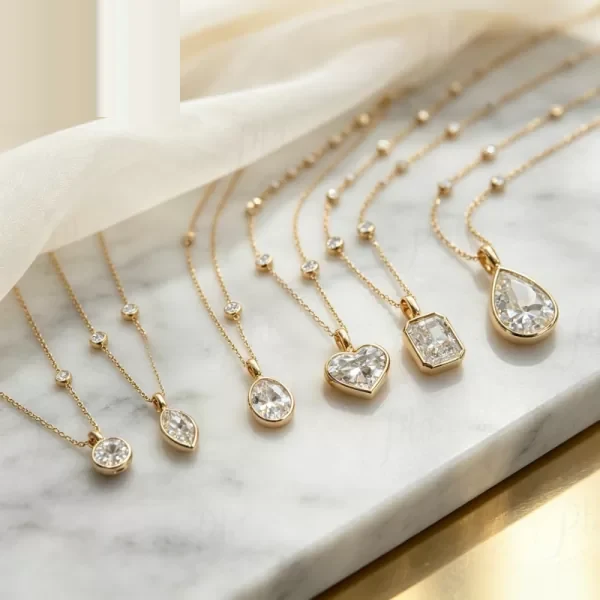
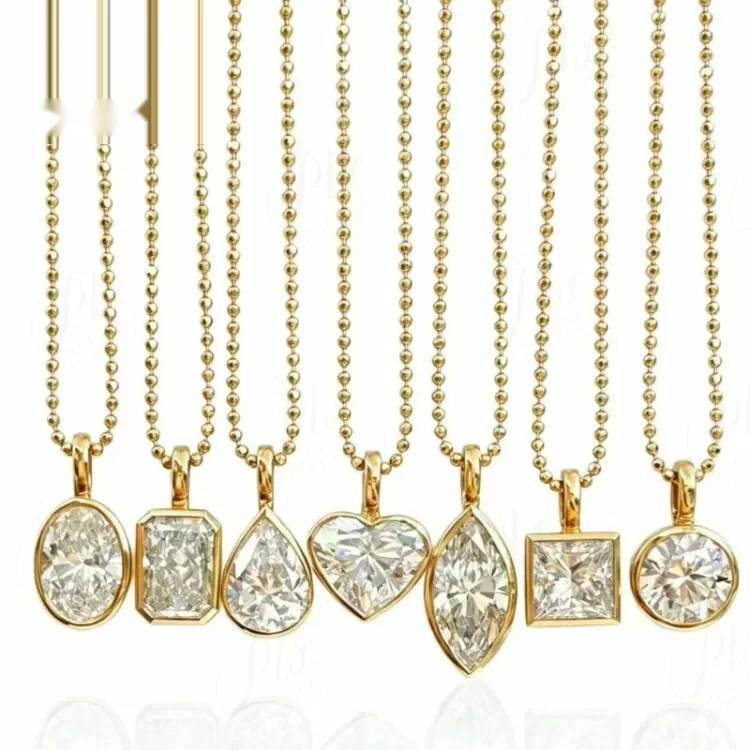
Bezel settings wrap the stone rim in metal and resist snagging, which makes them the stronger choice for bracelets in active-wear collections. Channel settings suit band-style rings and line bracelets, but they require precise stone calibration; a stone even slightly undersized will rattle in the channel. When you order moissanite jewelry sets with channel settings, confirm that stones are sorted by diameter tolerance and matched to the channel width before assembly.
Moissanite, a lab-created diamond alternative, is sold by the carat for loose stones, so specifying calibrated sizes keeps set production consistent across all three pieces.
Pavé and Micro-Settings
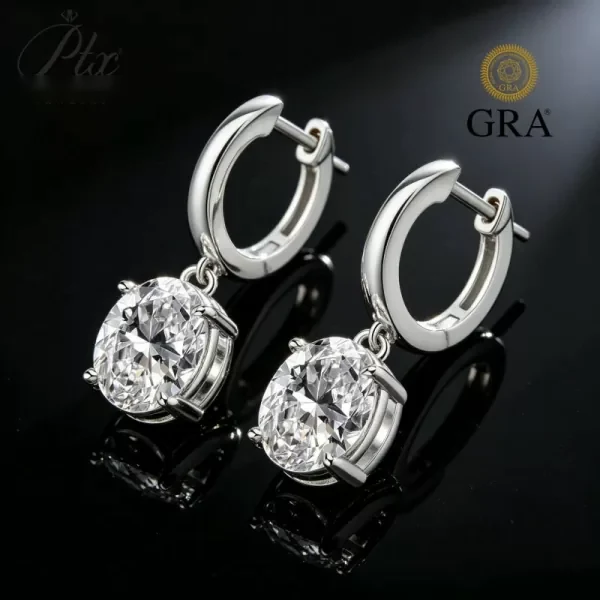
Pavé work looks premium on earrings and pendants, but pavé stones set into thin sterling silver shanks can loosen under flex. If you want pavé in a set that includes a ring, request a heavier gauge shank or a solid gold construction in 10K, 14K, or 18K, which holds micro-prongs more reliably. Graded stones for these designs come with GRA or IGI papers, which lets your retail accounts verify the center stone specifications they advertise.
Metal Selection and How It Affects Set Durability
Name the true metal in every product listing, because misrepresentation creates compliance exposure and customer disputes. The workhorse options for jewelry sets each carry different wear characteristics.
- 925 sterling silver: affordable, hypoallergenic for most wearers, and suitable for rhodium plating to slow tarnish. Best for fashion sets and bridge-price assortments.
- Gold vermeil: sterling silver plated with a thick gold layer. A strong mid-tier option; disclose it as vermeil, not solid gold.
- Gold plated: a thinner gold layer over base metal. Suitable for trend-driven sets with a short intended wear cycle; be transparent in listings.
- 10K, 14K, or 18K solid gold: the durable end of the range. 14K offers a practical balance of hardness and gold content for set pieces that take daily wear.
For sets, match the metal across all three pieces. A sterling pendant paired with a plated bracelet reads inconsistent under retail lighting and invites returns. Consistent metal across the set also simplifies your care instructions for end customers.
Structural Details Buyers Overlook: Clasps, Chains, and Posts
Settings get the attention, but closures cause a large share of set failures. Specify lobster clasps or double-locking clasps on bracelets and necklaces rather than spring rings, which fail at lower pull forces. On earrings, ask for soldered posts rather than friction-fit posts, and confirm that butterfly backs are stamped from thicker stock on heavier stones.
Chain links deserve a check as well: request soldered links on the pendant chain so a snag does not open a link and drop the piece.
Every one of these details is verifiable before bulk production. Our three-stage QC process covers incoming material inspection, in-process checks during assembly, and a pre-shipment AQL inspection on the finished sets, so clasp function, post solder joints, and link integrity are all examined on production goods, not just samples.
After approval, DDP delivery to the US takes 5 to 8 days, and payment terms are T/T with a 30 percent deposit and 70 percent balance before shipment; sample orders can be paid through PayPal.
Comparing Setting Options at a Glance
The table below summarizes how the main setting types perform across the three components of a typical jewelry set, so you can match setting to wear pattern during specification.
| Setting | Stone security | Snag risk | Best set component |
|---|---|---|---|
| Prong | Good with doubled prongs | Moderate | Pendant, earrings |
| Bezel | High | Low | Bracelets, rings |
| Channel | High when calibrated | Low | Band rings, line bracelets |
| Pavé | Moderate | Low | Earrings, pendant halos |
Use the table as a starting point, then validate with physical testing on your sample set. Pull-test clasps, flex a ring shank fifty times, and wear the earrings through a full workday before you approve production. Pricing is quoted per piece or per carat depending on the item, so request itemized quotes per component to see exactly where a stronger setting changes your landed cost.
Order Terms for Wholesale Buyers
MOQ is 1 piece for stock styles and 30 pieces for custom work, and loose stones are sold by the carat. Sampling takes 7 to 10 days, and bulk production runs 15 to 25 days after the sample is approved. Pricing is quoted per piece or per carat depending on the item. Payment is T/T with a 30% deposit and the 70% balance before shipment, and PayPal is accepted for sample orders.
Frequently Asked Questions
Can I order one sample set before committing to bulk?
Yes. Stock styles carry a minimum order quantity of 1 piece, so you can order a full sample set as a single unit. Sampling takes 7 to 10 days, and sample orders are payable through PayPal.
What is the minimum for custom jewelry sets?
Custom work requires a 30-piece minimum. This applies whether you are changing ring size curves, upgrading to solid gold, or specifying a bezel setting across all components.
How are moissanite stones in sets verified?
Graded stones ship with GRA or IGI papers for the center stones. Moissanite is a lab-created diamond alternative, so market it as such in your retail listings rather than as a natural diamond.
What quality checks happen before my sets ship?
Production passes three QC stages: incoming material inspection, in-process checks during assembly, and a pre-ship AQL inspection on finished goods. This covers prong seating, clasp function, and plating consistency across every set.
How do payment and shipping work for bulk set orders?
Bulk orders run on T/T terms with a 30 percent deposit and 70 percent balance before shipment. After approval, DDP delivery to the US takes 5 to 8 days, with duties handled through delivery.
Source Jewelry Sets Built to Hold Up at Retail
Sizing, settings, and structural details decide whether your jewelry sets generate repeat orders or warranty headaches, and every one of those decisions can be locked down during sampling. Browse our current assortments in the jewelry sets product catalog, read more sourcing guidance in our wholesale buying blog, or request a set sample and itemized quote through our contact page.
Bulk production runs 15 to 25 days after sample approval, so you can move from specification to US delivery within a single buying cycle.
Sources: Grading references: GIA gem education and GIA laboratory information.