Wholesale Jewelry Sets: Custom OEM & Private Label Workflow

Custom Jewelry Sets for Wholesale: How the OEM and Private Label Workflow Actually Works
Jewelry sets remain one of the strongest categories for wholesale buyers because a matched necklace, earrings, and bracelet combo commands a higher order value than single pieces and gives retail customers a ready-made gift solution. If you want to build your own branded line rather than resell generic stock, the real question is how the custom OEM and private label workflow runs from first sketch to delivered carton.
In short: you approve a sample in 7 to 10 days, confirm bulk production at 15 to 25 days after approval, meet a 30-piece minimum per custom style, and receive goods at your US door in 5 to 8 days under DDP terms. This article walks through every decision point in that process so you can plan orders, budgets, and launch dates with confidence.
OEM Versus Private Label: Choosing the Right Path for Your Jewelry Sets
Before you request a quote, decide which of the two models fits your business. They differ in cost, control, and speed, and choosing wrong at the start creates rework later.
OEM: Your Design, Our Production
Under OEM, you supply the design intent — sketches, reference images, or a physical sample to copy — and the factory engineers and produces the jewelry set for you. This route suits buyers who already know their market and want exclusive designs no competitor can source. Custom work carries a 30-piece minimum order quantity per style, which keeps the entry point manageable for emerging brands testing a new collection.
OEM also lets you specify the exact metal and stone combination up front, from 925 sterling silver bases to 10K, 14K, or 18K solid gold settings.
Private Label: Existing Sets, Your Brand
Private label means you select from existing jewelry set styles and apply your own branding — logo tags, custom pouches, branded cards, and packaging. Stock styles carry a 1-piece minimum, which makes private label the fastest way to test market demand before committing to custom runs. Many buyers use private label as a validation step: sell the stock version first, then move the proven design into an OEM run with your own modifications once orders justify the 30-piece custom minimum.
How to Decide Between the Two
Ask three questions. First, do you need exclusivity? If yes, OEM is the only option. Second, how fast do you need inventory? Private label from stock can move almost immediately, while OEM requires sampling plus production time. Third, what is your budget tolerance for tooling and sampling? OEM involves design and sampling effort; private label mostly involves branding materials. A hybrid approach — launch with private label stock sets, then transition bestsellers to OEM — reduces risk on both sides.
Material and Stone Decisions That Shape Your Set
A jewelry set is only as strong as its weakest component, and buyers who specify materials clearly avoid the most common quality disputes.
Metals: Naming Them Correctly
Every metal in your set should be named precisely in your spec sheet: 925 sterling silver, gold vermeil, gold plated, or 10K/14K/18K solid gold. Gold vermeil and gold plated pieces are not solid gold, and any marketing copy you produce must reflect that — mislabeling plated goods as solid gold creates legal exposure in the US market.
Sterling silver sets are the workhorse for mid-market pricing; solid gold sets serve the fine jewelry tier; vermeil sits between them as a heavier plating over sterling. Match all pieces in a set to the same base metal so color and wear characteristics stay consistent across the necklace, earrings, and bracelet.
Stones: Moissanite and Certification
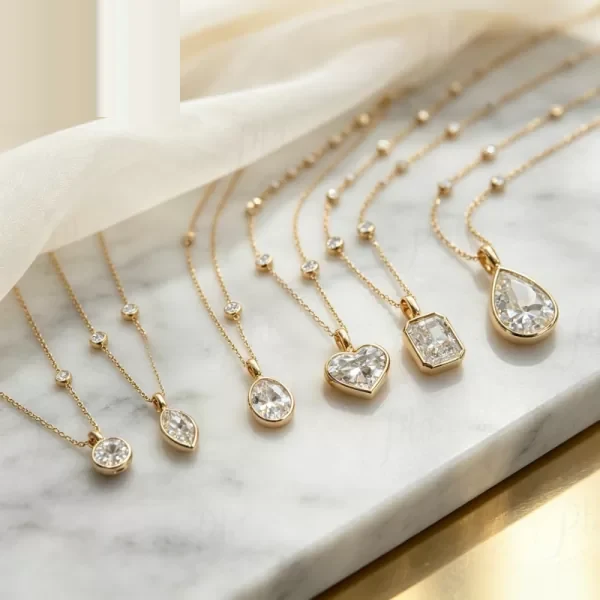
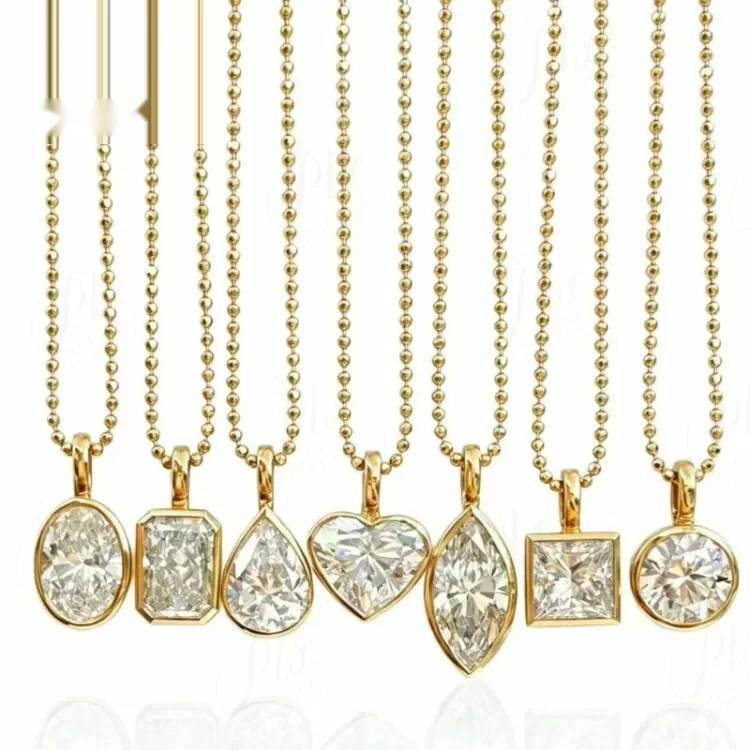
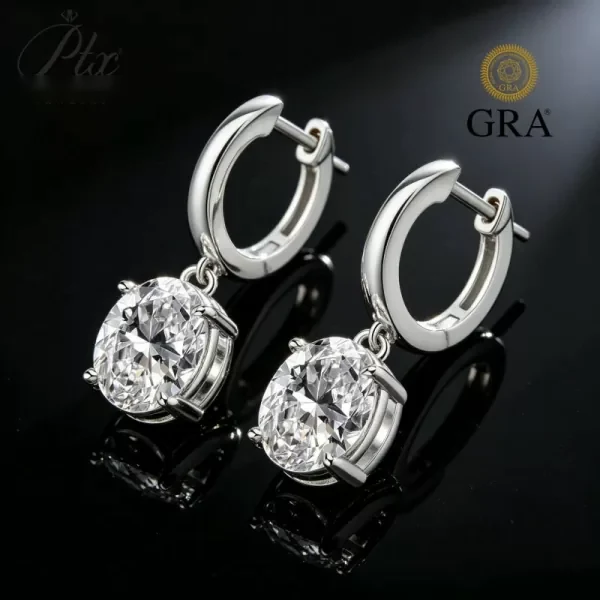
Moissanite is a lab-created diamond alternative, and it should be described that way in all your product copy — never as a natural or real diamond. For graded stones, GRA or IGI papers accompany the goods, giving your retail customers documentation they can verify. Because loose stones are sold by the carat, you can specify carat weight per stone when planning a set, and pricing will be calculated per carat for the stones alongside per-piece pricing for the finished settings.
When matching stones across a three-piece set, request that the factory source stones of matching color and clarity grade so the necklace stone and earring stones read as a family under store lighting.
The Step-by-Step OEM Workflow From Inquiry to Delivery
Knowing the sequence and timing of each stage lets you build realistic launch calendars and avoid the trap of promising retail partners dates the production schedule cannot support.
Stage 1: Design Brief and Quotation
Start with a written brief covering each piece in the set, metal type, stone sizes in carat weight, plating color (yellow, white, or rose gold tone), and branding requirements. The factory responds with pricing per piece or per carat depending on the item, plus any tooling considerations. The clearer your brief, the fewer revision rounds the sample stage will need — and every avoided revision shortens your timeline.
Stage 2: Sampling in 7 to 10 Days
Sample orders can be paid through PayPal, which keeps the upfront commitment low and simplifies small transactions. Sampling takes 7 to 10 days. When the sample arrives, check it against your brief in detail: stone setting security, clasp function, plating color consistency across all three pieces, and the weight and feel your customers will expect. Approve the sample only when it matches what you intend to sell, because the approved sample becomes the production standard.
Stage 3: Bulk Production in 15 to 25 Days
After sample approval, bulk production runs 15 to 25 days. During this window, you should confirm packaging artwork, carton markings, and final quantities. Custom work requires the 30-piece minimum per style, so finalize your size breaks and component mix — for example, how many necklaces versus bracelets in the total run — before production starts, because changes mid-run cause delays.
Stage 4: Three-Stage Quality Control
Quality control runs at three stages: incoming material inspection, in-process checks during production, and a pre-ship AQL inspection on finished goods. For a jewelry set, the pre-ship inspection matters most at the set level — the inspector confirms that matched pieces are grouped correctly, stones are secure, and plating is consistent across the components. Ask for the pre-ship AQL report before releasing the balance payment, which gives you documented confirmation before goods leave the factory.
Stage 5: Payment and DDP Shipping to the US
Payment terms run on T/T with a 30 percent deposit and the 70 percent balance before shipment. For shipping, DDP delivery to the US takes 5 to 8 days, meaning duties and clearance are handled and goods arrive at your address without surprise fees. Build this window into every launch plan: a custom set ordered today with a 10-day sample, a 20-day production run, and 6-day DDP transit is roughly five weeks from deposit to doorstep.
Timeline and Terms at a Glance
The table below condenses the core numbers buyers need when planning a custom jewelry set order. Keep it handy when quoting lead times to your own retail accounts.
| Stage | Timeframe | Minimum Order | Payment |
|---|---|---|---|
| Sampling | 7 to 10 days | 1 piece (stock styles) | PayPal accepted |
| Bulk production | 15 to 25 days | 30 pieces (custom) | 30 percent deposit |
| Balance payment | Before shipment | Not applicable | T/T 70 percent |
| DDP delivery to US | 5 to 8 days | Not applicable | Included in DDP |
Note that loose stones are priced by the carat while finished pieces are priced per piece, so a set quote may combine both pricing methods. Ask the factory to break the quote out by component so you can see exactly what each part of the set costs and adjust carat weight or metal where your margin needs room.
Branding and Packaging Decisions for Private Label Sets
Packaging does heavy lifting for jewelry sets, since the set itself is often bought as a gift. Plan your branding assets early so they are ready before production finishes.
What to Prepare Before Production Ends
Typical private label elements include logo hang tags, branded pouches or boxes, insert cards describing the moissanite as a lab-created diamond alternative, and care instructions mentioning the correct metal name. If your set includes graded stones with GRA or IGI papers, plan a card sleeve or envelope in the box that holds the certificate. Supply print-ready artwork during the production window so packaging runs alongside or immediately after the jewelry, not weeks behind it.
Consistency Across the Set Components
Each component of a set may be packed and sold together or split into separate SKUs depending on your retail strategy. If you plan to sell components individually later, specify that every piece carries its own logo mark and that packaging supports both bundled and standalone presentation. This small decision at the spec stage saves a costly rebranding run later.
Common Mistakes Wholesale Buyers Make With Custom Sets
A few avoidable errors account for most delays and disputes in custom set orders.
- Approving a sample that differs from the final spec sheet, then expecting production to match the spec instead of the sample. The approved sample is the standard.
- Releasing balance payment before reviewing the pre-ship AQL report. Hold the final 70 percent until the report confirms quality.
- Underestimating the timeline by forgetting that sampling, production, and DDP shipping stack sequentially — roughly five weeks total for a typical custom run.
- Mixing metals across set components, which produces visible color mismatch under retail lighting.
- Describing moissanite incorrectly in marketing copy, or labeling plated and vermeil pieces as solid gold, both of which create compliance risk in the US.
Each of these has a simple fix: lock the spec, follow the sample, demand the AQL report, and write product copy that names materials accurately.
Order Terms for Wholesale Buyers
MOQ is 1 piece for stock styles and 30 pieces for custom work, and loose stones are sold by the carat. Sampling takes 7 to 10 days, and bulk production runs 15 to 25 days after the sample is approved. Pricing is quoted per piece or per carat depending on the item. Payment is T/T with a 30% deposit and the 70% balance before shipment, and PayPal is accepted for sample orders.
Frequently Asked Questions
What is the minimum order for custom jewelry sets?
Custom work requires 30 pieces per style. Stock styles are available at a 1-piece minimum, which makes them useful for sampling demand or filling small initial orders. Loose stones are sold separately by the carat.
How long does the full custom process take?
Sampling runs 7 to 10 days, bulk production takes 15 to 25 days after sample approval, and DDP delivery to the US adds 5 to 8 days. Plan roughly five weeks from deposit to doorstep for a typical custom set order.
What payment methods are accepted?
Bulk orders run on T/T with a 30 percent deposit and the 70 percent balance due before shipment. Sample orders can be paid via PayPal, keeping the initial commitment small while you evaluate quality.
Do the stones come with certification?
Graded stones ship with GRA or IGI papers. Moissanite is a lab-created diamond alternative and should be described that way in all product listings, never as a natural diamond.
Who handles duties and customs for US delivery?
Under DDP terms, delivery to the US takes 5 to 8 days with duties and clearance handled before arrival at your door. This removes surprise brokerage fees and makes landed cost predictable for your margin planning.
Start Your Custom Jewelry Set Order
Whether you are moving a proven design into an OEM run or building a full private label collection, the workflow is straightforward when each stage is planned: brief, sample in 7 to 10 days, production in 15 to 25 days, AQL inspection, then DDP delivery to your US door in 5 to 8 days.
Browse the current catalog to see available wholesale jewelry sets and components, read more sourcing guidance in our jewelry wholesale blog, or request a custom OEM quote with your design brief and target quantities today.
Sources: Grading references: GIA gem education and GIA laboratory information.