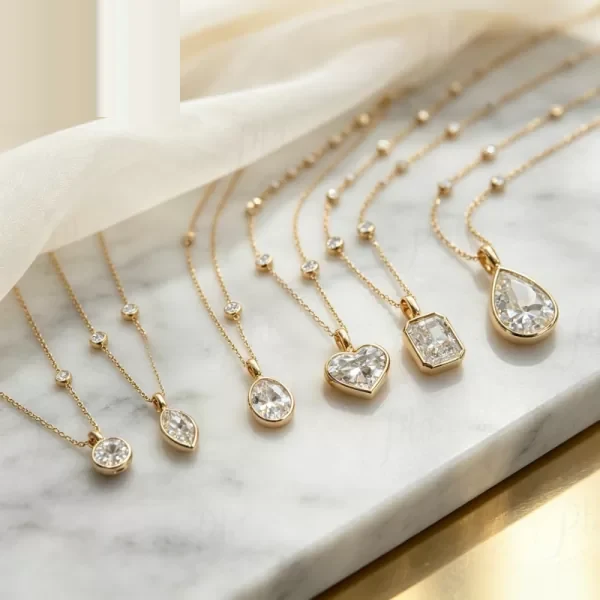
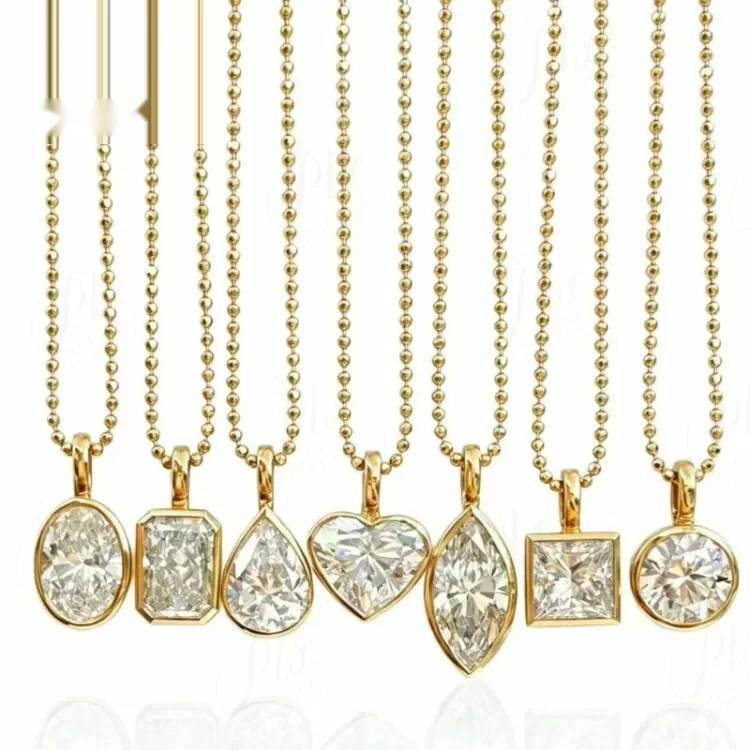
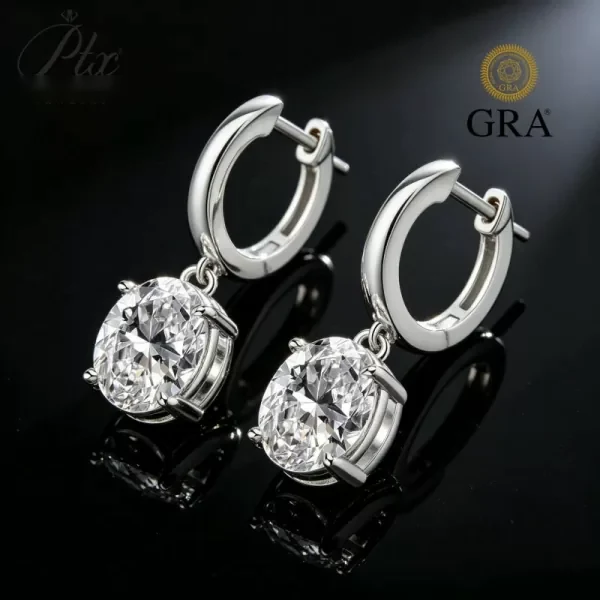
Wholesale Jewelry Sets: Pricing Basis & Wholesale Price Lists

How Are Wholesale Jewelry Sets Priced?
Wholesale jewelry sets are priced per piece when sold as completed assemblies or per carat when the quote is driven by the stones they contain. A set that combines a necklace, earrings, and a bracelet under one design will carry a per-piece price that reflects the metal weight, the stone count, and the setting labor across all three items.
If the buyer requests specific carat weights for the center stones, the supplier shifts to a per-carat basis and prices the metal and setting work separately. Understanding which basis applies to your order is the first step in reading any wholesale price list correctly, and it determines how you compare quotes from different suppliers.
For a US wholesale buyer, the pricing basis affects everything from margin planning to reorder math. A per-piece quote is easier to plug into a retail price sheet; a per-carat quote gives you transparency when stone quality varies between production runs. This article walks through both pricing models, how a wholesale price list for jewelry sets is typically structured, what drives the numbers up or down, and how to move from a quoted price to a repeatable order.
Per-Piece vs. Per-Carat: Choosing the Right Pricing Basis
Most suppliers quote stock jewelry sets on a per-piece basis. The set arrives as a finished unit, and the price covers all components: the metal body, the stones, the setting work, and the finishing polish. This basis works well when you are buying catalog styles at a fixed specification and want simple unit economics.
Per-carat pricing applies when loose stones are a meaningful part of the order. If you want larger center stones in a necklace-and-earring set, or if you are specifying a particular carat range for each piece in the set, the supplier prices the stones by the carat and adds the metal and labor as separate line items. This gives you control over stone quality and lets you compare stone costs across suppliers on an equal footing.
When Per-Piece Pricing Makes Sense
Per-piece pricing suits buyers who order stock styles at MOQ of 1 piece for sampling or small runs, then scale to volume once the style sells. The quote is stable across reorders as long as the specification does not change. It also simplifies landed-cost calculations because the set price already bundles every component.
When Per-Carat Pricing Makes Sense
Per-carat pricing suits buyers who treat the stones as the value driver. If your market sells on stone size and grade, price the stones separately and compare suppliers stone-to-stone. Loose stones sold by the carat also let you adjust the set specification seasonally, for example increasing center stone weight for a holiday collection without renegotiating the whole quote.
Reading a Wholesale Price List for Jewelry Sets
A useful wholesale price list breaks a jewelry set into its pricing components rather than quoting a single opaque number. Before the table below, note the two columns that matter most to your margin: the pricing basis and what that basis includes. After the table, we will look at how these components shift under custom work.
| Component | Pricing Basis | What It Covers | Typical Quote Unit |
|---|---|---|---|
| Complete stock set | Per piece | Metal, stones, setting, polish | Price per set |
| Custom set design | Per piece | Design, tooling, production | Price per set at MOQ 30 |
| Loose stones for sets | Per carat | Stone only, graded | Price per carat by size |
| Metal body | Per piece | 925 sterling silver or solid gold weight | Price by metal weight |
| Stone grading papers | Per stone | GRA or IGI certificate | Fee per certificate |
When you receive a price list, check that each line states its basis. A quote that mixes per-piece and per-carat lines without labeling them is difficult to audit, and small misunderstandings compound across a full set of necklace, earrings, and bracelet components.
What Drives the Price of a Jewelry Set Up or Down
Several variables move the number on a quote, and knowing them helps you negotiate specifications rather than just the price.
Metal Selection
The metal is usually the largest cost variable. 925 sterling silver is the most accessible base; gold vermeil adds a thick gold layer over silver; 10K, 14K, and 18K solid gold raise the quote with both metal weight and karat. A supplier should name the true metal on every line item. If a quote says "gold" without specifying plated, vermeil, or solid, ask for the exact construction before comparing prices.
Stone Size and Grading
Moissanite, a lab-created diamond alternative, is priced by carat and size range. Larger stones cost more per carat, and certified stones carry the cost of GRA or IGI papers. If your retail positioning depends on documented stones, budget the certificate fee per stone into the set price.
Set Complexity
A three-piece set costs more than a two-piece set not only because of added metal and stones but because of added setting labor and QC time. Custom work has a 30-piece minimum, so the design and tooling cost spreads across that run; smaller custom runs cannot absorb those costs the same way.
Order Quantity
Stock styles carry an MOQ of 1 piece, which is useful for testing a set design in your market. Volume pricing typically improves as quantity rises because setting labor and finishing are batched. Ask the supplier to quote two or three quantity tiers so you can see where the per-piece price levels off.
From Quote to Order: Timelines and Payment Terms
Pricing only matters if the production and payment structure behind it is clear. For jewelry sets, the standard flow runs as follows. Sampling takes 7 to 10 days, so you can hold the physical set, check the stone setting, and confirm the metal finish before committing. Bulk production takes 15 to 25 days after you approve the sample.
Payment is by T/T with a 30 percent deposit and the 70 percent balance before shipment; PayPal is accepted for sample orders, which lowers your risk during the sampling stage.
Quality Control Built into the Price
A quoted price should include three-stage quality control: incoming inspection of materials, in-process checks during setting and assembly, and a pre-ship AQL inspection. Ask which AQL level the pre-ship inspection uses and whether you can review the inspection report before the balance payment. This is particularly relevant for multi-piece sets, where one weak link, such as a loose stone in one earring, affects the sellability of the whole set.
Delivery Costs and Landed Price
DDP delivery to the US takes 5 to 8 days, and DDP means duties and shipping are included in the quoted price. For margin planning, convert your supplier quote into a landed per-set cost and build retail pricing from that number. A DDP quote is easier to compare against another supplier's FOB quote only after you add estimated freight and duty to the FOB figure, so normalize the basis before deciding.
Building a Repeatable Pricing Workflow
Buyers who reorder jewelry sets regularly tend to follow the same sequence each season, which keeps quotes comparable over time.
- Fix the specification first: metal type, stone sizes, number of pieces in the set, and whether grading papers are required.
- Request the price list with each line labeled per piece or per carat.
- Order a sample at 1 piece for stock styles, using PayPal for the sample payment.
- Approve the sample, then confirm the 30-piece minimum for any custom variation.
- Pay the 30 percent T/T deposit, review the pre-ship AQL report, then settle the 70 percent balance.
- Log the landed DDP cost per set so next season's quotes compare against real numbers.
This workflow keeps the pricing basis consistent across orders. If a supplier's quote shifts between seasons, you can identify whether the change came from metal, stones, or labor instead of accepting a blended number.
Order Terms for Wholesale Buyers
MOQ is 1 piece for stock styles and 30 pieces for custom work, and loose stones are sold by the carat. Sampling takes 7 to 10 days, and bulk production runs 15 to 25 days after the sample is approved. Pricing is quoted per piece or per carat depending on the item. Payment is T/T with a 30% deposit and the 70% balance before shipment, and PayPal is accepted for sample orders.
Frequently Asked Questions
Can I order one jewelry set as a sample before committing to bulk?
Yes. Stock styles carry an MOQ of 1 piece, so you can order a single set to evaluate quality. Sampling takes 7 to 10 days, and PayPal is accepted for sample orders. Bulk production of 15 to 25 days begins after you approve the sample.
When is jewelry sets pricing per carat instead of per piece?
Pricing moves to a per-carat basis when loose stones are specified separately, such as when you choose particular carat weights for the center stones. Metal and setting labor are then quoted as separate line items. For standard stock sets, the quote is per piece and includes all components.
What is the minimum for custom jewelry sets?
Custom work requires a 30-piece minimum. Stock styles do not carry this requirement, so you can test a catalog design at 1 piece and move to custom variations once you know the style sells.
Do the stones come with certification?
Graded stones come with GRA or IGI papers. The certificate is usually a per-stone line item, so confirm the fee when you request the price list if documented stones matter for your retail positioning.
How long does delivery to the US take?
DDP delivery to the US takes 5 to 8 days after production completes. Because DDP includes shipping and duties in the quote, the price you receive is close to your landed cost per set.
Get a Jewelry Sets Price List for Your Market
A clear pricing basis is the difference between a quote you can build margins on and a number you have to renegotiate later. Browse available styles and current pricing in our product catalog of jewelry sets and components, and read more sourcing guidance in our wholesale jewelry blog. When you are ready to request a per-piece or per-carat quote for your set program, contact our sales team with your specification and target quantity.
Sources: Grading references: GIA gem education and GIA laboratory information.