Wholesale Lab Grown Diamonds: Sourcing Checklist for Buyers

Why Wholesale Buyers Are Adding Lab Grown Diamonds to Their Catalogs
Lab grown diamonds are grown in controlled laboratory environments using advanced technology that replicates the conditions under which natural diamonds form deep in the earth. Chemically, physically, and optically, they are diamonds, and they arrive at a price point that lets retailers stock larger stones and better clarity grades without stretching their budgets. For a wholesale buyer, that opens up new product tiers and margin structures.
The challenge is not deciding whether to source them but deciding how to source them well. This checklist walks through the practical decisions a wholesale buyer faces when ordering lab grown diamonds, from certification and grading to production timelines, payment terms, and quality control.
Start With Certification and Grading Papers
The first item on any sourcing checklist is documentation. Graded lab grown diamonds should arrive with either GRA or IGI papers, which document carat weight, color grade, clarity grade, and cut grade for each stone. Without certification, you have no independent verification of what you are paying for, and your retail customers will ask for papers when they compare your pieces against competitors.
What to Verify on a Grading Report
Check that the report number on the certificate matches the laser inscription on the stone itself. Confirm the reported carat weight against the actual measured weight on your own scale when samples arrive. Review color and clarity grades against what you ordered, and flag any variance before bulk production begins. A supplier who resists this verification step is telling you something about how the rest of the relationship will go.
Loose Stones Versus Set Stones
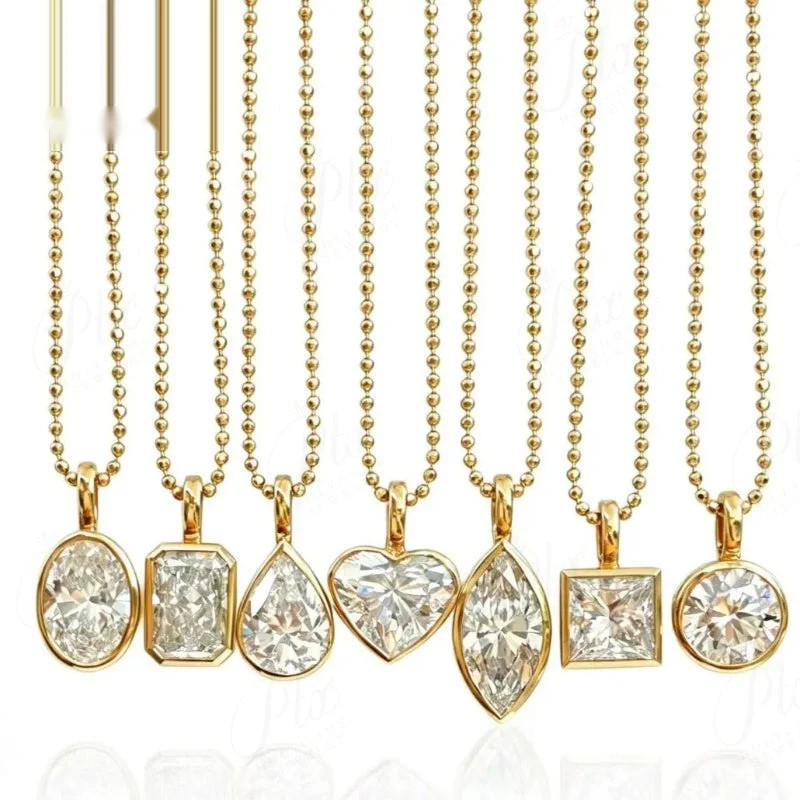
Loose lab grown diamonds are sold by the carat, so pricing scales directly with weight and grade. Set stones, such as those in a finished ring or pendant, are priced per piece. Decide early which format your catalog needs, because it affects your MOQ, your sampling process, and how you present pricing to your own customers. Many wholesale buyers start with loose stones to build a grading baseline, then move into finished jewelry.
Understand MOQ and Order Structure
Minimum order quantities determine how much capital you need before you can test a supplier. A flexible structure lets you start small and scale once quality is proven.
- Stock styles carry an MOQ of 1 piece, which makes sampling and small test orders straightforward.
- Custom work requires an MOQ of 30 pieces, which suits private-label collections and branded lines.
- Loose stones are sold by the carat, so your order size depends on the total carat weight you need.
Use the 1-piece stock MOQ to order samples across several designs before committing to a 30-piece custom run. This sequencing protects your budget and gives you real product in hand to evaluate before scaling.
Build a Sampling and Production Timeline
Wholesale buying is a calendar exercise as much as a sourcing exercise. You need to know when product arrives so you can plan launches, seasonal buys, and reorders.
Sampling Takes 7 to 10 Days
Sample production runs 7 to 10 days. This is your window to inspect stone setting, metal finishing, stone alignment, and overall build quality. Order samples of the exact SKUs you intend to buy in bulk, not just similar designs, because small differences in setting style can change how a stone performs under retail lighting.
Bulk Production Runs 15 to 25 Days After Approval
Once you approve samples, bulk production takes 15 to 25 days. Add shipping time on top of that: DDP delivery to the US takes 5 to 8 days, and because it is DDP, duties and clearance are handled before the goods reach you. Work backward from your launch date and build in buffer for revisions, because a sample that needs a second round will push your whole timeline out by another week or more.
Confirm Metal Types Before You Commit
Metal specification is where wholesale buyers most often get burned by vague language. Every listing should name the true metal without ambiguity.
- 925 sterling silver, the standard base for affordable lab grown diamond settings.
- 10K, 14K, or 18K solid gold for premium tiers and fine jewelry positioning.
- Gold vermeil or gold plated finishes for fashion-forward price points, clearly labeled as such.
A gold plated or vermeil piece is not solid gold, and your product copy should never blur that line. Request the metal spec in writing for every SKU, and check it against the sample weight and stamping when the piece arrives. Sterling silver should carry a 925 stamp, and solid gold pieces should carry the appropriate karat mark.
Set Up Payment Terms That Protect Both Sides
Payment structure should match order type. For sample orders, PayPal works well because it keeps the transaction small and simple while you evaluate quality. For bulk orders, the standard structure is T/T with a 30 percent deposit and the 70 percent balance paid before shipment. This is a normal arrangement in the industry, but you should still treat it with discipline: approve your samples fully, confirm your QC plan, and lock your shipping details before wiring the balance.
Because DDP delivery to the US takes 5 to 8 days, ask for the shipping notice and tracking as soon as the balance clears so you can plan receiving.
Require Three-Stage Quality Control
Quality control should be built into production, not bolted on at the end. A three-stage QC process gives you checkpoints at each phase, and it is a reasonable requirement to put in your purchase agreement.
| QC Stage | When It Happens | What Gets Checked |
|---|---|---|
| Incoming | Before production starts | Loose stones, metal stock, findings |
| In-process | During assembly | Setting quality, stone security, metal finish |
| Pre-ship AQL | Before packing | Finished goods against AQL sampling standards |
Ask your supplier to confirm each stage in writing and to share pre-ship inspection results with your order. The pre-ship AQL inspection is the one that matters most for you, since it samples finished goods against accepted quality limits before anything is packed. If a supplier cannot document all three stages, that is a signal to order samples first and keep initial volumes conservative.
Your Wholesale Sourcing Checklist, Summarized
Before you place a lab grown diamond order, work through this list:
- Confirm GRA or IGI papers for graded stones and match report numbers to inscriptions.
- Decide between loose stones sold by the carat and finished pieces priced per piece.
- Use 1-piece stock MOQs for samples, then scale to 30-piece custom runs.
- Plan around 7 to 10 day sampling and 15 to 25 day bulk production.
- Verify the true metal: sterling silver, solid gold, vermeil, or gold plated.
- Use PayPal for samples and T/T 30/70 terms for bulk.
- Require three-stage QC with a pre-ship AQL inspection.
- Book DDP shipping to the US, which takes 5 to 8 days door to door.
Buyers who work through this checklist before wiring a deposit avoid the most common wholesale failures: mislabeled metals, ungraded stones, and timelines that slip past launch dates. The checklist also gives you a repeatable framework, so your second and third orders move faster than your first.
Frequently Asked Questions
Are lab grown diamonds real diamonds?
Lab grown diamonds are diamonds in their chemical and optical properties; they are grown in a laboratory rather than mined. They are a lab-created diamond alternative to mined stones, and product copy should describe them accurately as lab grown or lab created. Never market them as natural diamonds.
What paperwork comes with graded lab grown diamonds?
Graded stones come with GRA or IGI papers documenting carat, color, clarity, and cut. Match the report number to the stone's inscription and verify the carat weight on receipt. Keep copies on file so your retail customers can reference them.
Can I order just one piece to test the quality?
Yes. Stock styles carry an MOQ of 1 piece, so you can order a single sample before committing to volume. Custom work requires an MOQ of 30 pieces, so reserve that for designs you have already validated through sampling.
How long does the whole process take from sample to delivery?
Sampling takes 7 to 10 days, bulk production takes 15 to 25 days after you approve samples, and DDP delivery to the US takes 5 to 8 days. Plan for roughly four to six weeks in a smooth run, longer if samples need a revision round.
How is lab grown diamond jewelry priced?
Pricing is per piece for finished jewelry and per carat for loose stones. Loose stone pricing varies with carat weight and grade, so request quotes for the specific grade combinations your catalog needs.
Ready to Start Sourcing Lab Grown Diamonds?
If you have worked through this checklist and know which SKUs you want to test, the next step is simple. Browse the current catalog of settings and loose stones on our lab grown diamond products page, then read more wholesale sourcing guidance in our jewelry wholesale blog.
When you are ready to request samples or a quote for a custom 30-piece run, reach out through our wholesale inquiry contact page and we will map out a timeline that fits your launch calendar.
Order Terms for Wholesale Buyers
MOQ is 1 piece for stock styles and 30 pieces for custom work, and loose stones are sold by the carat. Sampling takes 7 to 10 days, and bulk production runs 15 to 25 days after the sample is approved. Pricing is quoted per piece or per carat depending on the item. Payment is T/T with a 30% deposit and the 70% balance before shipment, and PayPal is accepted for sample orders.
Sources: Grading references: GIA gem education and GIA laboratory information.