Wholesale Moissanite Jewelry: Reorder Timing & Stock Depth

Moissanite Jewelry Reorder Timing: How Deep Should Your Stock Run?
Moissanite jewelry reorders work best when you place your next order before your current stock drops below roughly four to six weeks of expected sell-through, because sampling takes 7 to 10 days and bulk production runs 15 to 25 days after approval. Add DDP shipping time of 5 to 8 days to the US, and a standard reorder cycle lands between 27 and 43 days from decision to delivery.
That window is the entire planning problem for wholesale buyers: if you wait until shelves look thin, you are already late. This article walks through how to calculate your reorder point, how deep to stock each style, and how MOQ rules shape the decisions for both stock styles and custom work.
Why Reorder Timing Matters More for Moissanite Jewelry Than Other Categories
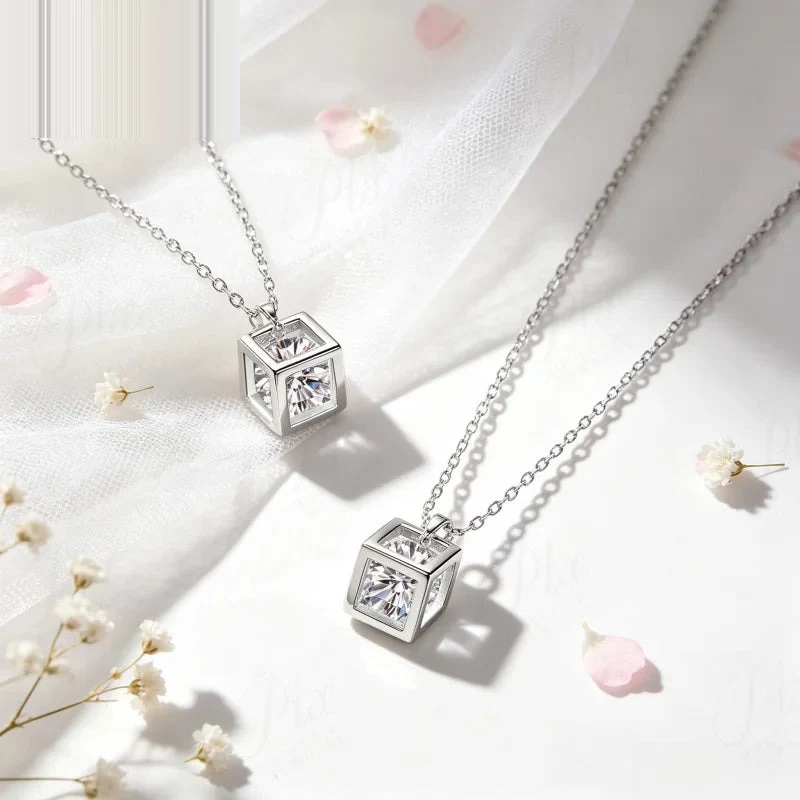
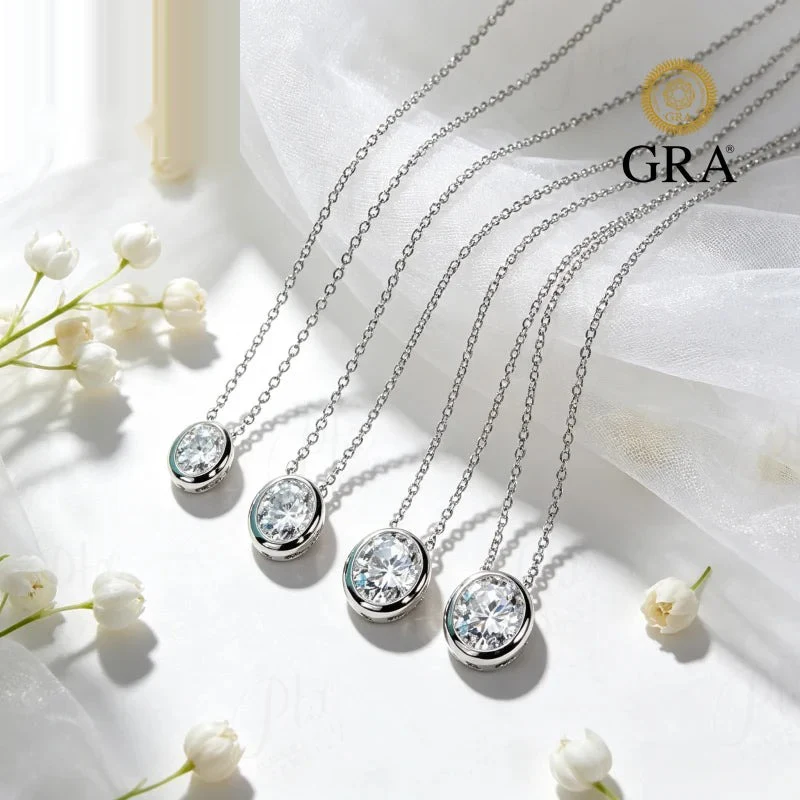
Moissanite jewelry occupies a specific position in the US wholesale market. It is a lab-created diamond alternative, sold at a price point that lets retailers move volume, and it sells in recognizable best-seller shapes: tennis bracelets, solitaire pendants, stacked bands, and hip hop pieces set in 925 sterling silver, gold vermeil, or 10K/14K/18K solid gold. Because demand concentrates in a small number of proven styles, your revenue depends on those styles staying in stock, not on carrying a wide assortment.
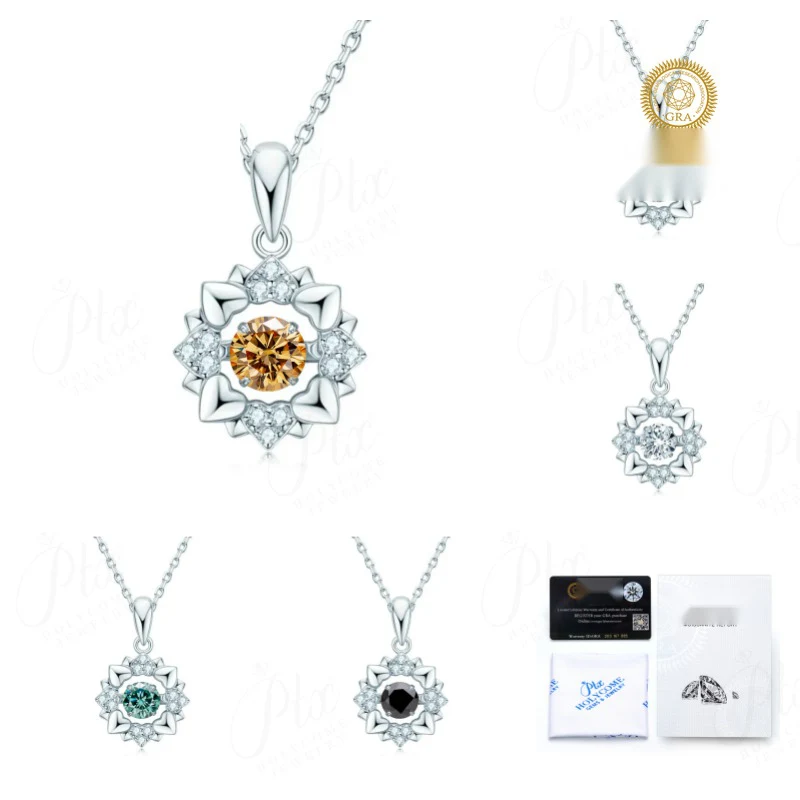
The production chain also has more fixed lead time than many buyers expect. Graded stones carry GRA or IGI papers, and each piece passes a three-stage QC process: incoming material inspection, in-process checks, and pre-ship AQL inspection. None of these steps can be compressed safely. When a hot style runs out mid-season, you cannot ask a factory to shortcut QC or stone grading without adding risk to every unit in the shipment.
The only reliable lever is ordering earlier and holding deeper stock on the pieces that move.
The Hidden Cost of a Stockout
A stockout on a core moissanite style does more than lose a week of sales. Buyers who arrive to find an empty peg often place that order with another supplier, and winning them back takes another full cycle. Stockouts also break your own data: you cannot distinguish between a style that slowed down and a style you simply did not have. Keeping a reorder discipline protects both revenue and the quality of your buying decisions.
Calculating Your Reorder Point: A Practical Formula
A reorder point is the stock level at which you must trigger a new purchase order. The basic math for moissanite jewelry looks like this: average weekly units sold multiplied by total lead time in weeks, plus a safety buffer. Lead time, using the numbers above, is 7 to 10 days of sampling (only needed for new or revised styles), 15 to 25 days of bulk production, and 5 to 8 days of DDP shipping to the US.
For a repeat order of an existing approved style, skip sampling and plan on roughly 3 to 5 weeks total.
Example: a tennis bracelet selling 20 units per week with a 4-week lead time needs 80 units on hand when you place the reorder, plus a buffer for demand spikes. If your buffer is two weeks of sales, you reorder at 120 units. Buyers who sell seasonally should recalculate this monthly, because a reorder point set in March will be wrong for a May wedding-season rush.
Adjusting for Seasonality in the US Market
Moissanite jewelry demand in the US clusters around holiday gifting, Valentine's season, and wedding months. Build your reorder calendar backwards from those peaks: if you want stock landing by early November, and your custom order needs sampling plus 15 to 25 days of production plus shipping, the latest viable order date falls in early September.
For stock styles with no sampling step, you gain two more weeks of flexibility, which is one reason to keep your core assortment in existing approved styles rather than redesigning every season.
Stock Depth: How Many Units of Each Style to Hold
Stock depth is the units you hold per style, and it should not be uniform across your catalog. A common wholesale mistake is spreading inventory evenly across 40 styles when 8 styles generate most of the movement.
Depth your assortment according to sales velocity, and use the MOQ structure to your advantage: stock styles carry a 1-piece minimum, which lets you test new designs at single-unit depth before committing capital, while custom work requires 30 pieces, which makes depth planning essential before you approve a custom run.
| Style tier | Suggested depth | Order type | Reorder trigger |
|---|---|---|---|
| Proven best sellers | 4 to 6 weeks of sales | Stock style, repeat PO | At 2-week buffer remaining |
| Steady mid-tier styles | 2 to 4 weeks of sales | Stock style, repeat PO | At 3-week lead time point |
| Test designs | 1 to 3 pieces | Stock style, 1-piece MOQ | After sell-through data |
| Custom exclusives | 30 pieces minimum | Custom, 30-piece MOQ | 8 weeks before peak |
Use this table as a starting framework, then tighten it with your own sales data. The key principle is that depth follows velocity: your fastest movers justify the deepest stock and the earliest reorder triggers, while test styles stay shallow until the data earns them a promotion to the mid tier.
Loose Stones and Carat-Based Depth Planning
Loose moissanite is sold by the carat, and many wholesalers carry loose stones alongside finished pieces for custom settings or trade customers. Stone inventory needs its own reorder logic, because carat-weight demand is less predictable than piece demand. Track your loose stone movement in carats per month by popular sizes, and reorder when your carat depth falls below your lead-time coverage.
Remember that custom work also consumes loose stones, so a 30-piece custom run of a larger-stone design can drain a stone size you thought was well stocked.
MOQ Rules and How They Shape Reorder Decisions
The MOQ structure directly affects when and how you reorder. For stock styles, the 1-piece minimum means you can top up a single style at any time, which favors frequent, smaller reorders on proven movers. For custom work, the 30-piece minimum means every custom reorder is a commitment: you should time it so the full 30 pieces have a clear sell-through path, typically anchored to a season, a marketing push, or an exclusive retail account.
Pricing is quoted per piece for finished jewelry and per carat for loose stones, so model both formats when comparing a custom run against topping up an existing stock style.
Sample First, Then Commit to the 30-Piece Run
Sampling takes 7 to 10 days and is the cheapest way to de-risk a custom order. Use PayPal for sample orders, evaluate the piece in person, and only then approve the bulk run. This sequence costs you a week and a half but protects you from a 30-piece commitment on a design that photographs well and wears poorly.
Once a custom style is approved and selling, consider moving it into your stock-style rotation so future reorders drop to the 1-piece minimum and shorter lead times.
Payment and Logistics Timing in Your Reorder Calendar
Build payment terms into your reorder timeline, because they affect when production actually starts. Bulk orders run on T/T terms with a 30 percent deposit and 70 percent balance before shipment, meaning production begins when the deposit lands and ships only after the balance clears. If your internal approval process takes a week, add that week to your reorder math. Sample orders on PayPal settle faster, which is another reason to keep the sample-then-bulk sequence in your calendar.
DDP delivery to the US takes 5 to 8 days, with duties and shipping handled so goods arrive ready to sell. The DDP term simplifies receiving: your reorder decision date, plus deposit timing, plus production, plus 5 to 8 days of transit, gives you a reliable arrival window you can publish to your own sales team.
Buyers who run two or three reorder cycles per season quickly learn to treat that arrival window as a fixed date on the calendar rather than an estimate.
Coordinating Reorders Across Multiple Styles
If you reorder style by style as each hits its trigger point, you pay freight and processing on many small shipments. A better pattern is a weekly or biweekly reorder review: check every style against its reorder point, consolidate everything below trigger into one purchase order, and negotiate production scheduling around that consolidated batch. This keeps individual styles from slipping past their trigger points while reducing the administrative load on both sides.
Order Terms for Wholesale Buyers
MOQ is 1 piece for stock styles and 30 pieces for custom work, and loose stones are sold by the carat. Sampling takes 7 to 10 days, and bulk production runs 15 to 25 days after the sample is approved. Pricing is quoted per piece or per carat depending on the item. Payment is T/T with a 30% deposit and the 70% balance before shipment, and PayPal is accepted for sample orders.
Frequently Asked Questions
How early should I place a custom moissanite order before a holiday season?
Work backwards from your required stock date. Sampling takes 7 to 10 days, bulk production runs 15 to 25 days after approval, and DDP shipping to the US takes 5 to 8 days. For holiday stock that must land by early November, place and approve the order by early September at the latest, earlier if your internal approval takes time.
Can I reorder a single piece of a stock style?
Yes. Stock styles carry a 1-piece minimum, so you can top up any approved design at any quantity. That said, frequent single-unit reorders add freight and processing cost, so consolidating into weekly or biweekly batch orders is usually more efficient.
What documentation comes with moissanite jewelry orders?
Graded stones come with GRA or IGI papers, and every order passes a three-stage QC process: incoming inspection, in-process checks, and pre-ship AQL inspection. Ask for the paperwork to accompany each shipment so your retail customers receive verification with their pieces.
How do payment terms affect my reorder timeline?
Bulk orders use T/T with a 30 percent deposit and 70 percent balance before shipment, so production starts on deposit and ships after the balance clears. Factor your payment processing time into the reorder calendar, since a delayed deposit pushes the entire production window back. Sample orders can be paid via PayPal, which settles faster.
Should I hold loose stones or finished pieces?
Hold finished pieces for predictable demand and loose stones by the carat for custom setting work and trade customers. Track each format separately, since a 30-piece custom run can consume loose stone inventory faster than your piece-level data would suggest.
Build a Reorder Calendar That Protects Your Best Sellers
Reorder timing for moissanite jewelry comes down to three habits: knowing your lead time (27 to 43 days for new styles, roughly 3 to 5 weeks for repeats), setting reorder points per style based on weekly velocity, and keeping depth proportional to sales rather than spreading capital evenly.
Use the 1-piece MOQ on stock styles to test cheaply, reserve the 30-piece custom MOQ for designs with a clear sell-through plan, and keep payment and DDP transit windows on the calendar as fixed dates. Buyers who treat reordering as a scheduled discipline rather than a reaction to empty shelves hold deeper stock on the styles that pay for the whole program.
If you want help mapping your current assortment to a reorder schedule, start by reviewing our moissanite jewelry catalog and available stock styles, then read more buying guides in our wholesale jewelry blog. When you are ready to set up a sampling plan or discuss a 30-piece custom run, contact our team and we will build a timeline around your season.
Sources: Grading references: GIA gem education and GIA laboratory information.