Wholesale Bracelets: Stone Grading & Color Consistency

Why Stone Grading and Color Consistency Matter for Bracelets
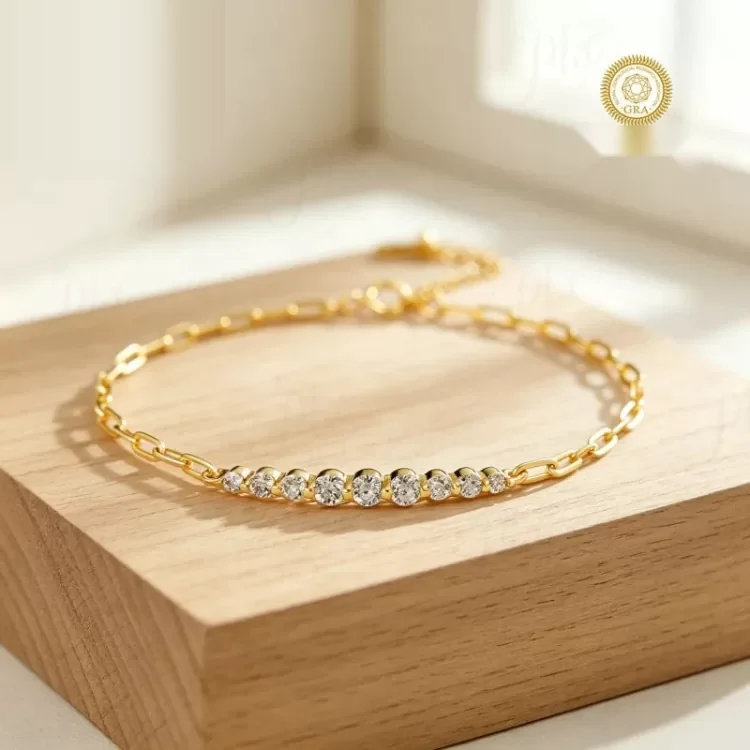
Bracelets present a harder color-matching problem than rings or pendants because a single piece often carries multiple stones set side by side along the band. When one stone leans warmer or darker than its neighbors, the inconsistency is visible on the wrist and becomes a return risk for your retail customers. For wholesale buyers, the practical answer is to treat stone grading and color consistency as purchasing criteria, not marketing language, and to write both into your purchase order.
Moissanite, a lab-created diamond alternative, is graded differently from natural diamonds. Reputable suppliers supply GRA or IGI papers with graded stones so you can verify color grade, clarity grade, and carat weight before goods leave the factory. This article walks through the decisions a US wholesale buyer faces when sourcing bracelets: which grading papers to require, how to specify color tolerance, how to confirm consistency during sampling, and how to structure QC so mixed-color lots never reach your shelves.
Understanding Grading Papers for Bracelet Stones
Graded stones for bracelets should arrive with a GRA or IGI certificate. These papers document the characteristics of the stone itself, which gives you a defensible product description for your own customers and a reference point if a dispute arises with your supplier.
What GRA and IGI Papers Actually Tell You
A grading paper typically lists color grade, clarity grade, cut style, and carat weight. For moissanite bracelets, the color grade is the number you care about most, because color drift between stones is the most visible defect in a multi-stone piece. Ask your supplier to match the certificate number on each stone or stone lot to the paperwork, and spot-check the match during your pre-ship inspection.
When to Accept Uncertified Stones
Small accent stones used in pavé or channel-set bracelets are sometimes too small to grade individually, and certification on each stone adds cost without adding much buyer value. In that case, require a certified master stone for the lot and a signed color-tolerance agreement for the accents. Loose stones are sold by the carat, so request per-carat pricing in writing and confirm whether the quoted price includes grading paperwork.
Setting a Color Tolerance Specification
Color consistency is not something you can request vaguely and hope for. The buyers who avoid mixed-color lots are the ones who define tolerance in measurable terms before production starts.
Defining Your Range in Writing
Specify the target color grade for the main stones and state the allowable deviation, for example that all stones in one bracelet must fall within a single grade step. Ask the supplier to source all main stones for an order from a single lot or production batch. Stones cut at different times or from different growth runs can show subtle color differences, and lot consolidation is the most reliable way to prevent it.
Matching Across Multiple Bracelets
If your retail program sells bracelets as matched pairs or in collections, tell the supplier. Cross-piece matching requires holding stones aside between production runs, which affects the production schedule and sometimes the price per carat. Confirm this at the quotation stage so bulk production timing does not surprise you.
How Sampling Confirms Color Before Bulk
Sampling runs 7 to 10 days, and it is the stage where color decisions should be locked in. Treat the sample as a physical specification, not a rough preview.
- Request samples made from the same stone lot planned for bulk, not showroom stock.
- Review the sample under daylight, incandescent, and store lighting before approving it.
- Photograph the approved sample next to a grading paper for your records.
- Ask for two samples if your order spans multiple metal colors so you can compare plating tone against stone color.
Approve the sample only after you have confirmed that the metal color and the stone color read consistently together. A warm-toned gold plating can make a cooler stone look mismatched even when the stones themselves match, so judge the complete piece rather than the stones alone.
Metal Choices and How They Affect Perceived Stone Color
Name the true metal in your purchase order. Options include 925 sterling silver, 10K, 14K, or 18K solid gold, gold vermeil, or gold plated brass. Never describe plated or vermeil pieces as solid gold in your listings, and expect your supplier to state the base metal and finish thickness plainly.
Metal tone interacts with stone color. Rhodium-finished 925 sterling silver tends to read cool, which pairs cleanly with colorless moissanite. Yellow and rose gold finishes, whether on solid gold or vermeil, add warmth that can amplify any warmth present in the stones. If your spec calls for a warm metal finish, tighten your stone color tolerance accordingly, since the finish will not hide a mismatch the way a mixed-stone lot would expose it.
Pricing, Order Terms, and Production Timelines
Bracelet pricing is quoted per piece or per carat depending on the item, and the quote should state which applies. Minimum order quantity is 1 piece for stock styles and 30 pieces for custom work, which makes it practical to run a small pilot order of a custom bracelet before scaling.
Standard payment terms are T/T with a 30 percent deposit and the 70 percent balance before shipment. PayPal is accepted for sample orders, which lowers the risk during the specification stage. Sampling takes 7 to 10 days and bulk production takes 15 to 25 days after approval, so plan your buying calendar around roughly a month of lead time for a custom bracelet program.
DDP delivery to the US takes 5 to 8 days, meaning duties and shipping are settled before the goods reach your door and your landed cost is known upfront.
Quality Control Stages That Protect Color Consistency
A three-stage QC process is what turns your written specification into a consistent shipment. Ask your supplier to confirm each stage in writing.
Incoming Material Inspection
At incoming inspection, stones are checked against the GRA or IGI papers and sorted by color grade. This is where a mixed lot gets caught, before any stone is set. Ask whether main stones are color-sorted under standardized lighting at this stage.
In-Process Checks During Setting
During production, in-process checks verify that setters draw stones from a single sorted batch rather than opening new parcels mid-run. A bracelet set from two parcels can show a visible seam in color down the band, which is exactly the defect your tolerance spec is meant to prevent.
Pre-Shipment AQL Inspection
The pre-ship AQL inspection is your last checkpoint before the balance payment. Request that the AQL sampling includes a color-consistency check against your approved sample, and ask for inspection photos of the pulled units. If the lot fails, corrections happen before shipment rather than as a claim after your customers see the goods.
The table below summarizes the checkpoints a wholesale buyer should attach to each stage of a bracelet order.
| Stage | Check | Document | Your Action |
|---|---|---|---|
| Quotation | Pricing basis and metal named | Written quote | Confirm per piece or per carat |
| Sampling | Color match and finish | Approved sample | Review under store lighting |
| Incoming QC | Stone sort against papers | GRA or IGI papers | Verify certificate numbers |
| Pre-ship AQL | Color consistency sampling | Inspection photos | Approve before balance |
Keep this table with your order file. When a new supplier relationship starts, walking through each row on a call takes minutes and prevents most of the color-related disputes that wholesale buyers encounter later.
Building a Repeatable Bracelet Program
Consistency across reorders is where graded stones and written specs pay off. Once a bracelet style passes your sample review, record the target color grade, the metal and finish, the stone lot reference, and the certificate numbers. On reorders, require the same grade range and request stones from a matching lot. This documentation also simplifies product listings, since you can describe the stones accurately using the grading papers rather than inventing claims you cannot support.
Finally, remember that moissanite is a lab-created diamond alternative and should be described that way in your own marketing. Accurate descriptions of stone type, metal, and finish protect your listings from platform takedowns and give your retail customers a clear basis for their purchase.
Frequently Asked Questions
Do I need grading papers on every stone in a bracelet?
Graded main stones should come with GRA or IGI papers. Small accent stones used in pavé work are often impractical to certify individually, so require a certified reference stone for the lot plus a written color tolerance for the accents instead.
How do I prevent color differences between bracelets in the same order?
Ask the supplier to source main stones for the whole order from a single lot and to color-sort at incoming inspection. State in the purchase order that all stones must fall within one grade step of the approved sample.
What metal should I choose for consistent stone color?
925 sterling silver with a cool finish pairs cleanly with colorless stones, while yellow or rose finishes on solid gold, gold vermeil, or gold plated pieces add warmth that can highlight mismatches. If you choose a warm finish, tighten your stone color tolerance.
How long does a custom bracelet order take?
Sampling takes 7 to 10 days and bulk production takes 15 to 25 days after approval, with DDP delivery to the US adding 5 to 8 days. Plan roughly a month of production time before shipping for a custom program.
Can I order a small quantity to test a bracelet style?
Stock styles have a minimum order of 1 piece, and custom work requires 30 pieces. Many buyers run a stock-style pilot first, then move to a custom run once sell-through is confirmed.
Start Sourcing Bracelets With Graded Stones
Color consistency in bracelets comes down to three habits: require GRA or IGI papers on graded stones, define a written color tolerance tied to an approved sample, and confirm each QC stage before releasing the balance payment. With MOQs starting at 1 piece for stock styles and 30 pieces for custom work, you can test these practices on a small scale before committing to volume.
Browse the available styles in our bracelet catalog and product collection, read more sourcing guides on our wholesale jewelry blog, or contact our sales team for a quote to discuss your color specifications.
Order Terms for Wholesale Buyers
MOQ is 1 piece for stock styles and 30 pieces for custom work, and loose stones are sold by the carat. Sampling takes 7 to 10 days, and bulk production runs 15 to 25 days after the sample is approved. Pricing is quoted per piece or per carat depending on the item. Payment is T/T with a 30% deposit and the 70% balance before shipment, and PayPal is accepted for sample orders.
Sources: Grading references: GIA gem education and GIA laboratory information.