Wholesale Bracelets: Pricing Basis & Wholesale Price Lists

How Bracelets Are Priced in Wholesale Jewelry
Bracelets are priced either per piece or per carat, and knowing which basis applies to each item is the first step toward building an accurate wholesale price list for your store. Per-piece pricing covers finished bracelets on 925 sterling silver, 10K/14K/18K solid gold, gold vermeil, or gold plated settings, where the value comes from the metal weight and the setting labor.
Per-carat pricing applies when loose stones are sold by the carat, because the total stone weight drives a large share of the final cost. Understanding this distinction helps buyers compare quotes from different suppliers without mixing incompatible numbers, and it keeps the wholesale price list easy to audit when order volumes shift between seasons.
Two Pricing Bases: Per Piece and Per Carat
Per-Piece Pricing for Finished Bracelets
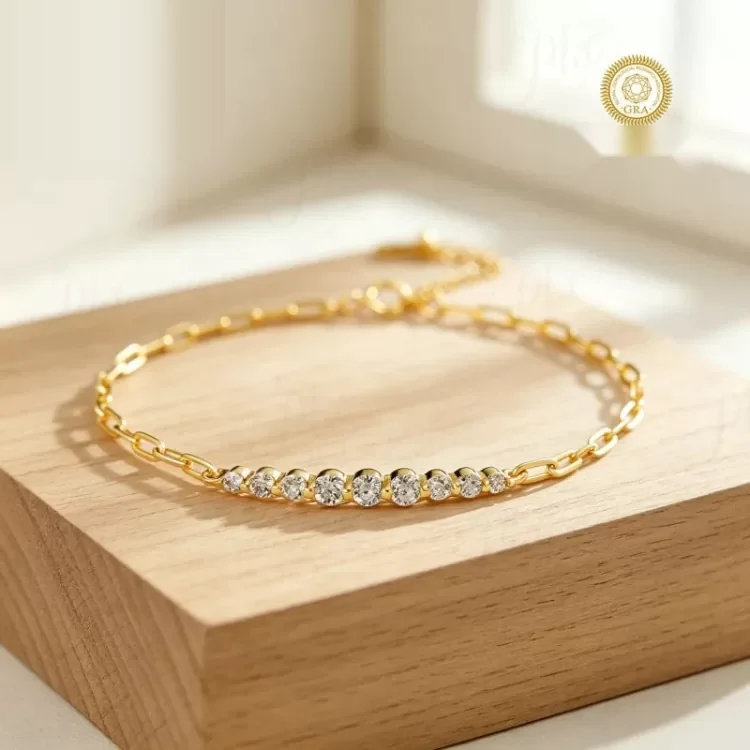
Most finished bracelets are quoted per piece. The quote reflects the metal type, the setting work, and finishing steps such as plating thickness or polishing. A tennis bracelet on 925 sterling silver carries a different per-piece price than the same design on 14K solid gold, because the raw material cost differs significantly.
When you request a quote, ask the supplier to state the metal type and approximate metal weight in the line item so your price list stays transparent for internal review. Pricing per piece or per carat depending on the item is standard practice, so the pricing basis should be labeled on every line.
Per-Carat Pricing for Loose Stones
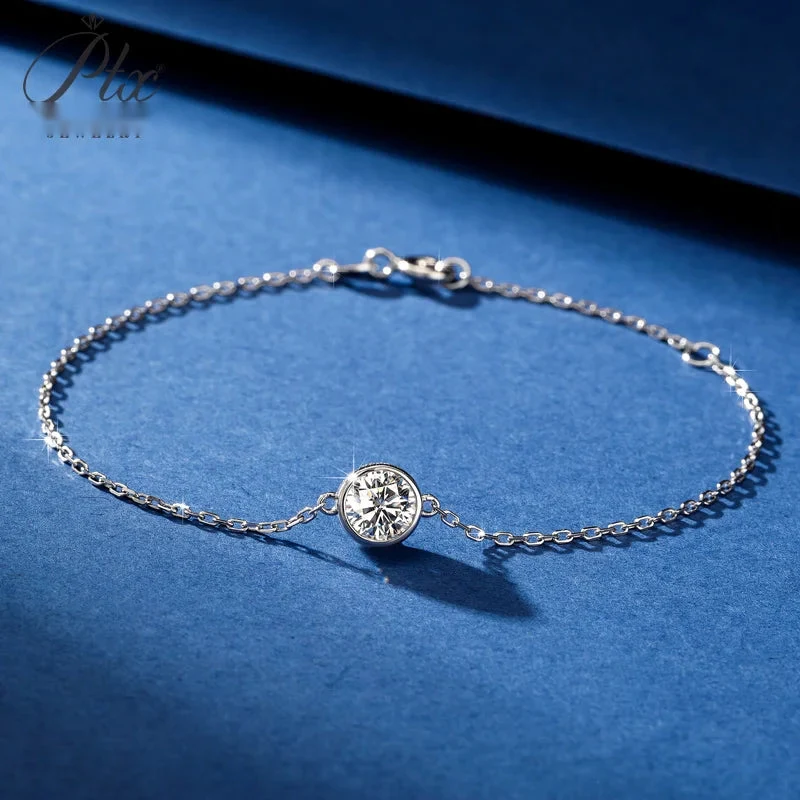
Loose stones, including moissanite, are sold by the carat. Moissanite is a lab-created diamond alternative, and its per-carat price is quoted separately from the metal setting cost. If a bracelet design calls for a specific total carat weight, the supplier combines the per-carat stone cost with the per-piece setting cost to produce a final unit price.
Buyers who plan multiple stone sizes across one bracelet line benefit from keeping the carat-based component itemized, since that allows quick recalculation when a client requests a larger center stone or a denser stone layout.
Choosing the Right Basis for Your Business
Your pricing basis choice should follow your sales model. Retailers selling finished designs at fixed retail prices usually prefer per-piece quotes, because they map directly onto shelf prices. Stores that offer customization, such as client-selected stone sizes, do better with a per-carat structure, because they can pass stone upgrades through without renegotiating the whole bracelet quote.
Ask your supplier to quote both ways on a sample style during your first order cycle; the comparison shows which basis produces cleaner margins for your assortment.
Building a Wholesale Price List That Holds Up
A workable wholesale price list does more than show a number next to a style code. Each line should identify the metal, the stone specification, the pricing basis, and the applicable minimum order quantity. For bracelets, the MOQ is 1 piece for stock styles and 30 pieces for custom work, and loose stones are sold by the carat.
Tiers may apply as well: a buyer ordering 30 custom pieces will sit at a different price point than one ordering 300, and your list should leave room to document volume-based adjustments agreed with the supplier.
The table below shows a sample structure you can adapt when organizing bracelet quotes from a supplier.
| Style Code | Metal | Stone Spec | Pricing Basis | MOQ |
|---|---|---|---|---|
| BR-101 | 925 sterling silver | 2mm round moissanite | Per piece | 1 piece |
| BR-205 | 14K solid gold | 3mm round moissanite | Per piece | 30 pieces |
| BR-310 | Gold vermeil | Loose stones by the carat | Per carat plus setting | 30 pieces |
| BR-412 | Gold plated | 1.5mm round moissanite | Per piece | 1 piece |
With this structure in place, comparing two suppliers on the same style becomes a line-by-line review instead of a guess. It also speeds up internal approvals, since your buying team can see at a glance which items are stock styles available at a 1-piece MOQ and which require the 30-piece custom minimum.
What Drives the Price of a Wholesale Bracelet
Metal Type and Weight
Metal selection is the largest cost driver on most bracelet quotes. 10K solid gold carries a lower material cost than 18K solid gold, and 925 sterling silver sits below both. Gold vermeil, a thick gold layer over sterling silver, prices between plated and solid gold items. Gold plated bracelets offer the lowest entry point, but your price list should name the true metal on every line so your own customers receive accurate product descriptions downstream.
Stone Size, Count, and Grading Papers
Stone cost scales with total carat weight and the number of setting positions. Bracelets packed with small stones take more labor than designs with fewer larger stones, even at identical carat totals. Graded stones use GRA or IGI papers, and buyers should confirm whether grading papers are included in the quoted price or billed separately.
If your market expects certificates with each bracelet, build that requirement into the quote request so it appears on the price list as a line item rather than a surprise cost later.
Design Complexity and Labor
Custom work carries a 30-piece MOQ, and the per-piece price reflects tooling, model making, and the sampling round. Sampling takes 7 to 10 days, and bulk production runs 15 to 25 days after approval. Factoring these timelines into your buying calendar prevents rush decisions that push you toward stock styles when a custom design would have served your assortment better. Complex link mechanisms, pavé layouts, and mixed-metal constructions sit at the higher end of the labor cost range.
Payment Terms and Their Effect on Your Price List
Wholesale bracelet orders typically follow T/T payment terms with a 30 percent deposit and the 70 percent balance before shipment. PayPal applies to sample orders, which lets buyers test designs at low risk before committing to bulk quantities. When you build your price list, note the payment terms alongside each supplier entry, because a supplier offering stronger terms effectively adjusts your landed cost even at an identical unit price.
Confirm whether quoted prices assume the standard T/T split or a different arrangement, and keep those notes current as terms change over your relationship.
Quality Control and Delivery: Protecting the Price You Pay
Three-Stage QC and Why It Matters for Pricing
A quoted price only holds its value if the goods arrive as specified. Three-stage quality control covers incoming materials, in-process checks, and pre-ship AQL inspection. Ask your supplier to confirm that all three stages apply to your bracelet order, and record that confirmation with the price list entry. For graded stones, matching the GRA or IGI papers against the shipped goods during pre-ship inspection closes the loop between the per-carat quote and the physical product.
DDP Delivery to the US
DDP delivery to the US takes 5 to 8 days, with duties and shipping handled so the quoted price reflects the full landed cost. This matters for price list accuracy: a per-piece quote without clarity on delivery terms understates true cost. When comparing suppliers, convert every quote to a DDP basis before judging unit prices, and log the delivery term next to each line so downstream buyers in your organization understand what the number includes.
Practical Checklist Before You Approve a Bracelet Quote
- Confirm the pricing basis on each line: per piece or per carat, depending on the item.
- Name the true metal: 925 sterling silver, 10K/14K/18K solid gold, gold vermeil, or gold plated.
- Verify the MOQ: 1 piece for stock styles, 30 pieces for custom work, loose stones by the carat.
- Confirm whether GRA or IGI papers are included for graded stones.
- Confirm three-stage QC including pre-ship AQL inspection.
- Log payment terms: T/T with 30 percent deposit, 70 percent balance before shipment; PayPal for samples.
- Base comparisons on DDP delivery to the US, 5 to 8 days.
- Plan around 7 to 10 day sampling and 15 to 25 day bulk production after approval.
Order Terms for Wholesale Buyers
MOQ is 1 piece for stock styles and 30 pieces for custom work, and loose stones are sold by the carat. Sampling takes 7 to 10 days, and bulk production runs 15 to 25 days after the sample is approved. Pricing is quoted per piece or per carat depending on the item. Payment is T/T with a 30% deposit and the 70% balance before shipment, and PayPal is accepted for sample orders.
Frequently Asked Questions
Why do some bracelet quotes use per-carat pricing while others use per-piece pricing?
Pricing per piece or per carat depending on the item reflects where the value sits. Finished bracelets with fixed stone layouts quote per piece, while designs built around loose stones sold by the carat carry a carat-based component. Ask for both figures itemized so you can compare styles accurately.
Can I order a single bracelet before committing to bulk?
Stock styles carry a 1-piece MOQ, so you can test a design with a single unit. Custom work requires a 30-piece MOQ because of the tooling and sampling involved. Sampling takes 7 to 10 days, and bulk production runs 15 to 25 days after approval.
Are grading papers included in the quoted price?
Graded stones use GRA or IGI papers, but inclusion varies by item and should be confirmed in writing. Request that papers appear as a line item on the quote so the price list shows the full cost. This prevents disputes when certificates are expected at retail.
How are payment terms structured for wholesale bracelet orders?
Bulk orders use T/T with a 30 percent deposit and the 70 percent balance before shipment. Sample orders can be paid through PayPal, which lowers the risk of testing new designs. Record the terms beside each quote in your price list.
What delivery term should I use when comparing supplier prices?
Use DDP as your comparison baseline, since DDP delivery to the US takes 5 to 8 days and reflects the full landed cost. Quotes on other terms exclude duties or freight and can mislead a side-by-side comparison. Converting all quotes to a DDP basis keeps the price list consistent.
Start Building Your Bracelet Price List
A clear pricing basis and a disciplined wholesale price list turn bracelet buying from a negotiation into a repeatable process. Browse the current range of bracelets and finished designs in our product catalog, read more buying guides like this one in our wholesale jewelry blog, and request itemized quotes through our contact page to get per-piece and per-carat pricing on the styles you want to stock.
Sources: Grading references: GIA gem education and GIA laboratory information.