Wholesale Earrings: MOQ, Sample Order & Bulk Pricing

Planning Your Earrings Order: MOQ and Sample Strategy for Wholesale Buyers
Earrings are one of the lowest-risk categories for testing a new jewelry supplier because the minimum order quantity is just 1 piece for stock styles, while custom work begins at 30 pieces. That structure lets you evaluate plating quality, stone setting, and pair consistency on real units before committing capital to bulk production.
This guide covers the practical decisions a wholesale buyer faces when planning earrings orders: choosing between stock and custom styles, sequencing samples, budgeting payment terms, and building a realistic timeline from first inquiry to delivery in the United States.
The buying angle matters because earrings fail differently than other jewelry categories. A weak post, a mismatched pair, or a backing that loses grip generates customer returns in ways a pendant never will. Sampling exists to catch those problems at low cost, and the suppliers who make sampling simple are the ones worth building a long-term program with.
Why Earrings Are the Smartest Category to Sample First
Earrings carry fewer fit variables than rings and lower unit costs than most pendant or bracelet programs, which makes them ideal for evaluating a factory. A single sample stud or hoop tells you a great deal: how secure the backing is, whether the posts are properly attached to the base metal, how the stones sit in their settings, and whether the finish matches your brand standard. Those are the same attributes that drive repeat purchases once the line is live.
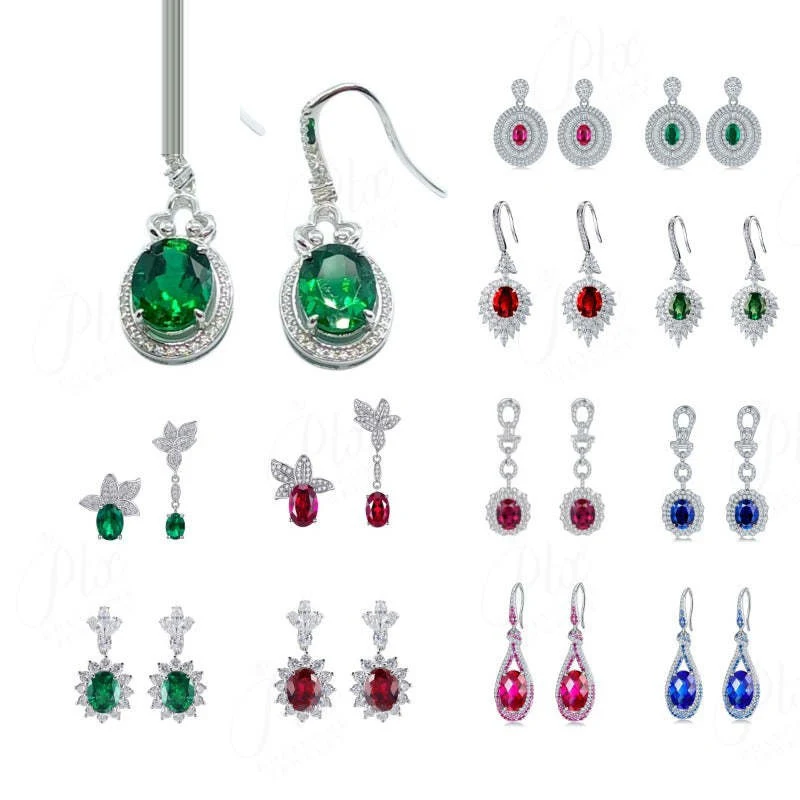
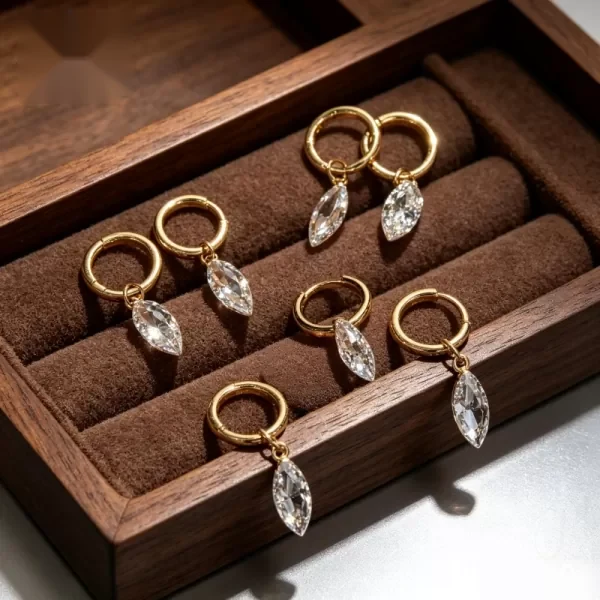
Because stock styles are available at 1 piece per order, you can order several different earring designs in a single sampling round. This is far more efficient than ordering one sample at a time, since each round triggers its own production cycle and shipping cost. Grouping styles also lets you compare consistency across a supplier's range rather than judging from a single unit, which is a small sample size for any serious quality judgment.
Stock Styles Versus Custom Earrings
Stock earrings are existing designs the factory already produces, available at a minimum of 1 piece. Custom earrings, meaning modifications to existing molds or fully new designs, require a 30 piece minimum per style. If your plan is to launch a branded line with your own logo or original silhouettes, build the 30 piece commitment into your buying budget from the start rather than discovering it mid-negotiation.
There is a middle path worth considering for a first order: select stock styles and reserve custom development for a second round once sales data confirms which silhouettes your customers want. Many buyers treat the stock category as a research phase, then move their proven designs into the custom program where the 30 piece minimum applies per style. This staged approach keeps upfront spend low while still building toward an exclusive assortment.
Loose Stones and Per Carat Pricing
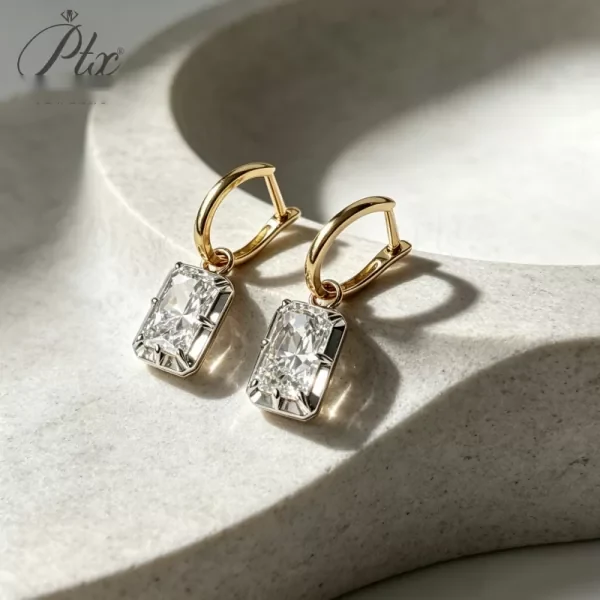
Loose stones are sold by the carat, so if your earrings program involves larger center stones, you will budget for stone purchasing separately from the per piece making cost. Pricing is quoted per piece or per carat depending on the item, and your sample quote will follow the same structure you will see at bulk, which is one reason sample pricing is a reliable planning input rather than a teaser rate.
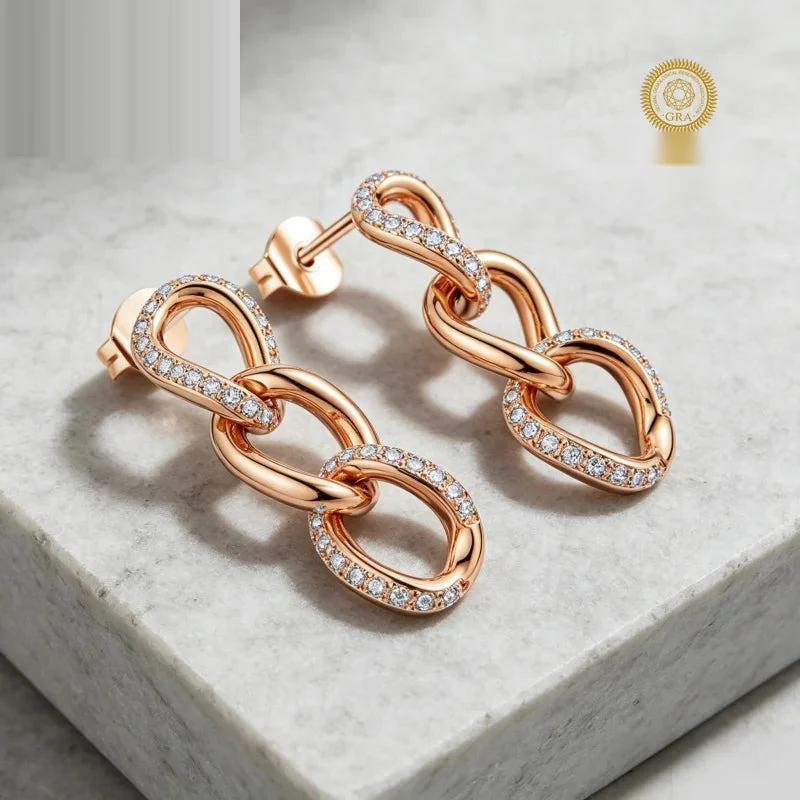
Graded stones come with GRA or IGI papers, and you should confirm at the sampling stage that paperwork will accompany your bulk stones in the same way. Matching papers to parcels at the sample phase takes minutes; doing it after a bulk shipment arrives is far harder and can hold up your own resale paperwork downstream.
The Sampling Timeline: What Happens in 7 to 10 Days
Sample production for earrings takes 7 to 10 days from order confirmation. During this window the factory sources materials, sets stones, applies finishes, and checks the pieces internally before they ship. Plan your calendar around this window rather than expecting same-week turnaround, and confirm the timeline in writing when you place the sample order so both sides share the same expectation from day one.
Shipping adds time on top of production. Delivery to the US takes 5 to 8 days under DDP terms, meaning duties and delivery are handled through the quoted price rather than billed to you at the border. A realistic first-cycle calendar therefore looks like this: one week for sampling, one week for transit, then your own inspection period before approving bulk.
Buyers who map this sequence in advance avoid the most common planning mistake, which is announcing a launch date before the first sample has even shipped.
Payment Terms: Samples Versus Bulk
Payment structure differs between sampling and bulk, and it affects your cash flow planning. Sample orders are typically paid through PayPal, which is fast and low-friction for small amounts and gives both sides a clean transaction record. Bulk orders use T/T terms: a 30 percent deposit to start production and the remaining 70 percent balance before shipment.
For budgeting purposes, that means your bulk cash commitment begins before the goods are finished, and the balance is due before the cartons leave the factory. Work backward from your launch date: bulk production runs 15 to 25 days after sample approval, so a two-sample-cycle program plus a 25 day production run plus 5 to 8 days of DDP shipping puts a realistic door date several weeks out from your first inquiry.
How Quality Control Applies to Earrings Specifically
Earrings demand tighter tolerance than many categories because pairs must match, posts must align, and backings must hold. A structured supplier runs a three-stage quality control process, and understanding it helps you ask better questions at the sampling stage.
- Incoming inspection verifies raw materials and loose stones before production begins
- In-process checks catch setting and finishing problems while units are still on the bench
- Pre-ship AQL inspection samples finished cartons against an accepted quality limit before release
Ask which stage catches pair-matching and post-alignment issues for your specific styles. A supplier who can answer that question precisely is one who has produced earrings at volume before, and that answer should influence which designs you move into the 30 piece custom program.
What to Evaluate When Your Samples Arrive
Inspect each sample against a written checklist so your feedback is specific and actionable. Points worth checking on earrings include:
- Post and clasp security, including whether backs grip firmly after repeated use
- Metal accuracy: 925 sterling silver, 10K/14K/18K solid gold, gold vermeil, or gold plated as specified on the quote
- Stone setting quality and whether GRA or IGI papers accompany graded stones
- Finish consistency across pairs, since mismatched pairs are a common return driver
- Packaging condition, since earrings are prone to tangling and scratching in transit
If a correction is needed, one more sampling round adds another 7 to 10 days. Buyers who allow two sampling cycles before bulk typically launch on schedule; buyers who skip revisions often absorb delays later, when the cost of a delay is measured in missed selling days rather than a small sample invoice.
Budgeting the Transition From Sample to Bulk
The jump from 1 piece to 30 pieces is where most earrings programs succeed or stall, so it deserves its own budget line. At the sampling stage your spend is limited to unit prices plus shipping, paid through PayPal. At bulk, the 30 percent deposit on a 30 piece custom order represents a materially larger outlay, and the 70 percent balance before shipment means the full production cost is committed within roughly a month of approval.
The table below summarizes how the two phases differ so you can present the program internally with clear numbers attached to each stage.
| Phase | Minimum Quantity | Timeline | Payment Terms |
|---|---|---|---|
| Stock style sampling | 1 piece | 7 to 10 days | PayPal |
| Custom production | 30 pieces per style | 15 to 25 days after approval | T/T, 30 percent deposit |
| Balance and shipment | Full order | Before dispatch | T/T, 70 percent balance |
| Delivery to the US | Full order | 5 to 8 days | DDP terms |
Reading the table left to right shows why the sample phase is so valuable: for the cost of a few units and a short wait, you gain the information needed to commit confidently to the larger phases. Pricing per piece or per carat is quoted per item, so request written quotes for every style you intend to sample, and keep those quotes on file as your baseline for bulk negotiation.
Scaling a Multi-Style Earrings Program
Once your first approved styles are selling, the same structure repeats cleanly. Reorders of proven stock styles can move at 1 piece minimums if you want to replenish slowly, while new designs enter through the 30 piece custom route. Many buyers stagger their calendar so a new sampling round is underway while the previous bulk order is in its 15 to 25 day production window, keeping new arrivals flowing without idle weeks.
Because DDP delivery to the US takes 5 to 8 days, landed inventory arrives quickly once production completes. That short final leg makes earrings well suited to replenishment models where you reorder smaller quantities more often rather than tying up capital in large seasonal buys.
Order Terms for Wholesale Buyers
MOQ is 1 piece for stock styles and 30 pieces for custom work, and loose stones are sold by the carat. Sampling takes 7 to 10 days, and bulk production runs 15 to 25 days after the sample is approved. Pricing is quoted per piece or per carat depending on the item. Payment is T/T with a 30% deposit and the 70% balance before shipment, and PayPal is accepted for sample orders.
Frequently Asked Questions
Can I order just one pair of earrings to test quality?
Yes. Stock styles are available at a minimum of 1 piece, so you can order a single pair to inspect plating, posts, and stone setting. Custom designs require a 30 piece minimum per style, so keep testing within the stock range until you are ready to commit.
How long does the full process take from sample to delivered bulk order?
Sampling takes 7 to 10 days, bulk production runs 15 to 25 days after sample approval, and DDP delivery to the US takes 5 to 8 days. Add your own inspection and approval time in between, and plan for roughly five to seven weeks from first sample to goods in hand for a smooth program.
How do I pay for samples versus a bulk order?
Sample orders are typically paid through PayPal, which keeps small transactions simple. Bulk orders use T/T terms with a 30 percent deposit to start production and the remaining 70 percent balance due before shipment.
Do the moissanite stones come with certificates?
Graded stones use GRA or IGI papers, which document the stone characteristics for your records. Confirm at the sampling stage that the same paperwork will accompany your bulk stones so documentation stays consistent across the program.
Is moissanite the same as a diamond?
No. Moissanite is a lab-created gemstone and a diamond alternative with its own optical properties, and it should be described that way in your product copy. Accurate descriptions protect your customers and your reviews, and your supplier can support you with the correct terminology for listings.
Next Steps for Your Earrings Program
The MOQ structure for earrings rewards buyers who plan in stages: sample broadly at 1 piece per style, revise over one or two 7 to 10 day cycles, then commit 30 pieces per custom style with the 30 percent deposit once samples are approved. With DDP delivery reaching the US in 5 to 8 days after production, a disciplined calendar turns a first inquiry into sellable inventory in under two months.
Browse available designs in our earrings catalog and product range, study more buying guides on our wholesale jewelry blog, or request sample pricing and start your first order through our contact page.
Sources: Grading references: GIA gem education and GIA laboratory information.