Wholesale Earrings: Pricing Basis & Wholesale Price Lists

How Earrings Are Priced in Wholesale Jewelry: A Buyer's Guide to Understanding the Price List
Earrings are priced on two bases in wholesale jewelry: per piece for finished items and per carat for designs built around loose stones. Which basis applies depends on the construction of the earring, the metal used, and whether stones are set into the design or sold separately.
Reading a wholesale price list correctly means knowing which basis applies to each line item, what drives the spread between the lowest and highest price on the list, and how sampling and bulk timelines affect your landed cost. This guide walks through the practical decisions a wholesale buyer faces when evaluating an earrings price list, from MOQ structures to metal selection to payment terms.
Two Pricing Bases: Per Piece and Per Carat
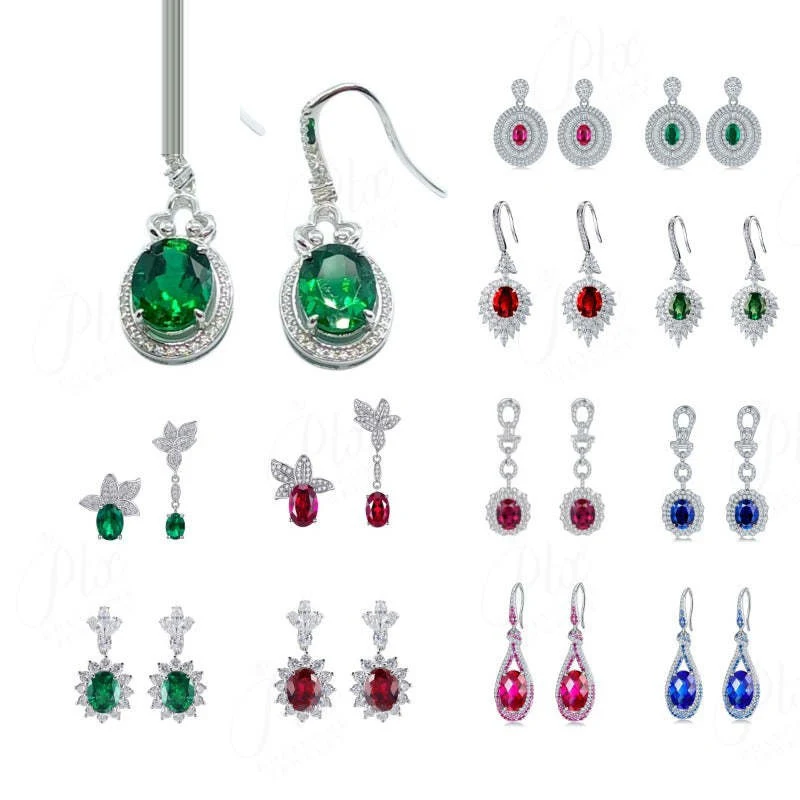
The first thing to check on any earrings price list is the pricing column. Stock styles are priced per piece, which means the quoted figure covers the complete finished earring, including the setting, the stone or stones, and the finish. Loose stones sold for custom earring production are priced per carat, since the value scales with the weight of the stone rather than with the labor in the setting.
Understanding which basis applies matters when you compare quotes from different suppliers. A per-carat quote for a stone does not include setting labor, plating, or the finding itself. A per-piece quote bundles all of those costs into one figure. When you build your margin model, use the per-piece number as your true unit cost for finished earrings, and treat per-carat pricing as a component cost you add to setting and finishing expenses.
What Drives the Per-Piece Price of Earrings
Several factors explain why two similar-looking earrings on the same price list can sit far apart in price. Keep these in mind as you scan the list:
- Metal choice: 925 sterling silver carries a different cost basis than 10K, 14K, or 18K solid gold, and gold vermeil and gold plated finishes each carry their own cost tier
- Stone weight: larger or multi-stone designs consume more carat weight, pushing the price up on a per-carat basis
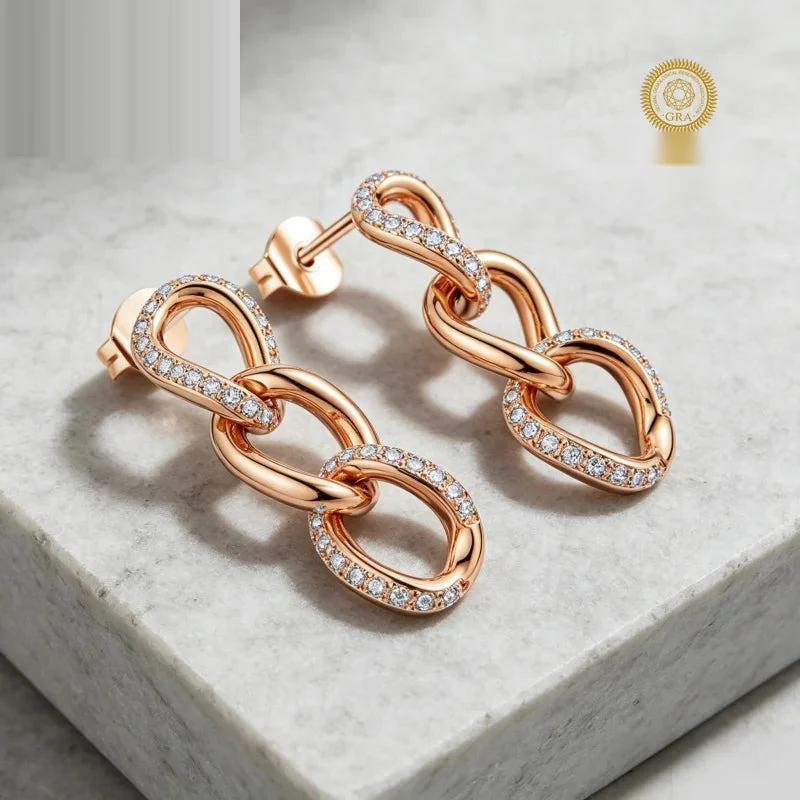
- Stone grading: stones accompanied by GRA or IGI papers command a different price tier than ungraded stones
- Setting complexity: pave work and multi-stone settings require more labor than simple prong or bezel settings
- Order quantity: moving from the MOQ of 30 pieces for custom work toward larger volumes changes the quoted per-piece price
Reading a Wholesale Price List Line by Line
A well-organized earrings price list should tell you four things per row: the style reference, the metal, the pricing basis, and the quantity requirement. Before you request quotes, sort the list by pricing basis so you can compare finished pieces against finished pieces and loose stones against loose stones. Mixing the two in the same comparison leads to inaccurate margin math and missed opportunities on the custom side, where the MOQ drops to 30 pieces per style.
For stock styles, the MOQ is 1 piece, which lets you test a design at the listed price before committing to volume. For custom work, the 30-piece MOQ means the supplier will typically quote a price that assumes that minimum; larger runs may shift the per-piece figure, so ask for tiered pricing rather than a single point quote.
Sample First: How Sampling Fits Your Cost Model
Sampling takes 7 to 10 days, and bulk production runs 15 to 25 days after approval. Build both windows into your buying calendar and into your landed cost model. Sample orders can be paid through PayPal, which simplifies small transactions, while bulk orders move to T/T terms with a 30 percent deposit and the 70 percent balance before shipment.
Why a Sample Protects Your Margin
A sample verifies that the earring you saw in a photo matches the price you were quoted. Weight, finish color, stone size, and clasp mechanism all affect perceived value and, ultimately, your retail price point. Spending the 7 to 10 days on a sample costs less than discovering a mismatch after a 15 to 25 day bulk run is complete.
Because stock styles carry a MOQ of 1 piece, you can sometimes order a single unit of an existing design as a low-cost sample before discussing custom work.
Structuring Payment Around Your Cash Flow
The standard terms are T/T with a 30 percent deposit and 70 percent balance before shipment. For a 30-piece custom run, that means you front roughly a third of the order value at production start and the remainder just before the goods ship. Plan your reordering calendar so the balance payment lands before you need the inventory on your shelves, since DDP delivery to the US adds another 5 to 8 days of transit time.
Quality Control: What You Are Paying For
Every order passes through a three-stage QC process: incoming inspection of materials, in-process checks during production, and a pre-ship AQL inspection on finished goods. This structure matters to your pricing decision because a price that seems low but arrives with defect rates above your AQL threshold costs more in returns and restocking than a slightly higher quote with documented inspection at each stage.
Matching Grading Papers to Price Tiers
Stones graded with GRA or IGI papers occupy a distinct tier on most price lists. The papers document the characteristics of the stone so your customers receive a verifiable description. When comparing quotes, confirm whether the per-carat price includes the grading paper or whether it is billed separately. Moissanite, a lab-created diamond alternative, is commonly offered with GRA papers, and it is priced differently from stones that carry IGI documentation.
Note that moissanite is a lab-created diamond alternative and is not a natural or real diamond, a distinction worth carrying through to your own product copy.
Comparing Metal Options on the Price List
Metal selection is the largest single lever on the per-piece price of earrings. Each option sits at a different point on the cost spectrum and appeals to a different retail customer. The table below summarizes how the common options compare on a wholesale price list.
Use this comparison when sorting a price list by metal type, since the pricing basis and the customer positioning change with each option.
| Metal Option | Typical Pricing Basis | Positioning | Best Fit |
|---|---|---|---|
| 925 sterling silver | Per piece | Accessible everyday price points | High-volume stock styles |
| Gold plated | Per piece | Trend-driven, budget-conscious | Fashion capsule collections |
| Gold vermeil | Per piece | Thicker gold layer over silver | Mid-tier boutiques |
| 10K or 14K solid gold | Per piece | Fine jewelry tier | Core permanent collections |
| 18K solid gold | Per piece | Premium fine jewelry tier | Flagship and gift designs |
After sorting by metal, review the pricing basis column again. Loose stones for custom 14K designs are quoted per carat, while the finished custom piece itself will be quoted per piece once the design is approved. Descriptions should name the true metal; gold plated and gold vermeil are distinct categories and should never be described as solid gold on your own listings or invoices.
Calculating Landed Cost: From Price List to Shelves
The price list is the starting point, not the final number. To calculate what an earring actually costs you, work through these steps:
- Start with the quoted per-piece price at your intended order quantity, whether that is a single stock unit or a 30-piece custom run
- Add sample costs if the design requires a 7 to 10 day sampling round before bulk approval
- Apply the T/T terms: 30 percent deposit at order, 70 percent balance before shipment, which affects your cash flow timing
- Include DDP delivery to the US in 5 to 8 days, which folds duties and shipping into a single delivered price
- Subtract an allowance for any pieces that fall outside your AQL acceptance level after the pre-ship inspection
DDP shipping deserves specific attention. Because delivery to the US takes 5 to 8 days with duties handled on the supplier side, your landed cost is closer to the quoted price than it would be under other shipping terms. That predictability makes per-piece pricing easier to defend in your own margin planning.
Balancing Stock Styles and Custom Work
Stock styles with a MOQ of 1 piece let you fill a catalog quickly and test demand at listed prices. Custom work at 30 pieces per style lets you differentiate your assortment and often improves the per-piece price at that volume. A practical approach is to build the core of your earring assortment from stock styles while using custom runs for your signature designs, then compare the tiered per-piece pricing across both as your volumes grow.
Timing Your Orders Against Production Windows
Add the two windows together when planning: 7 to 10 days for sampling plus 15 to 25 days for bulk production after approval, plus 5 to 8 days for DDP delivery to the US. A custom earring program can therefore run from roughly four to six weeks from first request to receipt.
Stock styles skip the sampling and production windows when units are on hand, which is one reason keeping a mix of both on your buying plan protects your ability to reorder quickly.
Order Terms for Wholesale Buyers
MOQ is 1 piece for stock styles and 30 pieces for custom work, and loose stones are sold by the carat. Sampling takes 7 to 10 days, and bulk production runs 15 to 25 days after the sample is approved. Pricing is quoted per piece or per carat depending on the item. Payment is T/T with a 30% deposit and the 70% balance before shipment, and PayPal is accepted for sample orders.
Frequently Asked Questions
What is the minimum order for wholesale earrings?
Stock styles carry a MOQ of 1 piece, so you can order a single unit to evaluate a design. Custom work requires a minimum of 30 pieces per style. Loose stones are sold by the carat and are priced separately from setting labor.
Are earrings priced per piece or per carat?
Finished earrings are priced per piece, which includes the setting, stones, and finish. Loose stones for custom designs are priced per carat, since their value scales with weight. Check the pricing basis on each line of the price list before comparing quotes.
How long does sampling and production take?
Sampling takes 7 to 10 days, and bulk production takes 15 to 25 days after you approve the sample. DDP delivery to the US adds 5 to 8 days of transit. Plan your reorder calendar around the combined timeline of roughly four to six weeks for custom programs.
What payment terms apply to wholesale orders?
Bulk orders use T/T with a 30 percent deposit and the 70 percent balance paid before shipment. Sample orders can be paid through PayPal. Plan cash flow so the balance payment clears before you need the inventory in stock.
Do the stones come with grading papers?
Graded stones come with GRA or IGI papers that document their characteristics. Moissanite, a lab-created diamond alternative, is commonly supplied with GRA papers. Confirm whether grading documentation is included in the quoted per-carat price.
Next Steps for Your Earrings Buying Program
Reading an earrings price list becomes straightforward once you separate per-piece from per-carat pricing, sort by metal tier, and build sampling, production, and DDP transit windows into your landed cost model. Whether you are testing stock styles at a MOQ of 1 piece or launching a custom design at 30 pieces, the same framework applies: confirm the pricing basis, verify the metal description, sample before you scale, and plan payment around the 30/70 T/T structure.
To browse current earring styles and stone options, visit our product catalog. For more buying guides like this one, explore our wholesale jewelry blog. When you are ready to request tiered pricing or start a sampling round, reach out through our contact page and our team will respond with a quote based on your target quantities and metal selection.
Sources: Grading references: GIA gem education and GIA laboratory information.