Earrings Wholesale: custom OEM
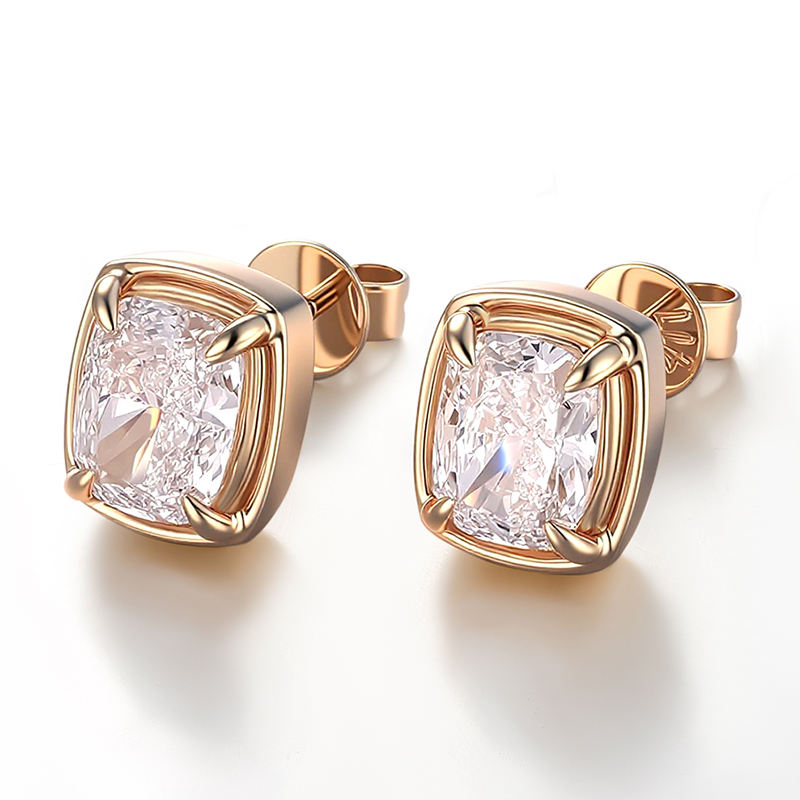
Custom OEM Earrings: How the Private Label Workflow Works for Wholesale Buyers
Custom OEM earrings are produced to your brand's specifications — your designs or our stock styles modified with your choices of metal, stone size, and setting — and shipped with your private label packaging. For wholesale buyers, the workflow runs from design submission through sampling in 7 to 10 days, bulk production in 15 to 25 days after sample approval, and DDP delivery to the US in 5 to 8 days.
The minimum order is 30 pieces for custom work, while stock earring styles can be ordered at 1 piece, which makes testing a design before committing to a full run straightforward.
This article walks through the practical decisions a buyer faces at each stage: choosing the right base metal and stones, structuring the sample round, planning the production timeline, arranging payment terms, and setting up quality control so the bulk order matches the approved sample. Whether you are building a branded earring line for a retail storefront or an online store, the same sequence applies, and the details below reflect how orders actually move through a factory floor.
Choosing the Metal and Stones for Your Earring Program
Metal choice drives both unit cost and how you position the product in your catalog. Every option must be named accurately in your product listings, and your supplier should label components the same way. The common choices for wholesale earrings are:
- 925 sterling silver — the workhorse for stud and hoop programs, often finished with rhodium plating for a bright white surface
- 10K, 14K, or 18K solid gold — for higher price point lines where the metal itself carries resale value
- Gold vermeil — thick gold plating over sterling silver, a mid-tier option that must be marketed as vermeil, not solid gold
- Gold plated — the most accessible entry point, suited to fashion-driven, trend-led assortments
Stone selection is equally consequential. Moissanite is a lab-created diamond alternative with strong brilliance and hardness, and it is graded with GRA or IGI papers when you need documentation for your listings. It should never be marketed as a natural or real diamond — accurate labeling protects your store from returns and disputes. Because loose stones are sold by the carat, you can match stone weight to your target retail price rather than accepting fixed pre-set configurations.
Matching Stone Size to Earring Category
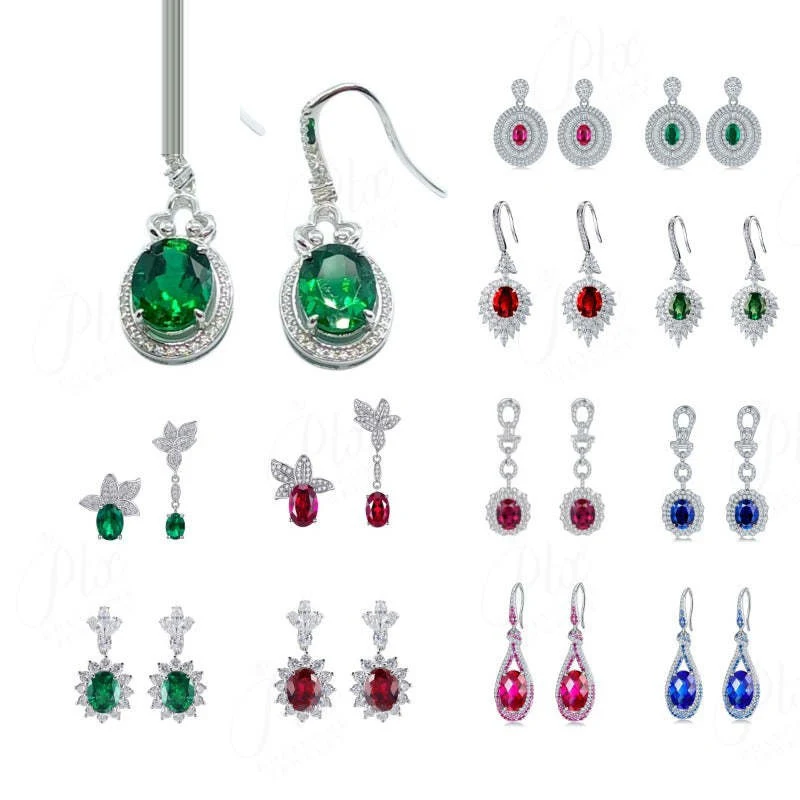
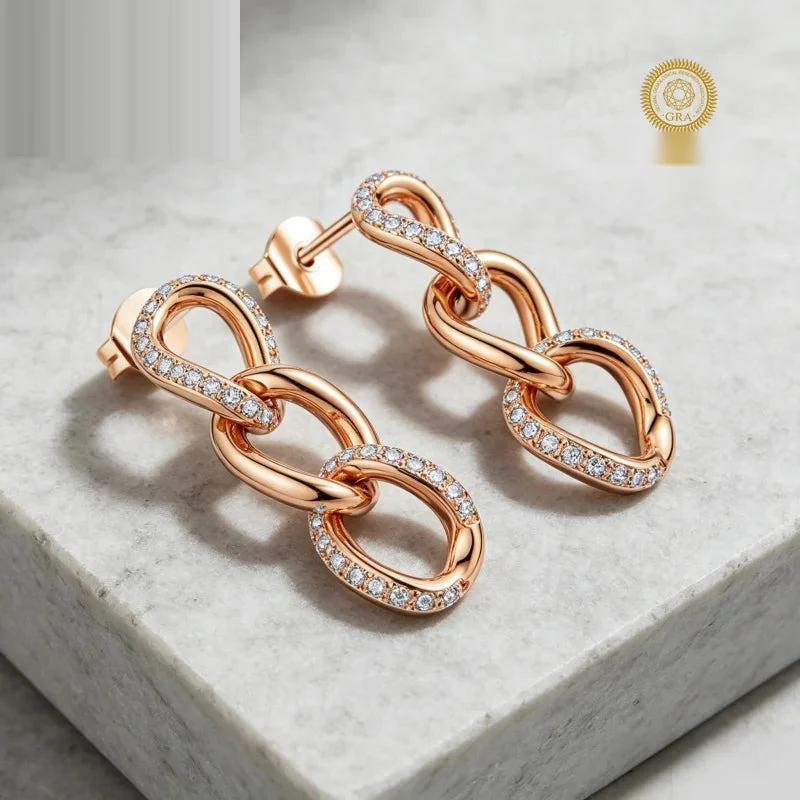
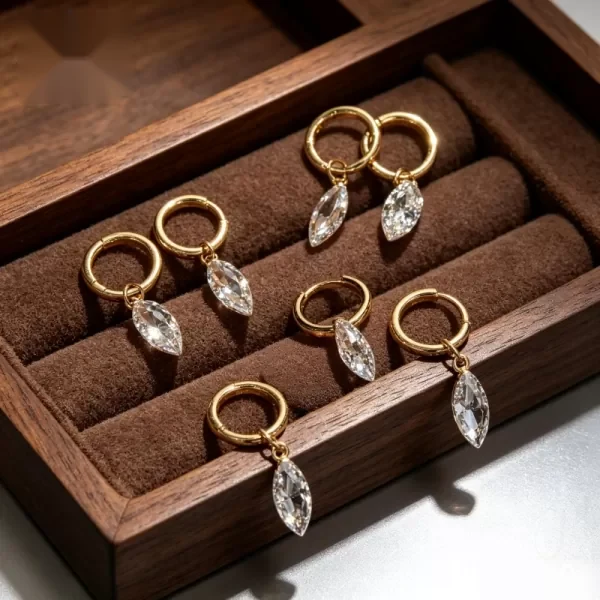
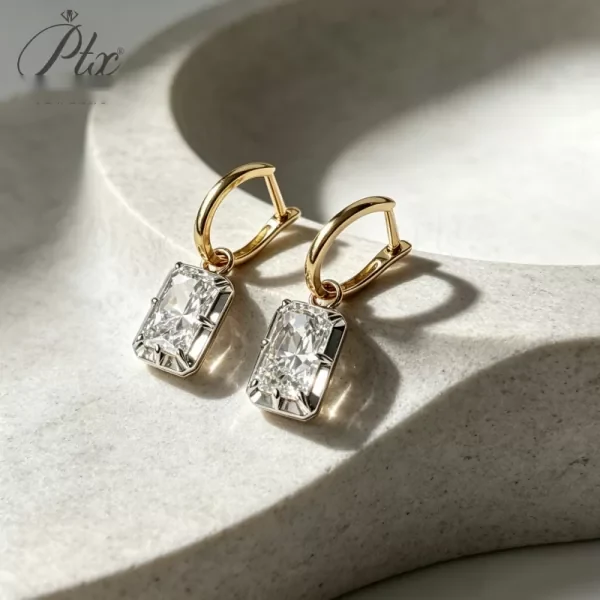
Different earring categories call for different carat ranges. Studs typically carry the largest single stones, hoops often use smaller pavé accents, and drop earrings pair a center stone with side accents. Since loose stones are priced per carat, you control the balance between stone weight and metal weight when costing a design. A practical approach is to sample two size variants of the same design and compare perceived value against cost before locking the bulk specification.
Backings, Posts, and Wearability Details
Small hardware decisions shape customer satisfaction more than many buyers expect. Push backs, screw backs, and lever backs each suit different price points and audiences. Post thickness matters for customers with sensitive ears, and sterling silver posts are the standard choice for plated and vermeil styles positioned as gentle on skin. Confirm these details in writing during the sampling stage, because they are costly to change after bulk production begins.
The OEM and Private Label Workflow Step by Step
The custom earring workflow follows a fixed sequence, and knowing it helps you plan launch dates backward from your target in-stock date. Sampling takes 7 to 10 days from design confirmation, bulk production takes 15 to 25 days after you approve the sample, and DDP shipping to the US takes 5 to 8 days door to door.
A buyer who approves a sample in the first week of a month can reasonably expect bulk goods ready by the middle to end of the following month, with delivery shortly after.
Here is how each stage works in practice:
| Stage | What Happens | Typical Timing |
|---|---|---|
| Design submission | You send drawings, references, or modified stock styles | 1 to 3 days review |
| Sampling | Sample pairs made for your approval | 7 to 10 days |
| Sample approval | You confirm spec, packaging, and label files | Your decision |
| Bulk production | Full order of 30 or more pieces per style | 15 to 25 days |
| Shipping | DDP delivery to your US address | 5 to 8 days |
The table gives planning anchors rather than promises of exact dates, because design complexity, stone availability, and order size all move the calendar. The value for a buyer is being able to give a launch team a realistic window: roughly a month from approved sample to goods on the water or in the air, then less than a week of transit under DDP terms.
Private Label Packaging and Branding Options
Private label work extends beyond the earring itself. Buyers typically customize boxes, pouches, cards, and certification card holders carrying GRA or IGI papers, plus hangtags and sticker branding. Packaging artwork is usually confirmed alongside the sample approval so that boxes are ready when bulk pieces come off the line. Provide print-ready vector files early; low-resolution logos are a common cause of packaging delays.
If you are launching a coordinated line, order packaging for all styles in the same run to keep unit costs consistent.
Stock Styles as a Bridge to Custom Work
You do not need a finished design file to start. Many buyers begin by ordering 1 piece each of several stock earring styles to evaluate build quality, plating depth, and stone setting in hand. Once you identify which silhouettes perform, you customize them — changing metal, stone carat weight, or post hardware — and move to the 30 piece minimum for the modified versions.
This path reduces risk on a first order and gives your design team real reference pieces rather than photos.
Quality Control Across Three Stages
Custom earrings pass through a three-stage inspection process before leaving the factory. Incoming QC checks raw materials — metal stock, loose stones, and findings — against the agreed specification. In-process QC monitors setting, plating, and assembly during production so problems are caught while correction is still inexpensive. The final stage is a pre-shipment AQL inspection on finished, packed goods, sampling from the bulk lot against the acceptance quality limit you and the factory agree on.
As a buyer, your role is to define what passes. Put measurable criteria in the specification: plating thickness for gold plated and vermeil items, post solder strength, stone security, and the dimensional tolerance allowed between sample and bulk. Ask for photos from the pre-ship AQL inspection, and reserve the right to hold shipment if the lot fails the agreed limit.
Buyers who skip this step are the ones who discover mismatched plating or loose stones after goods reach their warehouse, when remedies are limited to discounts or returns.
Pricing, Payment Terms, and Ordering Logistics
Pricing for earrings is quoted per piece for finished styles and per carat for loose stones, so you can cost a design from its bill of materials before sampling. Custom work requires a 30 piece minimum per style; stock styles can be ordered at 1 piece, which supports made-to-order dropshipping models and small test buys alongside your private label program.
Payment follows a standard structure for bulk orders: T/T with a 30 percent deposit to start production and the 70 percent balance before shipment. Sample orders are handled through PayPal, which keeps the sampling round low-friction and low-risk. Plan cash flow around this split — the deposit funds materials and labor at the front of the production run, and the balance releases the goods from the warehouse.
Why DDP Shipping Matters for US Buyers
DDP shipping to the US takes 5 to 8 days, with duties and clearance handled before the goods reach your door. For a wholesale buyer, DDP removes the biggest source of landed-cost surprises: customs assessment. You know your true per-pair cost at the quote stage, which makes margin planning and retail pricing far simpler than arranging clearance yourself.
Confirm that the quoted DDP price covers the full delivery to your address, not just the port, and keep the paperwork for your records.
Budgeting Your First Custom Earring Order
A sensible first custom order combines a small stock buy with one or two custom styles at the 30 piece minimum. Sample fees are paid through PayPal and typically credited toward the bulk order once you proceed. Get the per piece quote and the per carat stone quote separately so you can see where cost sits, and confirm the 30 percent deposit amount and the balance due date in the proforma invoice before transferring funds.
This keeps your first run inside a predictable budget while the sample-to-bulk process establishes the spec for repeat orders.
Order Terms for Wholesale Buyers
MOQ is 1 piece for stock styles and 30 pieces for custom work, and loose stones are sold by the carat. Sampling takes 7 to 10 days, and bulk production runs 15 to 25 days after the sample is approved. Pricing is quoted per piece or per carat depending on the item. Payment is T/T with a 30% deposit and the 70% balance before shipment, and PayPal is accepted for sample orders.
Frequently Asked Questions
What is the minimum order for custom OEM earrings?
Custom work requires 30 pieces per style. Stock styles can be ordered at 1 piece each, so you can evaluate designs in hand before committing to a custom run. Loose stones for your own setting projects are sold by the carat with no fixed piece minimum.
How long does the full custom process take?
Sampling takes 7 to 10 days after design confirmation. Bulk production takes 15 to 25 days after you approve the sample, and DDP delivery to the US adds 5 to 8 days. From approved sample to delivered goods, plan on roughly one month.
Can earrings come with grading documents?
Yes. Moissanite stones can be accompanied by GRA or IGI papers, which you can reference in your listings. Documentation is especially useful for larger center stones on studs and drop styles, and it supports accurate marketing of the stones as lab-created diamond alternatives.
What payment methods are available?
Bulk orders use T/T with a 30 percent deposit and the 70 percent balance paid before shipment. Sample orders are paid through PayPal, which keeps the sampling stage simple. Both terms should be stated clearly on the proforma invoice before you pay.
How do I make sure bulk goods match my approved sample?
Approve a sealed sample, put measurable specs in writing, and rely on the three-stage QC process: incoming, in-process, and pre-shipment AQL inspection. Request inspection photos before the balance payment, and confirm the AQL acceptance limit for your lot in advance.
Start Your Custom Earring Program
The custom OEM path rewards buyers who plan each stage: pick metals and stones with accurate labeling in mind, use stock styles to test demand at 1 piece, move to custom runs at 30 pieces, and keep the sample, payment, and QC checkpoints documented. If you are ready to see what is already available, browse our full range of earrings and other categories in our product catalog.
For deeper guidance on sourcing, timelines, and private label strategy, read the other articles in our wholesale blog. When you have a design or a shortlist of styles to customize, contact our sales team to request a quote and start the sampling process.
Sources: Grading references: GIA gem education and GIA laboratory information.