Wholesale Moissanite Jewelry: Stone Grading & Color Consistency

Moissanite Jewelry and the Grading Questions Every Wholesale Buyer Should Ask
Moissanite Jewelry succeeds or fails in the US wholesale market on one thing above all others: whether the stones you receive match the stones you sampled. Color consistency and reliable grading documentation separate a repeatable supply program from a series of one-off orders.
This article walks through the practical grading decisions a wholesale buyer faces — which certificates matter, how color grades are described, what to check at each inspection stage, and how to structure a purchase so that every shipment matches your approved sample.
Why Grading Papers Matter in Wholesale Moissanite Orders
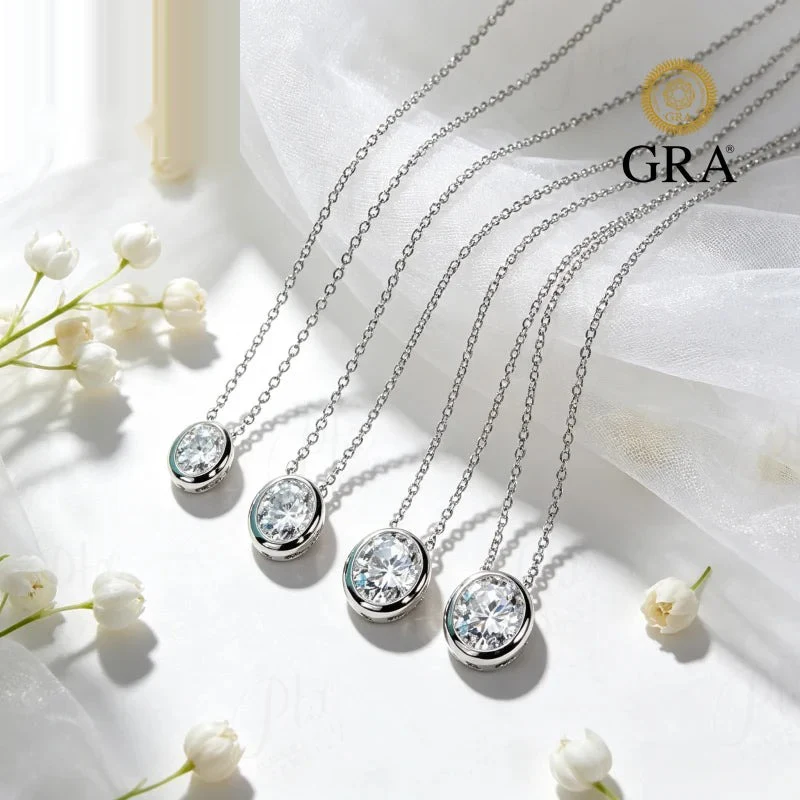
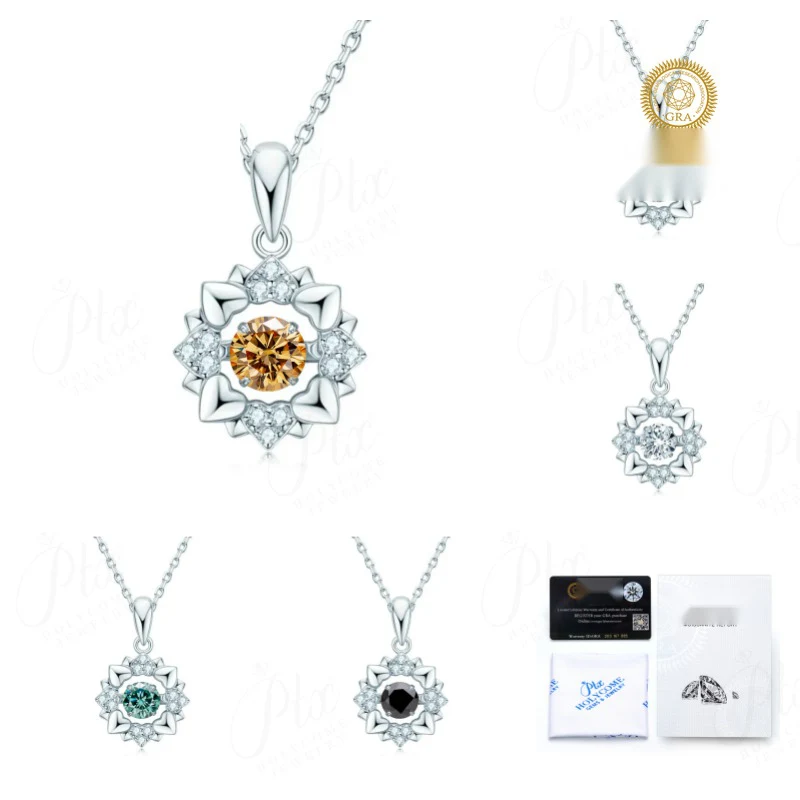
Moissanite is a lab-created diamond alternative with its own optical properties: higher refractive index and more fire than mined diamond. Because it is grown in a controlled environment, color should, in theory, be uniform. In practice, variation between production batches does occur, and that variation is what grading papers are designed to document. Graded stones from our catalog ship with GRA or IGI papers, which record carat weight, cut, color, and clarity characteristics for each stone.
For a wholesale buyer, those papers serve three purposes. First, they let you verify that a bulk shipment matches your approved sample by comparing documented color grades rather than eyeballing stones under mixed retail lighting. Second, they support your own downstream sales, since resellers and retailers can pass documentation to their customers. Third, they give you an objective reference during disputes — if a pre-shipment AQL inspection flags color drift, the papers provide the baseline.
GRA Papers Versus IGI Papers
GRA certificates are commonly issued for moissanite and describe the stone's specifications in a format familiar to jewelry buyers. IGI papers are issued by a well-known independent gemological institute and carry broader recognition in the US retail trade. If your customer base includes established jewelry stores, IGI-papered stones tend to move faster at the counter. If you are supplying e-commerce sellers, either paper works, but consistency of documentation across your whole assortment matters more than the name on the certificate.
Decide before sampling, and specify the paper type in your purchase order.
Color Grades and What They Actually Describe
Moissanite color is typically described on a scale that mirrors diamond terminology, with colorless stones at the top and near-colorless or tinted stones below. Unlike natural diamond, where inclusions are common, most commercial moissanite is eye-clean, so color is usually the deciding attribute for a wholesale assortment. A practical buying rule: pick one or two color grades and hold the entire program to them.
Mixing colorless and near-colorless stones within the same SKU line creates visible inconsistency when pieces are displayed side by side, especially in white metal settings where body color shows through more strongly.
Setting a Color Standard Before You Place a Bulk Order
The most expensive color problems are the ones discovered after bulk production. Prevent them by locking a color standard during sampling. Our sampling runs 7 to 10 days, which gives you enough time to request stones in more than one color grade and compare them under daylight, incandescent, and retail LED conditions. Approve one sample as your master reference, photograph it next to a neutral white tile, and keep it on file for the life of the program.
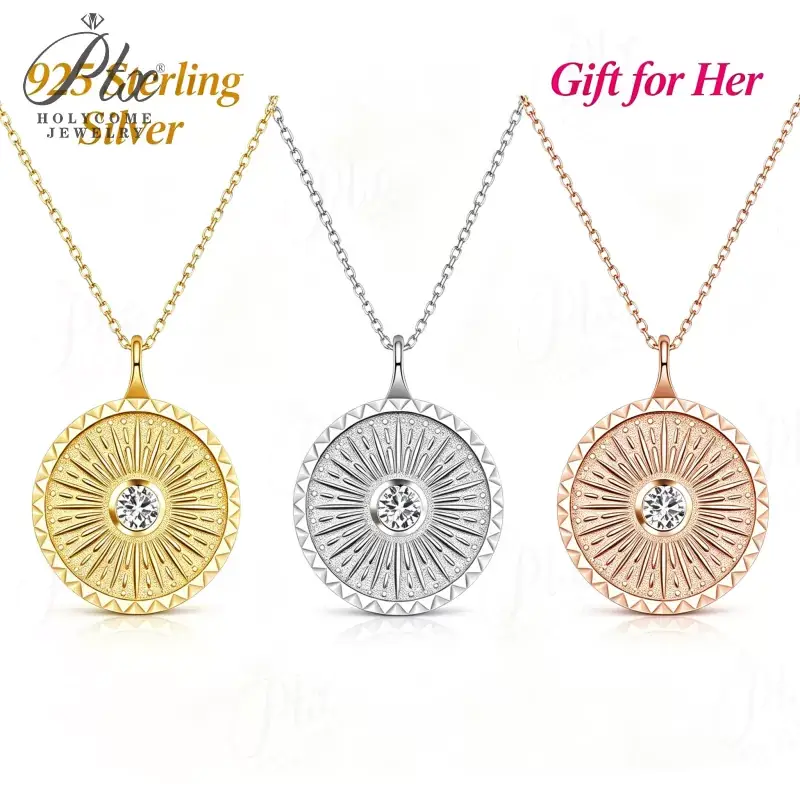
Color perception shifts with metal choice as well. A colorless-grade stone set in 925 sterling silver reads cooler and brighter; the same stone in 14K solid gold reads slightly warmer. Gold vermeil and gold plated finishes introduce their own tone, so evaluate stone color in the finished metal, not loose only. Buyers working in 10K, 14K, or 18K solid gold should confirm that the color grade still holds in yellow and rose alloys.
Building Color Consistency Into the Production Timeline
Bulk production runs 15 to 25 days after sample approval, and color consistency depends on what happens inside that window. Single-batch sourcing of loose stones is the simplest approach: request that your entire order be produced from one lot of matching-color material rather than blended lots.
Our three-stage quality control supports this — incoming inspection checks the loose stones against the approved color standard before setting, in-process checks catch any drift during mounting and polishing, and a pre-ship AQL inspection samples finished pieces for color match against your master sample.
If you are buying loose stones by the carat rather than finished pieces, ask that stones be sorted and papered by lot, so every parcel you receive carries matching documentation. Loose stone pricing is per carat, which makes lot-level color sorting straightforward to specify on the purchase order.
Cost Structures: What Grading Does and Does Not Change
Pricing is quoted per piece for finished jewelry and per carat for loose stones, and the certificate type is one of the variables inside that quote. The table below summarizes how the main specification choices affect a wholesale program.
| Specification | Typical Use Case | Grading Impact |
|---|---|---|
| Colorless grade, GRA paper | E-commerce assortments | Standard documentation, faster turnaround |
| Colorless grade, IGI paper | Retail store supply | Broad trade recognition |
| Near-colorless grade | Value-focused lines | Lower per-carat cost |
| Loose stones, lot sorted | Custom setting work | Per-carat pricing, matched parcels |
None of these choices changes the production schedule; sampling and bulk timelines stay the same whether you order GRA or IGI papers. What changes is your resale positioning, so align the paper choice with how your customers sell rather than defaulting to the cheapest option.
Quality Control Checkpoints a Buyer Should Verify
A written QC protocol only helps if you know what to ask for at each stage. Before confirming a bulk order, request the following checkpoints in writing:
- Incoming inspection: loose stones checked against the master sample color under standardized lighting before any setting begins.
- In-process inspection: mounted pieces checked for stone color match, seat alignment, and metal finish during assembly.
- Pre-ship AQL inspection: a statistically sampled batch of finished pieces verified for color consistency and paperwork accuracy.
- Documentation check: GRA or IGI papers matched one-to-one with pieces in the shipment.
What to Do When a Shipment Shows Color Drift
If your AQL results or your own receiving inspection finds stones outside the approved color range, the grading papers become your reference point. Compare the delivered stones' documented grades against the master sample paperwork, flag the affected lot numbers, and raise the issue before releasing the balance payment. Because terms are T/T with a 30 percent deposit and 70 percent balance before shipment, the pre-ship inspection window is your strongest position for negotiating a re-sort or replacement of off-color stones.
For sample orders, PayPal terms keep the process simple while you evaluate color standards.
Metal Authenticity Alongside Stone Grading
Stone grading is only half of the consistency equation; metal disclosure is the other half. Every piece should be specified by its true metal — 925 sterling silver, 10K, 14K, or 18K solid gold, gold vermeil, or gold plated — and stamped accordingly. Never accept listings that describe plated or vermeil pieces as solid gold, since mislabeled metal undermines the documented value of the stones set in it.
US buyers should match metal specifications to their own compliance requirements before the sample stage, not after.
Order Terms for Wholesale Buyers
MOQ is 1 piece for stock styles and 30 pieces for custom work, and loose stones are sold by the carat. Sampling takes 7 to 10 days, and bulk production runs 15 to 25 days after the sample is approved. Pricing is quoted per piece or per carat depending on the item. Payment is T/T with a 30% deposit and the 70% balance before shipment, and PayPal is accepted for sample orders.
Frequently Asked Questions
Do all moissanite stones come with grading papers?
Graded stones in our range ship with GRA or IGI papers. Specify the paper type when you place your order, and confirm one-to-one matching of papers to pieces during the pre-ship AQL inspection.
Can I order a single sample piece before committing to bulk?
Yes. Stock styles carry a minimum order quantity of 1 piece, and custom work starts at 30 pieces. Sampling takes 7 to 10 days so you can evaluate color grade and metal finish before bulk production begins.
How long does bulk production and delivery take?
Bulk production runs 15 to 25 days after sample approval. DDP delivery to the US then takes 5 to 8 days, with customs handled on our side.
What payment terms apply to wholesale orders?
Bulk orders use T/T with a 30 percent deposit and the 70 percent balance before shipment. Sample orders can be paid via PayPal.
How is loose moissanite priced?
Loose stones are priced per carat, while finished jewelry is priced per piece. Lot-sorted, papered parcels can be requested so color consistency carries through to your own setting work.
Start Your Moissanite Program With a Graded Sample
Color consistency is built at the sampling stage, enforced through three-stage quality control, and documented with GRA or IGI papers on every graded stone. Browse our full range of finished pieces and loose stones in the product catalog, read more buying guides on grading, metals, and order terms in the wholesale jewelry blog, and reach our team through the contact page to request samples and lock your color standard.
Sources: Grading references: GIA gem education and GIA laboratory information.