Wholesale Moissanite Jewelry: GRA/IGI Certificate Verification

Moissanite jewelry has earned a permanent place in US wholesale assortments because it offers the look of a diamond alternative at a price point that supports healthy retail margins. With that demand, however, has come a flood of suppliers whose certificates are generic, duplicated, or impossible to verify. Before you commit to a wholesale order, learning how GRA and IGI paperwork works, and how to confirm it, is one of the most practical skills a buyer can develop.
This guide covers what each certificate type actually tells you, the red flags to watch for, and the verification steps that protect your inventory investment.
Why Certificates Matter in Wholesale Moissanite Jewelry
When you buy loose moissanite or finished moissanite jewelry at wholesale, you are buying on trust that has not yet been earned. Unlike natural diamonds, most moissanite stones are not examined by a third-party lab unless the supplier submits them. The certificate accompanying your order is often produced by the supplier or by the grading service they work with. For a retail customer, that paper is the story attached to the purchase.
If a stone arrives and the certificate cannot be matched to the physical item, you face returns, chargebacks, and damage to your store reputation.
Certificates also serve an internal purpose across your supply chain. They give you a consistent basis for comparing stones between shipments. If a reorder arrives with stones that look different from the first batch, the paperwork becomes the reference point for a replacement claim. Suppliers with a structured quality control program, meaning incoming stone checks, in-process inspection, and pre-ship AQL inspection, can usually tie certificate data directly to their QC records.
Suppliers without that structure often cannot, and that gap shows up quickly in disputes.
GRA vs IGI: What Each Paper Actually Tells You
The two names most buyers encounter are GRA and IGI, and they operate in very different ways. Understanding the distinction keeps you from overpaying for paperwork or underestimating risk on either end.
GRA Certificates for Moissanite Stones
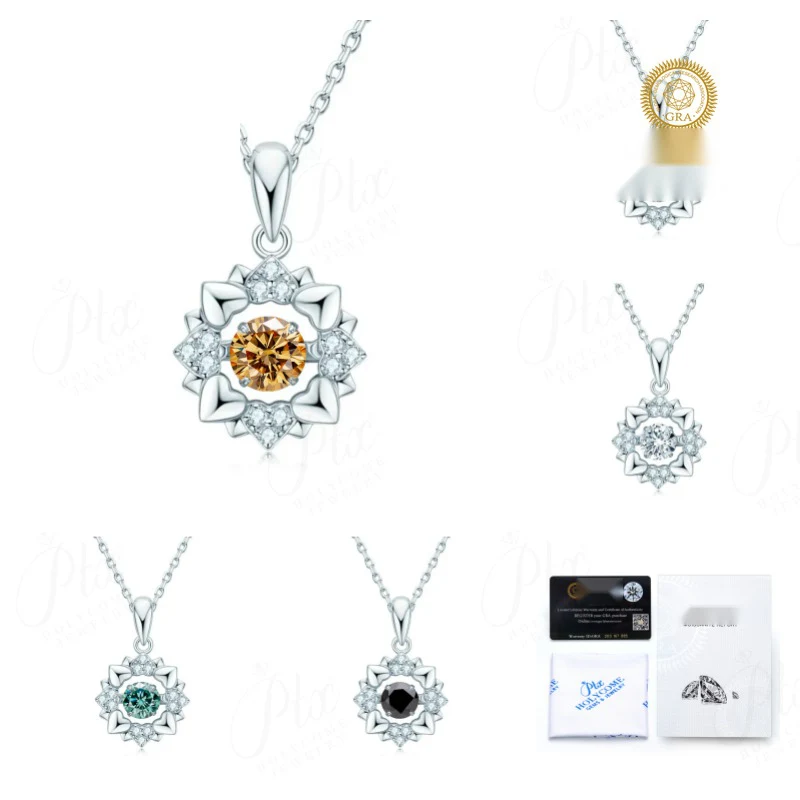
GRA papers are widely used in the moissanite trade, particularly for loose stones and pieces set in 925 sterling silver. A typical GRA certificate lists carat weight, color grade, cut, and clarity characteristics, and many are tied to a laser-inscribed number on the stone girdle that matches the document.
The key point for buyers: GRA grading of moissanite is generally a trade or supplier-side grading service rather than the same kind of independent gemological report you would expect for a natural diamond. Treat GRA papers as a useful reference for color and cut consistency across a production run, not as an independent appraisal of value.
IGI Reports and When They Apply
IGI is an established independent gemological laboratory that grades both natural and lab-created stones. When a supplier offers IGI paperwork on moissanite jewelry, the stone has been examined by an external lab, which carries more weight with informed retail customers. IGI reports clearly identify lab-created origin, which is exactly what compliance-minded retailers want printed on the documents they pass along.
Ask your supplier whether IGI grading is available for specific items, and confirm how it affects cost and lead time, since external lab submission can extend the sampling and production calendar.
Matching Certificate Tier to Your Sales Channel
The right choice depends on where and how you sell. For volume orders of silver moissanite jewelry at accessible retail prices, GRA papers with matching inscriptions are common and generally sufficient. For higher-ticket items set in 14K or 18K solid gold, or for stones above roughly two carats, IGI reports give your retail customers a stronger verification story.
Many suppliers can offer both tiers, letting you match the paperwork to the product positioning instead of paying for lab reports on every single unit in a large run.
How to Verify a Certificate Before and After Shipping
Verification is a process, not a single glance at a printed page. Build it into your ordering workflow in three stages: before the sample, before the bulk shipment, and at receiving.
Stage One: Check Papers at the Sampling Stage
Sampling runs 7 to 10 days, which gives you time to review paperwork alongside the physical piece. When the sample arrives, compare every field on the certificate against the stone itself: carat weight measured on your own scale, color as observed under standard lighting, and the inscription number if one is present. Photograph the certificate and the stone together. This creates a baseline record for the bulk order and a reference if quality drifts later.
For sample orders paid through PayPal, documentation also strengthens your position if you need to dispute a shipment.
Stage Two: Confirm Inspection Coverage on the Bulk Order
Before bulk production begins, ask how the certificates will be generated and when. Bulk production takes 15 to 25 days after sample approval, and a serious supplier will confirm which units receive graded stones with papers and which, if any, ship without them. Request that certificate numbers be listed on the packing list so each stone can be cross-checked at receiving.
Suppliers running three-stage QC, incoming, in-process, and pre-ship AQL inspection, should be able to show how certificate matching fits into that sequence, particularly at the pre-ship stage.
Stage Three: Spot-Check at Receiving
When goods arrive, do not file the paperwork sight unseen. Open a random selection of cartons, pull stones or finished pieces, and match certificate numbers to inscriptions and weights. Weigh stones on a calibrated carat scale and compare against the stated weight, allowing for the small tolerances typical of the trade. Record every mismatch. A supplier who resolves discrepancies quickly on the first order is far more likely to stay reliable on reorders than one who argues over minor claims.
Red Flags in Moissanite Paperwork
Certain warning signs appear again and again in problematic shipments. Add these to your buyer checklist before approving any production order.
- Certificates with identical photos or identical certificate numbers across different stones in the same shipment.
- Papers that describe the stone as a diamond or omit the lab-created origin entirely, which creates serious compliance risk in US retail.
- No way to cross-check the certificate number against any database or inscription on the stone.
- Carat weights that do not match your own scale readings within reasonable tolerance.
- Certificates printed on thin paper stock with low-resolution graphics and no consistent layout between orders.
- A refusal to provide paperwork samples before you commit to the bulk order.
Any one of these alone may be a simple printing issue. Two or more together usually indicate a supplier who treats certificates as marketing rather than documentation, and that is a signal to slow down and request pre-shipment verification.
Certificate Expectations by Product Type
Paperwork should scale with the value and construction of the piece. The table below shows a practical way to align certificate expectations with the items you are ordering.
| Product Type | Common Paper | Verification Step | Typical Use Case |
|---|---|---|---|
| Loose moissanite stones | GRA or IGI per carat | Weigh and match inscription | Custom setting programs |
| 925 sterling silver pieces | GRA certificate | Match numbers on packing list | Volume retail lines |
| 10K or 14K solid gold | GRA or IGI on request | Spot-check at receiving | Mid-range boutiques |
| 18K solid gold, larger stones | IGI report | Independent lab confirmation | Fine jewelry counters |
Use this framework as a starting conversation with your supplier rather than a rigid rule. Custom work carries a 30-piece minimum, so it makes sense to specify certificate requirements in writing at the same time you approve the design. Stock styles have a 1-piece minimum, which makes them an inexpensive way to test how a supplier's paperwork holds up before you scale the program.
Cost, Terms, and Logistics Considerations
Paperwork choices interact with pricing and payment terms. Pricing is quoted per piece or per carat depending on the item, and graded stones with IGI reports typically carry a different cost basis than stones with GRA papers only. Confirm in writing whether certificate fees are included in the quoted price or added per stone.
Payment terms are T/T with a 30 percent deposit and 70 percent balance before shipment, and PayPal is accepted for sample orders, which means the sampling stage is your lowest-risk window to validate documentation before larger funds move.
Delivery also affects how you verify. DDP shipping to the US takes 5 to 8 days, so build your receiving inspection into that window. Request digital copies of all certificates before the shipment leaves the factory, matched against the packing list, so any discrepancy can be flagged while the goods are still in transit rather than after they land.
For stones sold by the carat, ask for a stone-by-stone weight sheet alongside the certificates; it takes the supplier minutes to produce and saves you hours of reconciliation.
Order Terms for Wholesale Buyers
MOQ is 1 piece for stock styles and 30 pieces for custom work, and loose stones are sold by the carat. Sampling takes 7 to 10 days, and bulk production runs 15 to 25 days after the sample is approved. Pricing is quoted per piece or per carat depending on the item. Payment is T/T with a 30% deposit and the 70% balance before shipment, and PayPal is accepted for sample orders.
Frequently Asked Questions
Can a GRA certificate be verified online?
Some GRA certificates include a number that can be checked against a database, and many include a laser inscription on the stone girdle that matches the paper. Verification depth varies, so confirm with your supplier exactly how their GRA papers can be cross-checked. If there is no database and no inscription, the paper functions as an internal reference only.
Is IGI grading worth the extra cost on moissanite jewelry?
For higher-ticket pieces in solid gold or larger stones, IGI reports strengthen the verification story your retail customers see, since the grading comes from an independent laboratory. For volume silver lines at accessible price points, GRA papers with matching inscriptions are generally sufficient. Match the paperwork tier to the retail positioning of each product line.
Should certificates state that moissanite is lab-created?
Yes. Moissanite is a lab-created diamond alternative, and paperwork should describe it as such. Certificates that call the stone a diamond, or that omit origin, create compliance exposure for your store and should be treated as a serious red flag in any supplier's documentation.
How many pieces should I test before a bulk order?
Stock styles carry a 1-piece minimum, so order samples across the styles you plan to stock and verify every certificate against the physical piece. Custom work requires a 30-piece minimum, so use the 7 to 10 day sampling window to lock down paperwork requirements before production starts. Document your findings so reorder comparisons have a baseline.
What happens if certificate numbers do not match the stones on arrival?
Record every mismatch with photos, note the packing list entries, and raise the claim with your supplier promptly. Suppliers running three-stage QC with pre-ship AQL inspection should have records to cross-check against yours. Keep digital copies of all certificates received before shipment, since they establish what was promised.
Build a Verified Moissanite Program With Confidence
Certificate verification is not complicated, but it does require a process applied consistently: check papers at sampling, confirm inspection coverage before bulk production, and spot-check numbers at receiving. Suppliers who welcome that scrutiny are the ones worth building long-term programs with.
Browse the full range of moissanite jewelry and loose stones in our wholesale product catalog, read more buying guides like this one on our jewelry wholesale blog, or request samples and a quote with verification terms included through our contact page to start your next order.
Sources: Grading references: GIA gem education and GIA laboratory information.